
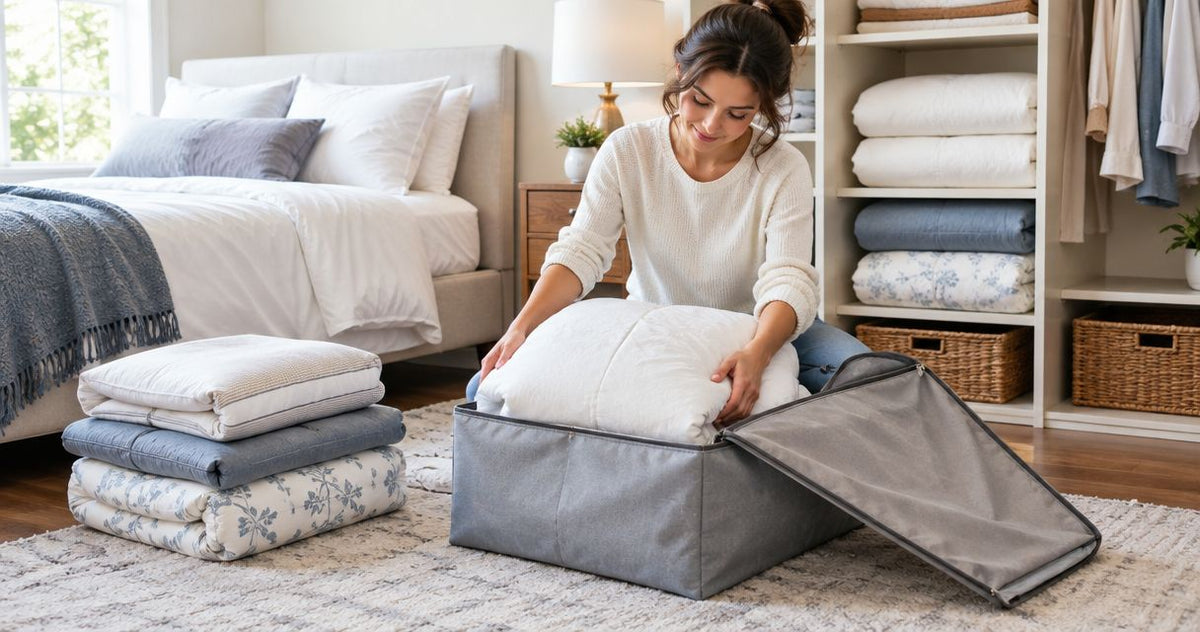
Store luxury bedding between seasons by washing it, drying it fully, folding it loosely into breathable cotton bags or a lidded bin, and keeping it somewhere cool, dark, and dry. The two things that ruin stored bedding are trapped moisture and compression.
- Wash and dry every piece completely before storage; leftover body oils yellow fabric over months.
- Use breathable cotton bags or lidded bins, never sealed vacuum bags for down or natural fibers.
- Store in a cool, dark, dry space off the floor, away from attics, garages, and basements.
- Refold along different lines each season to prevent permanent creases in the fabric.
How to store luxury bedding between seasons
The process takes six steps and works for sheets, duvets, comforters, and blankets alike. Skip any one and you risk mildew, odor, or flattened fill.
- Wash everything first. Body oils, sweat, and skin cells stay in the fabric and oxidize in storage, which causes yellowing. Follow each item's care label. For sheet care between uses, see how to keep luxury sheets soft after washing.
- Dry completely. Even slight dampness invites mildew. Run an extra dryer cycle on low heat, or air-dry fully, before folding.
- Skip fabric softener and scented sprays on the final wash. Residue can stain fabric over a long storage period.
- Fold loosely. Tight folds and heavy stacking crush fill and set creases. Roll duvets and comforters loosely rather than pressing them flat.
- Choose breathable containers. Cotton storage bags, pillowcases, or lidded bins with ventilation let moisture escape.
- Pick the right spot. A closet shelf, under-bed drawer, or bedroom wardrobe beats an attic, garage, or basement, where heat swings and humidity are highest.
Why storage conditions matter more than the container
Fabric stores well when three conditions hold: stable temperature, low humidity, and no light. Heat accelerates yellowing. Humidity feeds mildew. Sunlight fades dyes and weakens fibers.
A climate-controlled interior closet meets all three. That is the verdict: keep bedding inside the living space, not in unconditioned storage.
Storage options compared
| Option | Best for | Pros | Cons |
|---|---|---|---|
| Cotton storage bag | Duvets, comforters, wool, down | Breathable, protects from dust | Offers no protection from pests or water |
| Lidded plastic bin | Sheet sets, pillowcases | Stackable, pest resistant | Traps moisture if bedding is not fully dry |
| Under-bed drawer | Sheets and light blankets | Easy access, interior location | Limited space, floor dust |
| Vacuum-sealed bag | Synthetic fill only, short term | Maximum space savings | Crushes natural fill, traps moisture, causes creases |
| Wardrobe or closet shelf | Everything | Stable conditions, breathable | Uses prime closet space |
Storing by material
Cotton, Egyptian cotton, and sateen sheets
Cotton tolerates storage well if clean and dry. Fold neatly, keep each set together, and tuck the matching pillowcase inside the fitted sheet so you can find a full set quickly. If you are weighing fabric choices, see best organic cotton luxury bedding sets.
Down and down-alternative duvets
Down needs air. Store it in a cotton duvet bag, never compressed under heavy items. Fluff it fully when you pull it out in fall and give it a few hours to loft.
Wool and cashmere blankets
Wool attracts moths. Wash or dry-clean before storage, then add cedar blocks or lavender sachets in a breathable bag. Do not seal wool in plastic.
Linen
Linen is durable and breathes well. Wash, dry fully, and fold loosely. Change your fold lines each season to avoid permanent creases along the same edges.
Why storage results vary
- Humidity of the storage space. A damp basement can mildew bedding in weeks; a dry closet can hold it for a season without issue.
- How dry the bedding was when packed. This is the most common cause of musty smell.
- Fiber type. Natural fibers need airflow; synthetics tolerate more compression.
- Fold tightness and stack weight. Heavy stacking flattens fill and sets creases.
- Light exposure. Clear bins on an open shelf fade dyed fabrics.
- Pests. Wool and down attract moths and rodents when stored in open or unsealed areas.
Should you use vacuum-sealed bags for luxury bedding?
No, not for down, wool, or other natural fill. Vacuum compression breaks down loft and traps any residual moisture. Limit vacuum bags to synthetic comforters and short-term storage, and release them periodically.
How do you keep stored bedding from smelling musty?
Ensure it is fully dry before packing, then add a breathable bag and a natural deodorizer such as cedar or lavender sachets. Avoid scented sprays directly on fabric. Air the pieces out for a few hours before putting them back on the bed.
How long can you store bedding between seasons?
Bedding stored clean, dry, and cool holds up for the usual six-month seasonal gap with no loss in quality. Check it midway through longer storage periods and re-air anything that feels damp. For how long sheet sets generally last overall, see how long luxury sheet sets typically last.
Where in your home should stored bedding go?
The best spots are a bedroom closet shelf, a linen closet, or an under-bed drawer. The worst spots are attics, garages, basements, and anywhere against an exterior wall that sweats in summer.
Match your storage to what you own
If you are building a seasonal rotation, such as a heavier winter duvet and lighter summer layers, see best luxury duvet sets for winter before deciding what to pack away. Pillow-top and bed-frame choices also affect how much under-bed storage you have: the store carries platform frames such as the Queen Upholstered Platform Bed Frame, and checking the frame's clearance before buying under-bed bins saves a return.


FAQ
How do you store luxury bedding between seasons?
Wash and fully dry each piece, fold loosely, and store in breathable cotton bags or ventilated bins in a cool, dark, dry interior space. Avoid attics, garages, and basements.
Can you store bedding in plastic bins?
Yes, if the bedding is completely dry and the bin has a lid you can leave slightly vented. Plastic traps moisture, so a damp item will mildew inside it.
Should you wash bedding before storing it?
Yes. Body oils and sweat oxidize in storage and cause yellowing and odor. Wash according to the care label and dry fully.
Is it bad to vacuum seal a down comforter?
Yes. Vacuum compression damages down loft and traps residual moisture. Use a breathable cotton bag instead.
How do you keep moths away from stored wool blankets?
Clean the blanket first, then store it in a breathable bag with cedar blocks or lavender sachets. Moths target soiled wool, so cleanliness matters most.
Where is the best place to store extra bedding?
A bedroom closet shelf, linen closet, or under-bed drawer. These interior spots hold stable temperature and humidity.
How should you fold sheets for storage?
Fold loosely and keep each set together, with the pillowcase tucked into the fitted sheet. Change your fold lines each season to avoid permanent creases.
One last thing
Store your bedding set together as a labeled bundle. When the season changes, you pull one bag and everything matches, with no hunting through shelves for the right fitted sheet.
Related guides