
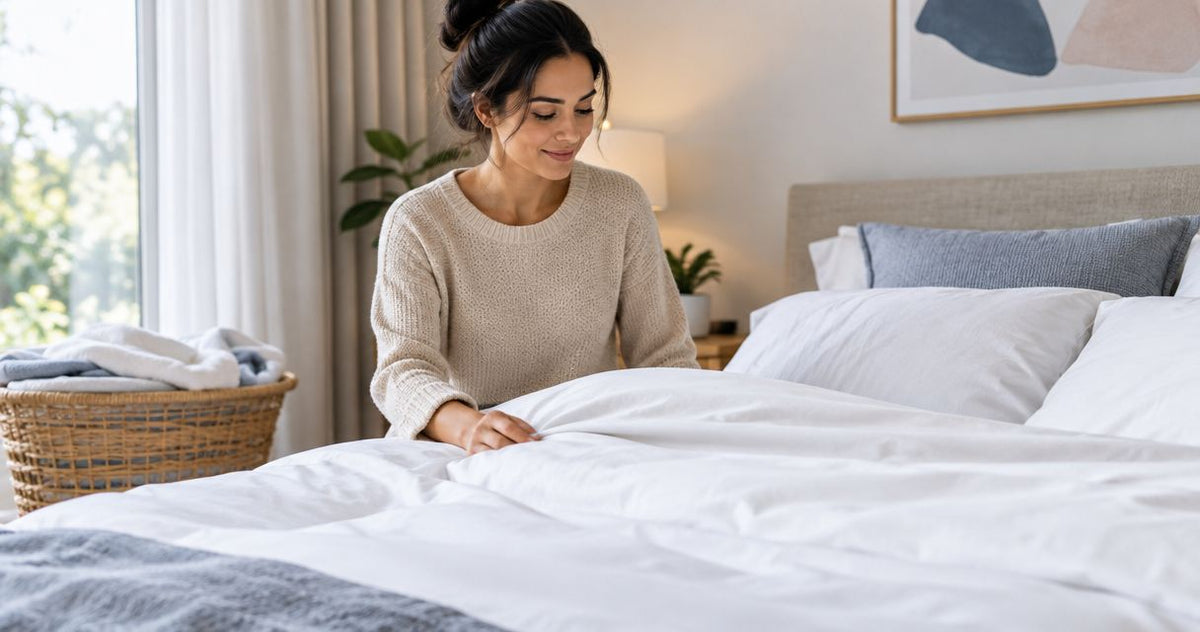
To keep luxury sheets soft after washing, follow the care label, measure detergent for your load and water conditions, rinse thoroughly, and avoid excessive dryer heat. Clean fibers—not added fragrance or a softener coating—are the goal. A gentle routine protects the fabric, but washing cannot reverse worn fibers or make every weave feel silky.
By Editorial Team
- How to keep luxury sheets soft after washing: follow the label, measure detergent, rinse thoroughly, and avoid overdrying.
- Aeva Vital bedding shoppers should prioritize fiber content and care instructions over luxury labels.
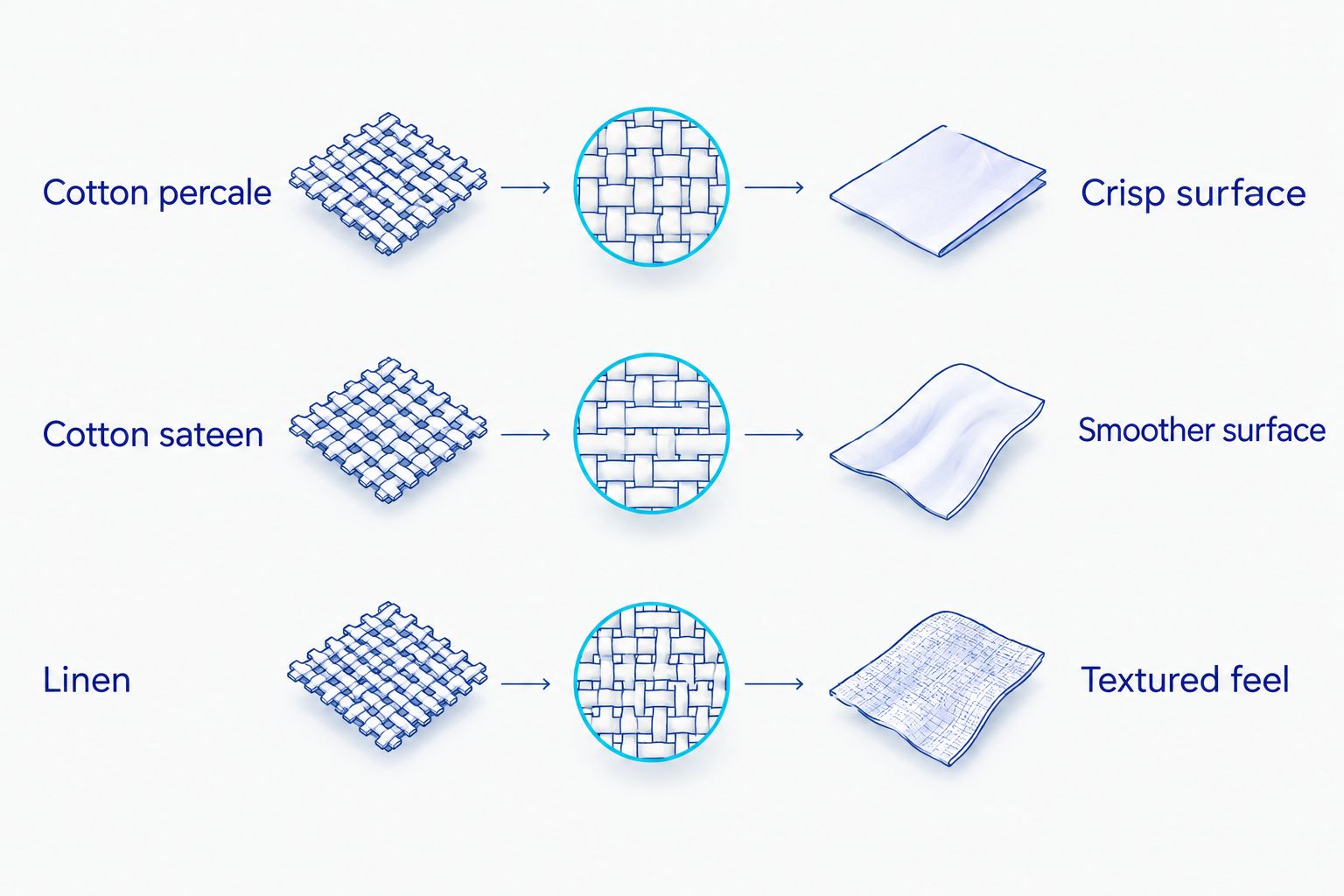
- Cotton percale stays crisp; cotton sateen feels smoother. Neither needs to feel coated to be clean.
- Treat stiffness, pilling, and dampness as different problems rather than adding fabric softener to every load.
How to keep luxury sheets soft after washing
Use this washing sequence for 2026, with the sewn-in care label taking priority over general advice. If you are unsure whether your fabric belongs in the washer, establish whether luxury bedding can be machine washed at home before choosing a cycle.
- Read the fiber content and care instructions. Check washing, bleaching, drying, and ironing directions separately. A machine-washable label does not automatically authorize tumble drying.
- Separate sheets from abrasive laundry. Wash them apart from towels, exposed zippers, hooks, and heavy garments. This reduces unnecessary rubbing and snagging.
- Leave room for movement. Load sheets loosely rather than compressing them into the drum. Follow your washer's capacity guidance, especially for bulky bedding.
- Measure detergent. Use the detergent label's directions for your machine, load size, soil level, and water hardness. Do not assume a full cap is the correct dose.
- Choose the permitted cycle and temperature. Match both to the fabric label. Use a suitable stain treatment when needed instead of increasing heat indiscriminately.
- Dry without prolonged heat exposure. If tumble drying is allowed, use the label-approved setting, untangle bundled sheets, and remove them when dry. Let any damp seams finish drying before folding.
Change one part of your routine at a time when troubleshooting. Otherwise, you cannot tell whether detergent dose, loading, or drying caused the improvement.
Why this matters
Softness comes from the fabric's construction and its condition after laundering. Residual detergent, mineral deposits, surface abrasion, and excessive drying can change how sheets feel, even when the original material is good quality.
Your 2026 sheet-care routine should separate cleanliness, softness, and disinfection. A soft-feeling sheet is not proof of adequate cleaning, and a hotter wash is not automatically the correct treatment for every textile. Follow applicable hygiene instructions when illness or contamination requires special laundering.
Match the washing routine to the fabric
The word luxury does not identify a fiber or a washing method. Cotton, linen, silk, and regenerated cellulose fabrics have different handling needs; blends add another reason to check the label.
Cotton percale and cotton sateen are different weaves, not interchangeable softness promises. Percale typically feels crisp, while sateen has a smoother surface. Best for your bed means the texture you prefer and the care routine you can maintain.
| Fabric or weave | Best for | What supports a pleasant feel | Limitation to recognize |
|---|---|---|---|
| Cotton percale | Sleepers who prefer a crisp surface | Thorough rinsing and label-approved drying | Crispness is normal; it will not feel like sateen |
| Cotton sateen | Sleepers who prefer a smoother surface | Gentle handling and separation from snagging items | A smooth surface still needs protection from abrasion |
| Linen | Sleepers who like a textured, relaxed feel | Room to move during washing and careful drying | Natural texture and creasing do not disappear with softener |
| Silk | Sleepers who prefer a smooth, lightweight fabric | Silk-compatible detergent and label-specific handling | Some pieces require hand washing or professional cleaning |
| Lyocell or viscose | Sleepers who prefer a fluid drape | The exact garment label's washing and drying instructions | A shared fiber category does not guarantee identical care requirements |
For linen, do not treat visible creases as a washing failure. For silk and regenerated cellulose fabrics, do not transfer cotton settings to the load without checking instructions.
Why sheet softness varies after washing
Check these factors before buying another laundry additive:
- Detergent dose: More detergent requires adequate dilution and rinsing. Excess can leave residue rather than improve cleaning.
- Water hardness: Calcium and magnesium in hard water affect laundering and can contribute to deposits. Check your local water report or test the water instead of diagnosing hardness by feel alone.
- Load size: Tightly packed sheets have less room to move through wash and rinse water. Bundled fabric also dries unevenly.
- Drying method: Line drying and tumble drying produce different surface feels. A stiff line-dried sheet is not automatically damaged.
- Fabric construction: Fiber, yarn, weave, and finishing influence texture. Thread count alone does not describe all of these properties.
- Surface wear: Pills, snags, and thinning are physical changes. A rinse can remove residue, but it cannot rebuild a damaged fabric surface.
This distinction matters: a coated sheet needs a different correction from a worn sheet. Adding softener to both hides the diagnosis rather than solving it.
Choose detergent by compatibility, not fragrance
Use a detergent intended for your washing machine and permitted by the sheet manufacturer. High-efficiency washers require compatible detergent; delicate fibers can require a different formulation from everyday cotton laundry.
For a 2026 laundry reset, start with the label-directed dose rather than an arbitrary spoonful or capful. Concentrations differ between detergents, so a universal volume is not a reliable instruction. Hard water and heavily soiled loads also change the appropriate dose.
Avoid pouring concentrated detergent directly onto sheets unless the product instructions explicitly allow it. Use the washer's dispenser as directed so the product enters the wash correctly.
An extra rinse is a troubleshooting option when residue remains. It is not a substitute for correcting a consistently excessive detergent dose, and it uses additional water. Clean the dispenser and maintain the washer according to its manual if buildup is visible.
Do luxury sheets need fabric softener?
Luxury sheets do not automatically need fabric softener. A rinse-added softener changes the fabric's surface feel by depositing conditioning ingredients; it does not repair fibers or remove mineral deposits.
The benefit is a smoother feel and, depending on the product and fabric, reduced static. The trade-off is an added coating that can affect absorbency or conflict with the textile manufacturer's instructions. Check the sheet label before using liquid softener or dryer sheets.
If your sheets have developed a waxy feel, stop adding conditioning products while you assess the problem. Launder according to the care label with a correctly measured detergent dose and adequate rinsing. Do not assume an aggressive stripping treatment is safe for the fabric.
Is vinegar a safe way to soften luxury sheets?
Vinegar is not a universal sheet-care treatment. Follow both the textile manufacturer's directions and the washer manufacturer's guidance before adding acidic products.
Never mix vinegar with chlorine bleach. Acids mixed with chlorine bleach can release dangerous chlorine gas. Avoid improvised combinations of cleaning agents, including mixtures promoted as natural laundry fixes.
Dry sheets without making them stiff or tangled
Drying deserves as much attention as washing. A label-approved wash can still end with rough-feeling sheets if the fabric remains bundled in prolonged heat.
Shake sheets open before transferring them to the dryer. If a fitted sheet wraps around other pieces, pause the cycle and separate them. Drying the outside of a bundle while the center stays damp does not produce an evenly finished load.
Use the drying setting permitted by the label, and remove sheets once dry rather than repeatedly restarting a timed cycle. Check elastic channels, hems, and folded corners before storing. The broad center panel is not the only area that holds moisture.
For line drying, spread the fabric so air can reach it and avoid tightly overlapping folds. A brief tumble can loosen a crisp line-dried feel only when the care label permits tumble drying. Do not use heat to override a line-dry-only instruction.
What changes when sheets dry slowly indoors?
In humid weather, the main problem is removing moisture from the whole sheet—not adding a stronger fragrance. For cotton, washing and drying cotton sheets requires attention to airflow and spacing when indoor conditions slow evaporation.
Spread sheets over a suitable drying rack without bunching them into thick folds. Improve ventilation when conditions allow, or use appropriate humidity control. Keep wet fabric away from surfaces that transfer dirt or restrict airflow.
Do not fold sheets simply because the exposed surface feels dry. Check hems and corners, then store them only after they have dried throughout. Fragrance is not a substitute for correcting persistent dampness or investigating a musty smell.
Diagnose rough sheets before changing everything
Use the feel and appearance of the fabric to narrow down the next action. These checks are troubleshooting steps, not proof of a single cause.
| What you notice | What to check | First practical action | What the action cannot fix |
|---|---|---|---|
| Slippery or coated feel | Detergent dose and conditioning additives | Correct the dose and rinse as permitted | Existing fiber damage |
| Stiffness after line drying | Drying method and fabric type | Shake out the sheets; tumble briefly only if allowed | A naturally crisp weave |
| Uneven dampness | Tangling and overloaded drying | Separate bundled sheets and finish drying | Poorly chosen care settings |
| Small surface balls | Abrasion and fabric wear | Separate sheets from rough laundry | Already formed pills |
| Persistent musty smell | Incomplete drying and washer cleanliness | Address moisture and maintain the washer | Every possible source of odor |
Do not escalate immediately to hot soaking, bleach, or repeated heavy-duty cycles. First establish whether the problem is removable residue, drying technique, or structural wear. Stop using a treatment that causes fading, weakening, or a change the care label warns against.
What to verify before buying Aeva Vital bedding
Aeva Vital offers premium bedding and hybrid mattresses, but a mattress specification does not establish how a separate sheet set should be washed. Check the bedding item's own fiber label and care instructions rather than transferring claims between products.
For Aeva Vital bedding shoppers, the best choice is a fabric whose texture and care requirements fit everyday use. Before choosing, confirm the material, weave where stated, dimensions, mattress-depth compatibility, and permitted drying method.
Use this 2026 buying checklist to distinguish useful specifications from incomplete promises:
- Fiber content: Identifies the material, but does not fully describe its softness or durability.
- Weave: Helps explain surface texture, but does not replace care instructions.
- Dimensions: Help establish fit, but do not prove the sheet will resist shrinkage under every wash condition.
- Care instructions: Establish permitted treatment, but do not guarantee that every stain or worn area can be restored.
A sheet that requires a routine you cannot follow is a poor fit, regardless of its luxury positioning.
FAQ
How do I keep luxury sheets soft after washing?
Follow the care label, measure detergent correctly, rinse thoroughly, and avoid overdrying. Separate sheets from abrasive items and leave enough room for washing and drying.
Why do my expensive sheets feel rough after washing?
Roughness can come from residue, mineral deposits, drying technique, or surface wear. Check whether the fabric feels coated, crisp, or visibly pilled before choosing a correction.
Should I wash luxury sheets in hot or cold water?
Use the temperature permitted by the sheet's care label and appropriate for the cleaning task. Do not use hotter water solely to chase softness.
Can I use fabric softener on luxury cotton sheets?
Use fabric softener only if the sheet manufacturer's instructions permit it. It adds conditioning ingredients rather than repairing fibers, and it can affect absorbency.
Will an extra rinse make my sheets softer?
An extra rinse can help when residual detergent is contributing to stiffness. Correct the detergent dose as well, rather than relying on extra rinsing every time.
Can I put luxury sheets in the dryer?
Tumble dry luxury sheets only when their care label permits it. Use the specified setting, separate tangled pieces, and check seams before folding.
Does high thread count guarantee softer sheets?
High thread count does not guarantee softer sheets. Fiber, yarn, weave, finishing, and laundering also influence the fabric's feel.
Can washing restore sheets that have become pilled?
Washing cannot rebuild fibers or reverse pilling. Reduce further abrasion by separating sheets from rough laundry and following their care instructions.
Related guides
- Is high-thread-count luxury bedding worth it?
- How long do luxury sheet sets typically last?
- Luxury sheet sets for hot sleepers
One last thing
For your next wash in 2026, change the process before adding another product. Start by measuring detergent and checking for bundled fabric during drying; then compare the result with the previous load. Naturally crisp percale does not need to become silky to be well cared for.