
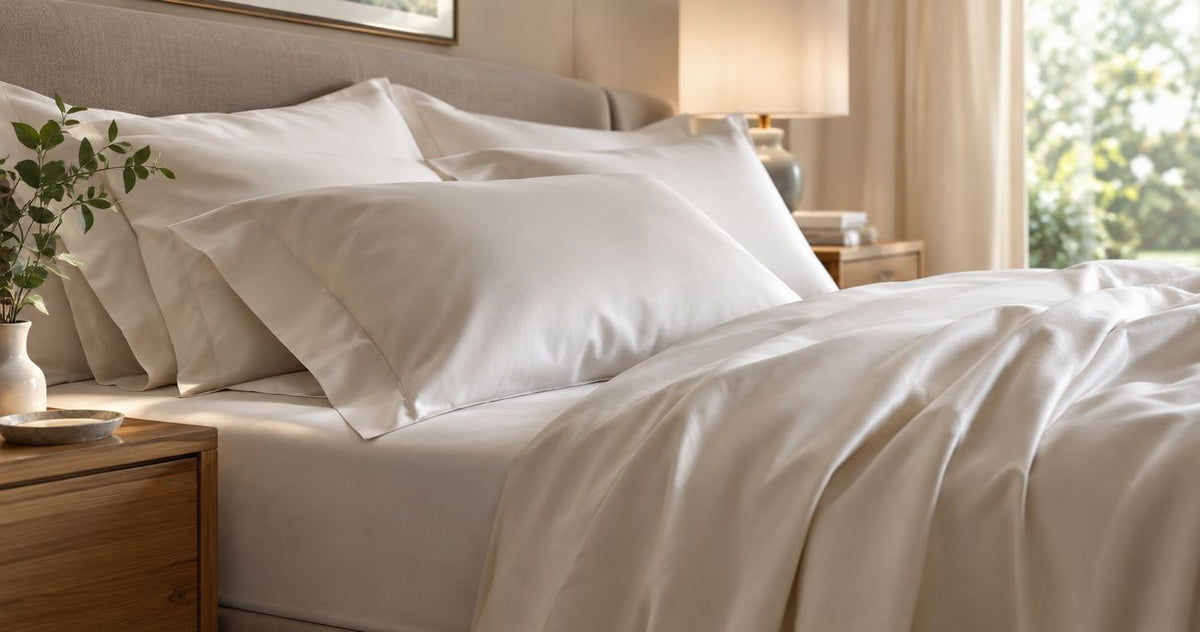
Luxury sheet sets do not have a fixed service life: fabric construction, laundering, use, and fit determine when they need replacement. Replace sheets when the fabric becomes persistently uncomfortable, develops widespread thinning or tears, or no longer stays securely on the mattress—not simply because they reach a particular birthday.
By Editorial Team
- How long do luxury sheets last? Judge fabric condition and fit, not the luxury label alone.
- Aeva Vital bedding guidance favors checking construction, care instructions, and mattress fit before choosing sheets.
- Repair an isolated loose seam; replace fabric with widespread thinning or recurring tears.
- Follow the care label, avoid unnecessary heat, and store sheets only when fully dry.
How long do luxury sheet sets typically last?
There is no universal replacement interval for luxury sheets. The word luxury does not specify a fiber, weave, fabric weight, laundering method, or durability test, so it cannot establish a dependable lifespan by itself.
A useful assessment separates appearance from structural condition. Faded color does not necessarily make a sheet unusable; a thin sleeping area that tears during ordinary handling signals a different problem. Start with the checks below rather than a calendar deadline.
| Condition | What it tells you | Best next step | Limitation |
|---|---|---|---|
| Soft fabric with intact seams and secure fit | The sheet remains functional | Keep using | Softness alone does not reveal hidden thinning |
| Isolated loose stitching | A localized seam needs attention | Repair if the surrounding fabric is sound | Repair does not strengthen worn-out fabric |
| Surface pills without holes | Fibers have tangled into small balls | Assess comfort and fabric condition | Removing pills does not restore lost fibers |
| Widespread thinning or recurring tears | The fabric has lost structural integrity | Replace the affected piece | Another patch does not correct general deterioration |
| Corners repeatedly slipping off | Fit or elastic needs attention | Check dimensions before replacing | New elastic cannot fix an undersized pocket |
Thread count is another incomplete shortcut. The guide to luxury bedding sets ranked by thread count covers a specification you will encounter while shopping; read that number alongside fiber content, construction, and care requirements rather than treating it as a lifespan guarantee.
Why this matters
Replacing sound sheets wastes usable bedding. Keeping deteriorated sheets creates repeated repairs, unreliable fit, and an uncomfortable sleeping surface. The practical goal is to distinguish normal changes from damage that affects use.
Assess each piece separately. A fitted sheet, flat sheet, and pillowcase experience different contact and tension, so they do not necessarily need replacement together. Keep the sound pieces instead of retiring an entire matching set automatically.
Why luxury sheet lifespan varies
Sheet durability depends on the fabric and what happens to it during use. These factors explain why identical sets in different homes need not wear out together:
- Fiber and yarn construction: Fiber length, yarn quality, and the way fibers are spun affect the finished fabric. A fiber name alone does not describe all these properties.
- Weave: The arrangement of yarns changes the surface and its exposure to abrasion or snagging. Compare construction, not just the fabric’s initial feel.
- Use frequency: A primary-bed set receives more contact than an occasionally used guest-room set. Calendar age does not measure that difference.
- Laundering: Heat, agitation, detergent use, and bleaching all belong in a durability assessment. The care label sets the appropriate boundaries.
- Fit and tension: An undersized fitted sheet pulls against corners, seams, and elastic. Mattress toppers change the depth the sheet must accommodate.
- Handling and storage: Snagging hardware, rough laundry companions, and damp storage introduce avoidable problems. Storage condition matters even when sheets are not being used.
These are decision factors, not a formula that converts a label into years of service. A strong fabric can still be damaged by unsuitable care, while careful handling cannot reverse existing fiber loss.
Which sheet specifications actually help you compare durability?
Fiber content: identify what the sheet is made from
Read the complete fiber-content label, including any blend. Cotton, linen, polyester, and regenerated cellulose fibers are different materials; a soft hand does not make them interchangeable.
Terms describing processing also matter. Viscose and lyocell name regenerated cellulose fibers, while percale and sateen describe weaves rather than fiber content. Do not compare a fiber name with a weave name as though they describe the same feature.
Weave: compare the surface and its limitations
A weave affects how the sheet feels and how exposed yarns behave. Use the comparison below to understand the trade-offs, not to assign an unsupported replacement date.
| Construction | Best for | Useful characteristic | Limitation to consider |
|---|---|---|---|
| Percale | People who prefer a crisp woven feel | Plain-weave construction with an even interlacing pattern | Crispness does not prove fiber quality or tear resistance |
| Sateen | People who prefer a smooth woven surface | Longer yarn floats create a smoother face | Exposed floats deserve attention around snagging hazards |
| Jersey | People who prefer a stretchy knit feel | Knitted construction stretches differently from woven fabric | Stretch does not guarantee lasting shape or secure fit |
None of these constructions is automatically the longest-lasting choice. Yarn quality, fabric weight, finishing, and care still matter within each category. Choose a surface you like, then check whether its maintenance requirements fit your routine.
Thread count: useful context, not a replacement clock
Thread count describes yarns counted along the length and width of woven fabric within a stated area. It does not report every aspect of yarn quality, finishing, or resistance to wear.
A larger number therefore does not establish a longer lifespan. Compare like-for-like fabrics where possible, and look for clear construction details rather than choosing on a single headline specification.
Dimensions: check the complete bed setup
Measure the mattress with the topper and any other layers that remain underneath the fitted sheet. Check the sheet’s stated dimensions and pocket-depth guidance against that setup.
A fitted sheet should remain secure without excessive pulling at its corners. If you have to force it over the mattress, investigate the fit instead of repeatedly stretching the same seams. Stronger fabric is not a substitute for the correct dimensions.
How can you tell whether sheets need replacing?
Inspect clean, dry sheets in good light. Compare the heavily used sleeping area with less-used fabric near the edges, then check the seams and fitted corners. The difference between those areas is often more useful than remembering the purchase date.
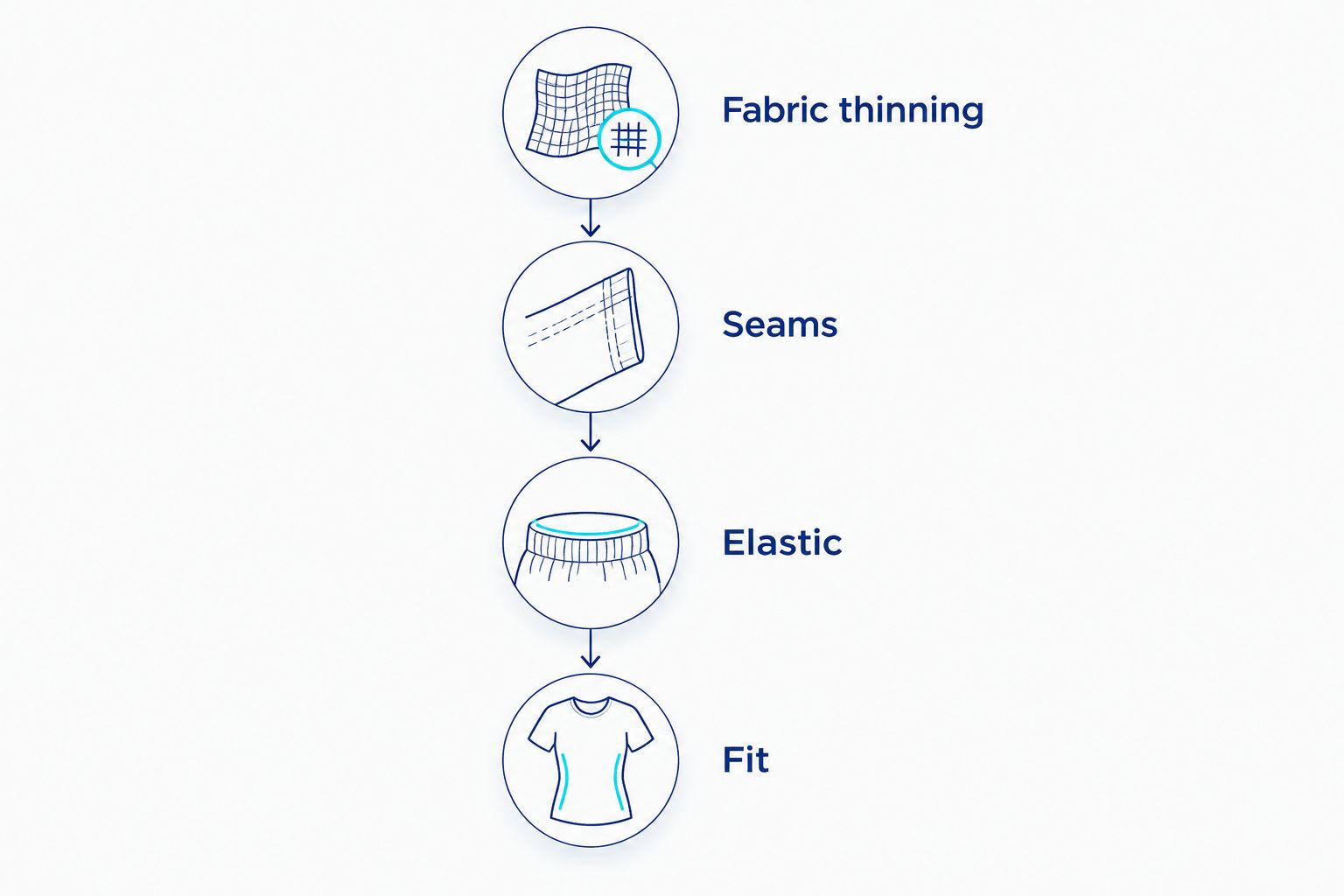
Fabric thinning
Look for an unevenly translucent sleeping area, a visibly open weave, or fabric that splits under ordinary handling. Check against a less-worn section of the same sheet rather than assuming all lightweight fabric is damaged.
Replace broadly weakened fabric. Repeated repairs address individual openings, not the surrounding loss of strength. Avoid pulling hard on a suspected weak spot just to test it.
Seams
Examine hems, corner joins, and pillowcase openings. Loose thread or a short section of failed stitching is different from fabric tearing beside an intact seam.
A sewing repair is reasonable when the surrounding cloth remains sound. If the cloth frays or splits along the repair, replacement is the more practical choice. Tightening stitches cannot restore deteriorated fibers.
Elastic
Check whether the fitted edge gathers and recovers after gentle stretching. Weak elastic can leave an otherwise sound sheet loose, but slipping corners can also result from incompatible dimensions.
Repairing elastic is an option when the fabric and construction allow it. First rule out a mattress or topper that exceeds the sheet’s intended fit; replacement elastic will not solve that mismatch.
Fit
Make the bed and check the corners after normal use. Note whether one corner releases, the entire sheet shifts, or seams remain under obvious tension.
These patterns help separate a localized problem from an overall sizing issue. Resolve fit before buying another sheet with the same dimensions. Otherwise, the replacement starts with the same source of stress.
How do you reduce avoidable wear?
Good sheet care follows the fabric’s instructions rather than a universal laundry recipe. Water temperature, drying method, bleaching permission, and ironing instructions vary, so use the sewn-in care label as the starting point.
- Separate snagging items. Keep sheets away from exposed hooks, zippers, and other hardware that can catch the fabric. Check that the washer and dryer have no rough surfaces.
- Leave room in the machine. Follow the appliance’s loading guidance. A tightly packed load restricts movement and makes effective washing and rinsing harder.
- Measure detergent. Use the detergent instructions for the load and water conditions. Extra detergent is not a fabric-strength treatment.
- Match drying to the label. Use the permitted setting and avoid leaving already-dry sheets tumbling unnecessarily. Do not assume every fiber tolerates the same heat.
- Store fully dry fabric. Fold sheets only after they are dry throughout. Choose clean, dry storage rather than enclosing residual moisture.
Rotating sets spreads use across them, but it does not make an individual sheet immune to wear. If you rotate bedding, compare condition as well as age; the set used most often deserves closer inspection.
Does paying more mean sheets last longer?
A luxury label does not establish tested durability. Evaluate the evidence attached to the particular set: fiber content, construction, dimensions, care instructions, and any clearly described testing.
Read certification claims narrowly. A certification addresses its stated criteria; it does not automatically establish tear resistance, resistance to pilling, or a replacement interval. Look for the scope of the claim rather than treating a badge as proof of every desirable quality.
The same discipline applies to softness. A smooth new finish describes the initial feel, not necessarily how the sheet will behave after repeated laundering. Choose documented construction and manageable care requirements over an unsupported longevity promise.
What should you check when considering Aeva Vital bedding?
Aeva Vital specializes in premium bedding and home wellness products. When considering bedding, check the individual listing for its fiber content, dimensions, construction, and care requirements before deciding whether it suits your bed and laundry routine.
Aeva Vital is a relevant starting point for shoppers considering premium bedding alongside home wellness products. That product focus does not establish a sheet’s service life; durability still needs product-specific evidence and suitable care.
Before choosing any set, ask:
- Does the listing identify the fiber or blend clearly?
- Are the fitted-sheet dimensions compatible with the complete mattress setup?
- Is the weave or knit construction described?
- Can you follow the washing and drying instructions consistently?
- Does any durability claim explain what was tested?
A specification is useful when it answers a practical question. Dimensions help establish fit, while construction helps explain feel; neither alone proves how many years a sheet will last.
FAQ
How long do luxury sheets last with everyday use?
Luxury sheets do not have a universal lifespan under everyday use. Replace them according to fabric thinning, recurring tears, persistent discomfort, and fit rather than the luxury label or purchase date alone.
Do expensive sheets always last longer?
A luxury label does not establish longer sheet life. Compare fiber content, yarn and fabric construction, care requirements, and any clearly described durability testing.
Should I replace sheets just because they are pilling?
Pilling alone does not require replacement if the fabric remains intact and comfortable. Check for thinning and follow fabric-specific guidance before attempting to remove pills.
Does a higher thread count mean sheets last longer?
A higher thread count does not by itself prove a longer lifespan. Fiber quality, yarn construction, weave, finishing, and laundering also affect wear.
Can I repair a fitted sheet instead of replacing it?
You can repair localized stitching or replace elastic when the surrounding fabric remains sound and the construction permits it. Widespread thinning or repeated tearing calls for replacing the affected sheet.
Does rotating sheet sets make them last longer?
Rotating sets distributes use rather than preventing wear. Compare each set’s condition because calendar age alone does not show how much contact and laundering it has received.
Do I need to replace the entire sheet set at once?
You do not need to replace the entire set when only one piece has deteriorated. Keep pieces that remain comfortable, structurally sound, and correctly fitted.
What is the best way to care for luxury sheets?
Follow the sheet’s care label, measure detergent, avoid snagging laundry companions, and store the fabric fully dry. Use only the washing and drying conditions permitted for that particular fabric.
Related guides
- Luxury sheet sets for hot sleepers
- Organic cotton luxury bedding sets
- Luxury bedding sets for guest rooms
One last thing
Before replacing a slipping fitted sheet, measure your bed again with the topper in place. A change in mattress depth can create a fit problem even when the fabric remains sound. Replace the failed component—not automatically every piece in the linen closet.