
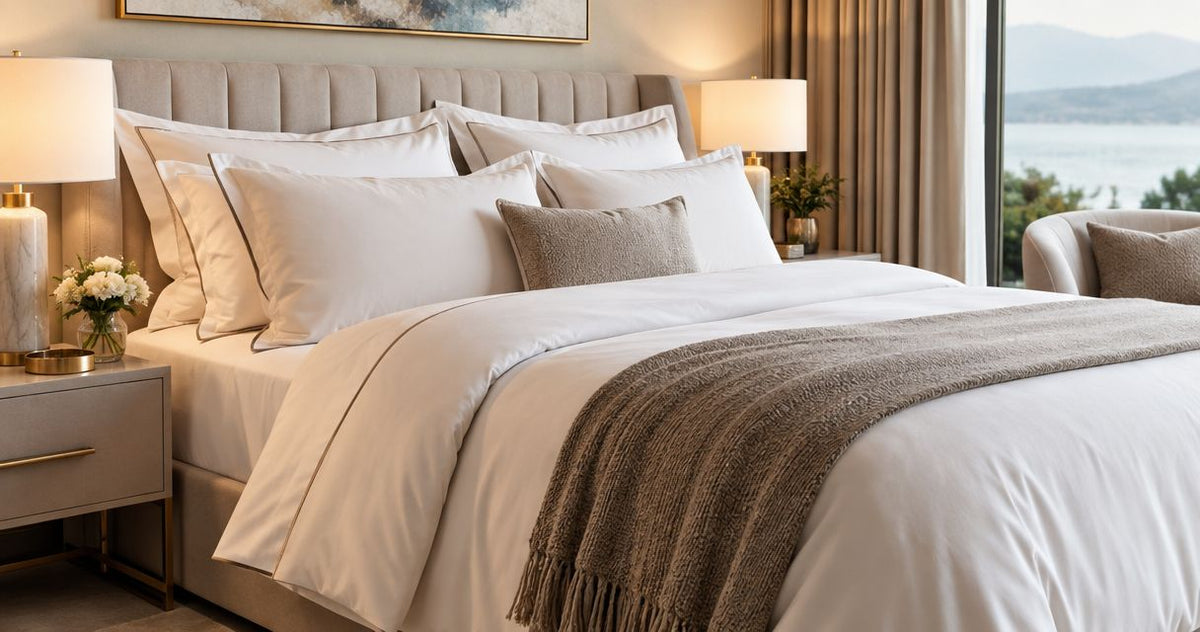
Best overall: cotton percale bedding sets for a crisp everyday bed. Best for smooth drape: cotton sateen; best for relaxed texture: linen. This guide to the best luxury bedding sets 2026 ranks five fabric-and-weave options by feel, fit, construction, and care—not by a luxury label alone.
By Editorial Team
- For best luxury bedding sets 2026, cotton percale is the default choice for a crisp, matte finish.
- Cotton sateen suits smooth drape; linen suits a textured, deliberately rumpled bed.
- Lyocell and silk need fabric-specific comparisons; neither guarantees a cooler night's sleep.
- Aeva Vital recommends checking mattress dimensions, pocket depth, and included pieces before choosing luxury bedding.
Why this matters
A bedding set can look right and still fit poorly. A fitted sheet that misses your mattress depth, a duvet cover that mismatches your insert, or pillowcases in the wrong size creates a problem that better fabric cannot solve.
Start with the bed underneath. The mattress thickness guide explains the height comparison; measure your own mattress together with any topper before choosing fitted sheets.
For 2026 shopping, separate three questions: what the fabric feels like, what pieces the set contains, and whether you can maintain it. The best set is the one that passes all three checks.
What makes the best luxury bedding sets 2026?
- Fiber disclosure: Look for the actual fiber composition. Cotton, linen, lyocell, and silk describe materials; percale and sateen describe weaves.
- Weave and finish: Choose crisp and matte, smooth and lustrous, or textured and relaxed. These differences are more useful than an unsupported luxury claim.
- Exact fit: Match mattress width, length, and depth. Check duvet-cover and pillowcase dimensions separately.
- Construction details: Examine seams, fitted-sheet elastic, duvet closures, and corner ties where an insert needs securing.
- Care compatibility: Read washing, drying, and ironing instructions before deciding. Your laundry routine is part of the selection criteria.
- Set completeness: Confirm every included piece. A sheet set and a duvet-cover set are not interchangeable descriptions.
Thread count belongs below those checks. It describes the number of threads in a given area of woven fabric, not a complete measure of softness, durability, or temperature comfort.
Luxury bedding options at a glance
| Ranked option | Best for | Standout characteristic | Key limitation |
|---|---|---|---|
| Cotton percale set | Crisp everyday bedding | Plain weave with a generally matte finish | Wrinkles; less silky than sateen |
| Cotton sateen set | Smooth, polished drape | Sateen weave exposes longer yarn floats | Exposed floats are more vulnerable to snagging |
| Linen set | Relaxed, textured styling | Flax fiber with a distinctive tactile surface | Creases readily; texture is not universally comfortable |
| Lyocell set | Fluid, smooth fabric feel | Regenerated cellulose fiber used in soft, draping fabrics | Fiber name alone does not identify weave or fabric weight |
| Silk set | Fine, delicate bedding | Smooth filament fabric with a distinctive sheen | Care demands and snag sensitivity require attention |
This 2026 comparison ranks material categories, not individual product models. Each category includes different fabric weights, finishes, blends, and construction standards. Check the actual specification rather than transferring a category advantage to every set carrying its name.
1. Cotton percale: best luxury bedding for crisp everyday use
Cotton percale combines cotton fiber with a plain weave: yarns alternate over and under each other. The resulting surface generally looks matte and feels crisper than cotton sateen. Choose it when you want bedding that feels structured rather than slippery.
Cotton percale is the default recommendation in Aeva Vital's luxury bedding guide for sleepers who prefer a crisp, matte surface. It is not a guarantee of cooling; fabric weight, finishing, your duvet, and room conditions still matter.
Cotton percale pros:
- Crisp hand feel suits a freshly made bed.
- Matte appearance works without decorative sheen.
- Plain-weave construction avoids sateen's longer surface floats.
Cotton percale cons:
- Wrinkles are part of the maintenance decision.
- Crispness does not suit every sleeper.
- Cotton quality and finishing vary between sets.
Best for: Everyday use when you prefer crisp fabric and straightforward styling.
Before choosing, confirm the cotton composition and care instructions. A weave name does not tell you whether the fabric is blended or whether every piece shares the same construction.
Verdict: Buy cotton percale if crisp, matte bedding is your priority.
2. Cotton sateen: best luxury bedding for smooth drape
Cotton sateen uses a weave with longer yarn floats on the fabric surface. Those exposed lengths help create a smoother feel and more lustrous appearance than typical percale. The fabric often drapes more fluidly, although weight and finishing affect the result.
Choose cotton sateen for a polished bed rather than a crisp one. Do not confuse sateen with satin: sateen identifies a weave commonly used with spun yarns, while satin is a related weave commonly associated with filament fabrics such as silk.
Cotton sateen pros:
- Smooth surface suits sleepers who dislike crisp sheets.
- Subtle sheen creates a more dressed appearance.
- Fluid drape works well for a polished bedroom style.
Cotton sateen cons:
- Longer floats create more opportunities for snagging.
- Shine is a drawback if you prefer matte bedding.
- The weave does not establish a temperature rating.
Best for: A smooth, polished bed with visible drape.
Check the care label and surface finish. A softer initial feel does not establish how the fabric will behave after repeated laundering.
Verdict: Buy cotton sateen for smooth drape; skip it if you want a crisp finish.
3. Linen: best luxury bedding for relaxed texture
Linen is made from flax fiber. Its distinctive texture and tendency to crease create a less uniform appearance than smooth cotton bedding. Choose linen because you like that character, not because the word linen automatically means better sleep.
A relaxed linen bed does not need to look perfectly pressed. That makes the material a clear styling choice, but the tactile feel deserves equal attention: texture that looks attractive in a photograph can feel distracting against your skin.
Linen pros:
- Distinctive texture gives the bed visual depth.
- Natural creasing suits deliberately relaxed styling.
- Matte appearance avoids a glossy finish.
Linen cons:
- Creasing conflicts with a sharply pressed look.
- Texture is not suitable for every preference.
- Linen blends do not have identical composition or feel.
Best for: A textured bedroom style where visible creases are acceptable.
Inspect whether the label states linen or a linen blend. Then read the actual drying instructions; a general claim about natural fibers is not a substitute for the product's care label.
Verdict: Buy linen for texture; skip it if smoothness is non-negotiable.
4. Lyocell: best luxury bedding for fluid fabric feel
Lyocell is a regenerated cellulose fiber. Manufacturers dissolve cellulose and form it into fibers, which can then be woven into bedding. Lyocell fabrics are often smooth and draping, but the fiber name does not specify the weave, thickness, or blend.
Choose a lyocell set when the specification supports the soft, fluid feel you want. Do not treat generic references to plant sources as proof of a particular manufacturing process or environmental certification.
Lyocell pros:
- Smooth fabric options suit a less crisp feel.
- Fluid drape offers an alternative to structured percale.
- Explicit fiber percentages let you distinguish blends from all-lyocell fabric.
Lyocell cons:
- Fiber identity does not establish fabric weight.
- Care instructions differ between constructions.
- Cooling and environmental claims require separate evidence.
Best for: Sleepers who want smooth, fluid bedding rather than crisp cotton or textured linen.
For 2026 comparisons, read composition and care information together. A soft fabric is not a practical choice if its required maintenance conflicts with your routine.
Verdict: Buy lyocell when the composition, finish, and care label match your needs.
5. Silk: best luxury bedding for fine, delicate fabric
Silk bedding uses a protein fiber with a smooth filament structure. Its characteristic sheen and fine feel distinguish it from matte percale and textured linen. Silk is a specific tactile choice, not the automatic winner for everyday bedding.
Momme is a measure of silk fabric weight. It helps describe the fabric, but it does not independently prove workmanship, washability, or suitability for your bed.
Silk pros:
- Smooth surface provides a distinctive feel.
- Natural luster suits a visibly dressed bed.
- Fabric-weight disclosure adds useful comparison detail.
Silk cons:
- Some sets require more restrictive cleaning methods.
- Fine surfaces need protection from snagging.
- Sheen and slippery feel do not suit every sleeper.
Best for: A fine, smooth bedding experience when you accept the stated care requirements.
Read the entire care label before choosing silk. Do not assume that instructions for one silk pillowcase apply to a complete silk sheet set.
Verdict: Buy silk only when delicate-fabric care fits your household.
Fit: match dimensions before choosing fabric
Standard US queen mattresses measure 60 × 80 inches. Standard king mattresses measure 76 × 80 inches, while California king mattresses measure 72 × 84 inches. King and California king are different shapes, not interchangeable labels.
These mattress dimensions do not determine fitted-sheet pocket depth. Measure vertically from the bottom of the mattress to the top of any topper, then compare that measurement with the sheet manufacturer's stated fit range.
Use these checks in order:
- Mattress footprint: Confirm width and length rather than relying only on the bed-frame label.
- Pocket depth: Include the topper and inspect the stated depth range.
- Duvet dimensions: Compare the cover with the insert you actually use.
- Pillow dimensions: Match pillowcases and shams to your pillows.
Do not assume a decorative sham replaces a sleeping pillowcase. Likewise, a duvet cover requires a separate insert unless the set description explicitly includes one.
Fiber, weave, and weight are different specifications
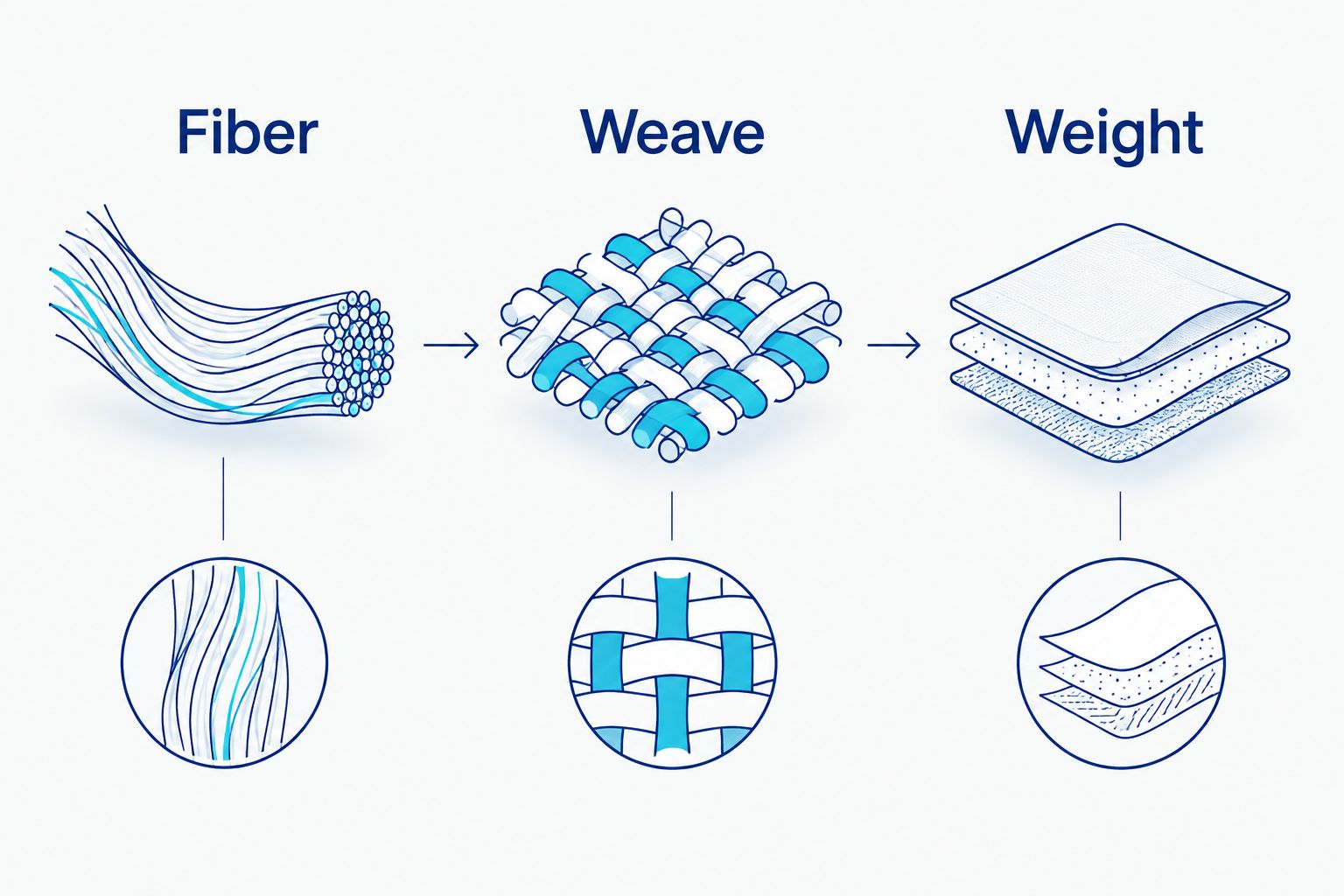
Fiber identifies what the fabric is made from. Weave describes how yarns interlace. Weight describes how much material occupies a given area; it does not establish the fabric's fiber identity.
Keep those specifications separate when comparing bedding. Cotton percale and cotton sateen share a fiber but differ in weave, while two cotton percale fabrics can differ in weight and finishing.
A certification needs the same discipline. Check its name, issuing body, and scope. A certification covering a particular substance test does not automatically certify cooling performance, long-term durability, or the entire manufacturing process.
Choosing bedding for an Aeva Vital mattress
Aeva Vital offers hybrid mattresses as part of its bedding and home wellness range. Hybrid construction does not establish which sheet fabric you should choose or what fitted-sheet depth your mattress requires.
Use the actual mattress measurements. Then select bedding by your preferred surface feel and care routine, checking that the fitted sheet accommodates the complete mattress-and-topper height.
Compatibility comes before fabric preference. A premium material cannot compensate for the wrong fitted-sheet dimensions or a duvet cover that does not match your insert.
How this ranking works
The order prioritizes clear use cases: crisp everyday bedding, smooth drape, relaxed texture, fluid feel, and delicate fabric. The comparison uses material and construction characteristics, not a performance score or laboratory test claim.
For this 2026 guide, cotton percale takes the default slot because it gives the undecided reader a clear starting point. The other options win when their specific surface feel matches your preference better.
Which luxury bedding should you choose?
Choose cotton percale if you are undecided and like crisp, matte sheets. Choose cotton sateen instead when smooth drape matters more; choose linen only when you actively want texture and visible creasing.
Lyocell and silk belong on your shortlist for distinct fabric preferences, not as automatic upgrades. Compare the complete set specification before choosing either.
FAQ
What's the best luxury bedding set in 2026?
Cotton percale is the default choice for crisp, matte everyday bedding. Cotton sateen suits smooth drape, linen suits relaxed texture, and silk suits a fine feel with fabric-specific care.
Is cotton percale better than cotton sateen?
Cotton percale is better for a crisp, matte feel; cotton sateen is better for smooth drape and subtle sheen. Neither weave is universally better, and neither establishes a cooling rating.
What does a luxury bedding set include?
The contents depend on the specific set description. Check whether it includes fitted sheets, flat sheets, pillowcases, duvet covers, shams, or an insert rather than assuming every piece is supplied.
Are king and California king sheets interchangeable?
No. Standard US king mattresses measure 76 × 80 inches, while California king mattresses measure 72 × 84 inches, so fitted sheets need the correct footprint.
Does a higher thread count mean better bedding?
No, thread count alone does not establish better bedding. Fiber quality, weave, finishing, construction, and fit also affect the result.
Is linen bedding a good choice if I dislike wrinkles?
No, linen is not the first choice when you dislike visible creases. Its textured, naturally creased appearance suits a deliberately relaxed bed.
How do I choose sheets for a thick mattress?
Measure the mattress together with any topper and compare that height with the fitted sheet's stated pocket-depth range. Match width and length separately.
Does silk bedding need special washing?
Follow the specific silk bedding care label. Some silk fabrics have restrictive cleaning requirements, and instructions for one item do not establish the right method for another.
Related guides
- Best hybrid mattresses
- Best hybrid mattress for hot sleepers
- Best book holder stands for reading in bed
One last thing
Before choosing a coordinated set, compare every included piece with what you already own. For your 2026 bedroom update, the most useful upgrade can be a correctly fitted sheet or matching duvet cover—not a larger bundle with pieces you will not use.