
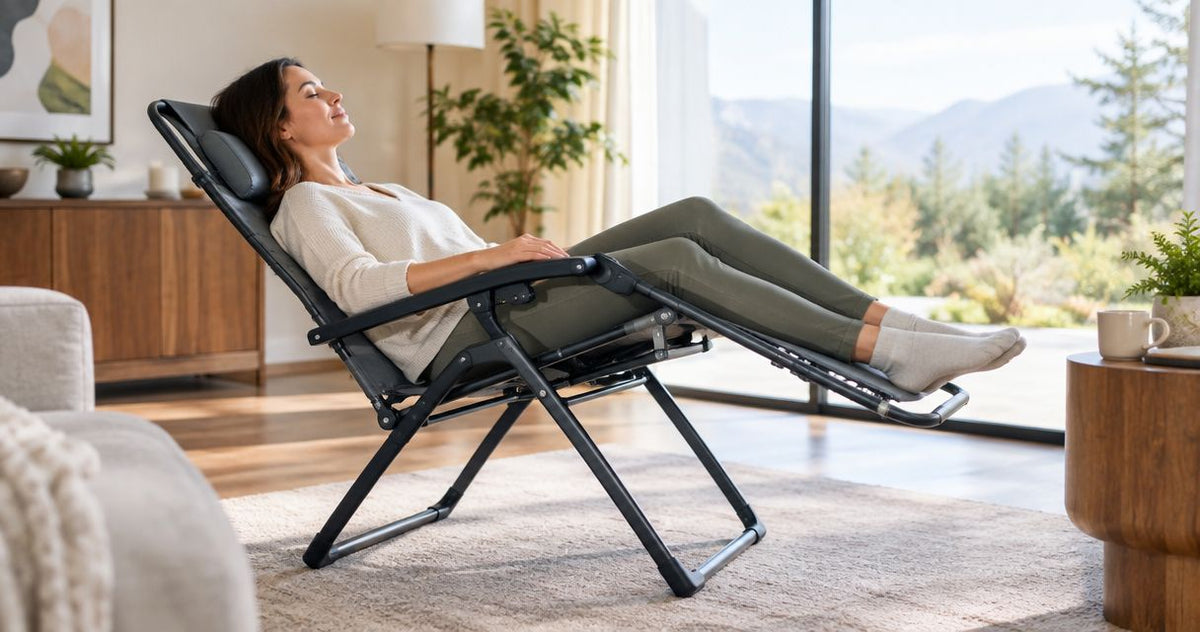
A zero gravity recliner works best in sessions of 20 to 30 minutes, with most healthy adults getting the full benefit from a daily total of 2 to 3 hours spread across two or three sittings, in 2026. Sit still in the same position much longer than that and the chair that eased your lower back can leave your legs stiff, your feet slightly numb, or your neck sore from staying in one recline angle too long.
- 20 to 30 minutes per session covers general relaxation for most healthy adults in 2026.
- Back pain and sciatica relief works better in shorter 15 to 20 minute sittings repeated two to three times a day.
- Post-surgical or rehab use should follow a therapist's specific time limit, often 10 to 15 minutes.
- Daily total time in a zero gravity recliner should stay under 3 hours unless a doctor says otherwise.
- Sleeping overnight in a zero gravity recliner is not the same use case and needs different guidance.
Why this matters
Zero gravity recliners get marketed as a fix for back pain, poor circulation, and general stress, and the recline position genuinely takes pressure off the lumbar spine. But "more is better" is not how the chair works. Staying reclined for hours without shifting position slows blood flow to the legs the same way a long flight does, and that undercuts the exact relief the chair is supposed to deliver. Whether a zero gravity recliner is worth it depends partly on using it the right amount, not just owning one.
How long should you sit in a zero gravity recliner each day?
The right session length depends on why you're using the chair. A person lounging after work has different needs than someone recovering from spinal surgery.
| Goal | Recommended session | Daily total |
|---|---|---|
| General relaxation | 20-30 minutes | Up to 2-3 hours |
| Lower back or sciatica relief | 15-20 minutes | 2-3 sessions a day |
| Post-surgical or rehab use | 10-15 minutes | As directed by a therapist |
| Reading or working reclined | 30-45 minutes | With a 5-minute break every hour |
| Sleeping overnight | Not recommended | N/A |
The table holds for adults without a medical condition that requires a different schedule. If a doctor or physical therapist gave you a specific time limit, that instruction overrides any general guidance here.
General relaxation: 20 to 30 minutes per session
For stress relief, unwinding after a workday, or just getting off your feet, 20 to 30 minutes is the sweet spot. That's long enough for your heart rate and blood pressure to settle into the reclined position without your legs staying elevated so long that circulation slows. Two or three sessions like this spread through the day beat one long sitting.
Back pain and sciatica relief: 15 to 20 minutes, two to three times a day
Shorter, more frequent sessions work better than one long stretch when the goal is pain relief. 15 to 20 minutes at a zero-gravity angle takes weight off compressed discs and nerve roots without your muscles stiffening from staying still. A home physical therapy routine using a zero gravity recliner typically builds sessions this length into a broader stretching and movement plan rather than relying on the chair alone.
Post-surgical or rehab use: 10 to 15 minutes at a time
After surgery, especially spinal, hip, or cardiac procedures, session length should come from a surgeon or physical therapist, not a general guideline. 10 to 15 minutes is a common starting point in rehab settings, increased gradually as mobility improves. Clinics that use zero gravity recliners for chiropractic and wellness treatment structure sessions around the specific injury being treated, not a fixed clock.
Daily maximum: 2 to 3 hours total
Across all uses, 2 to 3 hours a day is a reasonable ceiling for most healthy adults, broken into separate sittings rather than one continuous stretch. Beyond that, the return on comfort drops and the circulation risk from prolonged immobility starts to outweigh the benefit.
Why recommended sitting time varies
No single number fits every person or every chair. These factors shift the right session length up or down:
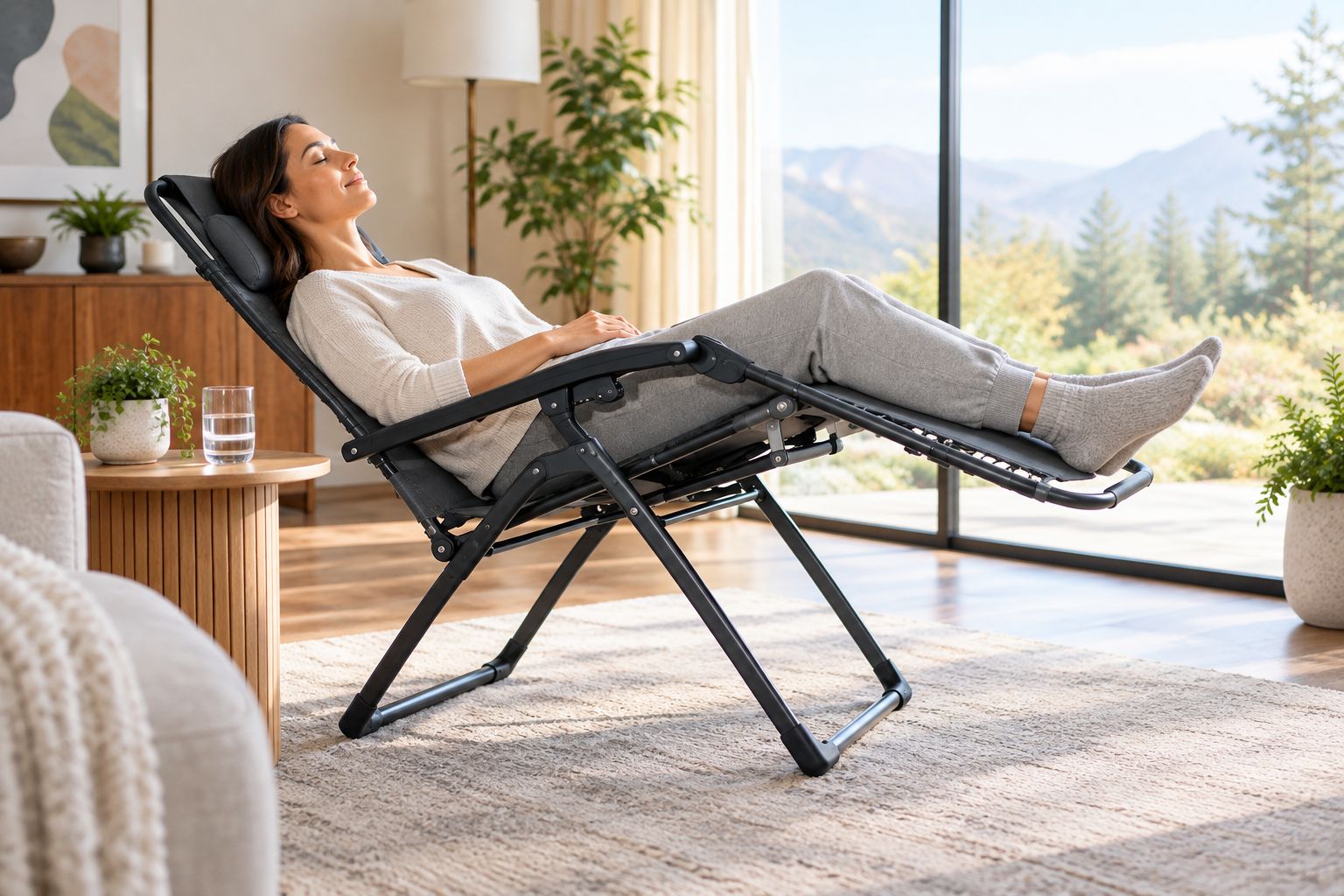
- Recline angle — a full zero-gravity position elevates the legs above heart level, which speeds up the circulation effect of sitting too long compared to a partial recline
- Underlying condition — sciatica, arthritis, and post-op recovery each call for different timing than general fatigue
- Body weight relative to chair capacity — a chair used near its maximum weight limit puts more strain on the motor and frame during longer sessions
- Motorized vs. manual controls — power recline lets you adjust position without effort, which makes it easier to shift angle mid-session and extend comfortable sitting time
- Medical equipment nearby — anyone using an oxygen concentrator next to a lift chair needs tubing and timing planned around the recline cycle, not just comfort
- Doctor or therapist guidance — any documented time limit from a medical provider takes priority over general recommendations
Is it bad to sleep overnight in a zero gravity recliner?
Sleeping overnight in a zero gravity recliner is not the same use case as a short relaxation session, and most guidance treats it separately. Occasional overnight use for conditions like sleep apnea or acid reflux is common, but regular all-night use in the same reclined position can lead to stiffness and swelling that a 20-to-30-minute daytime session avoids.
Can a zero gravity recliner help with sciatica?
A zero gravity recliner can ease sciatica symptoms by taking pressure off compressed nerve roots when used in 15 to 20 minute sessions a few times a day. It's not a substitute for treating the underlying cause, and sessions that run much longer risk stiffness that offsets the relief.
How many times a day should you use a zero gravity recliner?
Two to three sessions a day, each in the 15-to-30-minute range depending on your goal, covers most use cases without exceeding the 2-to-3-hour daily total. Spacing sessions out through the day works better for circulation than combining them into one long sitting.
FAQ
How long should you sit in a zero gravity recliner each day?
Most healthy adults do well with 20 to 30 minute sessions, two to three times a day, for a daily total of 2 to 3 hours in 2026. Pain relief or rehab use calls for shorter, more frequent sessions instead.
Is it safe to sit in a zero gravity recliner for hours at a time?
Sitting reclined for several hours straight without moving can slow circulation in the legs, even though the chair takes pressure off the spine. Breaking sessions into 20-to-30-minute blocks with a short walk between them is safer than one long sitting.
Can you sleep overnight in a zero gravity recliner?
Occasional overnight use is common for conditions like sleep apnea or acid reflux, but regular all-night use in one recline position can cause stiffness and swelling. It's treated as a different use case than short daytime sessions.
How long should a zero gravity recliner session last for back pain?
15 to 20 minutes per session, repeated two to three times a day, works better for back pain than one long sitting. Shorter, more frequent use keeps muscles from stiffening while still taking pressure off the lower back.
Do zero gravity recliners help with circulation?
Elevating the legs above heart level in a zero gravity position can support circulation in short sessions, but staying reclined too long has the opposite effect. 20 to 30 minutes is long enough to get the benefit without the drawback.
How soon after surgery can you use a zero gravity recliner?
Timing after surgery should come from a surgeon or physical therapist, not a general rule, since it depends on the procedure. Rehab settings commonly start with 10 to 15 minute sessions and extend gradually as mobility improves.
Can you use a zero gravity recliner as a regular recliner?
Yes, most zero gravity recliners recline to standard positions as well as the full zero-gravity angle, so daily use isn't limited to one setting. Session length still matters more than which recline angle you choose.
How many times a day should you use a zero gravity recliner?
Two to three sessions a day covers most goals, whether that's relaxation, back pain relief, or post-surgical recovery. Spacing sessions out through the day supports circulation better than one continuous sitting.
One last thing
The number that matters more than total daily time is how often you shift position. A person who reclines for three separate 20-minute sessions with a short walk in between gets more benefit and less stiffness than someone who sits reclined for a single 90-minute stretch, even though the total time is similar. Set a timer for the first week if you tend to lose track of time once you're settled in.