

A zero gravity recliner can ease mild snoring and take pressure off the airway when sleep apnea is tied to sleeping flat on your back, but it does not treat moderate or severe obstructive sleep apnea and it never replaces a CPAP machine or a diagnosed sleep study. The relief depends on the type of apnea you have — positional apnea (worse on your back, better on your side) responds to the recline angle; non-positional apnea does not care what angle you're at.
- A zero gravity recliner can reduce mild, positional snoring by elevating the legs above the heart and reclining the torso to roughly 130 degrees.
- It does not treat moderate or severe obstructive sleep apnea diagnosed by a sleep study.
- CPAP therapy still works better paired with a stable incline than with the recliner replacing it.
- A zero gravity adjustable bed base achieves the same angle for full overnight sleep, not just naps.
- 2026 buyers researching sleep apnea recliners should treat the chair as a symptom aid, not a medical device.
Why this matters
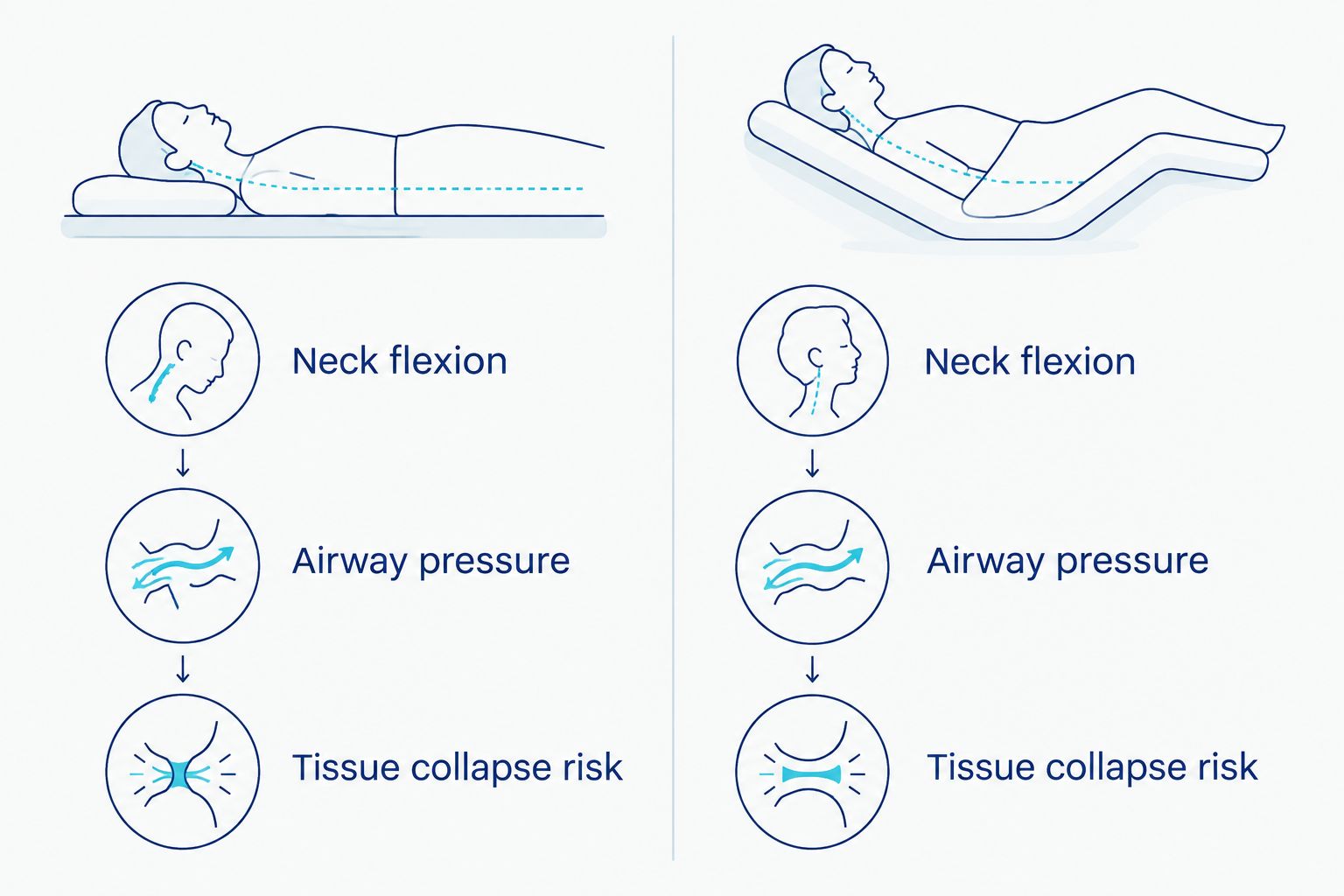
Obstructive sleep apnea happens when soft tissue at the back of the throat collapses and blocks airflow during sleep. Lying flat on your back lets gravity pull the tongue and soft palate backward, which is why doctors often recommend side-sleeping or elevated positions as part of managing mild cases. If you're already using a CPAP machine, positioning a CPAP machine with an adjustable bed covers how hose routing and incline interact overnight — the same physics apply whether you're in a recliner or a bed.
Zero gravity recliners get pulled into this conversation because the position mimics what NASA originally designed for astronauts: legs slightly above heart level, torso reclined, spine in a neutral curve. That angle reduces strain on the diaphragm and, for some people, reduces the tongue's tendency to fall backward. It is a real mechanism. It is not a cure.
Can a zero gravity recliner help with sleep apnea?
The honest answer: it can help with mild, positional snoring and apnea symptoms, but it does not resolve the underlying airway obstruction that defines moderate-to-severe obstructive sleep apnea. Sleep medicine has looked at head-of-bed and upper-body elevation as a supplemental strategy for years, and the general finding holds across that research: elevation reduces gravity's pull on the airway, which can lower the frequency of apnea events for people whose apnea is worse specifically when lying flat.
What elevation does not fix:
- Anatomical obstruction — enlarged tonsils, a narrow airway, or excess soft tissue at the throat still collapse regardless of angle in more severe cases.
- Central sleep apnea — this type is caused by a brain signaling issue, not airway collapse, so a reclined chair has no mechanism to help it.
- Diagnosed moderate-to-severe OSA — these cases are managed with CPAP, oral appliances, or surgery, not furniture.
A zero gravity recliner belongs in the same category as side-sleeping or a wedge pillow: a positional aid, not a treatment.
Zero gravity recliner vs. a zero gravity adjustable bed base
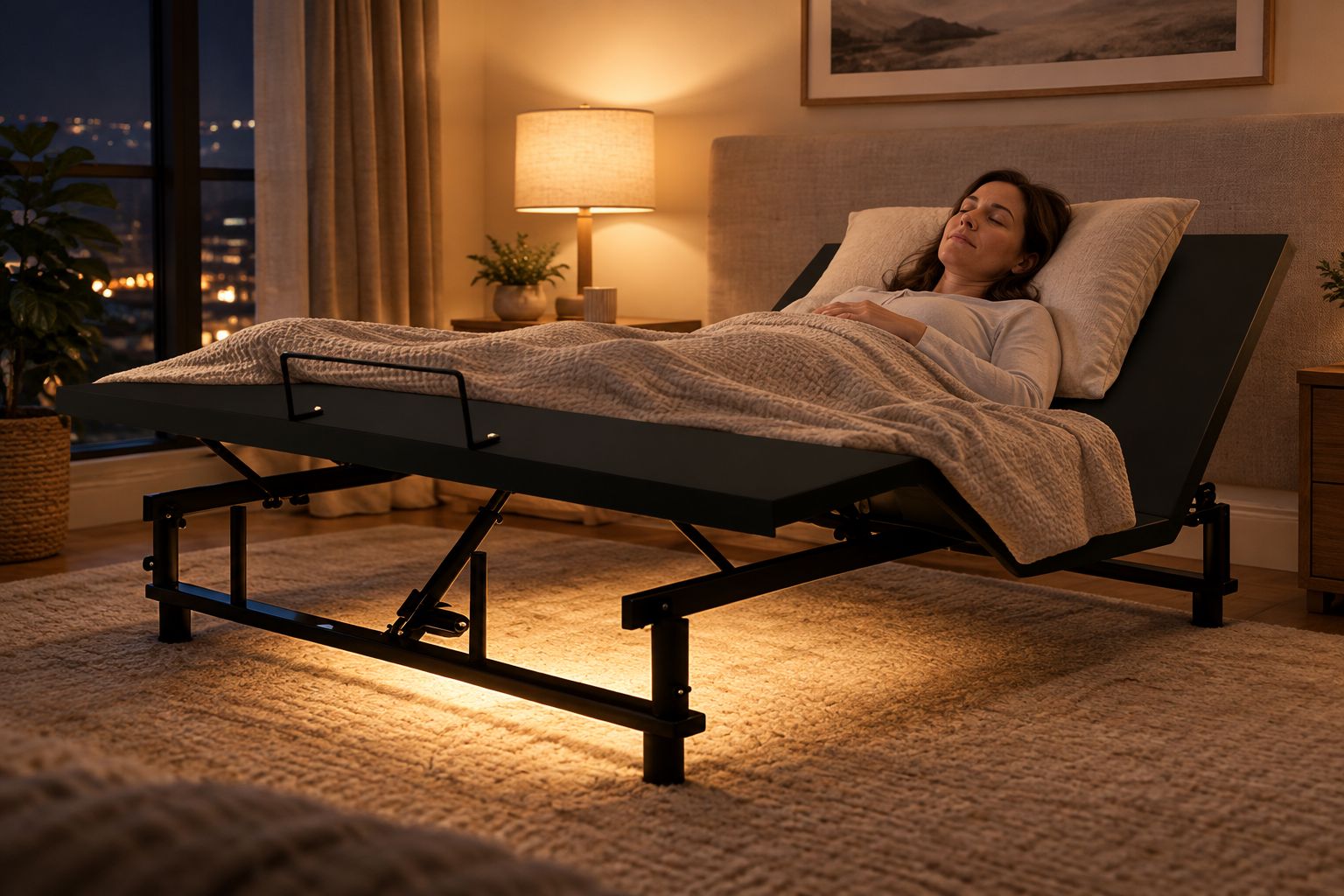
A recliner works for short naps or an hour of evening TV. An adjustable bed base holds the same angle for a full night of sleep, which matters more if your apnea only shows up when you're fully asleep and your muscles relax further than they do in a nap.
| Factor | Zero gravity recliner | Zero gravity adjustable bed base |
|---|---|---|
| Sleep position | Seated recline, legs at or above heart level | Full-body recline for overnight sleep |
| Best for | Daytime rest, short naps, mild positional snoring | Overnight sleep for supine-dependent apnea or reflux |
| CPAP use | Workable, but hose management is tighter in a chair | Easier hose routing across a flatter overnight surface |
| Verdict | Buy for daytime relief and lounging | Buy for a permanent nightly recline setup |
Aeva Vital's adjustable bed base line is built around this exact angle for overnight use rather than a seated nap — worth checking if the recliner's relief only lasts as long as you're awake to hold the position.
Why the effect varies from person to person
- Whether your apnea is positional. Sleep studies that show apnea events concentrated in the supine position respond better to elevation than studies showing events across all positions.
- Body weight and neck circumference. More tissue around the airway means the recline angle has less influence over collapse.
- Severity at diagnosis. Mild OSA (low apnea-hypopnea index on a sleep study) is more likely to see a benefit from positional changes than moderate or severe OSA.
- Whether CPAP is already in use. Elevation is a complement to CPAP therapy, not a replacement — pairing the two is common practice, not a substitute strategy.
- Recline angle and consistency. A chair or bed that doesn't hold roughly 120 to 140 degrees of recline through the night won't sustain the airway benefit.
- Underlying anatomy. Structural issues like a deviated septum or enlarged tonsils aren't touched by any recline angle.
“Elevating the airway reduces gravity's pull on soft tissue, but it doesn't fix the obstruction underneath it.”
For people rebuilding a routine after a diagnosis or a procedure, a home physical therapy routine using a zero gravity recliner shows how the same reclined angle gets used for breathing exercises and mobility work, not just sleep.
Does sleeping in a recliner reduce snoring?
Sleeping in a recliner reduces snoring for people whose snoring is worse lying flat on their back, because the reclined angle keeps the tongue from falling backward as easily. It does not reduce snoring caused by nasal congestion, alcohol use, or anatomical airway narrowing — those causes need their own fix regardless of chair angle.
Can elevating your head help sleep apnea?
Elevating your head can help mild, positional sleep apnea by reducing the gravitational pull on the tongue and soft palate during sleep. It has little to no effect on moderate or severe obstructive sleep apnea, which is why a sleep study and a CPAP prescription remain the standard path for those diagnoses.
Is it bad to sleep in a recliner every night?
Sleeping in a recliner every night is not inherently bad for most healthy adults, though it can contribute to lower back stiffness or reduced circulation in the legs over time for some people. If snoring or apnea symptoms are the reason you switched to a recliner, is a zero gravity recliner worth it in 2026 walks through the trade-offs against a full-size adjustable bed for nightly use.
FAQ
Can a zero gravity recliner help with sleep apnea?
A zero gravity recliner can help with mild, positional sleep apnea by elevating the legs and torso to reduce gravitational pull on the airway. It does not treat moderate or severe obstructive sleep apnea and is not a substitute for CPAP therapy.
Can a zero gravity recliner replace a CPAP machine?
No. A zero gravity recliner does not replace a CPAP machine for anyone diagnosed with moderate or severe obstructive sleep apnea. CPAP delivers continuous air pressure that keeps the airway open; a recliner only changes body angle.
Does an adjustable bed help with sleep apnea?
An adjustable bed can help with sleep apnea when it's set to a reclined, zero gravity-style angle, particularly for people whose apnea is worse lying flat on their back. It works the same way a zero gravity recliner does, but for a full night's sleep instead of a nap.
What angle is best for a zero gravity position?
The zero gravity position typically holds the torso reclined around 120 to 140 degrees with the legs elevated at or slightly above heart level. This is the angle used across zero gravity recliners and adjustable bed bases alike.
Can positional therapy cure obstructive sleep apnea?
Positional therapy does not cure obstructive sleep apnea; it manages symptoms for people whose apnea is specifically worse in certain sleep positions. Moderate and severe cases still require CPAP, an oral appliance, or another medical treatment.
Is a zero gravity recliner worth buying just for snoring?
A zero gravity recliner is worth buying for snoring if a sleep study or a partner's observation confirms your snoring is worse flat on your back. If snoring happens in every position, the recliner's angle won't change much.
Does sleeping upright help with breathing at night?
Sleeping upright or reclined can help breathing at night for people with reflux-related airway irritation or positional apnea, since it keeps stomach acid and gravity from working against the airway. It doesn't address apnea caused by anatomical obstruction.
One last thing
If you haven't had a sleep study, a zero gravity recliner is a reasonable thing to try while you wait for an appointment — it costs you nothing but a change in habit and it won't make anything worse. What it can't do is tell you whether your apnea is mild or severe, and that distinction is the only thing that actually determines your treatment. For a full look at what a lift or power recline chair costs and what to expect from setup, power lift recliner cost breaks down the numbers for 2026 buyers, and Aeva Vital's adjustable bed base delivers the same recline angle for anyone sleeping through the night rather than napping in it.
Browse Aeva Vital's zero gravity adjustable bed base to hold the recline angle all night, not just during a nap.