
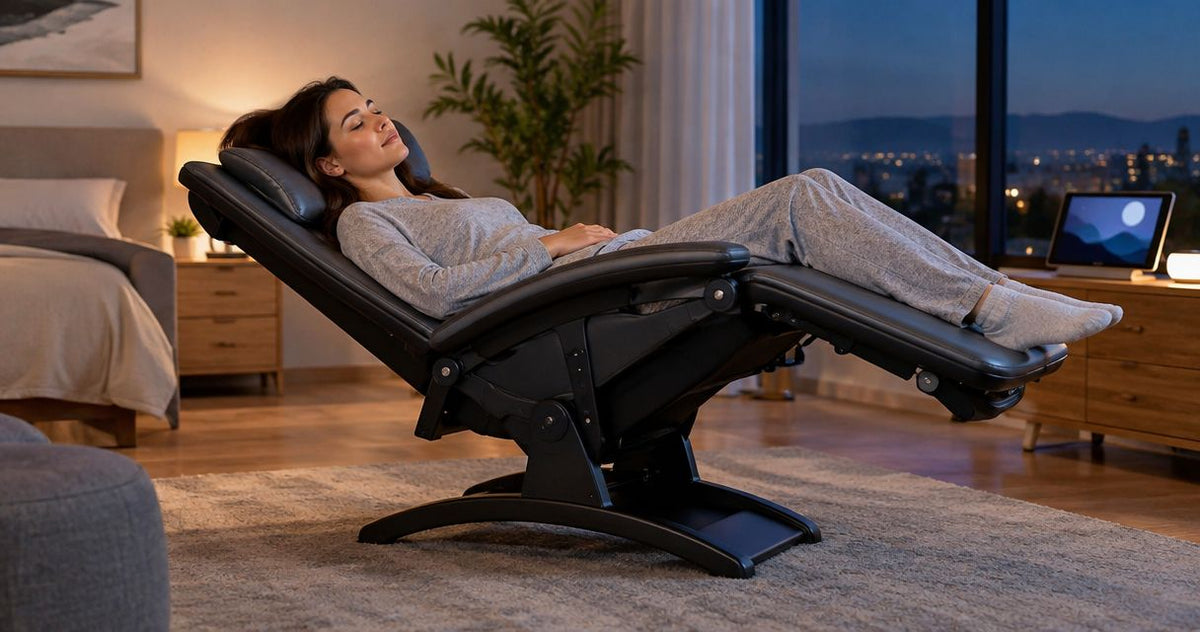
A zero gravity recliner can handle occasional overnight sleep, but it isn't built to replace a mattress night after night — the reclined-legs-up position that makes daytime naps comfortable puts less support under the lumbar spine than a flat bed once you're unconscious for eight hours. Short, occasional nights work fine for recovery from surgery, sciatica flare-ups, or sleep apnea and acid reflux management; using one as your only bed for months at a time is the scenario that causes stiffness and pressure points.
- Occasional overnight sleep in a zero gravity recliner is fine; nightly long-term use isn't recommended without a supportive headrest and lumbar cushion.
- The zero gravity position elevates the legs above heart level, which is why it helps with reflux, swelling, and lower-back pressure short-term.
- Side sleepers and stomach sleepers get the least benefit from a recliner — the seated-recline shape favors back sleepers.
- A lift chair or power recliner with a flat-recline option sleeps closer to a bed than a standard zero gravity model.
- For nightly use, an adjustable bed base with a zero gravity setting gives the same elevated position on a full mattress surface.
Why this matters
People end up sleeping in a recliner for a handful of real reasons: recovery after hip or back surgery, chronic acid reflux, sleep apnea that's worse lying flat, congestive heart failure symptoms, or simply a partner's snoring driving one person to the living room. Whether the chair does that job safely for more than a few nights depends on the recline angle, headrest shape, and how long the stretch actually lasts. Is a zero gravity recliner worth it in 2026 breaks down the buying case in more detail, but the sleep question deserves its own answer.
Can you sleep overnight in a zero gravity recliner?
Yes, for a night or a few nights in a row. The zero gravity position — legs elevated slightly above heart level, torso reclined at roughly 120 to 130 degrees — was developed by NASA to distribute body weight evenly and reduce strain on the spine during periods of sustained sitting. That's the same mechanic that makes it tolerable for sleep: less pressure on the lower back than sitting upright, and better circulation than lying flat for someone with reflux or swelling in the legs.
The catch is duration and body position. A mattress supports the whole body in whatever position you naturally shift into overnight — back, side, stomach. A recliner locks you into one seated-recline shape, and most sleepers change position 10 to 20 times a night without realizing it. Stay in one seated posture for eight hours, every night, for weeks, and the lack of position changes is what causes the stiff neck and sore hips people report.
| Sleep surface | Overnight suitability | Spinal support | Best for |
|---|---|---|---|
| Standard zero gravity recliner | Occasional nights, not nightly | Good for lower back, weak for side sleeping | Reflux, swelling, short recovery stretches |
| Power lift recliner with flat recline | Better for extended use | Moderate, depends on headrest | Post-surgery recovery, limited mobility |
| Adjustable bed base (zero gravity setting) | Built for nightly use | Full mattress support in an elevated position | Long-term reflux or back pain management |
| Standard mattress, flat | Designed for nightly use | Best for side and stomach sleepers | Everyone without a specific medical reason to elevate |
If the reason you're eyeing a recliner is a lift chair recovering from surgery rather than a permanent switch, using a lift chair as a regular recliner covers how that dual-purpose use actually holds up day to day.
Why comfort varies overnight
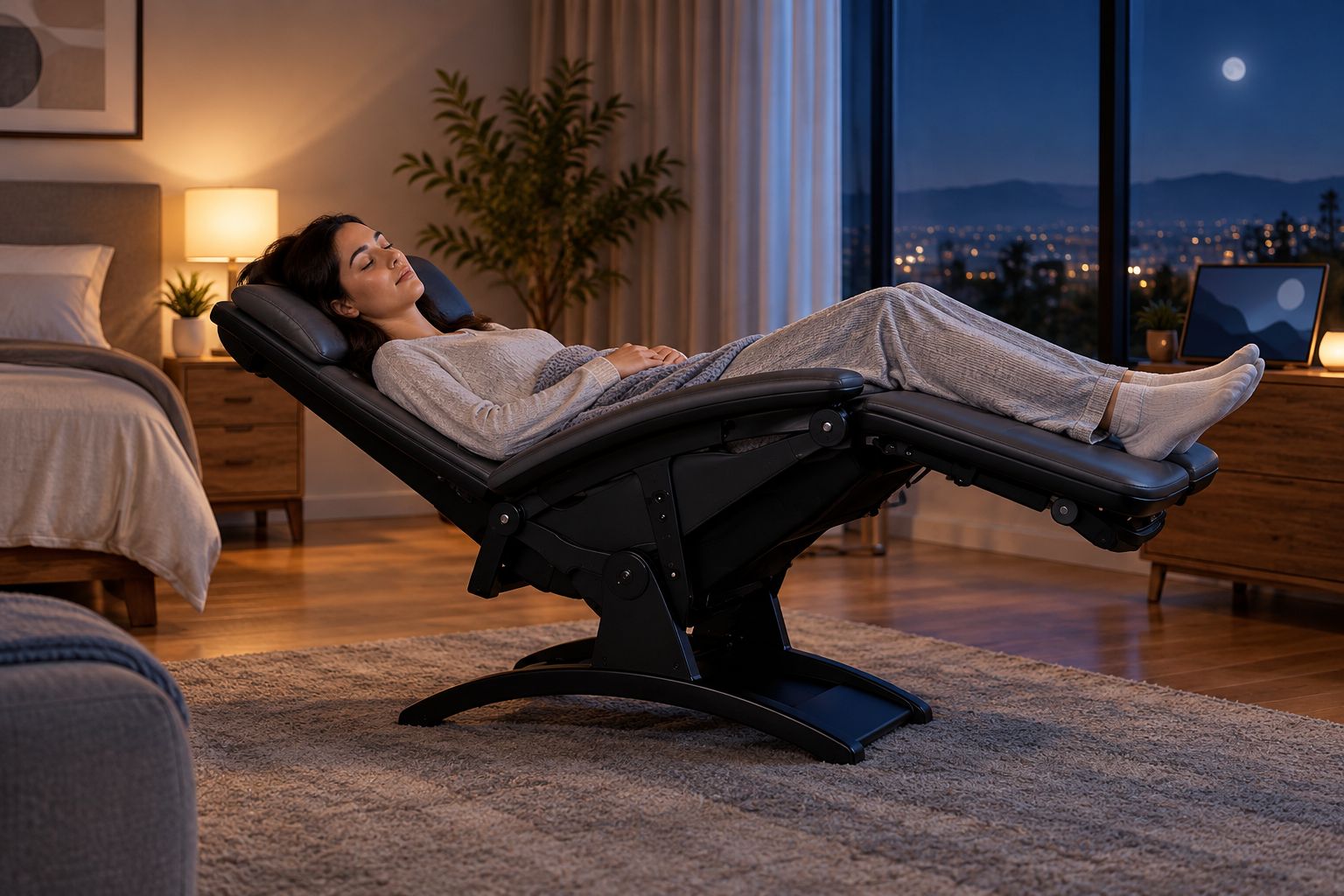
Four or five factors decide whether a night in the chair feels fine or leaves you sore the next morning:
- Recline angle: chairs that stop at 130-140 degrees leave more neck strain than models that recline closer to flat.
- Headrest shape: a fixed headrest that doesn't move with the recline angle is the single biggest cause of neck stiffness after a night in a recliner.
- Sleep position habit: back sleepers adapt fastest; committed side or stomach sleepers struggle in any recliner shape.
- Duration: one or two nights rarely causes lasting discomfort; weeks of nightly use without a break is where problems build.
- Underlying condition: reflux and swelling genuinely improve with elevation; general insomnia or a bad mattress won't be solved by switching to a chair.
For anyone recovering from a procedure and using a recliner as part of a structured routine, a home physical therapy routine using a zero gravity recliner lays out how to combine recline sessions with mobility exercises instead of just sitting still.
Is it bad to sleep in a recliner every night?
Sleeping in a recliner every night isn't dangerous on its own, but it's not ideal for most people without a specific medical reason like reflux, sleep apnea, or post-surgical positioning restrictions. Nightly use without position changes tends to produce stiffness in the neck, hips, and lower back over weeks, and it doesn't give side or stomach sleepers proper support.
How long can you safely nap or sleep in a zero gravity chair?
A few hours to a full night works fine occasionally; the concern is consecutive nights over an extended stretch rather than any single session. Anyone using a recliner nightly for more than a couple of weeks because of a medical condition should ask a doctor whether an adjustable bed with a zero gravity setting is a better long-term fit.
Do lift chairs recline flat enough to replace a bed?
Most lift chairs recline to a zero gravity angle, not fully flat, so they support seated-recline sleep better than they replace a bed outright. Chairs marketed specifically as flat-recline or sleeper recliners get closer to bed-level flatness than standard lift chair models.
One practical middle ground: an adjustable bed base with a zero gravity preset gives the same elevated-leg position as a recliner but on a full mattress, so side and stomach sleepers still get proper support while getting the reflux and circulation benefits. That's a different product category from a recliner chair, worth knowing before assuming a chair is the only way to get the position.
FAQ
Can you sleep overnight in a zero gravity recliner?
Yes, occasionally — the reclined, legs-elevated position is comfortable for a night or a few nights in a row. Nightly use over weeks tends to cause neck and hip stiffness because the chair locks you into one seated posture.
Is it bad to sleep in a recliner every night?
It's not dangerous but it's not ideal without a medical reason like reflux or sleep apnea. Consecutive nights over an extended period is what causes stiffness, not an occasional night.
How long can you safely nap in a zero gravity chair?
A few hours to a full night is generally fine. Longer stretches over multiple weeks are where discomfort tends to build.
Do zero gravity recliners recline flat like a bed?
No, most recline to roughly 120-130 degrees rather than fully flat, which is why they suit seated-recline sleep better than they replace a mattress.
Why do doctors recommend zero gravity position for reflux?
Elevating the legs and torso reduces pressure that pushes stomach acid upward compared to lying fully flat, which is why the position is common advice after reflux-related surgery or during flare-ups.
Is a lift chair the same as a zero gravity recliner for sleep?
Many lift chairs include a zero gravity recline setting, so the sleep experience is similar, but not every lift chair reclines to the same angle.
What's a better option than a recliner for nightly elevated sleep?
An adjustable bed base with a zero gravity setting gives the same elevated position across a full mattress, which supports side and stomach sleepers better than a chair shape can.
Can sleeping in a recliner cause back pain?
Extended nightly use without position changes can cause lower back and hip stiffness, mainly because the body doesn't shift positions the way it does on a mattress.
One last thing
The detail most buyers miss: the headrest, not the recline angle, is what decides whether a night in the chair feels fine or leaves your neck sore in the morning. A chair that reclines to a good zero gravity angle but has a fixed, non-adjustable headrest will still strain the neck over a full night. If reflux or swelling is the actual reason you're considering sleeping upright-reclined every night in 2026, an adjustable bed base built with a zero gravity setting solves the same problem on a full mattress instead of a chair seat — worth comparing before committing to a recliner as a permanent sleep setup.
Compare zero gravity recliner and adjustable bed options at Aeva Vital.