
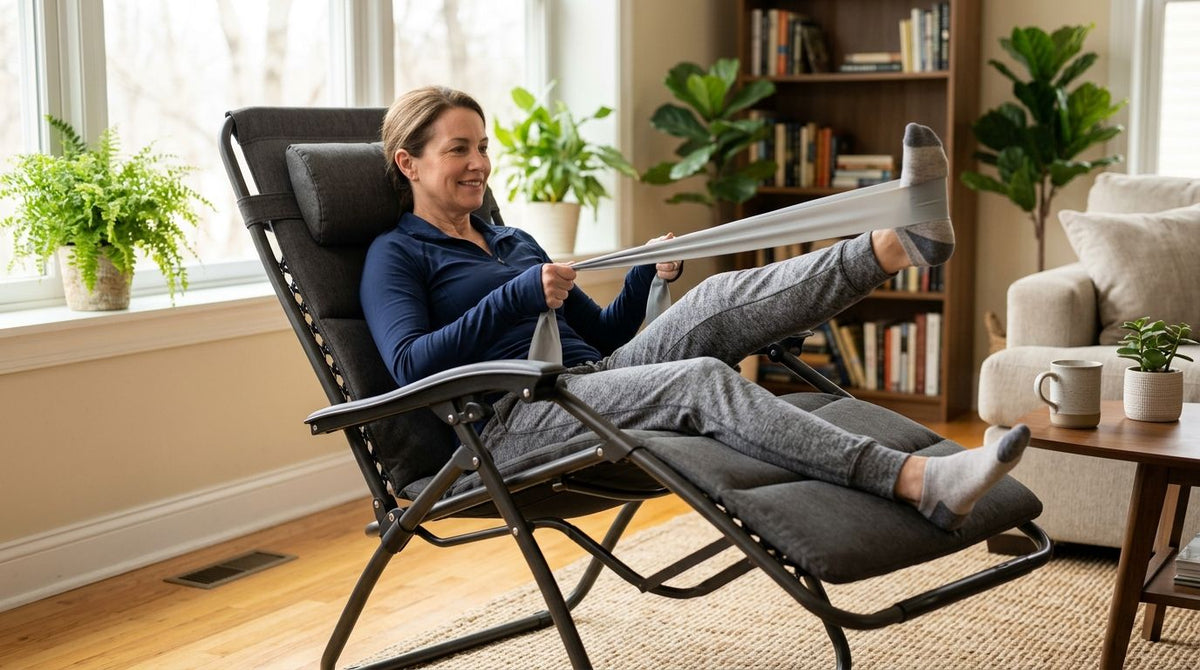
Stretching through a full physical therapy routine on a flat couch loses half its value the moment your lower back re-loads between reps. Recline into a true zero gravity position first, then run the same sequence your therapist gave you, and every stretch holds without your spine fighting gravity to stay there. Instead of manually repositioning pillows under your knees every session, set up a zero gravity recliner physical therapy routine once and repeat it daily in under 20 minutes.
- Zero gravity position (roughly 120-degree recline, legs above heart) unloads the spine before PT stretches begin.
- A home zero gravity recliner physical therapy routine runs 15-20 minutes: settle, 3-4 stretch holds, cool-down.
- Aeva Vital's zero gravity adjustable bed base reaches the same unloaded position clinics use in recliners.
- Post-surgical variants cut hold times to 10-15 seconds and run twice daily, per surgeon clearance.
- The most-skipped step in 2026 home routines is the 30-second neutral reset between stretches.
Why this matters
Physical therapists prescribe home exercise programs assuming you have a way to unload your spine before you stretch it. Most patients skip that step and do the prescribed reps sitting upright on a couch, where the lower back stays compressed the entire session.
The zero gravity recliners used in chiropractic and wellness clinics put the hips slightly above heart level, distributing body weight across the frame instead of the lumbar spine. That neutral posture came out of NASA research into body position under reduced gravity and is now standard in rehab settings for one reason: a stretch holds longer with less muscle guarding.
Building this into a repeatable routine in 2026 means treating the recliner setup as step one of PT, not a comfort add-on afterward.
Before you start
- Clearance from your physical therapist or surgeon for the specific stretches and hold times in your program. This guide covers positioning and equipment, not the exercise prescription.
- A recliner or adjustable base that reaches true zero gravity recline, not just a deep recline. Many chairs stop around 130-140 degrees with the legs only level with the hips, which is not the same position.
- The gotcha: on any powered recliner or adjustable base, check the outlet before you commit to a routine spot. Mid-recline motor stalls from an overloaded circuit are the most common reason a home setup gets abandoned in week one. The power lift recliner outlet guide covers what a dedicated outlet needs before installation.
Set up your zero gravity position
- Recline using the Zero Gravity preset if your unit has one, or recline manually until your knees sit slightly above hip level and your head sits slightly above your heart.
- Check alignment. Your spine should feel evenly supported from shoulders to hips with no gap under the lower back. Slide a thin rolled towel under the lumbar curve if a gap exists.
- Set a timer for 2 minutes and breathe in this position before any stretching. This is when spinal discs begin decompressing and baseline muscle tension drops.
Expected result: weight lifts off your lower back within the first minute, with no pressure points at the hips or shoulder blades.
Configure your stretching sequence
- From the zero gravity position, bring one knee toward your chest and hold for the duration your therapist prescribed, typically 20-30 seconds per side.
- Run any prescribed ankle pumps, seated marches, or shoulder rolls while still reclined. The unloaded spine means these movements don't re-compress the lower back between reps.
- Return to neutral zero gravity position for 30 seconds between each stretch. Skipping this reset is the most common reason a home routine feels weaker than a clinic session.
Expected result: each hold lasts the full prescribed count without your lower back tensing to compensate, and no pillow repositioning mid-routine.
Configure your cool-down phase
- After the last stretch, recline fully back to zero gravity and hold for 3-5 minutes.
- Add cold therapy here if your program includes it. A short cold plunge before or after the recliner routine is common on higher-intensity stretch days, and the options are compared in the best cold plunge tubs guide.
- Bring the chair or base upright in two or three stages rather than one motion, pausing 10-15 seconds at mid-recline.
Expected result: you stand up without dizziness and without a sudden ache in the lower back. A fast single-motion return to upright is the usual cause of post-session stiffness.


Variant: the post-surgical routine
Post-surgical PT is a different routine, not a lighter version of the same one. Set it up separately.
- Run it twice daily instead of once, at the interval your surgeon specified.
- Cut hold times roughly in half: 10-15 seconds per stretch instead of 20-30, with an extra minute of plain zero gravity rest before and after.
- Skip the cold plunge pairing in the first weeks post-op unless your surgeon has cleared it. Swelling protocols vary by procedure.
Facilities running structured post-surgical programs use dedicated powered chairs for exactly this position. The clearance and setup considerations are in the lift chairs for rehab and post-surgical recovery centers guide, and the same logic scales down to one chair in one living room.
“If the chair doesn't fully unload your lower spine, you're stretching in a recliner, not running a zero gravity recliner physical therapy routine.”
Troubleshooting
- The chair won't reach true zero gravity. Many recliners stop at 130-140 degrees with legs level, not elevated. Check the recline specification before assuming the problem is your positioning.
- Lower back still feels compressed at full recline. Add a thin lumbar roll. A gap under the lower back at recline is common in taller users and cancels out the benefit of the position.
- Powered unit stalls mid-recline. Almost always an outlet or circuit issue rather than a motor defect. Confirm the outlet is dedicated and rated for the unit's draw.
- Dizziness when standing after cool-down. Return to upright in stages, pausing 10-15 seconds at each stage.
- Holds feel shorter than prescribed. Use a visible timer instead of counting mentally. Under-holding by 5-10 seconds per rep compounds across a full 2026 routine.
Customize your routine
Once the base sequence runs clean, expand it rather than stopping at the minimum. Add a second short evening session if your therapist approves. Pair it with cold therapy on heavier stretch days. Extend the zero gravity rest phase to 10 minutes on off days between clinic visits.
If the same room holds other mobility or medical equipment, sort the layout before you fix the chair's position. Clearance around a powered recliner is easier to plan once than to fix after installation.
FAQ
What is the zero gravity position for physical therapy?
It is a recline of roughly 120 degrees that raises the legs slightly above heart level and spreads body weight across the chair frame instead of the lumbar spine. It is used before and during stretching so holds last longer with less muscle guarding.
How long should a home PT session in a zero gravity recliner last?
Most home routines run 15-20 minutes: 2 minutes settling into position, 8-10 minutes of prescribed stretches with 30-second resets between each, and 3-5 minutes of cool-down recline.
Can I use a zero gravity recliner for post-surgery recovery at home?
Yes, with your surgeon's clearance on hold times and frequency. Post-surgical routines typically run twice daily with holds cut to 10-15 seconds instead of 20-30.
Is a zero gravity recliner the same as a zero gravity adjustable bed?
They reach the same unloaded spinal position through different frames. A recliner is a standalone chair; a zero gravity adjustable bed base does it on your existing mattress.
What angle is zero gravity on a recliner?
Roughly 120 degrees of recline with the legs elevated slightly above heart level. The exact angle shifts with chair model and user height, so verify by feel: no gap under the lumbar curve, no pressure at the hips.
Do I need a therapist's approval before starting this routine?
Yes. This guide covers positioning and equipment setup, not the stretches or hold times, which should come from your therapist or surgeon based on your condition.
Can a zero gravity recliner replace clinic PT sessions?
No. It supports the home exercise portion of a prescribed program between visits. It does not replace hands-on assessment or manual therapy.
Should I pair cold therapy with a zero gravity recliner routine?
On higher-intensity stretch days, a short cold plunge before or after the routine is common for managing inflammation. Skip it in the early weeks after surgery unless your surgeon has cleared it.
One last thing
The step people drop first is the 30-second neutral reset between stretches, not the stretches themselves. That reset is the only point in the sequence where the spine fully unloads before the next rep, which is why routines that keep it hold their gains past week two and routines that cut it plateau.