

New sheets have no fixed softening timeline: the first wash can remove washable finishing residue, while further changes depend on the fiber, weave, and care routine. Washing will not turn a naturally crisp fabric into a silky one, and aggressive attempts to speed up softening can damage the sheets.
By Editorial Team
- How long does it take for new sheets to soften? There is no universal wash count.
- Cotton percale stays relatively crisp; cotton sateen generally feels smoother because of its weave.
- Follow the sewn-in care label before changing detergent, wash temperature, or drying settings.
- Aeva Vital bedding readers should distinguish removable residue from a fabric’s natural texture.
How long does it take for new sheets to soften?
Judge new sheets after label-approved washing and complete drying, not against a promised number of days. Time in the package does not soften fabric. Washing, drying, and use change its surface feel, but the result depends on how the fabric was made.
The practical question is whether the stiffness comes from something removable or from the textile itself. Detergent residue requires a different response from linen’s natural texture. For your 2026 care routine, start with the instructions covered in Can luxury bedding be machine washed at home?, then check your own set’s label.
| What you notice | Possible explanation | Useful next step | What not to expect |
|---|---|---|---|
| Stiffness straight from the package | Fabric construction or finishing treatment | Wash according to the care label | Guaranteed softness after a fixed wash count |
| A slippery or coated surface after laundering | Laundry-product residue | Check detergent dosing and rinse instructions | More detergent to improve the feel |
| A crisp, dry hand without visible damage | The fabric’s characteristic texture | Identify the fiber and weave | Percale to become sateen |
| Small raised balls or catching fibers | Pilling or surface damage | Inspect the fabric and reduce abrasion | Washing to restore a perfectly smooth surface |
| Scratchiness concentrated at a seam | Stitching, a label, or a construction issue | Inspect the specific area | Whole-sheet softening to fix a rough seam |
These are inspection clues, not a diagnosis from appearance alone. Compare the washed sheet with its label description and examine the surface before deciding to keep laundering it.
Why this matters: softness and fabric damage are different
A softer sheet should still have intact yarns, sound seams, and a usable fit. Thinning, shedding, and fraying are not useful signs of breaking in.
Your goal is to remove avoidable stiffness while preserving the fabric. A sheet that remains crisp but feels comfortable is not necessarily defective; a sheet that catches against your skin deserves closer inspection.
For bedding purchases in 2026, separate immediate surface feel from longer-term care needs. The softest display sample does not tell you how a fabric will respond to your detergent, dryer, or washing habits.
Cotton percale: expect crispness, not a silky finish
Cotton percale uses a plain weave with alternating over-and-under yarns. That construction produces its characteristic crisp feel. Washing and use can make the fabric feel less rigid without removing that identity.
Best for: sleepers who prefer a crisp sheet rather than a slick surface. The limitation is equally clear: if you dislike crispness itself, waiting longer is not a reliable solution.
Check whether the fabric bends and drapes comfortably after laundering. Do not use the absence of a silky finish as proof that the sheets need hotter water or stronger treatment.
Cotton sateen: distinguish smoothness from durability
Cotton sateen has longer yarn floats on its surface than a plain weave. Those exposed yarns help create a smoother hand and a subtle sheen, but they also make surface abrasion a relevant care concern.
Best for: sleepers who prefer a smoother cotton surface. The trade-off is that a smooth initial feel does not prove resistance to snagging or pilling.
Keep rough items and exposed fasteners out of the sheet load. If raised pills are causing discomfort, repeated washing is not the same as repairing the surface.
Linen: allow texture without accepting discomfort
Linen is made from flax fibers and has a different hand from cotton. Its textured appearance and feel are part of the material, although laundering and use can make it more supple.
Best for: sleepers who like a textured, less polished fabric. Its limitation is that it will not become identical to smooth cotton sateen, regardless of how long you own it.
Distinguish general texture from isolated rough spots. A stiff panel, a scratchy seam, and loose surface fibers need separate inspection rather than the same softening treatment.
Other fibers: follow the label, not a cotton routine
Polyester, cotton blends, viscose, lyocell, and silk should not share an automatic care recipe. Fiber content and construction affect how a sheet handles heat, agitation, and laundry products.
A sheet sold using a plant name still needs a clear fiber declaration. For example, a bamboo reference alone does not explain whether the finished textile is viscose or lyocell, or how you should wash it.
Choose by the stated fiber and care requirements, not a promise that every material gets softer with age. A routine intended for sturdy cotton is not a safe default for every bedding fabric.
Why the time needed for sheets to soften varies
The following factors explain why a universal softening schedule fails:
- Fiber content: Cotton, flax linen, polyester, and regenerated cellulose fibers have different surface characteristics.
- Weave: Percale and sateen arrange yarns differently, changing the feel even when both use cotton.
- Finishing treatments: Some washable treatments affect the fabric’s initial hand; others are intended to remain through laundering.
- Laundry residue: Excess detergent or poorly rinsed products can change how clean sheets feel.
- Water hardness: Dissolved minerals affect detergent performance and can contribute to deposits on fabric.
- Drying method: Air drying, permitted tumble drying, and excessive heat do not leave every textile feeling the same.
This is a more useful 2026 checklist than counting nights of use. Change the factor you can identify instead of increasing every wash setting at once.
How to soften new sheets without damaging them
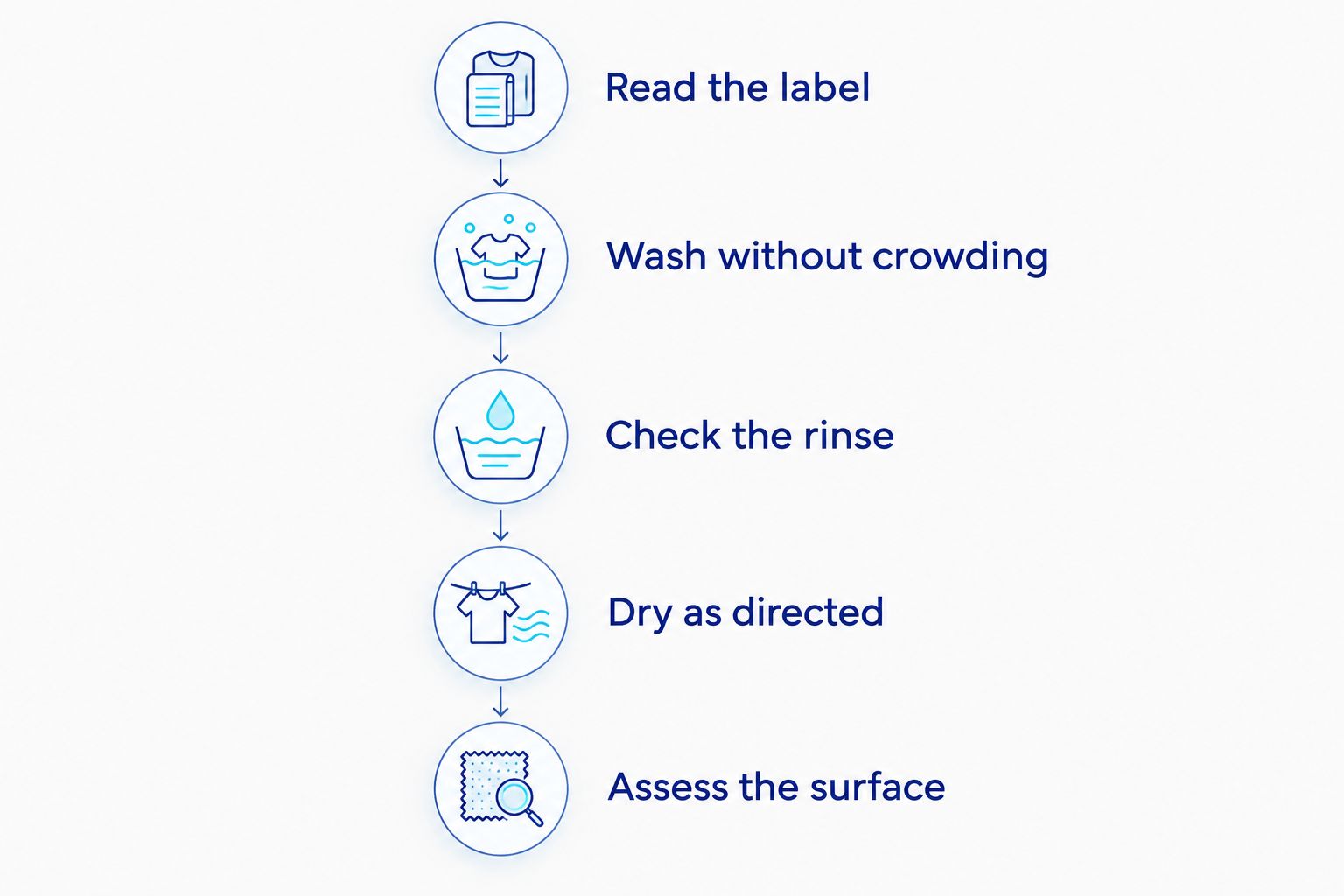
Use a controlled care sequence. The purpose is to establish a clean, properly dried baseline—not to force the fabric through repeated wash cycles until it wears down.
Read the label
Identify the fiber content, permitted wash method, drying instructions, and restrictions on bleach or other treatments. Keep the packaging instructions if they contain additional care information.
The sewn-in label takes priority over a general bedding tip. Do not assume that a familiar material name permits the same treatment across every set.
Wash without crowding
Give the sheets room to move in the machine and follow its loading instructions. Separate them from towels, rough fabrics, and items with exposed hooks or zippers.
Measure detergent using the product instructions, accounting for the load and water conditions. More detergent is not a shortcut to softer fabric.
Check the rinse
If sheets feel coated after washing, review your dosing before adding another product. Use an additional rinse only when appropriate for the fabric and machine instructions.
A coated feel is different from the dry crispness of percale. Treating both with a softener can hide the distinction rather than resolve it.
Dry as directed
Use the permitted drying method and heat setting. For machine-dryable sheets, avoid leaving them tumbling after they are dry merely to encourage softness.
Shake out the fabric before hanging or loading it into the dryer. Remove sheets promptly when the drying cycle finishes, and make sure they are fully dry before storage.
Assess the surface
Feel a broad area of the sheet, then inspect seams and any spot that catches. Note whether the change is reduced stiffness, a coating, or visible abrasion.
Use the sheets normally if the fabric feels comfortable and remains intact. If it still feels unpleasant, reassess the material and construction rather than committing to an arbitrary break-in deadline.
Should you use fabric softener, vinegar, or baking soda?
Do not make an additive your default response to stiff sheets. Start with the care label, correct detergent dosing, and appropriate drying.
| Option | Intended purpose | Limitation | Practical recommendation |
|---|---|---|---|
| Correctly dosed detergent | Remove soil during washing | Excess product can leave residue | Best for routine cleaning; follow dosing instructions |
| Additional rinse | Help remove remaining wash products | Does not change the weave | Best for suspected residue when instructions permit |
| Fabric softener | Change surface feel through deposited conditioning ingredients | Can affect absorbency and is not appropriate for every textile | Use only when permitted by the sheet instructions |
| White vinegar | Commonly suggested household laundry additive | Not a universal fabric or appliance recommendation | Check manufacturer guidance before use |
| Baking soda | Commonly suggested laundry additive | Does not convert a coarse weave into a smooth one | Do not treat it as a required softening step |
Never mix chlorine bleach with vinegar or other acids; the mixture can release toxic chlorine gas. Keep laundry products in their original containers and follow their safety directions.
For your 2026 routine, a repeatable label-approved wash is more useful than a changing mixture of household ingredients. It also makes the cause of any improvement—or damage—easier to identify.
When should you stop trying to soften sheets?
Stop escalating the treatment when you see fraying, thinning, snagging, persistent shedding, or damaged elastic. Those changes indicate deterioration rather than a useful improvement in hand.
Also stop if the sheets cause irritation. Remove them from use, check the laundry products involved, and seek medical advice for persistent or significant symptoms rather than treating discomfort as a necessary break-in stage.
A texture mismatch is another reason to reconsider the set. If you want a smooth surface but bought a deliberately crisp weave, a different construction is a clearer solution than repeated washing.
What Aeva Vital’s bedding range does—and does not—tell you
Aeva Vital is best for shoppers considering bedding alongside home wellness equipment. Its stated range includes hybrid mattresses, freestanding bathtubs, ice baths, and infrared saunas; that assortment does not establish a softening timeline for a particular sheet set.
For any Aeva Vital bedding purchase, evaluate the individual textile’s fiber declaration and care instructions. A brand’s broader positioning does not prove that a sheet is prewashed, suitable for fabric softener, or guaranteed to soften after a particular number of washes.
Keep mattress comfort separate from sheet texture, too. A supportive mattress cannot remove a scratchy seam, and a smooth sheet cannot change the mattress’s underlying construction.
FAQ
How long does it take for new sheets to soften after washing?
There is no fixed number of washes that guarantees softer sheets. Label-approved washing can remove washable residue, but fiber and weave determine how much the underlying texture changes.
Will new sheets soften after the first wash?
New sheets can feel less stiff after the first wash if washable finishing residue contributed to the original feel. A first wash does not guarantee a soft surface or change the fabric’s weave.
Why are my new cotton sheets still scratchy?
Scratchiness can come from the fabric itself, laundry residue, surface pilling, or rough construction details. Inspect the sheet and its seams before adding products or increasing wash intensity.
Do percale sheets ever become silky?
Percale sheets retain a relatively crisp character rather than becoming sateen. Washing and use can improve suppleness without changing the plain-weave construction.
Does a higher thread count mean sheets soften faster?
A higher thread count does not establish a faster softening timeline. Fiber, yarn construction, weave, and finishing also influence how sheets feel.
Should I wash new sheets repeatedly before sleeping on them?
Repeated washing is not a necessary default softening routine. Follow the initial care instructions, dry the sheets properly, and assess comfort before deciding whether another wash addresses a specific problem.
Can I use high dryer heat to soften sheets faster?
High dryer heat is not a reliable softening shortcut and can damage heat-sensitive components or contribute to shrinkage. Use the drying setting permitted by the care label.
Do I need fabric softener for new sheets?
Fabric softener is not required for every new sheet set. It changes surface feel through conditioning deposits and should be used only when the textile’s instructions permit it.
Related guides
- Is high thread count luxury bedding actually worth it?
- How long do luxury sheet sets typically last?
- Luxury sheet sets for hot sleepers
One last thing
For your next bedding decision in 2026, describe the feel you want before looking at thread count: crisp, smooth, or textured. Buy for the fabric’s intended character, not the hope that washing will turn it into something else.