

There is no universal number of hours you can safely sleep in a recliner. A short nap or an occasional night can be reasonable if you can breathe comfortably, change position and get out of the chair safely. If you need to sleep upright because of a health condition, or you wake with pain, swelling or breathing trouble, ask a clinician about the position rather than treating a time limit as proof of safety.
- There is no fixed answer to how long can you safely sleep in a recliner; your health and symptoms matter more than a timer.
- An occasional night is different from relying on a recliner for sleep every night.
- If breathing trouble, new swelling or pain makes the chair necessary, get medical advice before repeating the arrangement.
- A recliner should let you change position and stand up safely; comfort alone does not establish safety.
By Editorial Team
Why this matters
A recliner can feel easier to use than a bed when lying flat is uncomfortable. That does not mean it addresses the reason you cannot lie flat. The distinction matters most after surgery, during an illness or when you start sleeping in the chair regularly. For the separate question of long-term use, see whether it is safe to sleep in a recliner every night.
In 2026, the useful question is not whether a night exceeds a particular hour limit. It is whether you can breathe normally, shift your weight, support your body and leave the chair without help you do not have. If the chair has become your only comfortable place to sleep, find out why before making it your nightly bed.
How long can you safely sleep in a recliner?
There is no standard safe duration that applies to everyone. A healthy person taking an occasional nap faces a different decision from someone recovering from surgery, living with reduced mobility or needing to stay upright to breathe comfortably. Neither an all-night sleep nor a brief nap is automatically safe for every person.
Use this check before you settle in:
- Check why you are choosing the chair. Convenience is different from being unable to breathe or rest while lying flat. New or worsening breathing difficulty needs medical attention, not a different piece of furniture.
- Check your position. Keep your head and neck supported without letting your chin drop sharply toward your chest. Make sure your legs and feet are supported without leaving you stuck in one position.
- Check whether you can move. You should be able to adjust your position and get up when you need to. If you cannot, arrange the help your care plan calls for rather than sleeping alone in the chair.
- Check the route out. Keep the floor clear, put essential items within reach and confirm you can stand without pulling on an unstable part of the chair.
- Check how you feel afterward. New pain, numbness, swelling or poor-quality sleep is a reason to reconsider the setup. Persistent or worsening symptoms deserve clinical advice.
This is a decision check, not a medical clearance test. In 2026, a person-specific instruction from your clinician takes priority over any general advice about recliner sleep.
Napping versus sleeping overnight
| Arrangement | Best for | Potential advantage | Main limitation | Verdict |
|---|---|---|---|---|
| Recliner nap | Someone who can reposition and leave the chair safely | Offers a change of position without committing to a full night | Neck, back or leg discomfort can still develop | Reasonable when you feel comfortable and can move freely |
| Occasional night in a recliner | Someone with a temporary reason to avoid their usual bed | Lets you rest in a supported seated position | A comfortable first night does not establish that repeated nights are safe | Reassess the next day |
| Regular overnight recliner sleep | Someone following an individualized care plan | Can accommodate a position a clinician has recommended | The chair does not treat the condition behind breathing trouble, pain or limited mobility | Get individual guidance before making it routine |
| Bed or suitable adjustable sleep surface | Someone who can sleep comfortably outside a chair | Provides a dedicated surface for overnight sleep | A flat position will not suit every medical situation | Prefer it when it meets your needs |
The table compares uses, not chair models. No recline setting can be declared safe for every sleeper, and a position that feels good while you are awake can feel different after sleep.
What changes the answer?
- Your reason for sleeping upright. Occasional preference calls for a comfort check. Needing an upright position because lying down makes breathing difficult calls for medical evaluation.
- Your mobility. If turning, standing or walking is difficult, remaining in one position deserves particular attention. Follow any movement instructions in your care plan.
- Your health history. A recent operation, breathing condition or circulation concern changes which positions and precautions are appropriate. Use the instructions given for your situation.
- The chair’s fit. Your head, back, arms and legs need usable support. A chair that leaves your neck bent or makes you slide forward is a poor overnight setup, regardless of how soft it feels.
- Your exit route. A position is not practical if you cannot get up to use the bathroom or respond to a problem. Test that you can leave the chair while fully awake.
- Your symptoms afterward. Repeated pain, numbness, swelling or disrupted sleep is more informative than the number of hours you spent in the chair.
In 2026, none of these factors converts into a universal hourly cutoff. They tell you whether the chair suits a particular person on a particular night.
Position and movement matter more than the clock
A recliner supports your body differently from a mattress. Your hips and knees stay bent to some degree, while the chair determines where your neck and lower back rest. If the fit is wrong, you can wake sore even after a nap. If moving is difficult, you also have fewer chances to correct an uncomfortable position while asleep.
Before an overnight stay, recline to a position that keeps your head supported and does not force your chin down. Check where your legs rest. Then practice changing position and standing up. If you cannot do those things safely while awake, the chair is not a safe plan to improvise at bedtime.
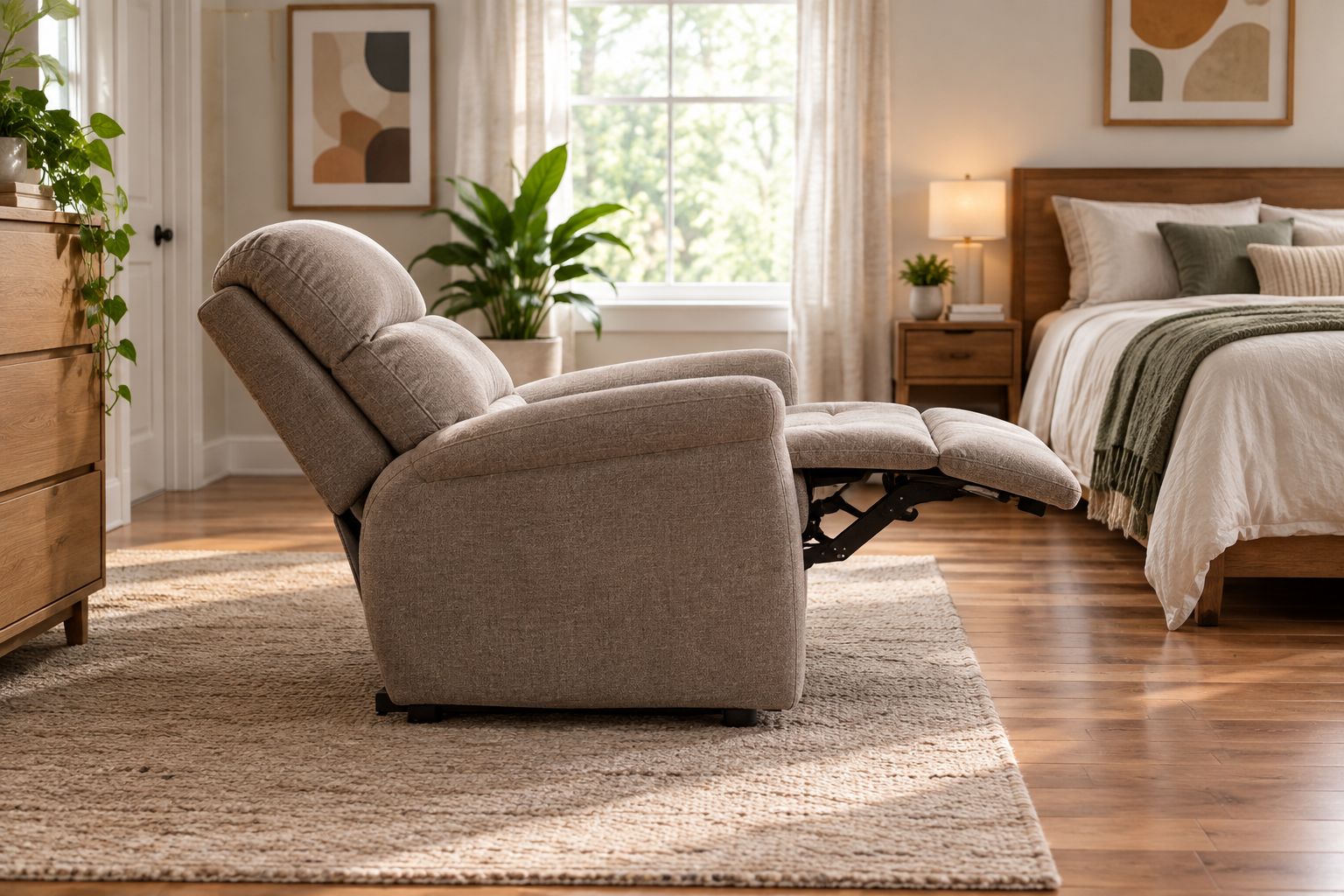
Position advice is not a substitute for post-surgical instructions. If you have been told to keep a particular part of your body elevated, avoid a movement or use a specific sleep position, follow that plan. Ask your care team before replacing a prescribed setup with a recliner.
When should you stop using the recliner for sleep?
Stop treating the recliner as a comfort choice when you need it because lying flat causes new or worsening breathing difficulty. Seek urgent medical care for sudden severe breathing trouble, chest pain or other symptoms that feel like an emergency. Do not wait to see whether a different recline setting fixes them.
Contact a clinician if you develop new leg swelling, persistent numbness, worsening pain or repeated difficulty getting out of the chair. Those signs do not identify a cause on their own. They do show that a general article cannot settle whether the chair is appropriate for you.
Poor sleep also counts. If you wake repeatedly to adjust your neck, hips or legs, or feel less rested after sleeping in the chair, the position is not working as an overnight routine. In 2026, use the pattern across nights as a reason to reassess, not as a challenge to find the maximum time you can tolerate.
Can you sleep in a recliner after surgery?
You can sleep in a recliner after surgery only if the position fits your discharge instructions and you can transfer in and out safely. The procedure and your personal recovery plan determine whether the chair is appropriate. A recliner is not a replacement for instructions about positioning, movement or when to seek help.
Before your first night at home, ask your care team whether you must avoid bending, twisting or putting pressure on a particular area. Practice sitting down and standing up with the assistance you will actually have. If you need support, arrange it before bedtime rather than relying on the chair’s armrests to solve a difficult transfer.
Can a recliner help you sleep with sleep apnea?
A recliner is not a substitute for sleep apnea diagnosis or prescribed treatment. Changing your sleep position can change how you feel, but comfort does not tell you whether breathing interruptions have been addressed. If you use a prescribed device, follow its instructions and discuss any change in sleeping position with your clinician.
The same distinction applies when you choose the chair because you feel short of breath lying flat. The position might feel easier, but the reason for that symptom still needs attention. Do not use a better night in the chair as evidence that the underlying problem has gone away.
When does a bed make more sense?
A bed makes more sense when you can lie there comfortably, change position and follow any medical instructions that apply to you. The goal is not to force yourself flat. It is to use a sleep surface and position that meet your needs without making a temporary workaround permanent by default.
Aeva Vital hybrid mattresses are best for people seeking a dedicated overnight sleep surface rather than a chair; they do not resolve a medical need to sleep upright. A mattress also needs to suit your own comfort and support needs. If your reason for avoiding a bed is a symptom rather than the bed itself, address the symptom first.
For 2026, make the next decision based on why you are in the recliner. If it is an occasional preference and you wake comfortable, reassess each time. If it is the only way you can rest, ask a clinician what position and equipment are appropriate before repeating the night.
FAQ
How long can you safely sleep in a recliner?
There is no universal safe number of hours for sleeping in a recliner. Your health, ability to move, chair fit and symptoms matter more than a fixed time limit.
Is it safe to sleep in a recliner all night?
An occasional night can be reasonable if you can breathe comfortably, change position and get out safely. If you need the chair every night or wake with new symptoms, ask a clinician about the cause and your sleep setup.
Is a short nap in a recliner safer than sleeping there overnight?
A short nap gives you less time in one position, but it is not automatically safe for everyone. Check your breathing, body support and ability to stand before you fall asleep.
Can sleeping in a recliner cause leg swelling?
If you notice new leg swelling after recliner sleep, stop treating the chair as an uncomplicated overnight solution and contact a clinician. Swelling has different possible causes, so the chair alone cannot explain it.
Can I sleep in a recliner after surgery?
Sleep in a recliner after surgery only when it fits your discharge instructions and you can get in and out safely. Ask your care team about position and movement restrictions before using it overnight.
Does a recliner replace sleep apnea treatment?
No, a recliner does not replace prescribed sleep apnea treatment. Discuss changes to your sleeping position with the clinician managing your care.
Should I switch to a bed if recliner sleep hurts my back?
Reassess the chair if you wake with back pain, and choose a sleep position that does not keep causing discomfort. Persistent or worsening pain calls for clinical advice rather than more time in the same position.
What if I can only breathe comfortably while sleeping upright?
Get medical advice if lying flat causes breathing difficulty, especially when the problem is new or worsening. Seek urgent care for sudden severe breathing trouble or chest pain.
Related guides
- Can you sleep overnight in a zero gravity recliner?
- Can sleeping in a recliner cause back pain?
- Setting up a lift chair and hospital bed rail after surgery
One last thing
A timer cannot tell you whether a recliner is safe for sleep. Before you repeat an overnight stay, check what made you choose the chair, how you felt when you woke and whether you could move and stand safely. Those answers are more useful than counting hours.