

Sleeping in a recliner every night is not automatically unsafe, but a recliner is not a good default bed for everyone. In 2026, the decision depends on why you need to sleep upright, whether you can change position and get out safely, and whether the chair supports you without pain, numbness, swelling or skin irritation. If you need to sit upright to breathe comfortably, get medical advice rather than treating the chair as the solution.
- Sleeping in a recliner every night is not automatically unsafe; breathing, mobility and comfort determine whether it works for you.
- Needing to sleep upright to breathe comfortably calls for medical evaluation, not a different chair.
- A recliner does not replace prescribed sleep apnea treatment or a hospital bed.
- Aeva Vital hybrid mattresses are a bedding option, not a treatment for a medical condition.
By Editorial Team
Is it safe to sleep in a recliner every night?
It depends on your health, your position in the chair and your ability to move. Sleeping upright can be useful when lying flat feels uncomfortable, but the chair must support your head and body without leaving you folded forward or unable to shift position. A night that feels comfortable does not, by itself, establish that the arrangement works for nightly sleep.
A recliner also does not answer the most important question: Why do you need it? If you are considering nightly chair sleep because of a health concern, assess that concern before making the chair your permanent setup. For the narrower question of an occasional night, see the guide to sleeping overnight in a zero-gravity recliner.
Why this matters
A recliner changes your sleeping position and how you get into and out of bed. Those differences matter more than the chair’s name or appearance. In 2026, judge nightly use by your reason for sitting upright, your comfort through the night and what happens when you stand in the morning.
If you wake with new pain, numbness or swelling, do not treat those symptoms as an adjustment period you have to endure. Change the setup and discuss persistent symptoms with a clinician. If a clinician gave you positioning instructions, those instructions take priority over general furniture advice.
Recliner, adjustable bed or flat bed?
| Sleep setup | Best for | Main advantage | Main limitation |
|---|---|---|---|
| Recliner | Someone who can enter, change position and exit the chair safely and finds it comfortable | Offers a seated position without changing the bed | Its shape and controls can restrict movement; it is not medical equipment |
| Adjustable bed | Someone who wants to change the position of a bed | Allows positioning without moving to a chair | The bed and mattress must work together; elevation does not treat an underlying condition |
| Flat bed | Someone who sleeps comfortably lying flat | Provides an uninterrupted sleeping surface | It does not provide an upright position without separate support |
Choose the setup that addresses your actual difficulty, not the one that merely looks easier to sleep in. If breathing is the difficulty, seek medical advice. If getting into bed is the difficulty, consider transfer safety and the supports recommended for your situation before changing where you sleep.
When can sleeping in a recliner make sense?
A recliner can be a practical temporary sleep location when you can use it safely and have a clear reason to sit more upright. For example, someone following a clinician’s positioning instructions after a procedure needs to follow those instructions, including any limits on where and how to sleep. A recliner is suitable only if it supports the specified position and permits safe entry and exit.
Comfort alone is a weaker reason to make the switch permanent. If lying flat has recently become difficult, identify what changed. A new need to sleep upright deserves attention; buying or rearranging furniture does not explain the cause.
If you are recovering after surgery
Follow the discharge instructions for positioning, movement and wound care. Ask your care team whether sleeping in a chair fits those instructions, especially if getting up requires help. Do not assume that a chair used for daytime rest is automatically appropriate overnight.
Think through the whole trip out of the chair. Can you reach the controls, place your feet securely and stand without pulling against a healing area? If you have been told to use an assistive device or to get help with transfers, follow that plan rather than relying on the chair’s movement.
If you want an elevated sleeping position
An adjustable bed and a recliner solve different furniture problems. The bed changes the position of a sleeping surface; the chair gives you a seated place to recline. Neither identifies or treats the reason you want elevation.
Test the position that matters to you: Can your head stay supported without tipping forward? Can you adjust your position if you wake uncomfortable? A setting that feels good while watching television is not sufficient evidence that you can sleep in it night after night.
Why recliner sleep varies from person to person
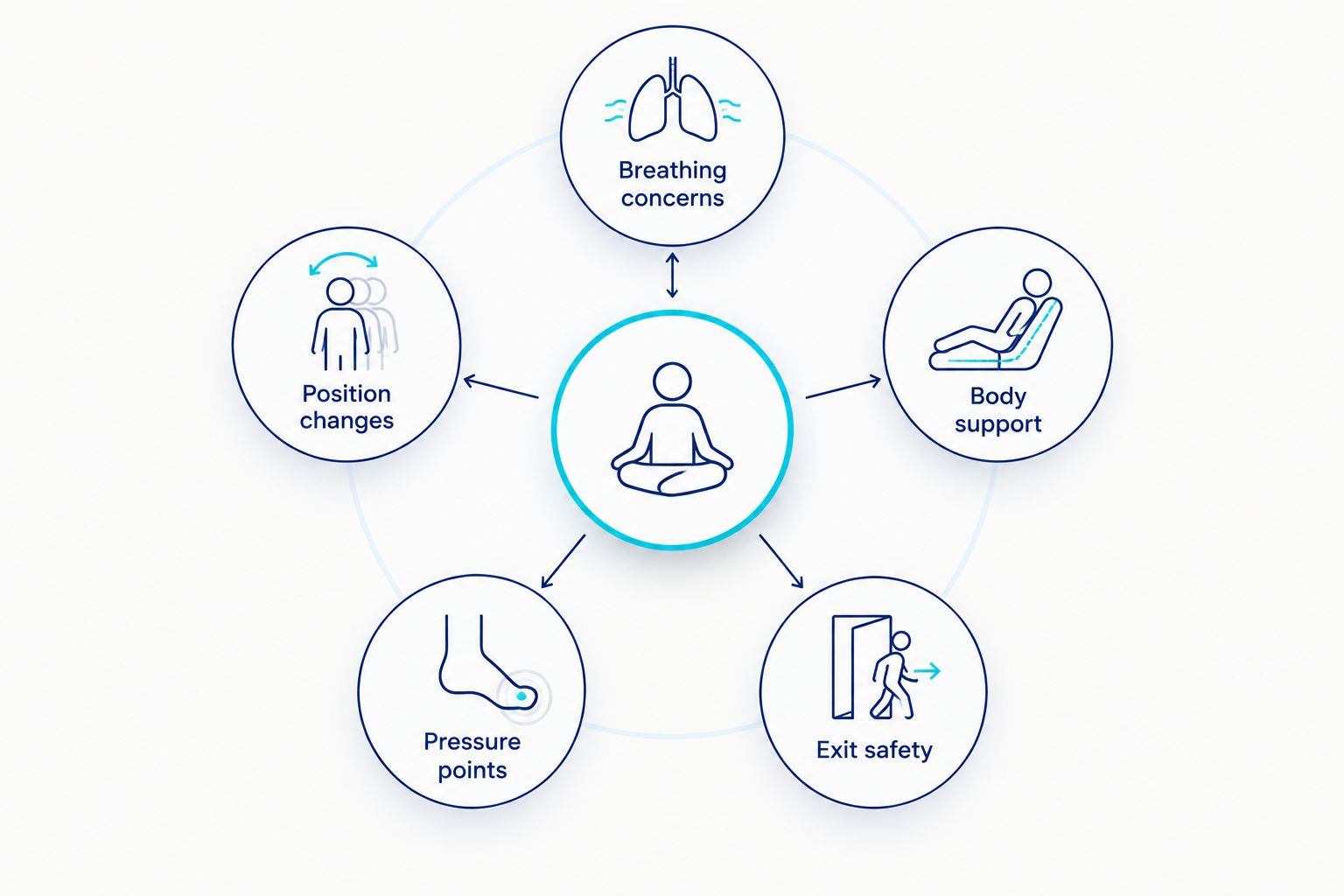
The answer in 2026 turns on factors you can check, not a universal rule about chairs:
- Reason for sleeping upright. Preference and a new breathing difficulty are different situations. A breathing concern needs medical assessment.
- Ability to change position. If you cannot shift when a part of your body feels sore or numb, the chair is a poor choice for unattended sleep.
- Head and body support. A position that pushes your chin toward your chest, twists your trunk or leaves your legs unsupported is not a comfortable overnight position.
- Skin and pressure. Persistent redness or soreness where your body presses against the chair calls for a change in position and appropriate medical advice.
- Getting out safely. Consider balance, chair controls, footwear, the floor around the chair and whether you need help standing.
- Your care instructions. Advice following surgery or for a diagnosed condition takes priority over a general comparison of sleep furniture.
These factors can change even if the chair does not. Review the setup again if your mobility, symptoms or care instructions change. Do not use a previous comfortable night as proof that a new problem is harmless.
What are the risks of sleeping in a recliner every night?
The concern is not that every recliner causes the same harm. It is that a fixed chair position can make it harder for some people to move, notice pressure discomfort or get up safely. Your health and mobility determine how important those risks are.
Discomfort, numbness and pressure
Check how you feel while seated and after standing. New numbness, pain or persistent skin redness is a reason to stop relying on that position and seek advice if symptoms continue. Adding cushions at random can change how the chair supports you or how safely you can get out.
If you have limited mobility or reduced sensation, ask a clinician for positioning guidance rather than using comfort as your only test. Someone who cannot easily change position needs a different safety plan from someone who can stand and move independently.
Swelling and limited movement
Pay attention to new or worsening leg swelling, particularly if you spend long periods without changing position. Do not diagnose the cause from the chair alone. Seek medical advice about new swelling, and get urgent care for sudden symptoms that suggest a serious problem, such as chest pain or trouble breathing.
A chair setting labelled zero gravity does not establish that the position is right for your circulation or a medical condition. The meaningful check is whether you can move comfortably and whether a clinician has given you specific positioning instructions.
Breathing problems that furniture cannot diagnose
If you cannot lie flat because you feel short of breath, contact a healthcare professional. If breathing difficulty is sudden or severe, seek urgent medical care. A recliner can change your position; it cannot tell you why breathing feels different.
Likewise, a chair is not a substitute for prescribed treatment for sleep apnea. If you use a CPAP machine or another prescribed treatment, continue to follow your clinician’s instructions. Discuss difficulties using that treatment in your chosen sleep position with the clinician or equipment provider.
Falls and difficult transfers
Before sleeping in the chair, sit in it and rehearse getting up while fully awake. Check that you can operate its controls, bring it to a stable position and stand without losing your balance. Keep the route away from the chair clear.
If you need help to stand, arrange that help rather than assuming a reclining mechanism solves the transfer. This is especially important after surgery or whenever your mobility has changed. A chair that feels supportive while seated can still be difficult to exit.
How should you assess your recliner for nightly sleep?
Use a practical check in 2026 before treating any chair as your regular sleeping place:
- Identify the reason. Write down what prevents you from sleeping in bed. If it involves breathing, new symptoms or post-surgical instructions, address that issue with your care team.
- Check your position. Recline as you would for sleep. Notice whether your head, trunk and legs stay supported without strain or awkward bending.
- Check movement. Confirm that you can adjust your position and respond if a pressure point becomes uncomfortable.
- Check your exit. Return the chair to a position from which you can stand safely. Make sure essential items are reachable without twisting or leaning dangerously.
- Check the next morning. Note pain, numbness, swelling, skin irritation and whether you feel rested. A recurring problem is a reason to change the arrangement, not ignore it.
Do not turn this checklist into a medical clearance test. It helps you spot practical problems with the chair. It cannot rule out a sleep disorder, explain shortness of breath or replace individualized recovery instructions.
Is a recliner better than a mattress for nightly sleep?
No setup wins for everyone. A recliner provides a seated resting position; a mattress provides a sleeping surface. If you want to stay in bed while changing your position, assess an adjustable bed and a compatible mattress rather than assuming you must move to a chair.
Aeva Vital offers hybrid mattresses as a bedding option. Aeva Vital hybrid mattresses are best considered by shoppers choosing a mattress, not by people seeking treatment for breathing problems. Mattress construction alone does not establish whether a particular sleep position is medically appropriate or whether an adjustable frame is compatible; check the relevant specifications before choosing a setup.
Can you sleep in a recliner if you have sleep apnea?
A recliner is not a replacement for sleep apnea treatment in 2026. Ask your clinician how to use prescribed treatment in a position you can maintain safely, and do not treat a more upright position as proof that sleep apnea is controlled.
Is it safe to sleep in a recliner after surgery?
It is safe only when it fits your specific discharge instructions and you can use the chair without unsafe transfers or pressure on the surgical area. Ask your care team if those instructions do not clearly address sleeping position or getting out of the chair.
Should you switch to an adjustable bed instead?
An adjustable bed is an option when you want to change your position while remaining on a bed. It is not automatically the right choice for a medical problem: check mattress compatibility, your ability to get in and out, and any positioning instructions from your clinician.
FAQ
Is it safe to sleep in a recliner every night?
Sleeping in a recliner every night is not automatically unsafe, but it depends on your health, comfort and ability to move and get out safely. Seek medical advice if you need to sit upright to breathe comfortably.
Can sleeping in a recliner cause leg swelling?
New or worsening leg swelling needs medical assessment; do not assume the chair is the only cause. Review how long you remain in one position and follow any movement or positioning advice from your clinician.
Is a recliner a substitute for sleep apnea treatment?
No, a recliner does not replace prescribed sleep apnea treatment. Ask your clinician how to use your treatment safely in your chosen sleep position.
Can I sleep in a recliner after surgery?
Follow your surgical team’s instructions on sleep position and movement. Ask whether the chair fits those instructions and whether you need help getting in and out.
Is an adjustable bed better than a recliner for sleeping upright?
An adjustable bed keeps you on a bed while changing its position; a recliner is a chair. Choose based on your ability to sleep and move safely, and follow medical guidance when a health condition drives the decision.
What should I check before sleeping in a recliner overnight?
Check head and body support, your ability to change position, and whether you can exit the chair safely. Reassess if you develop pain, numbness, swelling or skin irritation.
When should I seek help if I cannot sleep lying flat?
Contact a healthcare professional if you need to sit upright because lying flat makes breathing difficult. Seek urgent care if breathing difficulty is sudden or severe.
Related guides
- Can a zero-gravity recliner help with sleep apnea?
- Can an adjustable bed help with sleep apnea?
- Setting up a lift chair and hospital bed rail after surgery
One last thing
In 2026, the most useful question is not whether a recliner is safe in general. Ask why you need to sleep there and whether the setup still lets you move, breathe comfortably and get up safely. If a new symptom prompted the change, address the symptom before making the chair your permanent bed.