
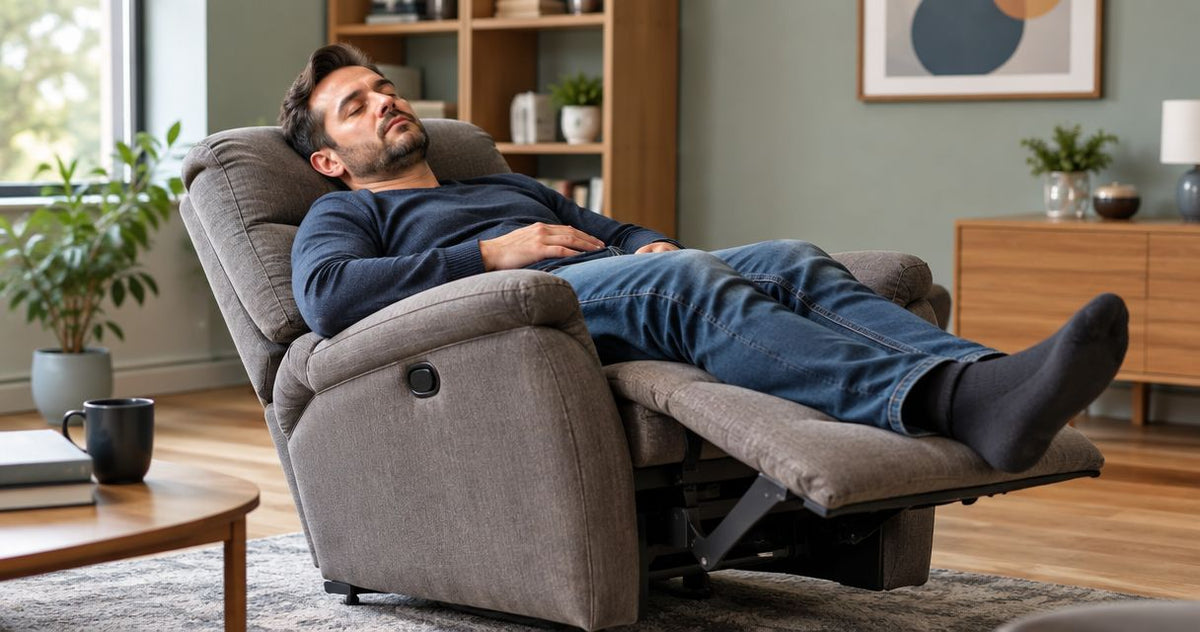
Yes, sleeping in a recliner can cause back pain if the chair leaves your lower back unsupported or holds your body in a position that feels uncomfortable through the night. A recliner can also feel more comfortable than a flat bed for some people; the chair itself does not determine the outcome. In 2026, the useful question is whether your particular recliner lets you rest without waking with new or worse pain.
By Editorial Team
- Yes, sleeping in a recliner can cause back pain when its position or support does not suit you.
- A recliner is best for occasional rest when it feels comfortable, not as a proven fix for back pain.
- Aeva Vital hybrid mattresses are a bed-based alternative, but no supplied specification establishes back-pain relief.
- New weakness, numbness around the groin, or loss of bladder or bowel control needs urgent medical attention.
Why this matters
An upright sleeping position is not automatically good or bad for your back. The practical concern is that a chair fixes the relationship between your head, hips, and legs differently from a bed. If you cannot change position comfortably, a setup that felt fine at bedtime can feel uncomfortable by morning.
If you are considering an overnight stay in a chair, the distinction between occasional use and a regular sleep setup matters. The guide to sleeping overnight in a zero-gravity recliner covers that related decision. For the back-pain question, judge the position by how your body feels during the night and after you get up, not by the chair's name.
Can sleeping in a recliner cause back pain?
Yes. A recliner can contribute to back pain when its seat, backrest, or leg support holds you in an uncomfortable position. It can also reduce discomfort for someone who finds that particular position easier to tolerate. Neither result proves that reclining treats or causes an underlying back condition.
| Sleep setup | Best for | Potential advantage | Main limitation |
|---|---|---|---|
| Recliner | Occasional rest in a position you already find comfortable | Supports an upright or partly reclined posture | Seat and backrest shape limit how you reposition |
| Flat bed and mattress | People who can sleep comfortably lying down | Gives you room to change position | A mattress that feels uncomfortable still needs attention |
| Adjustable bed | People who want to change their position while using a bed | Lets you alter the bed position | Adjustability alone does not establish back-pain relief |
Verdict: Do not choose a recliner because it is labeled supportive. Choose a sleep setup that lets you settle comfortably and change position without making your symptoms worse. If pain is persistent, assess the symptom rather than assuming a furniture change will resolve it.
How a recliner can affect your back
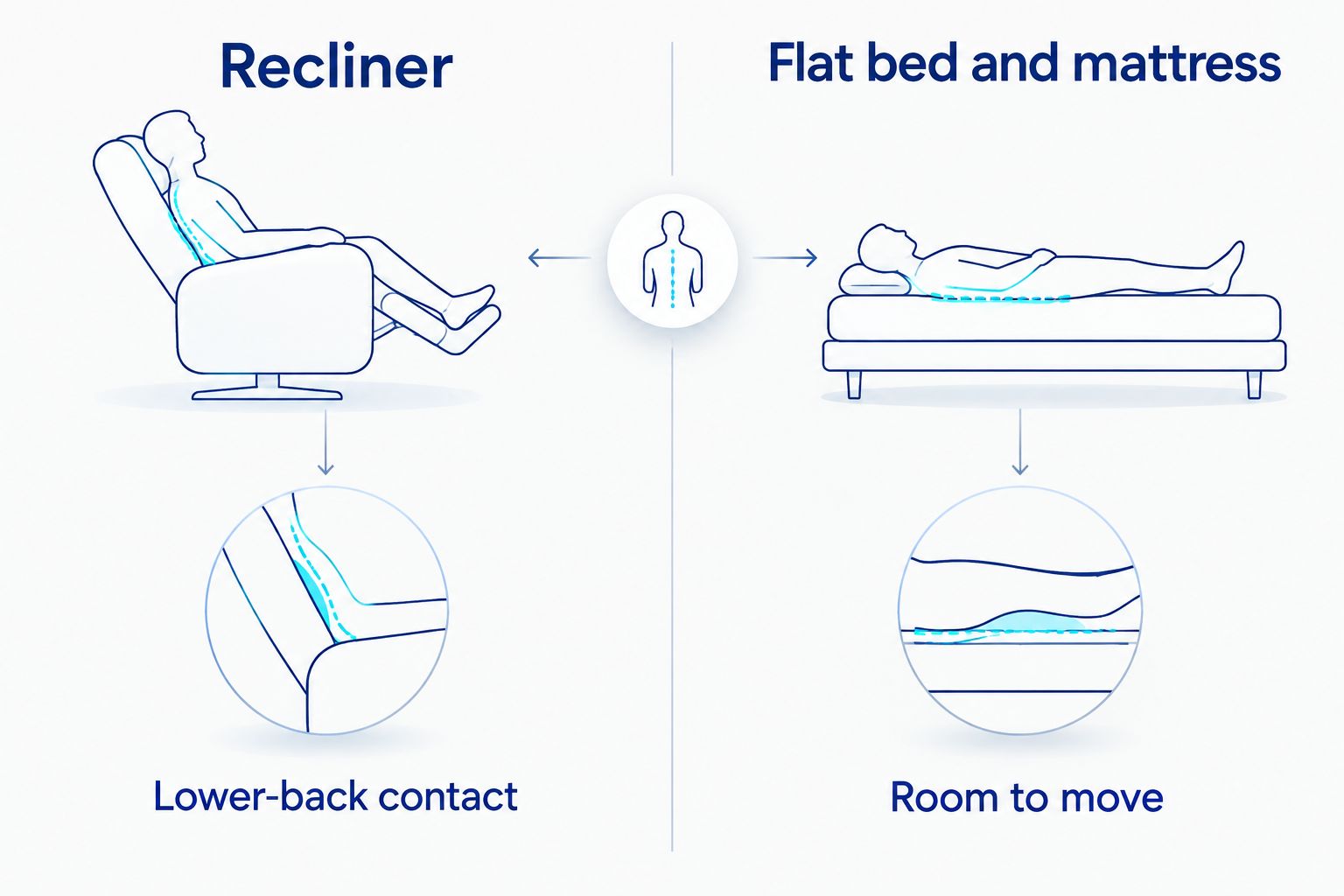
Lower-back contact
Notice whether the backrest touches and supports your lower back when you settle in. If there is a gap, you might find yourself tensing, sliding down, or repeatedly trying to reposition. If the backrest presses uncomfortably into one area, changing the recline angle is more useful than forcing yourself to stay there.
A pillow or small cushion can change how the chair feels, but it is not a universal correction. Check whether it helps once your legs are raised and again after you have spent time in the position. Remove it if it makes you arch or twist to get comfortable.
Seat and hip position
Your back does not rest against the backrest in isolation. The seat affects where your hips settle, and that changes how the rest of your body meets the chair. If you keep sliding forward, the position you selected is not the position you maintain while sleeping.
Check the full seated position rather than judging the backrest alone. Sit all the way back, set the leg rest where it feels comfortable, and notice whether your shoulders and hips can remain relaxed. Do not use a chair that requires you to brace yourself to stay in place.
Room to move
A bed generally gives you more room to turn than a recliner. If you regularly change position in your sleep, a chair's arms and shaped seat can restrict that movement. The issue is not that one sleeping posture is universally correct; it is whether you can leave a posture that has become uncomfortable.
This distinction matters in 2026 just as much as the chair's advertised position. A position can feel comfortable while you are awake yet be a poor match for a full night if you wake and cannot shift easily.
Why recliner-related back pain varies
There is no single recliner position that fits every sleeper. These factors change how a chair feels without telling you, on their own, what caused your pain:
- Backrest fit. A backrest can leave a gap behind your lower back or press against a spot you find uncomfortable.
- Seat position. Where your hips settle affects whether you remain against the backrest or slide away from it.
- Leg support. Raising or lowering the leg rest changes your overall position; choose the setting that feels comfortable rather than assuming higher is better.
- Movement. Chair arms and a shaped seat can make it harder to turn when you want a different position.
- Your existing symptoms. Pain that began before you used the chair needs its own assessment, especially if it persists or worsens.
These are fit checks, not a way to diagnose a spinal condition. If changing the recline angle reliably changes your discomfort, note the pattern. That observation is more useful than treating the term zero-gravity or any other position label as proof of a health benefit.
How to check whether the chair is the problem
Use a simple comparison, not a test of how much discomfort you can tolerate. The aim is to identify what happens when you use the chair and whether another available sleep position feels better.
- Notice when the pain starts. Is it present before you sit down, while you are in the chair, when you stand, or the next morning? A clear timeline helps you avoid blaming the chair for pain that was already there.
- Check where you make contact. Pay attention to your lower back, hips, shoulders, and legs. Look for a gap, pressure point, or position that makes you slide.
- Change one part of the setup. Try a different recline angle or leg-rest position. If you add a cushion, check whether it improves comfort without forcing another part of your body into an awkward position.
- Compare with your usual bed. If you can sleep comfortably there, notice whether symptoms differ after sleeping in the bed rather than the recliner. Do not treat a single better or worse morning as a diagnosis.
- Stop forcing an uncomfortable position. If pain increases in the chair, change position or use another suitable place to rest. Speak with a clinician if the pain continues.
In 2026, the most useful sleep-setup comparison is still personal and repeatable: where do you wake more comfortable, and can you move when your position stops feeling right? Keep the focus on the symptom. Buying a different chair or mattress is not a substitute for evaluating persistent pain.
When a recliner is not the right answer
Do not use a recliner to work around new or worsening back pain without considering why the pain has changed. Seek medical advice for pain that persists, limits normal activity, or follows an injury. If back pain occurs with new leg weakness, numbness around the groin, or loss of bladder or bowel control, seek urgent medical attention.
After surgery, follow the position and mobility instructions from your care team. A chair that feels easy to get into is not automatically suitable for sleeping during recovery. If getting into or out of either a bed or recliner is difficult, raise that specific issue with your care team rather than choosing a setup solely for its sleeping position.
Where a mattress fits into the decision
A bed-based option makes sense when you want more room to reposition and already know that lying down is comfortable for you. Aeva Vital hybrid mattresses are best for readers considering a bed-based alternative to recliner sleep, not for anyone seeking a proven back-pain treatment. Hybrid describes mattress construction; the supplied information does not establish a firmness level, dimensions, or a clinical outcome for an individual mattress.
Compare what you can actually evaluate: whether you can settle into a comfortable position, turn without difficulty, and get out of bed safely. If an adjustable bed is also under consideration, distinguish the bed's ability to change position from the mattress's feel. Neither feature guarantees that back pain will improve.
That distinction keeps a 2026 purchase decision grounded in fit rather than a promise. If a clinician has given you positioning instructions, use those instructions when assessing any sleep setup.
Is it better to sleep in a recliner or a bed if your back hurts?
The better option is the one that lets you rest comfortably and reposition without worsening your symptoms. A bed offers more room to move, while a recliner holds you in a more defined seated or reclined position. Persistent pain needs medical assessment regardless of which option feels better for one night.
Can a zero-gravity recliner prevent morning back pain?
No recliner position is guaranteed to prevent morning back pain. Zero-gravity describes a style of reclining position, not proof that a specific chair will suit your back. Assess your comfort in the actual position you would use for sleep.
FAQ
Can sleeping in a recliner cause lower back pain?
Yes. A recliner can contribute to lower back pain if its seat or backrest leaves you uncomfortable or limits your ability to reposition. Pain that persists needs assessment rather than a furniture-only fix.
Is sleeping in a recliner bad for your back every night?
Not necessarily, but a recliner is not automatically suitable for nightly sleep. Check whether you wake comfortable, can change position, and have any worsening symptoms.
Is a bed better than a recliner for back pain?
A bed is the better choice if it lets you sleep comfortably and reposition more easily. A recliner can feel more comfortable in a particular position, but neither setup treats every cause of back pain.
Should I put a pillow behind my back in a recliner?
Use a cushion only if it improves your comfort without making you arch or twist. Recheck the fit after you adjust the leg rest or recline angle.
Can a zero-gravity recliner fix back pain?
No recliner position is a proven fix for an individual's back pain based on its name alone. Judge the chair by fit and symptoms, and seek medical advice for pain that continues.
Why does my back hurt when I stand up after sleeping in a recliner?
The timing shows when you notice the pain, not what caused it. Check whether you felt uncomfortable in the chair and speak with a clinician if the pain persists or worsens.
When should I seek urgent help for back pain?
Seek urgent medical attention if back pain occurs with new leg weakness, numbness around the groin, or loss of bladder or bowel control. Do not try to solve those symptoms by changing your sleeping position.
Related guides
- Is an adjustable bed worth it for back pain?
- Hybrid mattresses ranked by firmness level
- Can a sofa bed be comfortable for everyday sleeping?
One last thing
If a recliner feels comfortable at bedtime but you wake with back pain, evaluate the position you stay in, not just the one you start in. In 2026, that is a more useful buying check than a chair label or an unsupported claim about pain relief.