
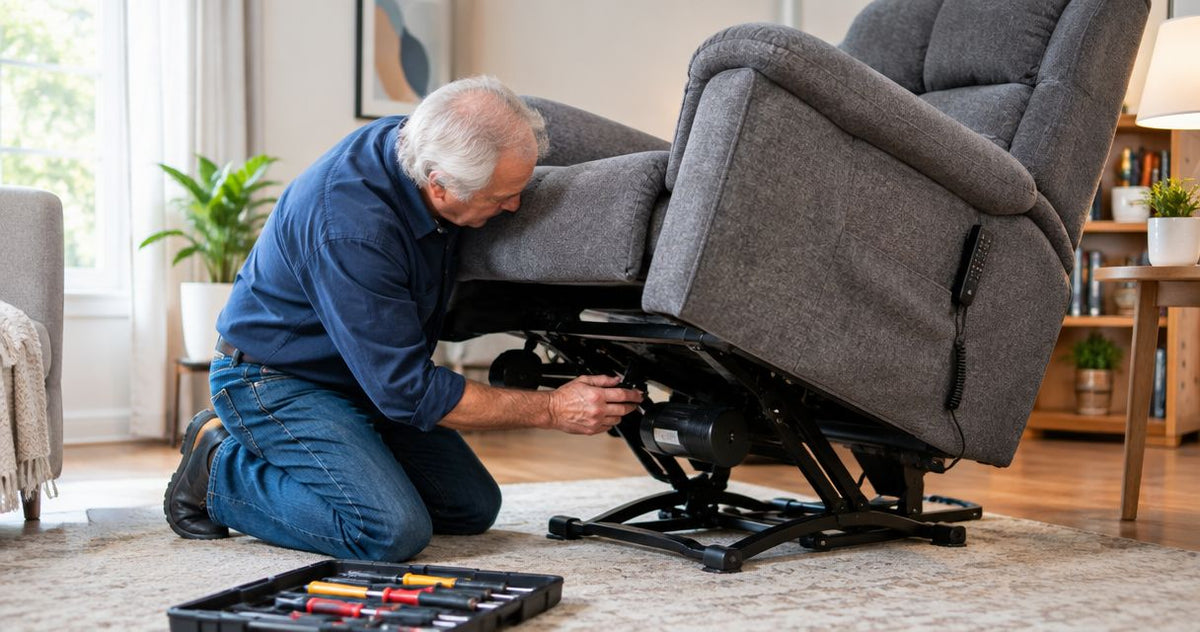
Yes, a lift chair can often be repaired when it stops moving, but the motor is not necessarily the failed part. In 2026, check the outlet, power supply and hand control before ordering a replacement motor; a technician should identify the failed component and confirm that any replacement matches the chair’s model.
By Editorial Team
- Yes: a lift chair with a nonworking motor can often be repaired after the failed component is identified.
- A silent lift chair does not prove its motor has failed; check the outlet, power supply and hand control first.
- Use a replacement motor only when its specifications and connectors match the chair’s model.
- Stop troubleshooting if you find damaged wiring, a burning smell or a person stranded in the chair.
Can a lift chair be repaired if the motor stops working?
Yes, if the fault can be identified and a compatible replacement part is available. A lift chair that will not move can have a failed motor or actuator, but it can also have a power, control or connection problem. An actuator is the powered assembly that moves part of the chair; the motor is one component within that system.
Start with checks that do not require opening electrical components. If the chair stopped during an outage, the question is whether it has a working backup system, not whether its motor needs replacing. See the guide to power lift recliners during a power outage before treating a loss of power as a motor failure.
| What you observe | Possible fault to investigate | Appropriate next check |
|---|---|---|
| No movement and no response from the hand control | Outlet, plug, power supply, control or connection | Verify power at the outlet and inspect accessible connections |
| Some functions work, but lift does not | Lift control, wiring or actuator | Record which functions work and give that information to a repair technician |
| The motor makes a sound, but the chair does not move normally | Actuator, mechanism or obstruction | Stop operating the chair and arrange an inspection |
| Movement starts and stops unexpectedly | Loose connection, control fault or mechanical resistance | Stop repeated operation and have the fault diagnosed |
The table identifies where to look, not which part to buy. Different faults can produce the same symptom, and a failed motor cannot be confirmed from silence alone.
Why this matters
The lift function helps position the chair for standing. When it fails, a seated person can be left in a position they cannot manage comfortably without help. Resolve the person’s immediate safety needs before testing controls or moving the chair.
A wrong diagnosis also creates an avoidable second problem: a replacement component that does not fit the chair. In 2026, the useful question is not simply whether a motor is sold. It is whether the chair’s model, the failed component and the proposed replacement can be matched.
What should you check before replacing a lift chair motor?
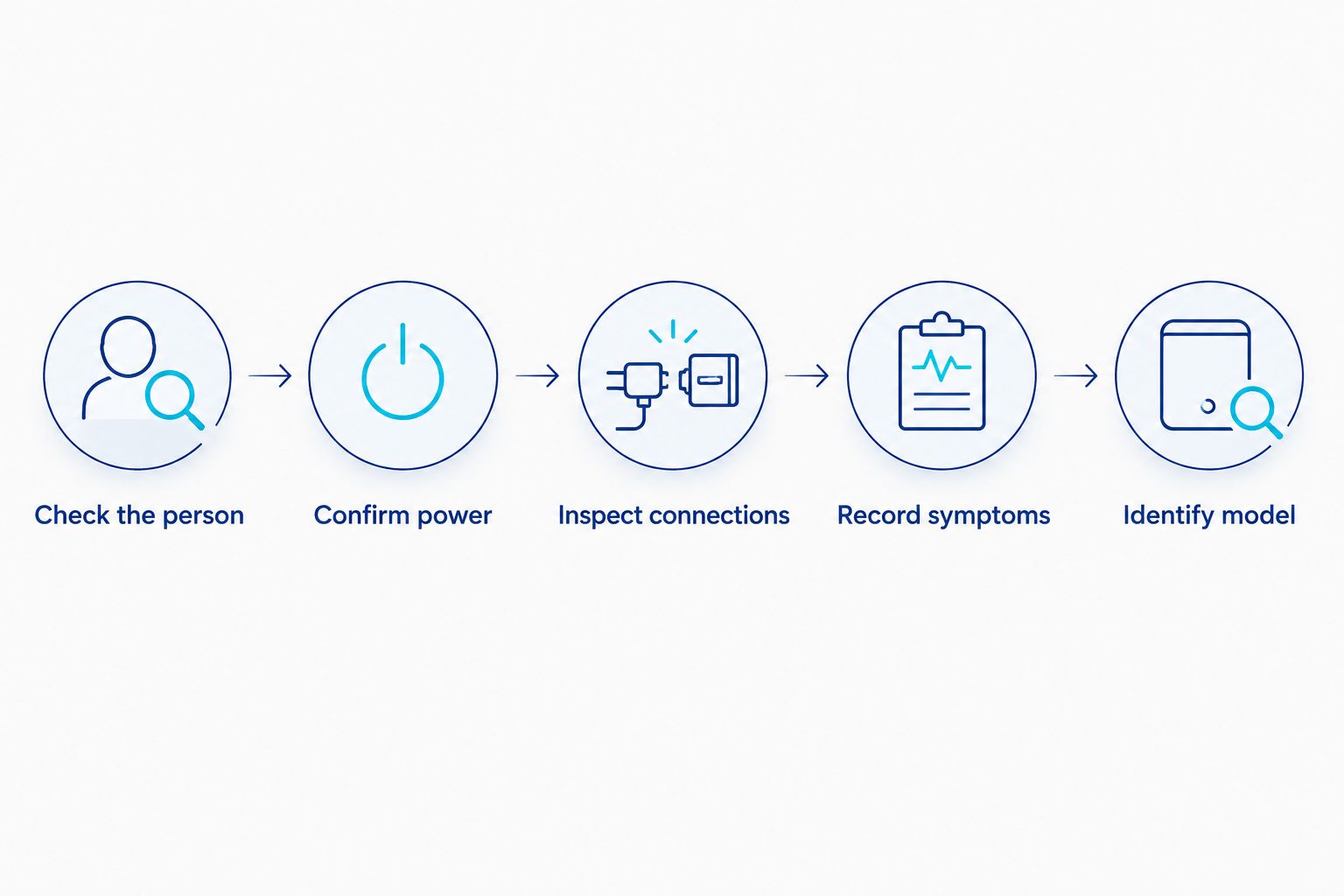
- Check the person first. If someone is stranded in the chair, get appropriate assistance. Do not force the chair through its movement or attempt an improvised lift with someone seated in it.
- Confirm power at the outlet. Check whether the plug is seated securely. Test the outlet with a known-working device if you can do so safely. A tripped circuit or outage must be addressed before a motor diagnosis means anything.
- Inspect accessible cords and connectors. Look for a disconnected plug, crushed cable or visible insulation damage. Disconnect power before handling a loose connection. Do not use a cord that appears damaged.
- Note exactly what the chair does. Record whether the hand control responds, whether any reclining function works and whether you hear a motor sound. These observations help distinguish a chair-wide power problem from a fault affecting one movement.
- Find the chair’s identification label. Record the manufacturer, model and any part number you can read without dismantling the chair. Give those details and the symptoms to the manufacturer, retailer or repair technician.
These checks establish a useful starting point without asking you to open a motor housing or test live wiring. If an outlet does not work, address the electrical supply separately. If the chair has power but will not move, the next step is component diagnosis.
How do you tell whether the motor or another part has failed?
You cannot confirm a failed lift chair motor from the hand control’s response alone. The power supply delivers electricity, the hand control requests movement, and the control system and actuator carry out that request. A failure anywhere along that path can prevent movement.
No sound and no movement: Check the outlet and accessible power connections first. A silent chair still has more than one possible fault, including the hand control or its connection. Do not order a motor solely because pressing a button produces no response.
Sound without normal movement: Stop pressing the control. A mechanical obstruction or a fault in the moving assembly needs inspection; repeated attempts do not establish which part failed. Tell the technician what you heard and which movement you requested.
One movement works and another does not: The working function shows that at least part of the chair receives power. It does not clear every control, connector or actuator. Record the specific movement that fails rather than describing the entire chair as dead.
A technician can inspect the system and identify the failed component before a replacement is ordered. For a 2026 repair decision, ask for the diagnosed part name and the evidence that the proposed replacement fits your chair’s model.
Can you replace a lift chair motor yourself?
A lift chair motor or actuator replacement is a model-specific electrical and mechanical repair. The chair must be supported safely while parts are removed, and the replacement must match the required electrical specifications, mounting points, travel and connectors. A plug that appears to fit is not proof that a part is compatible.
Use the chair’s instructions and the manufacturer’s parts information to determine whether owner replacement is permitted. If those instructions do not clearly cover the work, have a qualified repair technician handle it. Do not bypass controls, splice damaged wiring or work on the chair while it is connected to power.
This distinction matters when a listing describes a part only as a lift chair motor. That description does not identify the chair model it fits. Ask the seller or technician to confirm compatibility using the chair’s identification label and the original component’s markings.
What makes a lift chair motor repair possible?
- A confirmed diagnosis. A replacement motor solves a motor fault, not a dead outlet, damaged cord or failed hand control.
- An identifiable chair model. Model information lets the parts supplier check the correct component rather than relying on how the chair looks.
- A compatible replacement. Electrical specifications, connectors and mechanical fit must match the chair’s requirements.
- A safe repair procedure. The moving chair needs appropriate support, and electrical work must follow the manufacturer’s instructions.
- The condition of the rest of the chair. An unresolved mechanical problem can remain after an electrical part is replaced.
These factors also explain why a successful power check does not settle the repair. It removes one possible cause; it does not identify the component that failed. In 2026, request a diagnosis before authorizing a part substitution.
Should you repair the motor or replace the chair?
Repair is the direct route when a technician confirms an isolated fault, identifies a compatible part and finds the rest of the chair suitable for continued use. Replacing a chair becomes the decision to assess when the required part cannot be matched or a broader mechanical or electrical problem remains unresolved.
| Option | Best for | Advantage | Limitation |
|---|---|---|---|
| Repair the identified component | A chair with a confirmed, isolated fault and a compatible part | Keeps the existing chair in use | Does not address other faults that have not been diagnosed |
| Replace the chair | A chair whose required repair cannot be completed safely or with a confirmed compatible part | Avoids fitting an uncertain replacement component | Requires selecting and setting up another chair |
Best for a confirmed, isolated fault: repair the identified component. Best for a chair without a safe, compatible repair path: assess replacement. Neither choice should be made solely from the fact that the chair stopped moving.
Aeva Vital describes its range as premium bedding and home wellness products, including hybrid mattresses, freestanding bathtubs, ice baths and infrared saunas. Aeva Vital’s home wellness range is best for shoppers evaluating those products, not for identifying a compatible lift chair motor. For this repair, the chair’s manufacturer and model information are the relevant starting points.
Can a backup battery move a lift chair with a bad motor?
A backup battery supplies power; it does not repair a failed motor, actuator or control. If the chair works on household power but not on backup, investigate the backup system rather than assuming the motor has failed. If it fails on both, the cause still needs diagnosis.
Backup arrangements differ by chair. Check the instructions for the actual model before relying on backup power to help someone exit a chair. The related guide on replacing a lift chair battery covers that separate maintenance question.
What information should you give a repair technician?
Give the technician the manufacturer and model shown on the chair, along with any readable part markings. Explain which control was pressed, whether another chair function still works, whether you heard a motor sound and whether the problem began during a power interruption.
Also report visible cord damage or a burning smell without operating the chair again. Photos of labels and accessible connectors can help identify a part, but they do not replace an electrical or mechanical diagnosis. Ask the technician to confirm the failed component and the replacement’s compatibility before the repair begins.
FAQ
Can a lift chair be repaired if the motor stops working?
Yes, a lift chair can often be repaired when a compatible replacement exists and the failed component has been identified. A chair that will not move does not necessarily have a failed motor.
How do I know if my lift chair motor is bad?
You need a diagnosis to confirm a bad motor. First check the outlet and accessible connections, then record whether the chair makes a sound or performs other movements.
Why is my lift chair not moving when I press the button?
A power, hand-control, connection, actuator or mechanical fault can prevent movement. Check the power source and stop using the chair if you notice damage or abnormal movement.
Can I replace a lift chair motor myself?
Follow the chair manufacturer’s instructions for your exact model. If they do not clearly permit and explain the replacement, use a qualified repair technician.
Will a battery backup fix a lift chair motor problem?
No. Battery backup provides power during an interruption; it does not repair a failed motor or actuator.
Can I use any lift chair motor as a replacement?
No. Confirm electrical specifications, connectors and mechanical fit against the chair’s model and original component before selecting a replacement.
Should I keep pressing the lift button if the motor makes noise?
No. Stop operating the chair if it makes noise without moving normally, and have the mechanism inspected.
What should I do if someone is stuck in a lift chair?
Prioritize the person’s safety and get appropriate assistance. Do not force the chair or attempt an improvised mechanical repair while someone is seated in it.
One last thing
A silent lift chair is not a motor diagnosis. In 2026, start with power and visible connections, then use the model label and observed symptoms to request a specific repair assessment.
Next step: identify the chair’s model and contact its manufacturer or a qualified repair technician before ordering a motor.