

Pregnant women should not start or continue cold plunging without an individualized discussion with their obstetric clinician; a home cold plunge is not an established pregnancy-safe recovery treatment. Sudden cold-water immersion can trigger gasping, rapid breathing, and cardiovascular stress, and ordinary fitness guidance does not establish safety for your pregnancy. Until your prenatal care team advises otherwise, skip deliberate ice-cold immersion.
By Editorial Team
- Can pregnant women use a cold plunge tub? Ask your obstetric clinician; general cold-plunge advice does not establish pregnancy safety.
- The American College of Obstetricians and Gynecologists supports appropriate pregnancy exercise, not a blanket approval for ice baths.
- A short session, prior experience, or precise temperature control does not establish pregnancy safety.
- Choose clinician-approved movement or comfortable bathing instead of experimenting with extreme water temperatures.
Can pregnant women use a cold plunge tub safely?
There is no universal yes: your pregnancy, medical history, symptoms, and proposed exposure require individual assessment. A routine designed for a healthy, nonpregnant athlete is not a prenatal protocol. Your clinician needs to assess the activity itself, not simply whether you exercised before pregnancy.
An ice-filled bath and a refrigerated plunge both involve cold-water immersion. The distinction explained in is an ice bath the same as a cold plunge tub? does not make either format pregnancy-safe.
For a 2026 decision, use this assessment sequence rather than borrowing a temperature or timer setting:
- Describe the actual activity. Tell your clinician that you mean deliberate cold-water immersion, not ordinary swimming or a comfortable bath.
- Explain your history. Include previous cold-water experience, pregnancy complications, relevant diagnoses, medications, and recent symptoms.
- Ask whether to avoid it. Do not turn general permission to exercise into permission to cold plunge.
- Clarify any restrictions. If your clinician supports a specific activity, ask about supervision, warning signs, and when to reassess.
- Do not improvise a protocol. An online challenge, wearable reading, or manufacturer's cooling range cannot supply medical clearance.
Why this matters: cold shock is not a recovery benefit
Cold shock is the immediate response to sudden cold-water exposure. It can include an involuntary gasp, uncontrolled breathing, and increased heart rate and blood pressure. The Royal National Lifeboat Institution's cold-water safety guidance describes these general immersion hazards; it is not pregnancy-specific clearance.
You do not need to develop hypothermia before cold water creates a problem. Breathing difficulty, dizziness, or trouble getting out of a tub creates an immediate safety concern, even when someone planned a brief session.
That distinction matters when reading 2026 recovery advice. Claims about alertness, soreness, or athletic routines answer a different question from whether deliberate cold exposure is appropriate during pregnancy. A possible benefit for an athlete does not establish a favorable risk-benefit balance for a pregnant person.
Cold plunging, swimming, and bathing are different choices
An activity's name does not determine its safety. Water temperature, exertion, access, medical history, and the likelihood of overheating or cold stress all matter.
| Activity | Best for | Useful distinction | Limitation during pregnancy |
|---|---|---|---|
| Deliberate cold plunge | A clinician discussion before participation | Intentionally exposes the body to cold water | General recovery protocols do not establish prenatal safety |
| Swimming in a suitable pool | People whose prenatal clinician supports swimming | Provides movement without requiring deliberate extreme cold | Pool conditions, symptoms, and individual restrictions still matter |
| Comfortable, non-hot bathing | Personal comfort when bathing is appropriate | Does not require an extreme-temperature recovery routine | Slippery surfaces and difficult entry or exit remain concerns |
| Sauna-to-plunge contrast routine | Deferral pending specific clinical advice | Combines heat exposure with cold immersion | Permission for one activity does not approve the combination |
The American College of Obstetricians and Gynecologists' guidance, Exercise During Pregnancy, identifies swimming and water workouts among activities suitable for many uncomplicated pregnancies. Its general exercise recommendation is at least 150 minutes of moderate-intensity aerobic activity per week, subject to individual medical advice.
Those 150 minutes per week concern appropriate exercise. They are not a cold-exposure target, and sitting in an ice bath is not a substitute for that recommendation. For your 2026 plan, ask which forms of movement fit your pregnancy rather than trying to make cold plunging count as prenatal exercise.
Why the assessment varies between pregnancies
A clinician's assessment depends on more than your willingness to tolerate cold. Bring these factors to the appointment:
- Pregnancy course: Discuss complications, bleeding, contractions, fluid leakage, and any existing activity restrictions.
- Cardiovascular history: Report high blood pressure, heart conditions, fainting, and unexplained palpitations.
- Current symptoms: Mention dizziness, breathlessness, chest discomfort, illness, and unusual fatigue before considering immersion.
- Exposure details: Explain the intended water conditions, immersion depth, supervision, and whether heat exposure is also involved.
- Access and assistance: Describe the tub's entry, exit, wet surfaces, and who would help if you felt unwell.
- Previous experience: Tell your clinician whether you already cold plunge, while recognizing that experience does not establish pregnancy safety.
These are discussion points, not a self-screening system. Passing a checklist at home does not replace an assessment, and a prior uncomplicated pregnancy does not determine the advice for your current pregnancy.
Does the trimester change the answer?
Do not assume any trimester automatically makes cold plunging safe. Advice can change with your pregnancy course, symptoms, balance, and medical findings. A decision made earlier in pregnancy needs reconsideration if your circumstances change.
Likewise, do not assume that avoiding abdominal immersion solves the problem. Cold exposure can still affect breathing and circulation, and a slippery entry or exit remains a physical hazard. Ask about the actual activity you intend to do rather than a simplified description such as dipping briefly.
For 2026 planning, treat new symptoms or a new diagnosis as reasons to revisit your activity plan. Do not continue because a calendar, app, or earlier conversation says you are still within a previously acceptable stage.
What water temperature and session length are safe during pregnancy?
Do not use a generic temperature or session duration as a pregnancy safety limit. A setting promoted for athletic recovery is not a validated prescription for pregnant users. Shortening the session does not remove the initial cold-shock response.
Temperature control answers an equipment question: how closely the system can maintain its setting. It does not answer whether that setting is appropriate for your pregnancy. Similarly, a timer measures exposure; it does not prove that the exposure is safe.
Do not use comfort alone as your clearance test. Feeling accustomed to cold water does not tell you everything about your cardiovascular response or pregnancy-specific circumstances. If your clinician advises against plunging, choosing a milder setting yourself is not an equivalent alternative.
Make the appointment useful: describe the whole setup
Your prenatal clinician needs a concrete description, not just the phrase home wellness. Explain whether the tub requires stepping over a high edge, lowering yourself onto the floor, or climbing out without a fixed handhold. Include any history of feeling lightheaded after bathing or exercise.
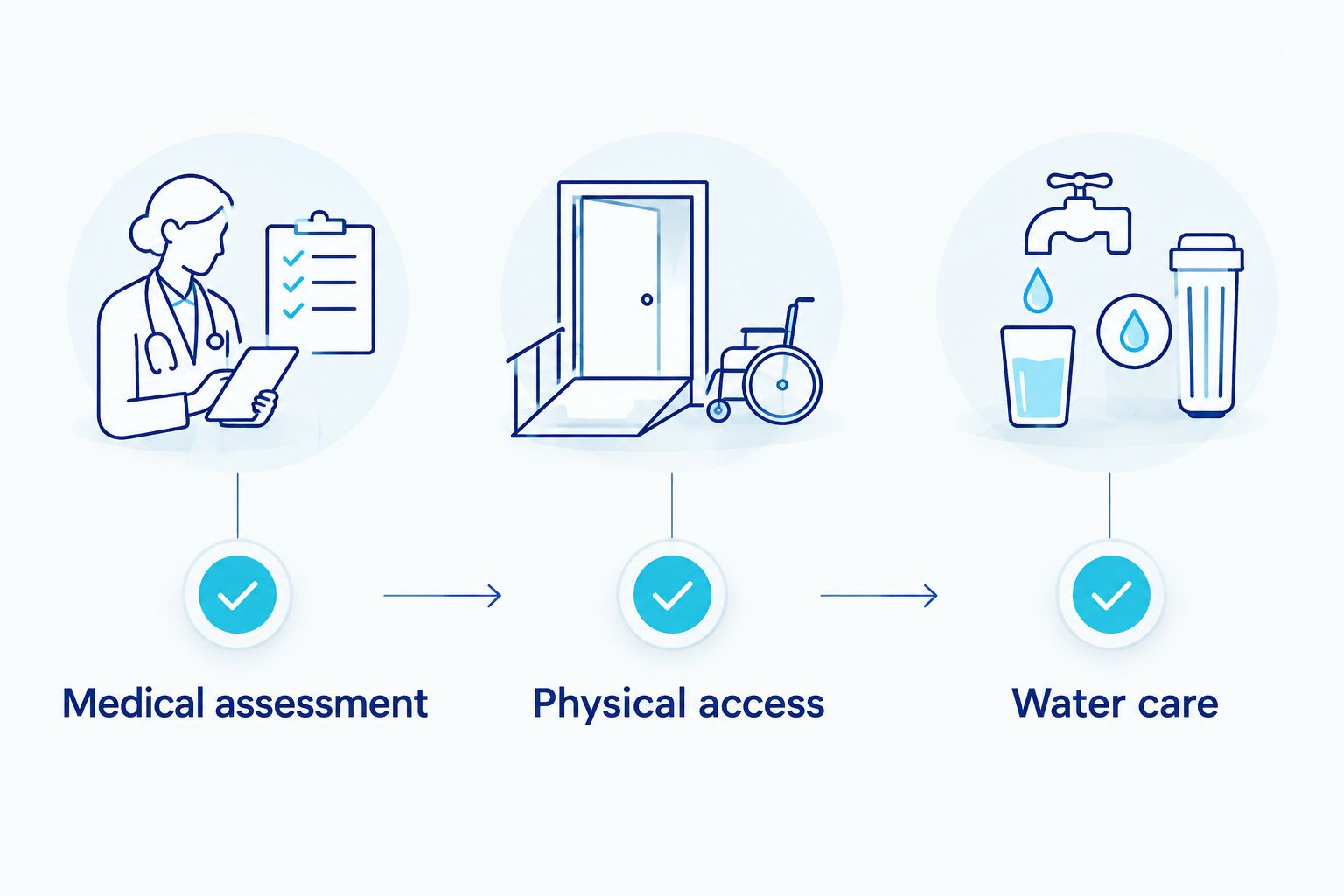
Keep the conversation focused on these distinct questions:
- Medical assessment: Is deliberate cold-water immersion appropriate for this pregnancy?
- Physical access: Can you enter and leave the bathing area safely?
- Water care: What cleaning and maintenance does the equipment require?
These questions are separate. Clean water does not prevent cold shock, and a stable handhold does not make extreme temperatures medically appropriate. An equipment professional can address installation; your prenatal care team addresses pregnancy restrictions.
If someone else in your household uses the plunge, keep that person's routine separate from your prenatal plan. A shared tub, shared schedule, or partner's reassuring experience does not make the same exposure appropriate for you.
What home cold-plunge specifications do—and do not—prove
Aeva Vital sells home wellness equipment, including ice baths. Aeva Vital cold plunge tubs are positioned for athletes and wellness enthusiasts, not as pregnancy-specific medical equipment. Product capacity and intended audience help explain the equipment, but neither establishes prenatal suitability.
| Aeva Vital product | Listed capacity | Stated audience or use | What the specification does not prove |
|---|---|---|---|
| Portable Inflatable Ice Bath Tub | Cold Water Therapy for Athletes | 76.6 Gallon | 76.6 gallons | Portable cold-water therapy for athletes | Pregnancy safety, clinical benefit, or an appropriate exposure protocol |
| 79 Gallon Cold Plunge Tub | All-Season Outdoor Ice Bath | Thermo Lid Included | 79 gallons | Outdoor cold therapy for athletes and wellness enthusiasts | Pregnancy safety, safe entry for every user, or medical clearance |
The 76.6-gallon and 79-gallon capacities describe water volume. They do not establish usable internal dimensions, entry height, support strength, or a safe water setting for a pregnant user. A larger capacity is not a medical advantage.
Portability offers flexibility in placement, but it does not prove easy access. An included lid is an equipment feature, not evidence of pregnancy suitability. For a pregnancy-related decision in 2026, assess medical appropriateness before comparing cold-plunge features.
What if you already took a cold plunge before realizing you were pregnant?
A past exposure does not by itself establish that harm occurred. Stop further deliberate cold plunging while you contact your prenatal care team for individualized advice. Explain the exposure and any symptoms without assuming either a good or bad outcome.
Record what you remember: the water conditions, approximate exposure, whether you immersed your face, and how you felt during and afterward. Do not repeat the activity to test your tolerance or to gather better measurements.
Seek urgent medical help for chest pain, severe trouble breathing, fainting, or other severe symptoms. Pregnancy warning signs such as vaginal bleeding, fluid leakage, severe abdominal pain, or reduced fetal movement when movements are normally established also require prompt assessment. In the United States, call emergency services for a medical emergency.
What can you do instead for comfort or recovery?
Choose an activity your prenatal clinician supports rather than replacing cold plunging with another extreme-temperature routine. Depending on your circumstances, that discussion can include walking, suitable swimming, modified exercise, or comfortable non-hot bathing.
Give your clinician the symptom you are trying to address. Muscle soreness, poor sleep, swelling, and persistent pain are not interchangeable problems, and a recovery purchase does not diagnose their cause.
Avoid treating sauna use as the automatic alternative. Heat exposure raises a separate concern about overheating; alternating heat and cold does not cancel the risks of either. Your prenatal plan should address the goal directly, not preserve a particular wellness ritual.
FAQ
Can pregnant women use a cold plunge tub if their pregnancy is uncomplicated?
An uncomplicated pregnancy does not automatically make cold plunging safe. Discuss deliberate cold-water immersion specifically with your obstetric clinician rather than relying on general exercise clearance.
Is a quick ice bath safe while pregnant?
A quick ice bath is not automatically safe during pregnancy. Sudden cold exposure can trigger gasping and cardiovascular stress before a planned session ends.
What cold-plunge temperature is safe during pregnancy?
Do not treat a generic cold-plunge temperature as a pregnancy-safe threshold. Ask your prenatal care team whether deliberate cold immersion is appropriate at all before discussing settings.
Can I keep cold plunging if I did it before pregnancy?
Previous cold-plunging experience does not establish safety during pregnancy. Review the activity with your prenatal clinician and reassess if symptoms or pregnancy circumstances change.
Is swimming the same as using a cold plunge while pregnant?
Swimming is not the same as deliberate cold plunging. Appropriate swimming provides exercise without requiring extreme cold, and suitability still depends on your pregnancy and the water conditions.
Does a bigger cold plunge tub make pregnancy use safer?
A bigger cold plunge tub does not establish pregnancy safety. Capacity describes water volume, not medical suitability, entry stability, or an appropriate exposure protocol.
What should I do if I feel dizzy after a cold plunge while pregnant?
Stop the activity and get assistance to leave the water safely if you feel dizzy. Contact your prenatal care team promptly; fainting, chest pain, or severe breathing difficulty warrants urgent medical help.
Can I alternate an infrared sauna and a cold plunge during pregnancy?
Do not assume a sauna-to-plunge routine is safe during pregnancy. Heat exposure and cold immersion require separate assessment, and alternating them does not cancel their risks.
Related guides
These equipment guides explain general home-plunge considerations. They do not provide prenatal clearance.
- How cold does a cold plunge tub need to be?
- How to maintain water quality in a cold plunge tub
- Can a cold plunge tub be installed indoors?
One last thing
A precise temperature display is not a medical safety rating. Before buying or using cold-water equipment during pregnancy, ask your prenatal clinician whether you should avoid deliberate cold immersion altogether. Aeva Vital product information belongs after that decision—not in place of it.