
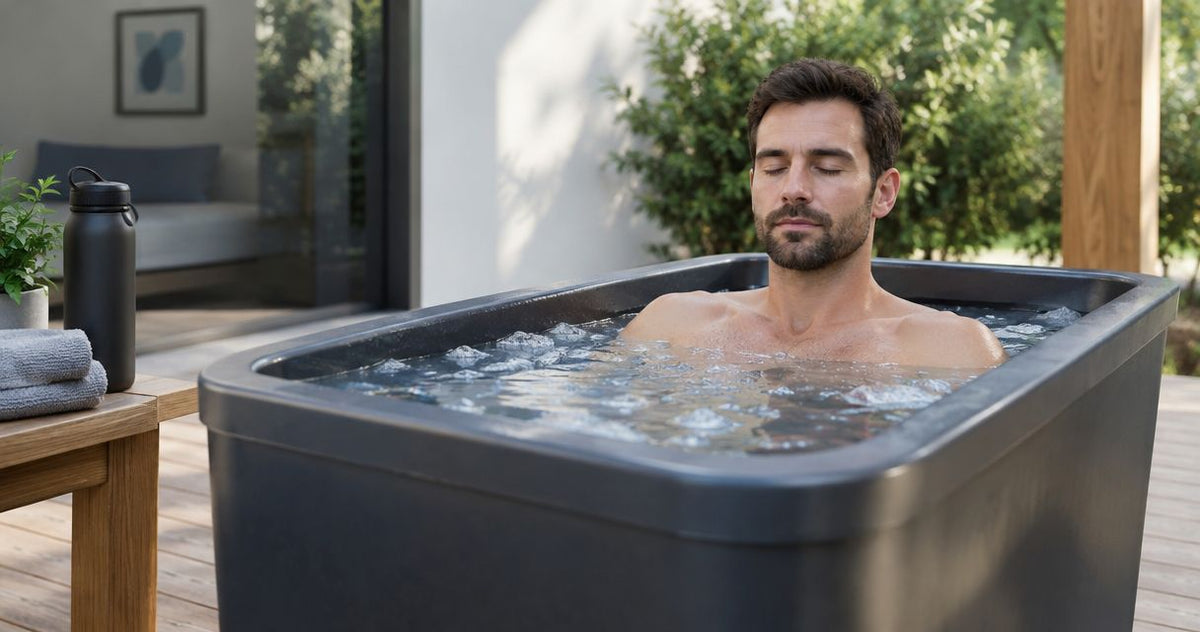
A cold plunge tub needs to be cold enough for your planned exposure, not as cold as the equipment can possibly make it; there is no single temperature that is safe or necessary for everyone. Choose the setting with your health, experience, immersion depth, and session length in mind, because colder water increases the challenge without establishing a better result.
By Editorial Team
- How cold should a cold plunge tub be? No single setting is appropriate for every person or session.
- Aeva Vital cold plunge tubs suit home shoppers comparing portable formats and stated tank capacity.
- Measure the actual water temperature; a chiller setting does not confirm the temperature throughout the tub.
- Choose manageable exposure, keep your head above water, and never plunge alone.
- Tank capacity, insulation, and cooling equipment describe different capabilities; none establishes a personal safety limit.
How cold should a cold plunge tub be?
Choose a temperature you can enter without losing control of your breathing, and do not treat that response as proof of safety. Your medical circumstances and the complete exposure matter more than reaching a particular number on a display. For your 2026 home setup, establish a cautious plan before buying equipment or lowering the water temperature.
Cold-water immersion research uses different temperatures, durations, and protocols. A setting used in a supervised study is not automatically an appropriate home routine, and a temperature advertised by a manufacturer describes equipment capability rather than a medical recommendation.
Use this decision sequence instead of copying someone else's setting:
- Check whether cold immersion is appropriate for you. Discuss it with a clinician if you have cardiovascular disease, circulation problems, a history of fainting, or another relevant condition.
- Measure the water before entering. Use a water thermometer rather than estimating from the weather, ice, or how the surface feels.
- Start with manageable exposure. Do not combine a colder setting with a longer session or deeper immersion.
- Keep an easy exit available. Have another adult present, and leave immediately if you feel unwell.
If you are choosing temperature-controlled equipment, review the distinctions in this guide to a cold plunge tub with a built-in chiller. Temperature control is a practical feature, not permission to use the lowest setting.
Why this matters
Cold water can trigger an involuntary gasp, rapid breathing, and increased cardiovascular strain. Those responses can occur before prolonged cooling becomes the main concern. Entering deliberately and keeping your face above water does not remove the risk, but it avoids adding an underwater breath-holding challenge.
The useful question is not whether you can tolerate a colder bath. It is whether your setup lets you control the exposure, recognize trouble, and get out without assistance. A repeatable routine should never depend on enduring warning signs.
At-a-glance: compare the setup, not just the lowest temperature
Water temperature is only one part of choosing a cold plunge. The following comparison separates cooling methods from the tub that contains the water; these are setup categories, not claims about a particular model.
| Setup | Best for | Practical advantage | Limitation |
|---|---|---|---|
| Water and added ice | Users who prefer manually preparing each bath | You can adjust the bath before entry | Temperature changes as ice melts and the surroundings add heat |
| Compatible chiller system | Users who prioritize controlled water temperature | The equipment can regulate water within its documented operating range | Compatibility, circulation, installation, and maintenance need checking |
| Unchilled outdoor tub | Users prepared to measure changing conditions | The setup does not depend on active refrigeration | Weather does not provide a reliable or consistent bath temperature |
None of these arrangements is inherently safe because of its cooling method. For a 2026 purchase, compare the complete system: tub, cooling equipment, thermometer, sanitation method, electrical requirements, and access.
Why the right cold plunge temperature varies
A temperature recommendation without exposure details leaves out much of the decision. These factors explain why copying a setting from a video or another person's routine is a poor starting point:
- Health history: Cold exposure places demands on the cardiovascular system. Medical conditions and medications can change whether immersion is appropriate.
- Previous experience: Familiarity can change how the water feels, but feeling accustomed to cold does not eliminate its physiological effects.
- Immersion depth: Sitting with your legs submerged is a different exposure from immersing your torso. Do not treat them as interchangeable sessions.
- Session length: Water temperature and time work together. A colder bath is not a reason to chase a longer stay.
- Water movement: Moving water changes heat transfer around your skin. The same thermometer reading can feel different in still and circulating water.
- Conditions before entry: Recent exercise or sauna use changes your starting condition. A routine designed around an ordinary bath does not automatically apply after heat exposure.
Keep these variables consistent when you evaluate a routine. Changing several at once makes it harder to understand which part caused discomfort or made the session difficult to control.
Measure the water, not your expectations
A chiller setpoint is the temperature the controller is trying to reach. It is not independent confirmation that every part of the bath has reached that temperature. Sensor location, circulation, and recently added water can affect the reading you see.
Before each 2026 session, check the actual bath with a suitable thermometer and follow the equipment's instructions for circulation and measurement. Do not reach into the water briefly and assume your hand provides an accurate temperature reading.
For a manually cooled bath, allow added ice to mix through the water before checking it. Avoid pressing your skin against ice, and do not add more simply because pieces have melted. The thermometer reading matters more than whether ice remains visible.
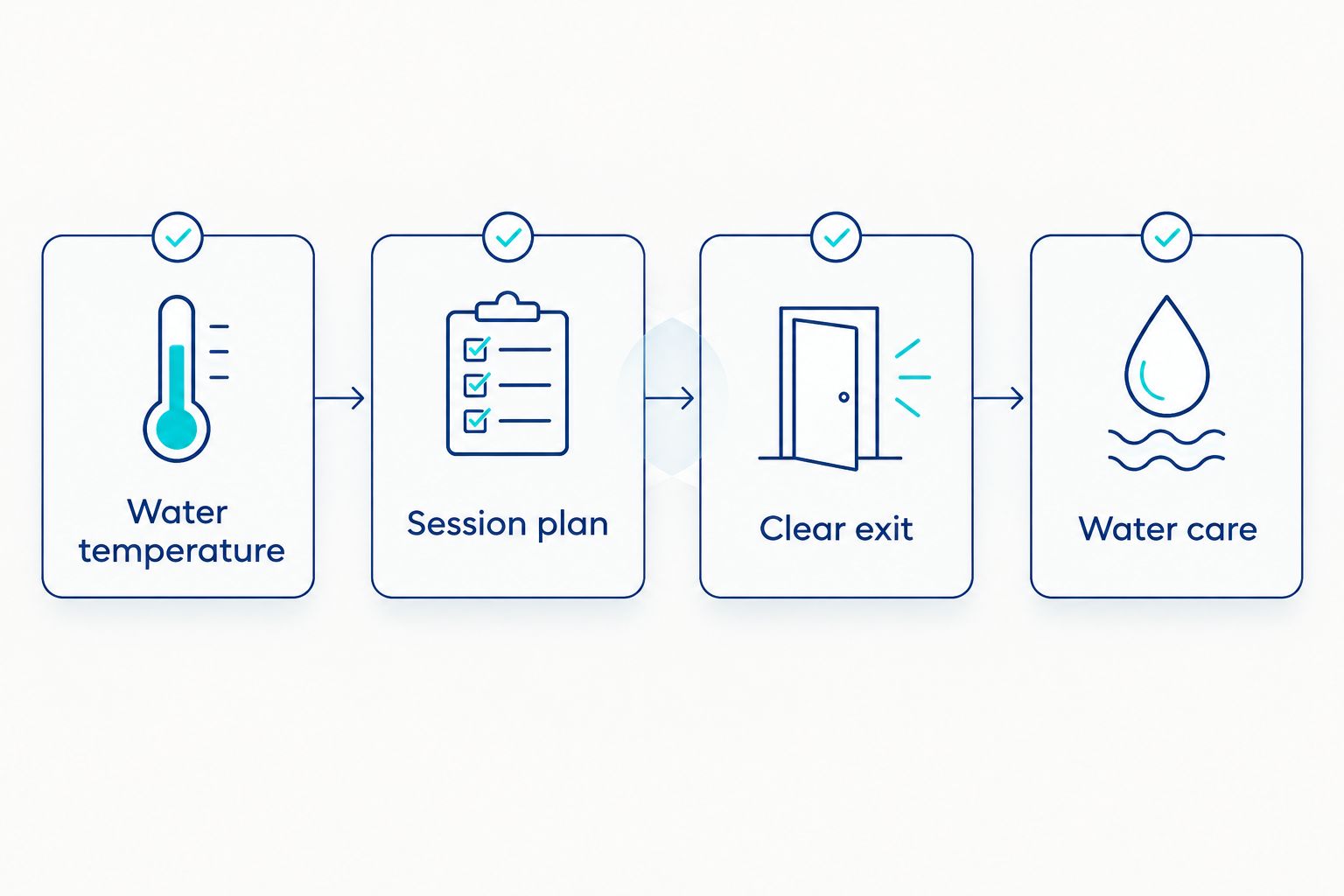
A useful equipment check has four parts:
- Water temperature: What does the thermometer show before entry?
- Session plan: Have you decided how you will manage exposure and exit?
- Clear exit: Can you stand and step out without moving equipment?
- Water care: Has the tub been maintained according to its instructions?
Does colder water produce better recovery?
A lower temperature alone does not establish a better recovery outcome. Recovery claims depend on the activity, the outcome being measured, and the immersion protocol. Reduced perceived soreness is not the same thing as improved performance, tissue healing, or long-term training adaptation.
Do not use pain, numbness, or difficulty breathing as evidence that a session is working. They are reasons to stop, not targets to pursue. Cold immersion should not replace evaluation of an injury or a recovery plan from a qualified professional.
For a 2026 training routine, define the purpose before choosing the exposure. If you are managing an injury or coordinating cold immersion with structured athletic training, ask the relevant clinician or coach how it fits the plan rather than assuming more intense cold is better.
What temperature specifications do—and do not—tell you
A listed minimum temperature describes a cooling system's stated capability under its documented conditions. It does not tell you how quickly a filled tub will cool, how consistently it will hold temperature outdoors, or what setting is appropriate for you.
Tank volume is a separate specification. A larger volume contains more water to cool, but capacity alone does not establish cooling speed. Starting temperature, insulation, ambient conditions, and the connected cooling equipment also matter.
Likewise, a lid is a physical feature, not a complete performance test. Check the manufacturer's information for operating conditions, compatible equipment, cleaning instructions, and any restrictions. Do not infer those details from the words ice bath or cold plunge.
Aeva Vital cold plunge options: what the listed facts establish
Aeva Vital cold plunge tubs are best for home-wellness shoppers comparing portable formats and stated tank capacity. The supplied product listings identify the following formats and capacities; neither capacity determines the right immersion temperature.
| Listed option | Stated capacity | Best for | What the listing establishes | What it does not establish |
|---|---|---|---|---|
| Portable Inflatable Ice Bath Tub | 76.6 gallons | Shoppers seeking an inflatable format | The product is described as portable and inflatable | A personal temperature target or documented chiller compatibility |
| Cold Plunge Tub with Thermo Lid | 79 gallons | Shoppers seeking a tub listed with a lid | The title states the capacity and included thermo lid | A guaranteed temperature-holding duration or active cooling capability |
The 76.6-gallon option's portable format is relevant if you need to consider storage and setup. Its capacity does not confirm that your preferred seated position will fit comfortably; check the product's dimensions and access requirements before ordering.
The 79-gallon option includes a thermo lid according to its title. That feature does not establish a specific insulation rating, sanitation system, or cooling performance. For either Aeva Vital ice bath, compare the complete specifications rather than treating the gallon figure as a measure of recovery quality.


Plan the installation before lowering the temperature
A controlled bath requires more than cooling equipment. You need stable placement, a usable entry and exit, appropriate drainage, and a water-care routine. Cold water is not a substitute for cleaning or sanitation.
For powered equipment, follow the manufacturer's electrical instructions and use a qualified electrician where required. Keep extension-cord improvisations out of the plan. This guide to connecting a cold plunge tub to a dedicated GFCI outlet covers a relevant installation topic; the equipment documentation determines the actual requirements.
Before your first 2026 session, rehearse getting in and out with the tub empty and safely positioned. Make sure the rim, steps, and surrounding floor do not create an awkward movement or slipping hazard. Do not assume you will be equally coordinated after cold exposure.
Should you put your head under during a cold plunge?
Keep your head above water and do not combine cold immersion with breath-holding. Sudden cold exposure can disrupt breathing, making underwater experimentation particularly hazardous.
A home recovery bath is not an appropriate place to test underwater endurance. Have another adult present who can recognize distress and help you leave the water.
When should you stop a cold plunge?
Stop immediately if you develop chest pain, dizziness, confusion, severe breathlessness, or feel faint. Exit carefully, get dry, and seek urgent medical help for serious or persistent symptoms.
Do not wait for a timer to finish. Numbness, loss of coordination, or escalating distress are not milestones to work through, and another person's tolerance does not change your own warning signs.
FAQ
How cold should a cold plunge tub be for a beginner?
There is no universal beginner temperature that guarantees safety. Start with manageable exposure, measure the water, and obtain medical guidance if your health history raises concerns.
Does a cold plunge need ice in it?
A cold plunge does not need visible ice. Measure the actual water temperature; ice presence is not a reliable indicator of the bath's temperature or suitability.
Is the coldest chiller setting the best setting?
The coldest chiller setting is not automatically the best setting. A minimum-temperature specification describes equipment capability, not an appropriate exposure for your body.
Can I stay in longer if the water feels manageable?
Feeling comfortable does not establish that a longer immersion is safe. Follow an appropriate exposure plan and leave immediately if you develop warning symptoms.
Can I cold plunge alone at home?
Do not cold plunge alone. Have another adult present and keep the exit clear because cold exposure can affect breathing and coordination.
Does a larger cold plunge tub stay colder?
Tank capacity alone does not establish temperature retention. Insulation, ambient conditions, water movement, and cooling equipment also affect the bath.
Do Aeva Vital's listed ice bath capacities establish cooling performance?
Aeva Vital's listed 76.6-gallon and 79-gallon capacities describe tank volume, not cooling performance. Check each product's documented equipment compatibility and operating requirements separately.
Should I lower the temperature after using a sauna?
Do not automatically lower the temperature after sauna use. Heat exposure changes your starting condition, so a combined routine needs its own safety assessment rather than a more aggressive cold setting.
Related guides
One last thing
Record the measured water temperature, not just the chiller setting. Pair that reading with your immersion depth and how you responded, so your notes describe the actual exposure rather than an equipment command. The most useful adjustment is one you can evaluate—not an automatic move toward colder water.