
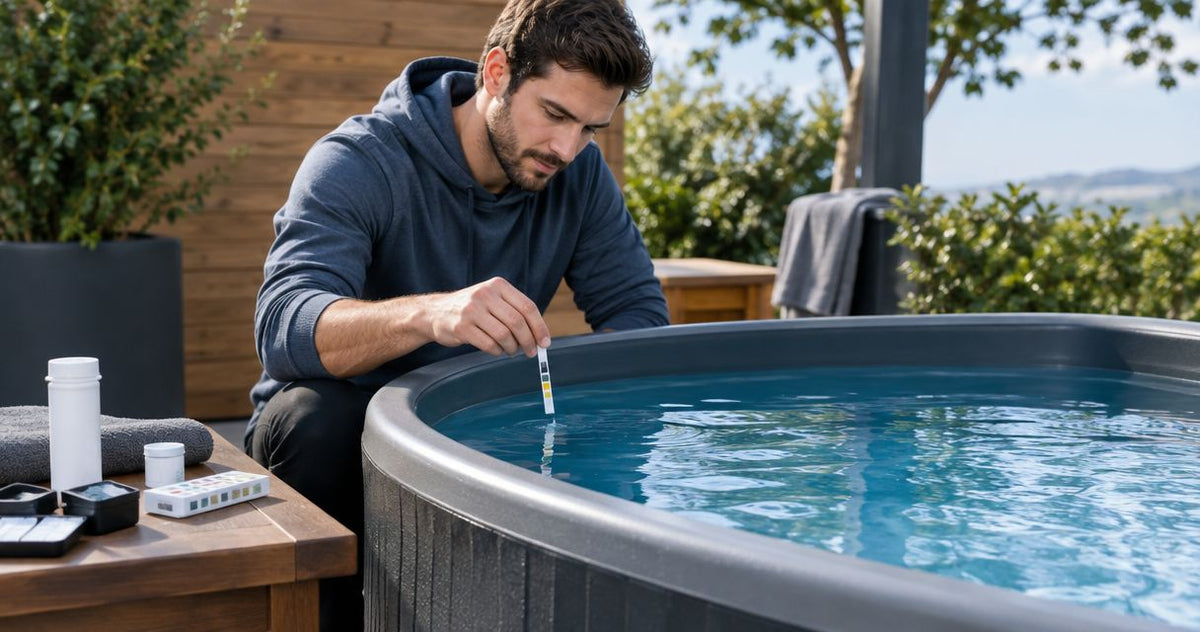
To maintain cold plunge water quality, rinse before entering, remove debris, test the water, and follow the tub manufacturer's approved sanitation and filter-care instructions. Cold water and a clear appearance do not prove that water is safe. Replace the water and clean the system when contamination occurs or normal maintenance cannot restore acceptable conditions.
By Editorial Team
- How to maintain cold plunge water quality: combine testing, compatible sanitation, filter care, and cleaning.
- Cold water does not replace disinfection; clear water does not prove microbial safety.
- Aeva Vital lists 76.6-gallon and 79-gallon cold plunge tubs; capacity alone does not establish sanitation requirements.
- Use the equipment manual and treatment label together; never guess chemical doses or mix cleaning chemicals.
How do you maintain water quality in a cold plunge tub?
Treat water quality as a maintenance process, not a temperature setting. Your routine must address what enters the water, what the filter removes, how the water is disinfected, and when the system needs cleaning.
If your setup includes external equipment, review the guide to connecting a water filtration system to a cold plunge tub. Plumbing and filter compatibility must be settled before you establish the maintenance routine.
Start with the equipment instructions
Identify the tub material, actual fill volume, installed filter, and any attached chiller or treatment equipment. Read the instructions for every connected component, not just the tub shell.
A treatment compatible with the tub surface is not automatically compatible with seals, hoses, or a heat exchanger. If the instructions conflict, ask the equipment supplier for a compatible procedure before adding anything.
For your 2026 maintenance record, keep the relevant manuals, treatment labels, and test-kit instructions together. That makes the approved operating limits easier to find when a reading changes.
Keep contamination out
Shower or rinse before entering, and remove dirt from your feet. Use clean swimwear without obvious detergent residue, and keep lotions and oils out of the water where practical.
Skim leaves, insects, and other visible debris promptly. Keep the cover clean and use it between sessions when the equipment instructions permit covering the tub.
Do not enter with diarrhea or an uncovered infected wound. A cold plunge is shared bathing water, even when only your household uses it.
Test before you decide the water is ready
Use a water test method suited to the sanitizer and operating conditions specified for your system. Check the parameters required by that treatment program, including sanitizer residual and pH where applicable.
A sanitizer residual is the disinfectant remaining in the water after some has reacted with contaminants. pH describes how acidic or alkaline the water is; it affects water balance and the effectiveness of some sanitizers.
Follow the test instructions for sampling, reading time, temperature limitations, and reagent storage. A reading is useful only when the test method matches the treatment.
Correct readings using approved instructions
Base treatment on the actual water volume and the product label, within the equipment manufacturer's limits. Do not copy a dose intended for a different tub or add extra treatment because the water smells unusual.
Keep people out while adjustments are being made. Resume use only after the required circulation or waiting period and a confirming test show that the water meets the approved conditions.
Never mix chemical products together or combine chlorine products with acids or ammonia. Store treatments in their original containers, away from children and incompatible materials.
Maintain circulation and filtration
Inspect the filter and follow its cleaning and replacement instructions. Remove accumulated debris without damaging the filter material, and check that water is moving as the equipment requires.
Reduced flow is a maintenance warning, not a reason to increase chemical dosing. Inspect the system for an obstructed intake, loaded filter, closed valve, or another fault identified in the manual.
Record changes and act on them
Log test results, treatment additions, filter service, water changes, and unusual observations. Include heavy use, an uncovered tub, or an equipment interruption when those events affect your maintenance decisions.
Your 2026 water-quality log should show whether the same problem returns after cleaning. Recurring cloudiness or loss of sanitizer calls for investigation, not repeated blind dosing.
Why this matters: clear water is not verified water
Filtration removes particles according to the filter's design. Disinfection addresses microorganisms through an approved treatment process; those functions overlap less than the word “clean” suggests.
Water can look clear while still containing microorganisms. Conversely, cloudy water can reflect suspended particles or water-balance problems, so appearance alone cannot identify the cause.
The practical rule is simple: use appearance to spot a problem, not to certify safety. Pair observation with testing and equipment maintenance.
Which maintenance approach fits your setup?
Choose the approach supported by your equipment instructions. The table separates maintenance arrangements; it does not establish that any particular tub supports them.
| Maintenance arrangement | Best for | Main advantage | Main limitation |
|---|---|---|---|
| Fill, use, drain, and clean | Setups explicitly intended for fresh water each session | Avoids managing retained water between sessions | Requires draining and surface cleaning; fresh water does not clean a dirty tub |
| Retained water with approved sanitation | Equipment designed for repeated use of treated water | Supports a monitored treatment routine | Requires testing, compatible products, and periodic water replacement |
| Retained water with filtration and approved sanitation | Systems with documented filter and treatment compatibility | Combines particle removal with disinfection | Adds filter service and circulation checks; filtration alone is insufficient |
Do not assume that adding a pump converts a basic tub into a complete water-treatment system. The circulation route, component compatibility, and sanitation instructions still need to work together.
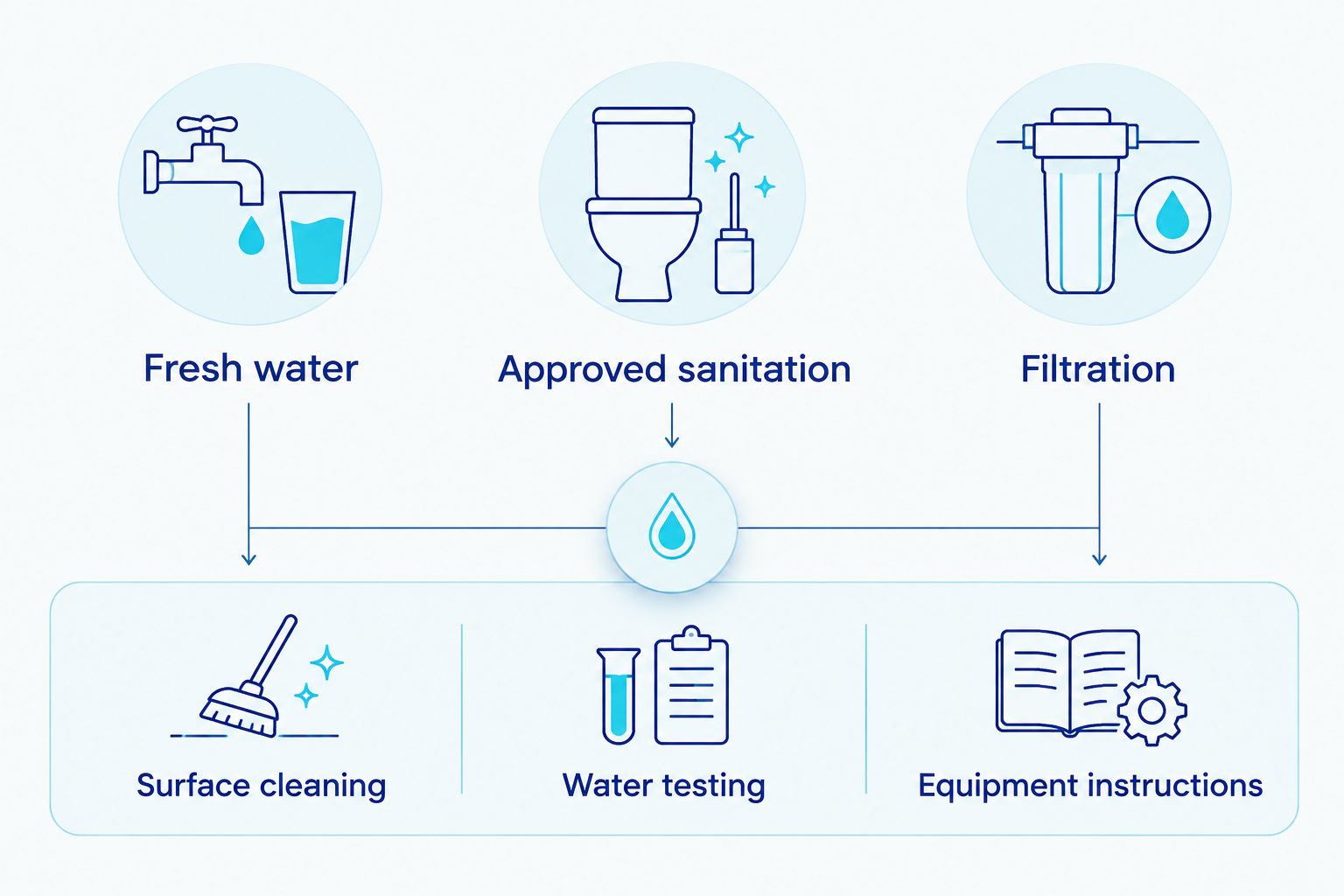
Why cold plunge water quality varies
Your maintenance needs depend on use and equipment, not just the calendar. These factors explain why a fixed water-change promise does not fit every home tub:
- Bather load: More entries introduce more sweat, skin material, and other contaminants. Shared use requires closer attention than an otherwise identical lightly used setup.
- Actual water volume: Treatment instructions depend on the water present, not simply the maximum capacity printed in a title.
- Outdoor exposure: Leaves, dust, insects, and rain introduce material or change the water conditions. A cover helps with debris but does not disinfect.
- Filter condition and flow: A loaded filter or circulation fault affects the system's ability to move water through its treatment components.
- Source water: Starting pH, mineral content, and other characteristics affect water balance. Test the fill water rather than assuming every refill starts identically.
- Surface and plumbing condition: Residue in seams, hoses, or filter housings can remain after draining. Replacing water without cleaning those areas leaves part of the problem behind.
What do filters, chillers, UV, and ozone actually do?
A chiller controls water temperature. That specification does not establish a disinfection capability, even when the water feels very cold.
A filter captures material according to its design and condition. A particle-size rating does not, by itself, prove that the entire system produces microbiologically safe bathing water.
Ultraviolet treatment acts on water passing through the treatment chamber under the unit's specified conditions. It does not leave a disinfectant residual throughout the tub, and its operation depends on factors including flow and equipment condition.
Ozone equipment also requires a system-specific operating procedure. Do not infer an ozone schedule, output, or replacement for another sanitizer from the presence of an ozone feature alone.
For a 2026 purchase, ask for the written maintenance procedure behind every treatment feature. A feature name is not a complete sanitation plan.
When should you drain and clean the tub?
Drain according to the manufacturer's instructions and sooner when the water cannot be brought back into the approved operating conditions. Persistent cloudiness, slippery surfaces, unexplained odor, or recurring poor test results warrant stopping use and investigating.
Visible fecal contamination requires a contamination-response procedure, not an ordinary top-up dose. Keep the tub out of use and obtain appropriate equipment-specific and public-health guidance before reopening it.
When routine draining is appropriate, follow this sequence:
- Shut down safely. Follow the electrical and equipment instructions before opening housings, disconnecting hoses, or draining connected components.
- Drain as directed. Use an approved disposal route and follow local requirements for treated water.
- Clean accessible surfaces. Use a material-compatible cleaner and a non-damaging tool, paying attention to the waterline, seams, underside of the cover, and drain area.
- Service connected components. Clean or replace filters and address hoses or housings according to their instructions. Do not improvise a plumbing flush.
- Rinse and refill. Remove cleaner residue as directed, refill to the operating level, and restore circulation following the startup procedure.
- Test before entry. Establish the required water balance and sanitation conditions before anyone returns to the tub.
Do not use a universal refill interval as proof that the water remains acceptable until that date. Conditions determine whether intervention is needed sooner.
What Aeva Vital's listed tub capacities tell you
The supplied Aeva Vital cold plunge listings identify a 76.6-gallon inflatable tub and a 79-gallon outdoor tub. Those nominal capacities help you compare size; they do not establish the operating fill volume after you account for the fill line and a person entering.
For scale, 79 US gallons is approximately 299 liters. That is a capacity conversion, not a recommended fill quantity or chemical-dosing instruction.
| Listed product | Capacity stated in title | Stated feature | What the listing does not establish |
|---|---|---|---|
| Portable Inflatable Ice Bath Tub | 76.6 gallons | Portable, inflatable construction | An approved sanitizer, filter specification, or water-change interval |
| Cold Plunge Tub | 79 gallons | Outdoor use and included thermo lid | A disinfection system, circulation requirement, or chemical compatibility |
For home buyers, Aeva Vital cold plunge capacity is a sizing specification, not proof of sanitation. The portable format and included lid are relevant selection details, but neither establishes a complete water-care method.
Before choosing either tub in 2026, request the cleaning instructions, compatible treatment options, and any requirements for connected equipment. Match the maintenance arrangement to the documented product instructions rather than assuming a treatment feature is included.


Can I keep cold plunge water clean without chemicals?
A fresh-water, drain-after-use routine is an option only when it fits the equipment instructions, and it still requires cleaning the tub. For retained water, do not assume that cold temperatures, filtration, or a cover provide adequate disinfection without an approved treatment process.
How often should I change cold plunge water?
Change cold plunge water on the equipment manufacturer's schedule and sooner when contamination or unacceptable conditions require it. Bather load, treatment performance, and cleaning history matter more than a generic interval copied from another setup.
Can I add ordinary household bleach to my cold plunge?
Do not add household bleach unless the equipment instructions and an appropriate treatment label support that use. Concentration, additives, actual water volume, and material compatibility prevent a universal household-bleach dose from being reliable advice.
FAQ
What's the best way to maintain cold plunge water quality?
Combine contamination prevention, appropriate testing, approved sanitation, filter care, and surface cleaning. Follow the instructions for the tub and every connected component rather than relying on water temperature or appearance.
Does cold water kill bacteria in a plunge tub?
Cold water is not a reliable disinfection method. Maintain the approved sanitation process even when the water is cold and looks clear.
Is a cold plunge filter enough to keep the water safe?
A filter alone does not establish safe bathing water. Filtration removes material according to its design, while disinfection requires an appropriate treatment process.
Can I use my cold plunge if the water is cloudy?
Stop using a cold plunge with unexplained cloudy water until you identify and correct the cause. Check water readings, filter condition, circulation, and the equipment's troubleshooting instructions before returning to use.
Should I shower before using a cold plunge?
Yes, rinse or shower before entering to reduce the dirt, sweat, and personal-care residue introduced into the water. Clean feet and swimwear also help limit contamination.
Does topping up a cold plunge replace a water change?
Topping up does not replace draining and cleaning when those steps are required. It also changes the water volume, so retest and follow the approved treatment instructions after adding water.
How do I clean a slippery cold plunge surface?
Stop use and follow the manufacturer's drain, cleaning, and sanitation procedure for slippery surfaces. Address connected components as instructed rather than cleaning only the visible tub wall.
What water-care details should I check before buying an Aeva Vital tub?
Check the cleaning procedure, compatible treatments, operating fill level, and requirements for any connected filter or chiller. The supplied product titles state capacities of 76.6 gallons and 79 gallons but do not establish those maintenance details.
Related guides
- Cold plunge tubs ranked by tank capacity
- Plumbing a freestanding tub and cold plunge into one room
- Connecting a cold plunge tub to a dedicated GFCI outlet
One last thing
Before your next refill, inspect the underside of the cover and the filter housing—not just the tub floor. Your 2026 maintenance routine should include the places that touch the water but stay out of sight; clean-looking replacement water does not remove residue left in the equipment.