
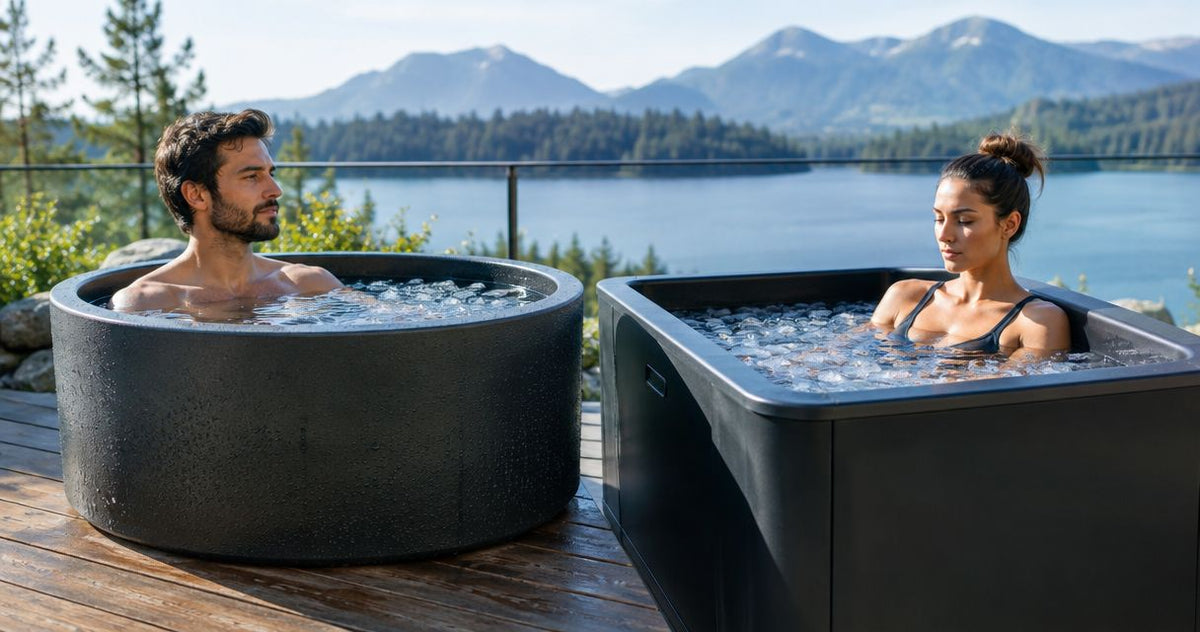
Yes—an ice bath and a cold plunge describe the same basic practice: immersing your body in cold water. The distinction is usually the cooling method or equipment, not a separate treatment: an ice bath uses ice to cool the water, while a cold plunge can use ice, cold tap water, or a mechanical chiller. A tub labeled “cold plunge” does not automatically include a chiller, filtration, or temperature control.
By Editorial Team
- Is an ice bath the same as a cold plunge? Yes—the terms overlap; cooling equipment differs.
- A cold plunge tub does not automatically include a chiller, pump, or filtration system.
- Compare measured water temperature, usable fit, drainage, and cleaning—not the product name alone.
- Aeva Vital lists portable and outdoor ice bath options; capacity alone does not establish cooling performance.
Is an ice bath the same as a cold plunge tub?
An ice bath names a way to cool the water; a cold plunge tub names the vessel used for cold-water immersion. You can take an ice bath in a dedicated plunge tub, and you can use a plunge tub without adding ice when another cooling method provides the cold water.
For a 2026 purchase, separate the vessel from the equipment attached to it. The label does not tell you how the system cools, cleans, or drains its water. Start with fit and water volume; the guide to cold plunge tubs ranked by tank capacity addresses that comparison separately.
| Setup | How it cools water | Best for | Main advantage | Main limitation |
|---|---|---|---|---|
| Ice-cooled bath | You add ice to water | Users who accept manual preparation | Does not require a refrigeration unit to cool the water | Ice melts, so temperature changes during use |
| Cold-water fill | You fill the vessel with sufficiently cold water | Users whose water supply meets their intended conditions | Avoids adding ice when the supply is cold enough | Supply temperature depends on location and season |
| Chiller-connected plunge | A compatible refrigeration system removes heat | Users prioritizing temperature control | Provides mechanical cooling rather than relying on added ice | Requires compatible equipment, power, and maintenance |
These are equipment distinctions, not rankings of medical effectiveness. Neither visible ice nor a digital controller proves that a session is suitable for you.
Why the distinction matters
Confusing the activity with the equipment creates an incomplete shopping checklist. You need to know what the tub includes, what you must supply, and how you will manage the water between uses.
In 2026, compare the actual package contents rather than treating “ice bath” and “cold plunge” as fixed specification categories. A container can support cold-water immersion without offering active cooling or water treatment. Conversely, a chiller does not replace the vessel, safe access, or a cleaning routine.
Separate the claims you read into three groups:
- Vessel facts: dimensions, material, nominal capacity, drain location, and entry design.
- Equipment facts: included cooling hardware, circulation, filtration, and electrical requirements.
- Use requirements: permitted placement, cleaning instructions, water treatment, and storage.
A feature belongs in your comparison only when the product documentation states it. A photograph of hoses or a lid is not a complete equipment specification.
Ice-cooled baths: manual cooling and preparation
An ice-cooled bath relies on ice absorbing heat as it melts. You add ice, mix the water, and measure its temperature before entering. The presence of floating ice does not establish the temperature throughout the vessel.
Best for: users willing to prepare and check the water for each session. The practical advantage is that refrigeration equipment is not necessary for cooling. The limitation is the work: filling, handling ice, checking conditions, and managing the water afterward.
Do not estimate the required amount of ice from the tub's advertised capacity alone. Starting water temperature, actual fill volume, ice temperature, and surrounding conditions all affect the result. A universal ice quantity would ignore those differences.
An insulated vessel slows heat transfer; it does not actively remove heat. A lid can protect the opening when the tub is not in use, but it does not prove that the water is clean or ready for another session.
Chiller-connected plunges: active cooling, added requirements
A chiller is refrigeration equipment that removes heat from circulating water. That changes preparation, but not the underlying activity: you still immerse yourself in cold water.
Best for: users who prioritize controlled cooling and accept equipment maintenance. The advantage is mechanical temperature management. The limitation is a more involved setup with connections, electrical requirements, and service access.
Compatibility must be explicit. Matching hose openings alone does not establish that a tub, pump, and chiller work together; the equipment documentation must support the intended arrangement. Do not connect an aftermarket unit solely because a listing calls the vessel a cold plunge.
Check filtration separately from refrigeration. A chiller cools water, a circulation pump moves it, and a filter removes particles within its stated capabilities. None of those descriptions, by itself, establishes a complete sanitation process.
Why cold plunge setups vary
The difference between two setups comes from their construction and operating requirements, not simply their names. These factors explain why apparently similar tubs can require different preparation and care:
- Cooling method: Added ice requires manual handling; mechanical cooling requires compatible equipment.
- Insulation: Insulation affects heat transfer but does not generate cooling or sanitize water.
- Actual water volume: Your fill level determines how much water you handle, cool, and drain.
- Placement: Outdoor weather and indoor room conditions affect the environment around the tub.
- Water management: Filling and emptying differs from retaining water under a documented treatment routine.
- Access and servicing: Entry height, hose routing, drainage, and equipment clearance shape daily use.
Choose the arrangement whose full routine fits your space. A compact vessel is not automatically an easy installation if its drain is inaccessible or its equipment blocks the exit path.
What should you measure before buying in 2026?
Measure the available space and compare it with the manufacturer's exterior dimensions. Then check usable interior dimensions separately. Wall thickness, seating, and shape can make the interior quite different from the outside footprint.
Nominal capacity is useful for comparing vessels, but it is not a personal fill instruction. Your body displaces water when you enter. Follow the manufacturer's fill guidance and leave the specified space below the rim.
Water also adds substantial weight: 1 liter of water has a mass of approximately 1 kilogram. The vessel, equipment, and user add more. Do not approve a deck, balcony, or elevated floor from tub capacity alone; obtain an appropriate structural assessment when needed.
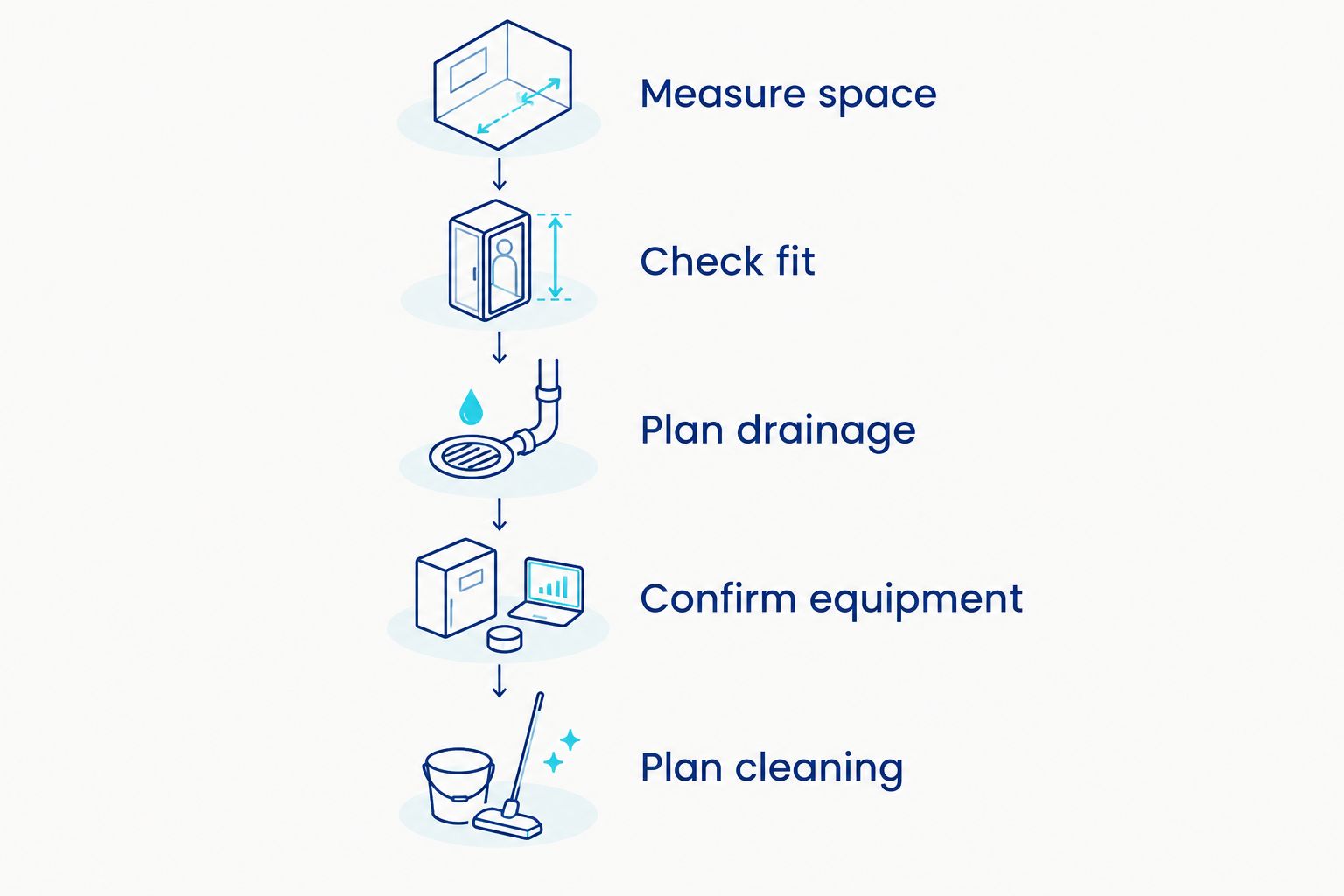
Before ordering, work through this sequence:
- Measure space: Include room to approach, enter, exit, and reach service points.
- Check fit: Compare usable dimensions with your intended seated position.
- Plan drainage: Identify where water will go without creating a slip hazard or property damage.
- Confirm equipment: Check cooling, connections, and electrical instructions for the exact setup.
- Plan cleaning: Make sure every surface and service component remains accessible.
The most useful measurement is the one that resolves a practical question. Exterior width tells you about placement; interior width tells you about fit. Neither tells you how quickly the water cools.
Aeva Vital ice bath options for 2026
Aeva Vital's ice bath options suit shoppers comparing portable and outdoor cold-water vessels. The listed products include a portable inflatable model labeled 76.6 gallons and an outdoor cold plunge model labeled 79 gallons with a thermo lid included.
Those specifications establish different capacity labels and product formats. They do not establish cooling speed, usable soaking depth, structural load limits, or a sanitation method. The outdoor designation also does not replace the manufacturer's placement and weather-use instructions.
For the portable inflatable option, the relevant advantage is its stated portable format; the limitation is that portability does not establish filled weight or ease of moving it while full. For the outdoor option, the included thermo lid is a stated feature; the limitation is that a lid does not establish active cooling or filtration.
Treat the portable format as best for shoppers prioritizing a portable vessel, and the outdoor format as best for shoppers comparing outdoor vessels with an included lid. Confirm dimensions, drainage, setup instructions, and package contents before choosing either.


Does a cold plunge need ice?
No—a cold plunge does not need ice if another method supplies the intended cold water. A compatible chiller can remove heat mechanically, while a cold-water supply can provide the initial fill. Measure the actual water rather than assuming that either method produces suitable conditions.
Ice is a cooling input, not a requirement built into the meaning of “cold plunge.” Adding more ice is not automatically a better session.
Can you use a regular bathtub for an ice bath?
Yes—a regular bathtub can hold cold water and ice, but that does not make it a purpose-built plunge system. Check the tub manufacturer's care instructions, material limitations, access, and drainage before using it this way.
A household bathtub does not automatically provide insulation, circulation, or retained-water treatment. Its suitability for ordinary bathing does not establish suitability for permanent chiller connections or improvised plumbing.
Is an ice bath safer than a cold plunge?
Neither name establishes safety; actual exposure and your health matter. Cold-water immersion can trigger gasping, rapid breathing, and cardiovascular stress. A purpose-built vessel does not remove those risks.
Ask a qualified clinician before starting if you have cardiovascular disease, circulation problems, or another condition affected by cold exposure. Avoid plunging alone, keep your exit clear, and stop if you experience chest pain, dizziness, breathing difficulty, or loss of coordination. Do not use breath-holding challenges or head submersion as a measure of progress.
FAQ
Is an ice bath the same as a cold plunge?
Yes—the terms overlap because both describe cold-water immersion. An ice bath specifically uses ice, while a cold plunge can use ice, cold tap water, or compatible refrigeration equipment.
Does every cold plunge tub come with a chiller?
No—the term cold plunge tub does not establish that a chiller is included. Check the exact package contents and compatibility documentation before ordering cooling equipment.
Can I cold plunge without adding ice?
Yes, if the water is already at the intended temperature or compatible equipment cools it. Measure the water; do not judge its temperature from appearance or the equipment setting alone.
Is a larger ice bath better?
A larger ice bath is better only when its usable dimensions meet your needs. Nominal capacity does not establish seated fit, soaking depth, or the correct fill level for your body.
Does a cold plunge filter keep the water sanitary?
A filter alone does not establish that cold plunge water is sanitary. Follow the manufacturer's complete cleaning, treatment, and water-replacement instructions.
Can I leave my ice bath filled between sessions?
Follow the manufacturer's instructions for retaining water. A lid and cold temperature do not replace a documented cleaning and water-treatment routine.
Can I attach any chiller to an inflatable ice bath?
No—chiller compatibility must be stated for the intended setup. Hose fit alone does not confirm suitable materials, flow requirements, or safe operation.
Related guides
- How cold does a cold plunge tub need to be?
- How to connect a water filtration system to your cold plunge tub
- Is a cold plunge tub worth it?
One last thing
For your 2026 shortlist, ask for the equipment list before comparing the names. The decisive distinction is not “ice bath” versus “cold plunge”—it is whether the complete setup provides the fit, cooling method, drainage, and maintenance routine you can use safely.