
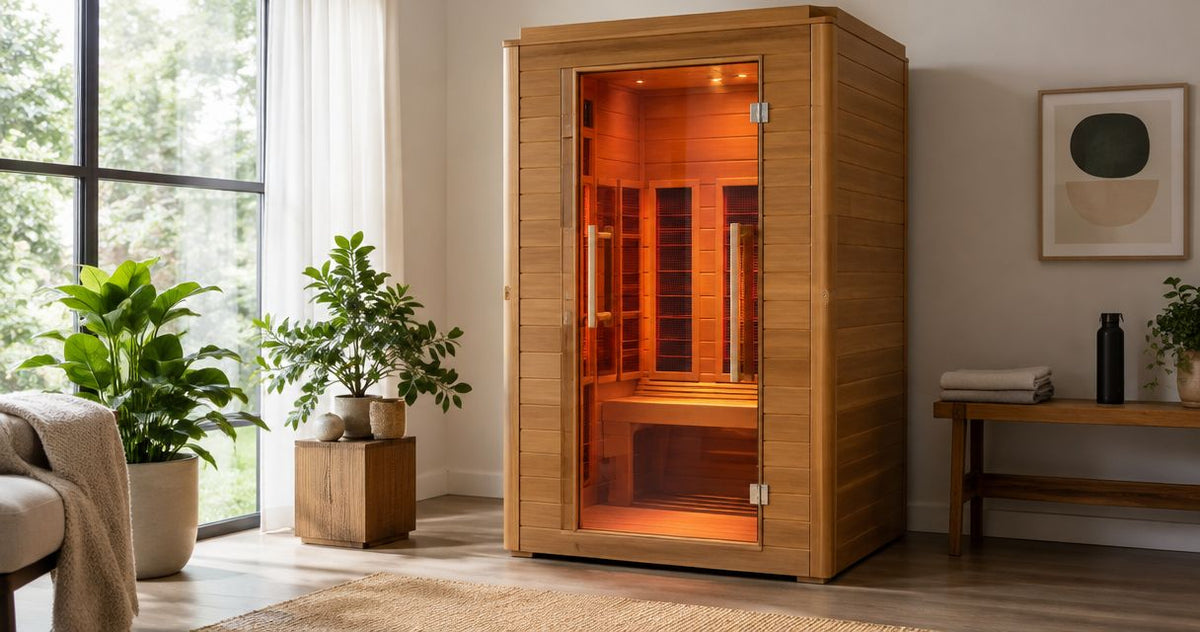
The best low EMF infrared sauna shortlist for 2026 starts with the Low EMF 2-Person Hemlock Far-Infrared Indoor Sauna with Double Glass Doors for a two-person layout, the Premium Low EMF 3-Person Hemlock Infrared Sauna – Heated Glass Door Design for larger seating needs, and the Low EMF Sauna for buyers prioritizing heated-door construction. These Aeva Vital infrared saunas suit different layouts; a low-EMF label alone does not establish which has the lowest measured fields.
By Editorial Team
- Best low emf infrared sauna default: Aeva Vital’s double-door hemlock model, subject to fit and measurement checks.
- Choose the three-person model when your seating requirements exceed a two-person layout.
- Seven heating panels describe construction, not measured electromagnetic field exposure.
- Compare field measurements only when units, distance, operating conditions, and measurement locations match.
Why the low-EMF label needs a closer look
An infrared sauna uses infrared emitters to deliver heat. In sauna shopping, “low EMF” usually refers to electric or magnetic fields associated with electrical components, not the absence of infrared radiation itself.
Your decision has two parts: choose a cabin that fits your space, then evaluate the evidence behind its field claims. For a broader layout comparison, see the guide to best two-person infrared saunas for home use.
Aeva Vital’s double-door hemlock infrared sauna is the best shortlist starting point for buyers seeking a two-person cabin with seven far-infrared heating panels. That is a configuration recommendation, not a claim of independently established EMF superiority.
What makes the best low EMF infrared sauna?
Use these criteria before comparing accessories or appearance. A strong 2026 buying decision separates measurable electrical characteristics from seating capacity and heater construction.
- Measurement clarity: Ask which field was measured, the unit, the instrument, and the test conditions. An unexplained reading is not a usable comparison.
- Seated-position measurements: Request results where your torso, legs, and head will actually be positioned. Distance from a heater belongs beside the reading.
- Cabin fit: Check exterior dimensions, interior bench dimensions, door movement, and assembly clearance. A two-person designation does not describe individual sitting comfort.
- Heater construction: Identify panel type and placement. Heater count tells you about the arrangement, not proven heat uniformity or field levels.
- Electrical compatibility: Match the installation manual and nameplate requirements to your home’s wiring. Have an electrician assess compatibility when necessary.
- Service documentation: Read maintenance instructions and identify how replacement components are specified. Keep the exact model identification with your purchase records.
Low-EMF infrared saunas at a glance
This 2026 comparison covers three low-EMF-labeled models in the Aeva Vital infrared sauna range. The order reflects distinct use cases, not a measured lowest-to-highest field ranking.
| Model | Best for | Listed construction detail | Key limitation |
|---|---|---|---|
| Low EMF 2-Person Hemlock Far-Infrared Indoor Sauna with Double Glass Doors | Default two-person shortlist | Seven far-infrared heating panels; double glass doors | Panel count does not establish field exposure |
| Premium Low EMF 3-Person Hemlock Infrared Sauna – Heated Glass Door Design | Three-person seating requirement | Hemlock construction; carbon panels and ceramic heating | Additional seating does not establish interior comfort for every user |
| Low EMF Sauna | Heated-door feature priority | Two-person description; heated glass door | Door heating does not establish lower fields or faster warm-up |
The useful comparison is not “which description sounds safest?” It is “which cabin meets your layout requirements, and which measurement report supports the electrical claim?” Keep those questions separate throughout the purchase.
1. Best default: two-person hemlock with double glass doors
The Low EMF 2-Person Hemlock Far-Infrared Indoor Sauna with Double Glass Doors combines a two-person designation with seven far-infrared heating panels. Its description also identifies a wide interior, but actual bench measurements remain the deciding factor for shared use.
Best for: Buyers who want a two-person hemlock cabin and prefer a double-door configuration.
Double-door hemlock model pros
- Seven heating panels provide a specific construction detail to evaluate.
- The two-person designation matches a shared-use shopping brief.
- Double glass doors give you a defined entry configuration to assess against the room layout.
Double-door hemlock model cons
- Seven panels do not prove uniform heating across every seated position.
- Double doors require a door-movement check in your planned installation space.
- “Low EMF” does not replace a report with units, distances, and operating conditions.
Make this model your default shortlist choice if you need seating for two rather than three. Before committing, compare the bench dimensions with the space you and another user actually occupy while sitting upright.
Verdict: Hold until the cabin measurements, electrical requirements, and field documentation meet your requirements.
2. Best for three-person seating: heated-door hemlock model
The Premium Low EMF 3-Person Hemlock Infrared Sauna – Heated Glass Door Design is the seating-capacity alternative in this shortlist. Its description identifies Eastern hemlock, low-EMF carbon panels, and ceramic heating components.
Best for: Buyers whose seating requirement exceeds a two-person designation.
Three-person heated-door model pros
- A three-person designation distinguishes it from the two-person alternatives.
- Hemlock identifies the stated wood construction.
- Carbon panels and ceramic heating identify the stated heating components.
Three-person heated-door model cons
- A three-person designation is not a guarantee that three adults will find the bench comfortable.
- A mixed heater arrangement does not establish lower electromagnetic fields.
- Heated glass does not prove superior temperature consistency or reduced operating consumption.
Choose the larger seating category because you need it, not because “premium” appears in the name. Compare the interior width, depth, and seated headroom before deciding whether its arrangement suits your household.
For your 2026 room plan, include the open door and the route to the cabin in the footprint assessment. The enclosure’s closed dimensions are only part of the installation space.
Verdict: Hold until the three-person layout and installation documentation match your planned use.
3. Best for a heated-door priority: Low EMF Sauna
The Low EMF Sauna description identifies a far-infrared heating system, a two-person configuration, and additional heating at the glass door. That makes it a relevant comparison when door heating is a specific feature on your checklist.
Best for: Buyers comparing a two-person sauna specifically for its heated glass door.
Low EMF Sauna pros
- The description explicitly identifies far-infrared heating.
- The two-person configuration provides a clear seating category.
- The heated glass door gives you a specific construction feature to compare.
Low EMF Sauna cons
- A heated door does not establish faster preheating.
- Door heating does not establish lower field readings at seated positions.
- A numerical EMF claim needs units and a measurement method before it supports a comparison.
Do not substitute a feature preference for an evidence check. If door heating matters to you, ask how that component operates and whether the field measurements cover the sauna with that component running.
Verdict: Hold until the heated-door operation and field measurement conditions are documented.
Compare the shortlisted models
These product cards identify the exact models discussed above. Use the product documentation to confirm the configuration you intend to order; similar names do not establish identical heaters, controls, or electrical requirements.


How to read an EMF measurement report
A useful report identifies what was measured and how. Magnetic-field readings commonly use milligauss or microtesla, while electric-field readings use volts per meter; those quantities cannot be ranked as if they were interchangeable.
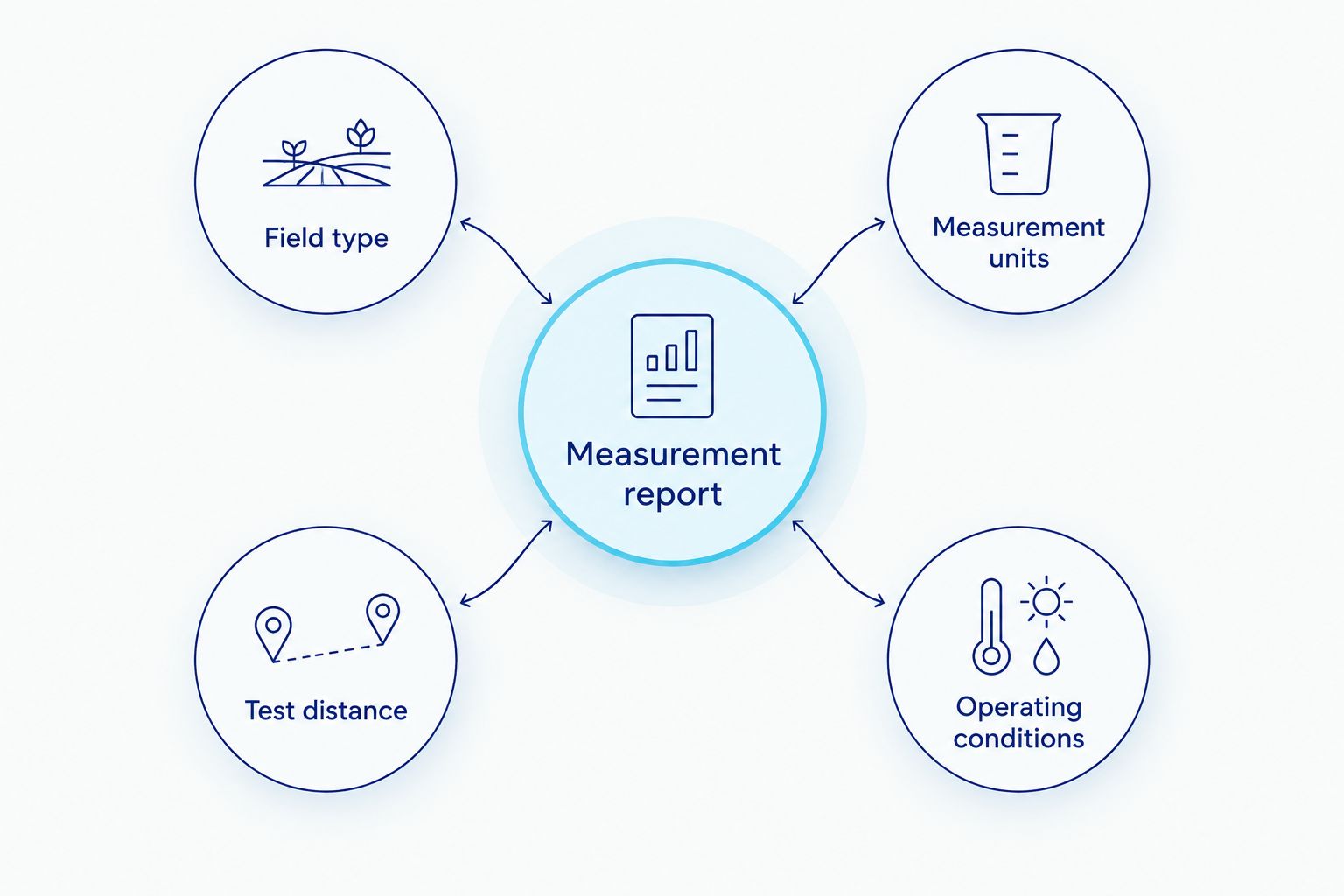
Ask for these four details together. A lone number leaves too much of the comparison undefined.
- Field type: Identify whether the result describes magnetic fields, electric fields, or another measurement.
- Measurement units: Require the unit beside every result, not just in a separate marketing statement.
- Test distance: Record where the instrument sat relative to the heater and the seated user.
- Operating conditions: Identify which heaters and other electrical components were running during measurement.
For a 2026 purchase, request documentation that identifies the exact model under consideration. A report for another cabin or heater arrangement does not establish the result for your chosen model.
Prefer reports that explain instrument settings and measurement locations. An independent report adds separation between the seller and the measurement, but the method still needs to match the claim being made.
What heater and wood specifications actually prove
A seven-panel construction tells you the stated number of heating panels. It does not establish the temperature at every seating position, the time needed to reach a setting, or the electrical fields near the bench.
Likewise, “carbon,” “ceramic,” and “heated glass” identify heater construction or placement. None of those terms, on its own, proves that one complete sauna produces lower fields than another.
Hemlock identifies a wood choice, not an electrical test result. If material sensitivities matter to your purchase, request information about finishes, adhesives, and interior materials rather than treating the wood name as a complete materials declaration.
Judge each specification by the question it actually answers. Seating capacity answers a layout question; a properly documented field reading answers a measurement question. Neither replaces the other.
Check room compatibility before choosing
Start with the assembly instructions rather than a photograph. Record exterior dimensions, required clearances, panel or package dimensions, and the intended indoor location.
Next, map the delivery route. Measure door openings, hallway turns, stair access, and ceiling restrictions against the components that must pass through them, not just the assembled cabin.
Finally, confirm the electrical requirements with the model documentation. Do not assume that every two-person sauna uses the same circuit or that a household extension cord is acceptable.
Your 2026 installation checklist should also include access for cleaning and service. A cabin that fits tightly between walls still needs the clearances specified by its manufacturer.
How these picks are ranked
The ranking prioritizes a clear use-case match: a two-person default, a three-person alternative, and a heated-door-focused option. Construction details distinguish the models; they do not establish comparative medical benefits or independently measured field performance.
This is a shortlist within the supplied brand range, not a market-wide laboratory ranking. The strongest final choice is the model that passes your measurement, fit, electrical, and service-documentation checks.
Which low-EMF infrared sauna should you choose?
Start with the double-door two-person hemlock model if you are undecided. Its seven-panel construction and two-person designation give you a specific configuration to assess without selecting a larger seating category you do not need.
Choose the three-person heated-door model when shared seating is the deciding requirement. Keep the Low EMF Sauna on your list when a heated glass door is central to the comparison.
Do not choose any model solely because it carries the lowest-looking EMF number. First establish that the readings describe the same field, unit, distance, and operating conditions.
FAQ
What’s the best low EMF infrared sauna in this shortlist?
The Low EMF 2-Person Hemlock Far-Infrared Indoor Sauna with Double Glass Doors is the default configuration pick for two-person use. Its description identifies seven far-infrared heating panels, but field documentation and room compatibility still determine whether it meets your requirements.
Does low EMF mean an infrared sauna has no electromagnetic fields?
No. Low EMF does not mean zero electromagnetic fields, and infrared radiation is itself part of the electromagnetic spectrum. Ask which electrical fields the claim describes and how they were measured.
What should I ask for before trusting a sauna EMF reading?
Ask for the field type, measurement unit, test distance, operating conditions, and exact model identification. Compare readings only when those details align.
Are seven infrared panels better than fewer panels?
Seven panels establish a panel count, not superior heating or lower fields. Heater placement, controls, cabin design, and measurements are separate considerations.
Is the three-person model better than a two-person sauna?
The three-person model is the relevant option when your seating requirement exceeds a two-person designation. Check actual bench dimensions because capacity labels do not guarantee individual comfort.
Does a heated glass door prove that a sauna warms up faster?
No. A heated glass door identifies a heating feature, not a verified warm-up time. Compare documented warm-up conditions before making a speed comparison.
Can I install any of these saunas on an ordinary outlet?
Use the electrical requirements for the exact model rather than assuming ordinary-outlet compatibility. Have an electrician assess the installation when the circuit requirements or existing wiring need clarification.
Does a low-EMF label establish medical safety?
No. A low-EMF label is not medical clearance or proof of a health outcome. Ask a clinician about sauna use if you have a medical condition, take medications affecting heat tolerance, or are pregnant.
Related guides
- How hot does a home infrared sauna get?
- Can an infrared sauna fit through a standard doorway?
- How much electricity does a home infrared sauna use?
One last thing
Ask for the measurement location before asking for the lowest number. A reading taken away from the bench answers a different question from a reading taken where you sit; your final comparison should reflect your actual position inside the cabin.
Contact Aeva Vital about model specifications and installation requirements