
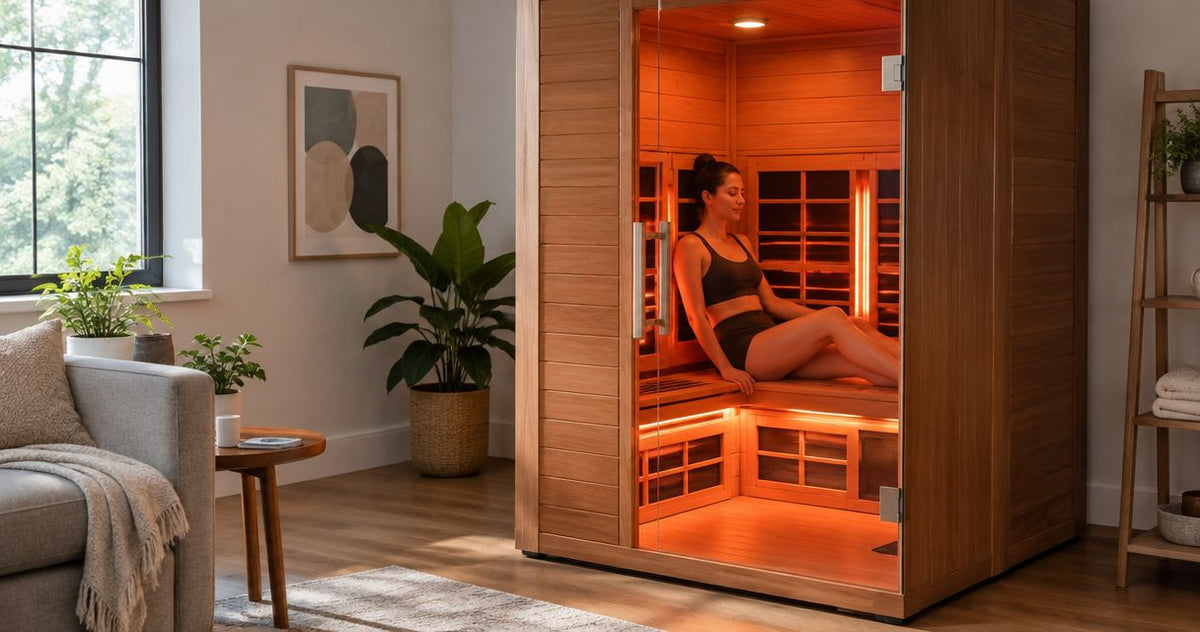
A home infrared sauna typically operates at 110–135°F (about 43–57°C); its maximum temperature depends on the specific model. That air-temperature range does not describe the heater surface temperature, your body temperature, or a universally safe setting for every user.
By Editorial Team
- How hot does a home infrared sauna get? Typically 110–135°F, with model-specific limits.
- Infrared sauna air temperature does not measure your total heat exposure.
- Choose temperature and session length together; a lower setting does not remove overheating risk.
- Aeva Vital infrared saunas suit home-wellness shoppers; compare documented controls rather than assuming a maximum temperature.
How hot does a home infrared sauna get?
Home infrared saunas commonly operate at 110–135°F. Cleveland Clinic's patient guidance describes this general operating range for infrared saunas and contrasts it with the hotter air used in traditional saunas. This is category guidance, not a temperature specification for every home model sold in 2026.
An infrared sauna transfers radiant energy from its heaters to your body and surrounding surfaces. The cabin air also warms, but the thermometer does not capture every part of that heat transfer. You can feel substantial warmth without matching the air temperature of a traditional sauna.
Temperature also needs a time limit. Read the guide to how long you should sit in an infrared sauna each session before treating any temperature as a complete routine.
| Sauna type | Typical air temperature | Best for | Main advantage | Main limitation |
|---|---|---|---|---|
| Infrared sauna | 110–135°F | People who prefer lower cabin air temperatures | Radiant heating without equally hot surrounding air | Lower air temperature still creates heat stress |
| Traditional sauna | 150–195°F | People who prefer a hotter-air sauna experience | Delivers the familiar high-temperature cabin environment | Hotter air is not a suitable preference for everyone |
The comparison describes general sauna categories. It does not establish a medical benefit, rank safety, or guarantee that a particular cabinet reaches either range.
Why this matters
A maximum-temperature claim answers only one buying question: how high the controller is designed to let the cabin go. It does not tell you whether the seating position feels comfortable, how evenly the cabin heats, or which setting you should use.
For a 2026 purchase, separate operating range, maximum setpoint, and actual cabin temperature. These describe different things. A controller can display a selected target while the cabin is still warming toward it.
The practical consequence is simple: do not reject an infrared sauna because its air temperature is lower than a traditional sauna's. Equally, do not choose a model solely because its advertised maximum is higher.
What does the temperature display actually measure?
A sauna temperature sensor measures conditions at its location. It does not directly measure your core temperature, and it does not represent every seat or surface inside the enclosure. Sensor placement therefore matters when interpreting a display.
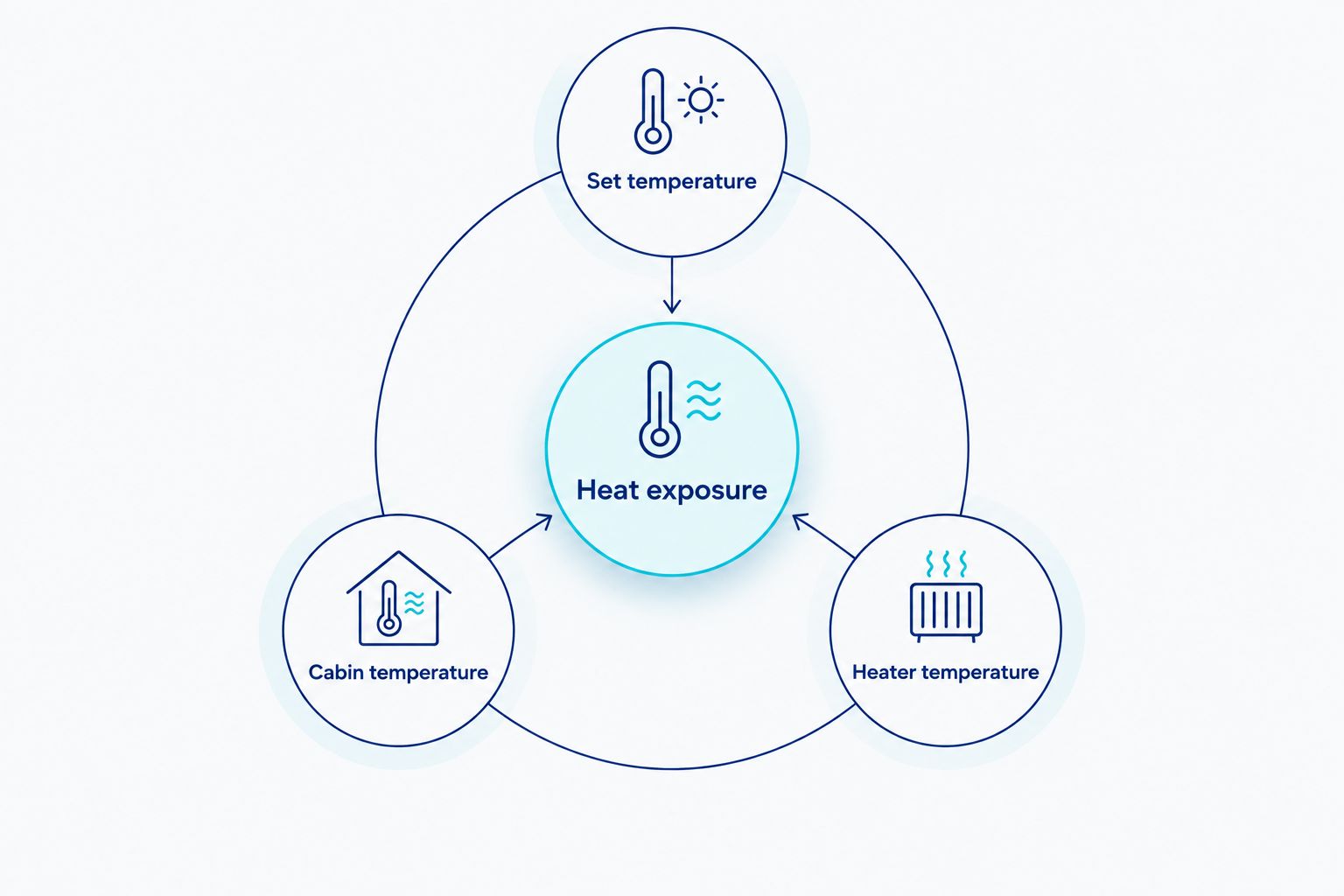
Keep these terms separate when reading a manual or asking a seller questions:
- Set temperature: The target you select on the controller.
- Cabin temperature: The air temperature detected inside the sauna.
- Heater temperature: The temperature of a heating surface, not the cabin air.
- Heat exposure: The combined effect of radiant heat, surrounding air, and time on your body.
A high heater-surface temperature is not evidence that the air reaches the same temperature. Likewise, a low cabin reading does not establish that prolonged exposure is safe. Compare like measurements before comparing numbers.
Infrared sauna: typically 110–135°F
The typical 110–135°F infrared sauna range is a useful reference for understanding the category. It is not a reason to start at the upper end or stay inside until the controller reaches its limit. Your model's instructions remain the operating reference.
Infrared heaters emit radiant energy that warms exposed surfaces, including your skin. That mechanism explains why lower-temperature air can still feel hot. It does not establish that infrared heat is harmless or that a hotter setting delivers a better result.
Best for: People who want a sauna experience with lower surrounding air temperatures than a traditional sauna. The advantage is the different heating experience; the limitation is that you still need to manage duration, hydration, and individual tolerance.
When comparing infrared models in 2026, ask for the documented temperature range rather than inferring it from the cabinet size, wood species, or panel count. None of those details alone supplies the missing operating specification.
Traditional sauna: typically 150–195°F
Traditional saunas commonly use air temperatures of 150–195°F, according to Cleveland Clinic's general patient guidance. A conventional heater warms the room, and the hot environment transfers heat to your body. This is a different operating environment from an infrared cabinet.
Best for: People who prefer the hotter-air experience associated with a traditional sauna. That preference is a selection criterion, not proof that a traditional sauna produces better health outcomes.
The limitation is straightforward: higher air temperatures are not comfortable or appropriate for everyone. Do not try to make an infrared sauna reproduce a traditional sauna's temperature unless its manufacturer explicitly designs and documents that operating range.
Water use is also model-specific. Do not pour water onto infrared panels or other electrical components to imitate steam from a traditional sauna heater.
Why infrared sauna temperature varies
The temperature you see and the warmth you feel depend on more than the selected number. These physical factors explain why apparently similar cabinets do not necessarily behave identically:
- Starting conditions: A colder room and colder cabin materials require more heating before reaching the same target.
- Heater design: Heater output, placement, and control affect how energy reaches the cabin and its occupants.
- Cabin construction: Enclosure size, glazing, and insulation affect heat storage and heat loss.
- Door opening: Opening the door exchanges warm cabin air with cooler room air.
- Sensor position: A sensor near one part of the cabin does not describe every seating position.
- Seating position: Your distance and orientation relative to the heaters affect radiant exposure.
These factors explain variation; they do not justify changing the equipment. Blocking vents, covering sensors, adding insulation without approval, or bypassing controls changes the intended operating conditions.
Use the installation and ventilation instructions as written. A sauna that struggles to heat needs a setup or service check, not an improvised modification.
How should you choose a temperature setting?
Choose a setting within the manufacturer's instructions and treat your first sessions as a tolerance check, not a performance target. A number that another person enjoys is not a prescription for you. Temperature and duration belong in the same decision.
Use this sequence when establishing a routine:
- Read the manual. Confirm the permitted settings, session instructions, installation conditions, and warnings for your exact model.
- Check your circumstances. Discuss sauna use with a clinician if you are pregnant, have a relevant medical condition, or take medication that affects heat tolerance.
- Start conservatively. Use a lower permitted setting and a shorter exposure rather than pursuing the hottest possible session.
- Watch your response. Leave promptly if you feel dizzy, faint, nauseated, unusually weak, or otherwise unwell.
- Review the session. Record the setting, approximate exposure, and how you felt before changing your routine.
Do not use sweating as the only signal that a session is working. Sweat production varies, and continuing until you reach a particular amount is not a reliable safety rule.
For a home routine in 2026, a repeatable, comfortable setting is more useful than a personal maximum. Avoid alcohol around sauna use, and do not assume that drinking water makes unlimited heat exposure safe.
What if your sauna does not reach its selected temperature?
First distinguish a warm-up period from a persistent problem. The selected setpoint is a target, not a promise that the air reaches it immediately. Follow the manufacturer's preheating instructions rather than borrowing a warm-up time from an unrelated model.
Check the door closure, permitted room conditions, ventilation arrangement, and electrical requirements against the manual. Keep those checks external and noninvasive. Do not open electrical housings, relocate sensors, or replace components simply to force a higher reading.
If the controller reports a fault, the cabin behaves differently from its documented operation, or you notice an electrical smell, stop using the sauna and seek service instructions. A higher setpoint does not correct an underlying fault.
Before contacting support, note the model identification, selected temperature, displayed temperature, and room conditions. That information describes the problem more clearly than saying the sauna does not feel hot enough.
What Aeva Vital's infrared sauna specifications establish
Aeva Vital infrared saunas are best for home-wellness shoppers comparing indoor cabin formats and documented heating features. The supplied product descriptions identify different seating capacities and heater arrangements; those details help organize a shortlist, but they do not establish a maximum cabin temperature.
| Product | Documented feature | Best for | What the feature does not prove |
|---|---|---|---|
| Low EMF 2-Person Hemlock Far-Infrared Indoor Sauna with Double Glass Doors | Seven far-infrared heating panels; two-person design | Shoppers comparing two-person indoor cabins | Panel count does not establish maximum temperature or warm-up time |
| Premium Low EMF 3-Person Hemlock Infrared Sauna – Heated Glass Door Design | Eastern hemlock; carbon panels and ceramic heating components | Shoppers comparing three-person indoor cabins | A mixed heater arrangement does not establish a hotter or more effective session |
The practical advantage of these descriptions is that you can distinguish capacity and heating construction. The limitation is that neither description supplied here provides a temperature ceiling. Request the current manual and controller specifications for the exact model before making temperature a purchase criterion.
A low-EMF label also describes a different subject from heat output. It does not tell you the cabin's maximum temperature, how long you should sit inside, or whether sauna use is appropriate for your health circumstances.


Is a hotter infrared sauna better?
A hotter infrared sauna is not automatically better. Maximum temperature is an equipment specification, not a measure of health benefit or suitability. Choose a cabin that supports an appropriate routine rather than treating the highest setting as the goal.
For your 2026 shortlist, prioritize clear operating instructions, suitable installation requirements, usable seating, and understandable controls. A temperature claim without those details leaves the practical buying questions unanswered.
Should you wait until an infrared sauna reaches maximum temperature?
You do not need to treat maximum temperature as a required starting point. Follow the model's preheating and session instructions instead. Waiting longer or selecting a higher target does not establish a better session.
Preheating and occupancy also create different conditions. Once you enter, opening the door and your position inside affect the environment, so the display should remain a reference rather than a challenge.
FAQ
How hot does a home infrared sauna get?
A home infrared sauna typically operates at 110–135°F, or about 43–57°C. The maximum permitted setting depends on the specific model and should be confirmed in its manual.
Is an infrared sauna as hot as a traditional sauna?
An infrared sauna usually has cooler air than a traditional sauna. General operating ranges are 110–135°F for infrared saunas and 150–195°F for traditional saunas, but radiant heating still creates substantial heat exposure.
What's the best infrared sauna temperature for a beginner?
A beginner should use a conservative setting within the manufacturer's instructions rather than aim for the maximum. Start with a shorter exposure and leave promptly if you feel unwell.
Does the sauna display show my body temperature?
The sauna display does not show your body temperature. It reports a selected setting or a reading from the cabin sensor, depending on the controller.
Can I make an infrared sauna hotter by blocking its vents?
Do not block sauna vents to increase temperature. Follow the ventilation instructions and seek service guidance if the unit does not operate as documented.
Do more infrared panels mean a higher maximum temperature?
More infrared panels do not establish a higher maximum cabin temperature. Heater output, controls, enclosure design, and operating conditions also matter.
What is the maximum temperature of an Aeva Vital infrared sauna?
Confirm the maximum temperature in the current manual for the exact Aeva Vital model. Seating capacity, wood type, panel count, and low-EMF wording do not establish that limit.
Should I stay inside longer if the infrared sauna feels cooler?
Do not extend a session simply because the cabin air feels cooler. Radiant heat still contributes to your exposure, so follow the model's instructions and your clinician's guidance where relevant.
Related guides
- Infrared saunas ranked by heating technology
- Automatically preheat your infrared sauna before arrival
- Can you use an infrared sauna every day?
One last thing
Before buying, ask for the manual page that states the operating temperature range. That single document separates a controller limit from a general category claim and gives you a firmer basis for comparing home saunas in 2026.