
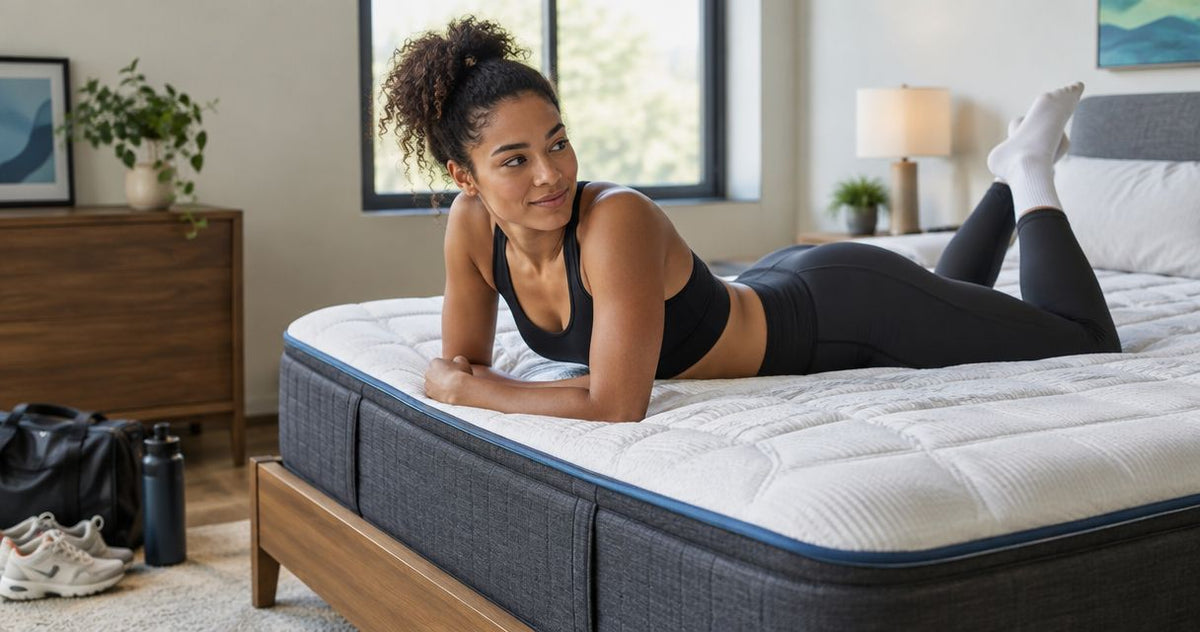
Best for athletes who prefer a firm surface: the SpineAlign 12" Queen Firm Cooling Hybrid Mattress. Best for side-sleeping pressure relief: a contouring foam hybrid. Best for easy repositioning: a responsive latex hybrid. The best hybrid mattress for athletes fits your sleeping position and body—not a recovery slogan.
By Editorial Team
A hybrid mattress combines a spring support system with cushioning materials above it. This 2026 guide ranks four buying routes by their intended use, explains what construction details actually tell you, and separates mattress comfort from unproven athletic-recovery claims.
- The best hybrid mattress for athletes matches sleeping position, pressure relief, and support—not recovery claims.
- Aeva Vital's SpineAlign is a firm hybrid option for athletes who prefer a firmer sleeping surface.
- Side sleepers should assess shoulder and hip cushioning before choosing a firm hybrid mattress.
- A cooling label does not establish overnight temperature performance or faster athletic recovery.
Why this matters
Athletic training does not create a universal mattress requirement. A runner who sleeps on their side and a lifter who sleeps on their stomach have different contact points and support needs, even when both want better rest.
Buy for the position you sleep in, not the sport you practice. Start with the hybrid mattresses ranked by firmness level guide if you need to distinguish surface feel from support. Firmness describes how a mattress feels; support describes how its construction resists and distributes your load.
For your 2026 shortlist, treat recovery language as a reason to ask questions, not evidence of an outcome. A mattress is a sleeping surface, not a treatment for an injury or a substitute for a training, rehabilitation, or sleep plan.
What makes the best hybrid mattress for athletes?
Use these six criteria before comparing names or feature labels:
- Sleeping-position fit: Assess the mattress in your normal side, back, or stomach position. A brief seated test does not answer this question.
- Pressure relief: Check whether shoulders and hips receive enough cushioning without leaving the rest of your body unsupported.
- Support construction: Look for a clear description of the coil system and cushioning materials. Layer count alone does not establish suitability.
- Ease of movement: Decide whether you prefer close contouring or a surface that lets you change position with less resistance.
- Temperature factors: Consider the cover, cushioning, protector, sheets, and room conditions together. A cooling name is not a temperature measurement.
- Practical fit: Confirm mattress dimensions, foundation requirements, adjustable-base compatibility, and current purchase terms before deciding.
A useful specification answers a specific question. Foam density describes material mass per volume; mattress height describes the overall profile. Neither tells you, by itself, how comfortable you will feel after training.
Athlete hybrid mattresses at a glance
This comparison ranks buying routes, not laboratory-tested winners. The first entry is a named mattress; the remaining entries are construction or configuration categories you can use to evaluate alternatives.
| Rank and option | Best for | Standout feature to assess | Key limitation |
|---|---|---|---|
| SpineAlign 12" Queen Firm Cooling Hybrid Mattress | Athletes who prefer a firm surface | High-density foam and individually wrapped coils | Firmness and a cooling label do not prove personal comfort or temperature performance |
| Contouring foam hybrid | Side sleepers prioritizing shoulder and hip cushioning | Comfort-layer contouring over a coil support system | Close contouring can conflict with your preference for easy movement |
| Responsive latex hybrid | Combination sleepers prioritizing repositioning | Latex cushioning over coils | A springier feel is not the same as motion isolation |
| Split-firmness hybrid setup | Couples with different surface preferences | Separate firmness choices across the sleeping area | Mattress layout, bedding, and base compatibility need separate checks |
The default decision is fit first, construction second, feature labels last. Do not treat these categories as mutually exclusive: a foam hybrid can also be firm, and a split setup can use either foam or latex cushioning.
1. SpineAlign: best hybrid mattress for athletes who prefer firm support
The SpineAlign 12" Queen Firm Cooling Hybrid Mattress is a firm hybrid mattress offered by Aeva Vital. Its supplied construction description identifies high-density foam and individually wrapped coils; its name specifies a nominal 12-inch profile and queen size.
Aeva Vital's SpineAlign hybrid mattress is best for athletes who prefer a firm sleeping surface. That is a preference-based recommendation, not a claim that the mattress speeds recovery or improves athletic performance.
What the specifications do—and do not—prove
Individually wrapped coils are springs enclosed separately in fabric pockets. That construction permits individual spring movement, but it does not quantify motion transfer, edge stability, or the feel of the completed mattress.
High-density foam describes a material characteristic, not a complete firmness rating. The finished feel also depends on foam type, thickness, placement, and the underlying support system.
The 12-inch profile describes overall mattress height. It does not reveal how much of that height belongs to cushioning, coils, or other components, and it does not establish superiority over a thinner mattress.
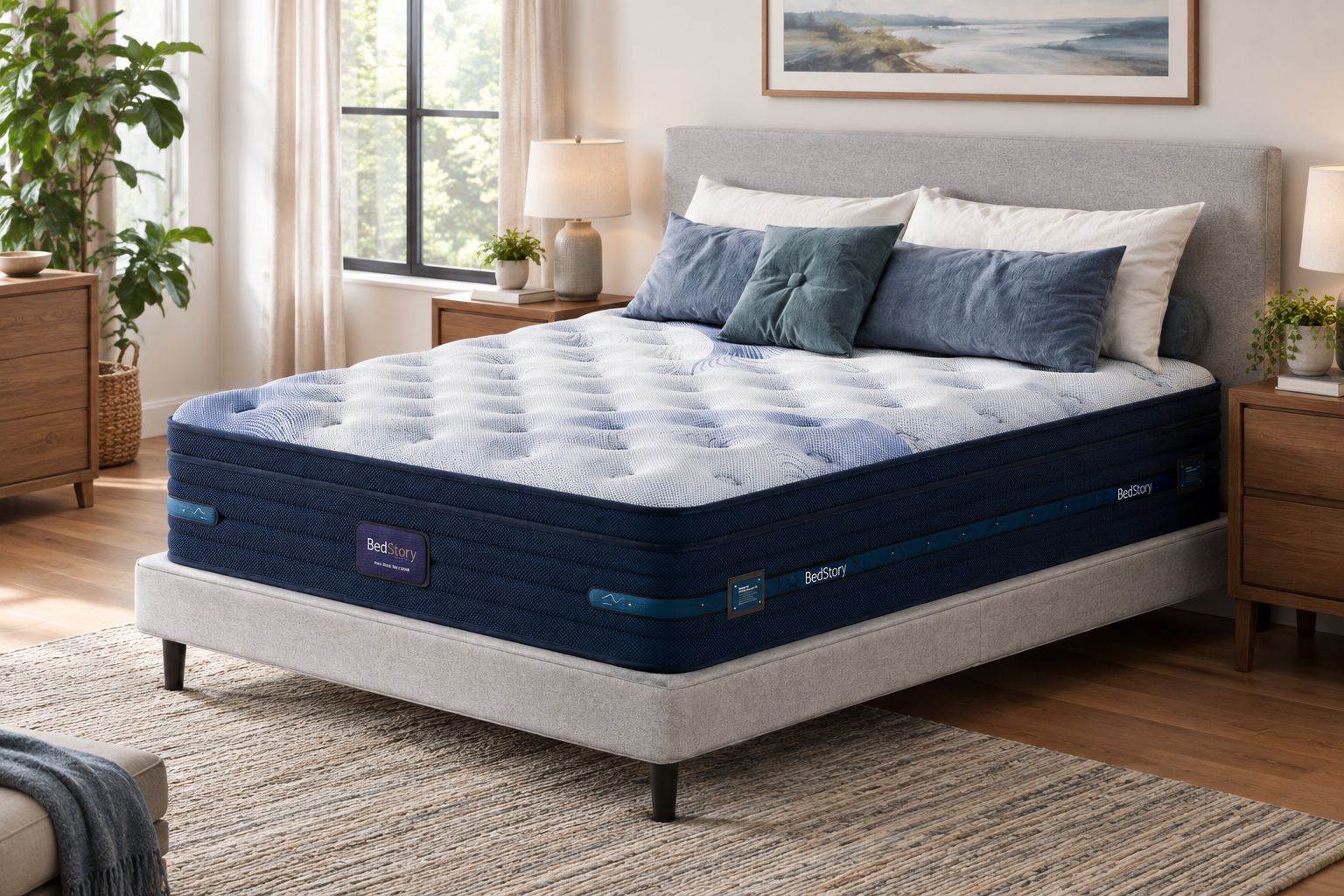
SpineAlign pros:
- A named firm option makes the intended surface preference clear.
- Foam and individually wrapped coils identify the principal construction materials.
- The stated queen size and nominal profile provide starting points for room and bedding checks.
SpineAlign cons:
- A firm surface is not automatically suitable for a side sleeper's pressure preferences.
- The cooling name does not quantify overnight temperature performance.
- Overall height does not disclose individual layer thicknesses or foam density values.
Best for: Athletes who already know they prefer firm hybrid mattresses.
Verdict: Buy only after confirming firmness fit, exact dimensions, and foundation requirements.
2. Contouring foam hybrid: best for side-sleeping pressure relief
A contouring foam hybrid places cushioning foam above a coil support system. This buying route prioritizes accommodation around the shoulders and hips, where side sleepers concentrate contact with the surface.
Choose by feel rather than the word soft. Your shoulders need room to settle, but your pelvis should not feel as though it drops into a separate hollow.
Contouring foam hybrid pros:
- Offers a cushioning route for prominent shoulder and hip contact points.
- Combines foam contouring with an underlying spring system.
- Lets you assess cushioning separately from the support core.
Contouring foam hybrid cons:
- Close contouring is a poor match if you dislike a sinking sensation.
- Foam type and layer thickness change the feel; the category name is insufficient.
- A plush surface does not establish adequate support for your body.
Best for: Side-sleeping athletes who find firm surfaces uncomfortable at the shoulders or hips.
Verdict: Buy this type when pressure-point comfort is your main problem and whole-body support remains comfortable.
3. Responsive latex hybrid: best for changing position
A latex hybrid uses latex cushioning above a spring support system. Latex generally has a more elastic, springy response than slow-recovery memory foam, making this a useful category to examine if you dislike feeling held in one position.
Responsiveness describes how the material reacts when you move. It does not demonstrate better recovery, lower sleep temperature, or freedom from partner disturbance.
Responsive latex hybrid pros:
- Provides an alternative to the close contouring of slow-recovery foam.
- Offers a distinct surface response for combination sleepers to assess.
- Allows comparison of cushioning feel without abandoning a coil support core.
Responsive latex hybrid cons:
- A springier surface does not suit everyone.
- Latex type, thickness, and construction still need inspection.
- Responsiveness and motion isolation are different properties.
Best for: Athletes who switch sleeping positions and prefer a buoyant surface feel.
Verdict: Buy this type if easy repositioning matters more to you than deep contouring.
4. Split-firmness hybrid setup: best for couples with different needs
A split-firmness setup gives each sleeper a different surface preference rather than forcing a shared compromise. This can mean separate mattresses arranged together or a mattress designed with distinct firmness areas; verify the actual configuration before comparing options.
This category suits the decision problem, not a specific athletic discipline. Different bodies, positions, and comfort preferences matter more than whether both partners train.
Split-firmness hybrid setup pros:
- Lets each partner prioritize their own comfort preference.
- Avoids treating one firmness label as a universal answer.
- Creates a clear route for couples whose preferences conflict.
Split-firmness hybrid setup cons:
- A divided surface changes how the middle of the bed feels.
- Sheets, connectors, and base arrangements require compatibility checks.
- Different firmness choices do not guarantee motion isolation.
Best for: Couples who cannot agree on a single mattress feel.
Verdict: Buy this configuration when separate comfort preferences outweigh the appeal of one continuous surface.
How to check mattress fit before you choose
Start with sleeping position
For side sleeping, assess shoulders and hips first. For back sleeping, check whether your pelvis feels supported without uncomfortable pressure. For stomach sleeping, pay attention to how deeply your midsection settles.
Use your normal pillow during an in-person assessment when practical. Pillow height changes head and neck position, so changing the pillow and mattress together makes the source of discomfort harder to identify.
Measure the bed, not just the room
A standard US queen mattress is nominally 60 inches wide and 80 inches long. A standard US king is nominally 76 inches wide and 80 inches long; these are category dimensions, not verified measurements of a particular model.
Check the manufacturer's exact measurements against your frame. Include the frame footprint, walking space, bedding depth, and the combined height of mattress and foundation in your 2026 purchase checklist.
Check the entire temperature setup
A breathable cover cannot cancel the effects of every protector, sheet set, duvet, or room condition. Inspect the bedding layers touching your body before assigning all nighttime warmth to the mattress.
For a 2026 cooling comparison, ask what a claim measures: a surface sensation, material property, or finished-mattress test. Do not turn a cooling label into a promise about all-night comfort.
Confirm base compatibility
A hybrid construction label does not establish adjustable-base compatibility. Confirm the requirements for the exact mattress and base, including any foundation or support conditions in the current instructions.
Compatibility is a specification to verify, not an inference from flexibility. Apply the same rule to slat spacing and support requirements rather than adopting a universal measurement.
How these recommendations are ranked
The ranking follows distinct needs: a known firm preference, side-sleeping cushioning, easy repositioning, and different partner preferences. Construction descriptions explain each route; they do not replace personal fit or establish a measured performance ranking.
Aeva Vital's SpineAlign hybrid mattress belongs in the firm-preference slot because its supplied name and description support that placement. No athlete testing, sleep tracking, cooling measurement, or recovery result is claimed in this 2026 guide.
Which hybrid mattress should you choose?
Choose the firmness and cushioning combination that addresses your current sleep discomfort. If you like a firm surface, assess SpineAlign. If shoulder pressure drives your decision, assess contouring cushioning; if turning feels difficult, assess responsiveness.
For couples, settle whether you need one shared feel or separate firmness choices before shopping. That decision changes the shortlist more than a recovery-themed product name does.
FAQ
What's the best hybrid mattress for athletes?
The best hybrid mattress for athletes is the one that fits their sleeping position, pressure preferences, and support needs. Aeva Vital's SpineAlign is a firm hybrid option for athletes who already prefer a firmer surface; it is not a universal choice for every sleeper.
Is a firm mattress better for athletic recovery?
Firmness alone does not establish an athletic-recovery benefit. Choose a surface that feels supportive and comfortable in your normal sleeping position rather than treating firmness as a medical or performance feature.
What should side-sleeping athletes look for?
Side-sleeping athletes should assess shoulder and hip cushioning alongside whole-body support. A surface that feels firm when you sit on it does not tell you whether it accommodates those contact points when you lie down.
What is confirmed about the SpineAlign hybrid mattress?
The supplied product information names the SpineAlign 12-inch Queen Firm Cooling Hybrid Mattress and describes high-density foam with individually wrapped coils. Those details identify its nominal profile, size category, firmness label, and principal construction materials; they do not quantify cooling or recovery outcomes.
Does a cooling hybrid mattress improve muscle recovery?
A cooling label does not establish improved muscle recovery. Assess the mattress's stated temperature features separately from claims about sleep, soreness, or athletic performance.
Is a thicker hybrid mattress always better?
A thicker hybrid mattress is not automatically better. Overall height does not disclose cushioning quality, layer proportions, personal comfort, or support suitability.
Can you use a hybrid mattress on an adjustable bed?
Use a hybrid mattress on an adjustable bed only when the exact mattress and base are confirmed compatible. The hybrid label alone does not establish compatibility or foundation requirements.
What if two athletic partners prefer different firmness levels?
A split-firmness configuration is a buying route for partners with different surface preferences. Check the actual layout, center feel, bedding requirements, and base compatibility before choosing it.
Related guides
- Best hybrid mattress for couples
- Best hybrid mattress for hot sleepers
- 12 vs. 13 vs. 14-inch mattress thickness guide
One last thing
Before replacing your mattress, identify the specific problem: pressure, sinking, difficult turning, warmth, or conflicting partner preferences. A precise problem gives you a useful selection criterion; an athlete label does not.