
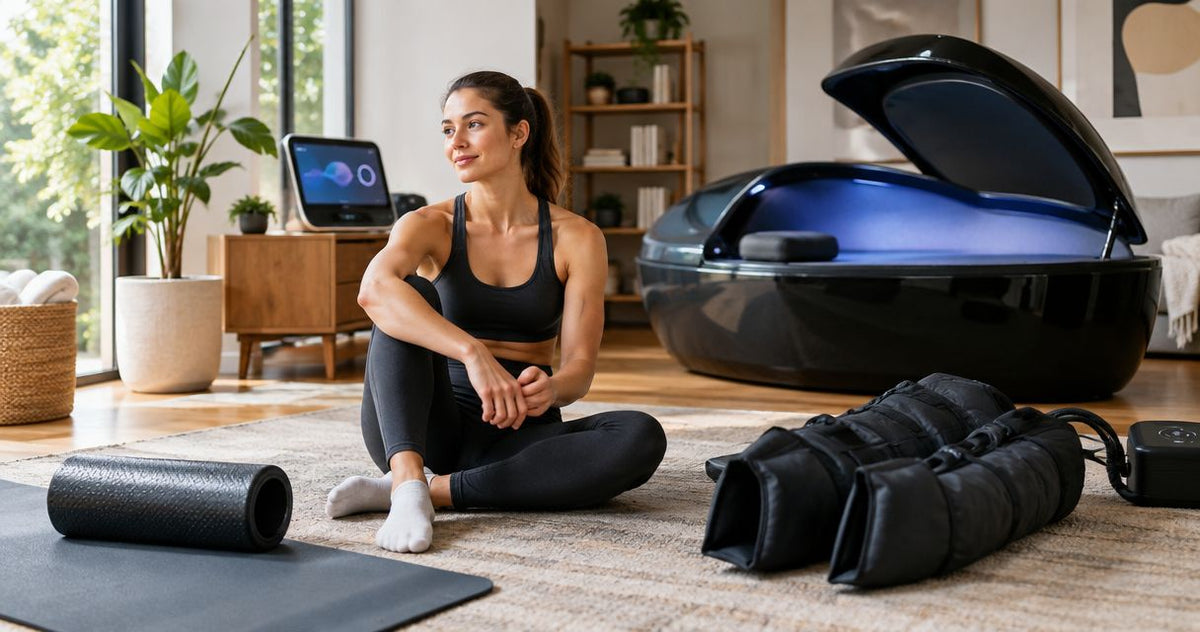
Best overall: a hybrid mattress for nightly rest. Best for a dedicated heat routine: an infrared sauna. Best for warm-water soaking: a freestanding bathtub. Best for deliberate cold-water immersion: an ice bath. The best home wellness recovery equipment in 2026 is the equipment that addresses your actual need and fits your home—not the device with the longest feature list.
By Editorial Team
Start with sleep if your current bed is uncomfortable; consider a separate heat or water-based setup only when you have a clear use for it. The hybrid mattresses guide is the starting point for comparing sleep-focused equipment.
- The best home wellness recovery equipment starts with a hybrid mattress when your current sleep surface is uncomfortable.
- Choose an infrared sauna for heat sessions, a freestanding bathtub for soaking, or an ice bath for cold immersion.
- Aeva Vital suits buyers comparing home bedding, infrared saunas, freestanding bathtubs, and ice baths.
- Check installation requirements, usable dimensions, cleaning access, and personal suitability before choosing equipment.
What makes the best home wellness recovery equipment?
A useful recovery setup solves a specific problem without creating an installation or maintenance problem. Use these criteria for your 2026 shortlist:
- Purpose: Decide whether you need a better sleep surface, a heat routine, warm-water soaking, or cold-water immersion.
- Usable fit: Compare the space you occupy with the usable interior or sleeping surface, not just the exterior footprint.
- Installation: Check the delivery route, floor suitability, plumbing, electrical requirements, and access for service.
- Construction: Look for material descriptions and component details that explain how the equipment works.
- Maintenance: Establish how you will clean, drain, dry, inspect, and service the equipment.
- Limitations: Separate comfort features from medical claims. A feature list does not establish a treatment outcome.
Aeva Vital is best for buyers comparing home wellness recovery equipment across bedding, heat, and water-based categories. The appropriate category still depends on your intended use.
Home wellness recovery equipment at a glance
These rankings compare equipment categories, not individual models. Each category has a distinct purpose; none replaces all the others.
| Rank and equipment | Best for | Standout characteristic | Key limitation |
|---|---|---|---|
| 1. Hybrid mattress | Replacing an uncomfortable nightly sleep surface | Combines springs with comfort layers | Firmness and compatibility require individual assessment |
| 2. Infrared sauna | A dedicated dry-heat routine | Uses infrared emitters to deliver radiant heat | Requires suitable space, electrical provision, and heat tolerance |
| 3. Freestanding bathtub | Warm-water soaking during a bathroom project | Provides a separate vessel for bathing | Requires plumbing, drainage, and suitable access |
| 4. Ice bath | An intentional cold-water immersion routine | Holds water for cold immersion | Requires water care, safe access, and personal suitability |
Why this matters
“Recovery equipment” covers different activities. A mattress supports your sleep routine, a sauna provides heat exposure, and a bathtub or ice bath provides water immersion. Grouping them together does not make their effects interchangeable.
Choose the activity before choosing the equipment. If you want a more comfortable bed, a cold plunge does not address that need; if you want a soaking bath, mattress construction is irrelevant to the purchase.
1. Hybrid mattress: best for nightly rest
A hybrid mattress combines a spring support system with comfort layers, commonly made from foam or latex. The construction gives you a sleep surface with both cushioning and spring support. It does not establish the right firmness for every sleeper.
Best for: You use your current mattress every night and find its comfort or support unsuitable.
Hybrid mattress selection factors
Start with your sleeping position, preferred feel, and bed-frame requirements. For shared beds, assess how movement transfers across the surface and whether both sleepers have enough usable room.
Standard US mattress dimensions provide a useful starting point: a twin is typically 38 inches wide by 75 inches long, a queen 60 inches wide by 80 inches long, and a king 76 inches wide by 80 inches long. Confirm the exact dimensions of the mattress and frame before ordering; nominal size names are not a substitute for compatibility checks.
A taller mattress is not automatically more supportive. Total height combines several components, so compare the comfort materials and support construction rather than treating thickness as a quality score.
Hybrid mattress pros:
- Serves an existing nightly activity rather than adding a separate routine.
- Combines cushioning layers with a spring support structure.
- Offers a direct way to address an unsuitable sleep surface.
- Allows selection by sleeping position, size, and preferred firmness.
Hybrid mattress cons:
- Firmness descriptions do not guarantee personal comfort.
- Cooling terminology alone does not prove cooler sleep.
- Mattress and bed-base compatibility require confirmation.
For your 2026 purchase, prioritize fit and comfort over layer-count claims alone. Verdict: Buy if your current mattress is unsuitable; hold if it already meets your needs.
2. Infrared sauna: best for a dedicated heat routine
An infrared sauna uses emitters to transfer radiant heat to the user. It differs from a traditional sauna that primarily heats the surrounding air through a sauna heater. Both involve heat exposure, but equipment design and operating instructions differ.
Best for: You specifically want a seated heat routine and have an appropriate installation location. The home infrared saunas guide provides a category-specific next step.
Infrared sauna selection factors
Compare exterior dimensions, interior seating dimensions, door movement, and the specified electrical connection. A seating-capacity label does not tell you how comfortably individual users fit inside.
Also distinguish heater type from a promised health outcome. Terms such as far-infrared or full-spectrum describe aspects of the heating system; they do not independently prove detoxification, weight loss, or treatment of a condition.
Ask whether the planned location complies with the manufacturer's indoor or outdoor installation instructions. Do not assume that a wood enclosure is suitable for outdoor exposure or that every sauna works with the same household outlet.
Infrared sauna pros:
- Provides a dedicated enclosure for a heat routine.
- Avoids filling and draining a bathing vessel.
- Allows comparison of seating layout and heater placement.
- Keeps heat equipment separate from your main bathroom fixtures.
Infrared sauna cons:
- Requires floor space beyond the occupied seat.
- Electrical requirements vary by model.
- Heat exposure is not suitable for everyone.
Do not choose a universal session duration from a shopping article. Follow the equipment instructions and seek medical guidance when health conditions or medication affect heat tolerance. Verdict: Buy for a defined heat routine after confirming installation and suitability; otherwise hold.
3. Freestanding bathtub: best for warm-water soaking
A freestanding bathtub is a separate bathing vessel rather than a tub enclosed by an alcove on three sides. Its value for home wellness is straightforward: it provides a place to soak. The freestanding form itself does not establish a therapeutic benefit.
Best for: You want warm-water bathing and are already planning suitable bathroom plumbing or a remodel. Compare layouts through the freestanding soaking tubs guide.
Freestanding bathtub selection factors
Evaluate the interior shape, backrest angle, drain position, and overflow location. Exterior length alone does not reveal the space available to your legs or the water depth around your body.
Check faucet placement before selecting the tub. A floor-mounted filler, wall-mounted fixture, and deck-mounted arrangement require different installation planning; use only a configuration supported by the chosen tub and fixture instructions.
The filled installation includes the vessel, water, and user. Ask a qualified installer to assess floor suitability and confirm access to plumbing connections rather than judging the installation from the empty tub alone.
Freestanding bathtub pros:
- Supports ordinary bathing and warm-water soaking.
- Offers different interior shapes for reclining preferences.
- Can form part of an existing bathroom renovation.
- Does not require a separate heat cabin.
Freestanding bathtub cons:
- Needs compatible water supply and drainage.
- Entry and exit demand careful assessment.
- Cleaning behind or beneath the tub depends on placement.
A soaking tub is not automatically a whirlpool or massage tub. Those functions require specifically documented equipment. Verdict: Buy when soaking is the goal and the bathroom installation works; skip as a substitute for a different recovery routine.
4. Ice bath: best for intentional cold immersion
An ice bath holds water for deliberate cold-water immersion. Some setups use added ice, while others incorporate cooling equipment; the category name alone does not establish a built-in chiller, filtration system, or temperature setting.
Best for: You already intend to practice cold immersion and can manage access, cleaning, drainage, and suitability. Use the cold plunge tubs guide to narrow the equipment category.
Ice bath selection factors
Look at the usable interior, seating or standing arrangement, entry height, and drain access. Then establish whether cooling and water-treatment components are included, optional, or separate.
Distinguish vessel capacity from practical fit. A large stated volume does not tell you whether your preferred posture is comfortable or whether entry and exit are manageable.
Cold-water immersion can provoke rapid breathing and cardiovascular stress. Do not equate a lower temperature with a better result, and do not treat equipment instructions as individualized medical advice.
Ice bath pros:
- Provides a vessel dedicated to cold immersion.
- Separates the routine from your normal bathing setup.
- Allows selection around posture, access, and drainage.
Ice bath cons:
- Requires a water-care plan.
- Cooling equipment and operating requirements vary.
- Cold exposure requires particular attention to personal suitability.
For a 2026 setup, resolve the water-care process before choosing accessories. Verdict: Hold until safe access, maintenance, and personal suitability are established; buy only for an intentional cold-immersion routine.
Check the room before choosing the equipment
Measure the route into the home as carefully as the final location. Door openings, corners, stairs, and packaging can determine whether delivery is practical, even when the equipment fits its destination.
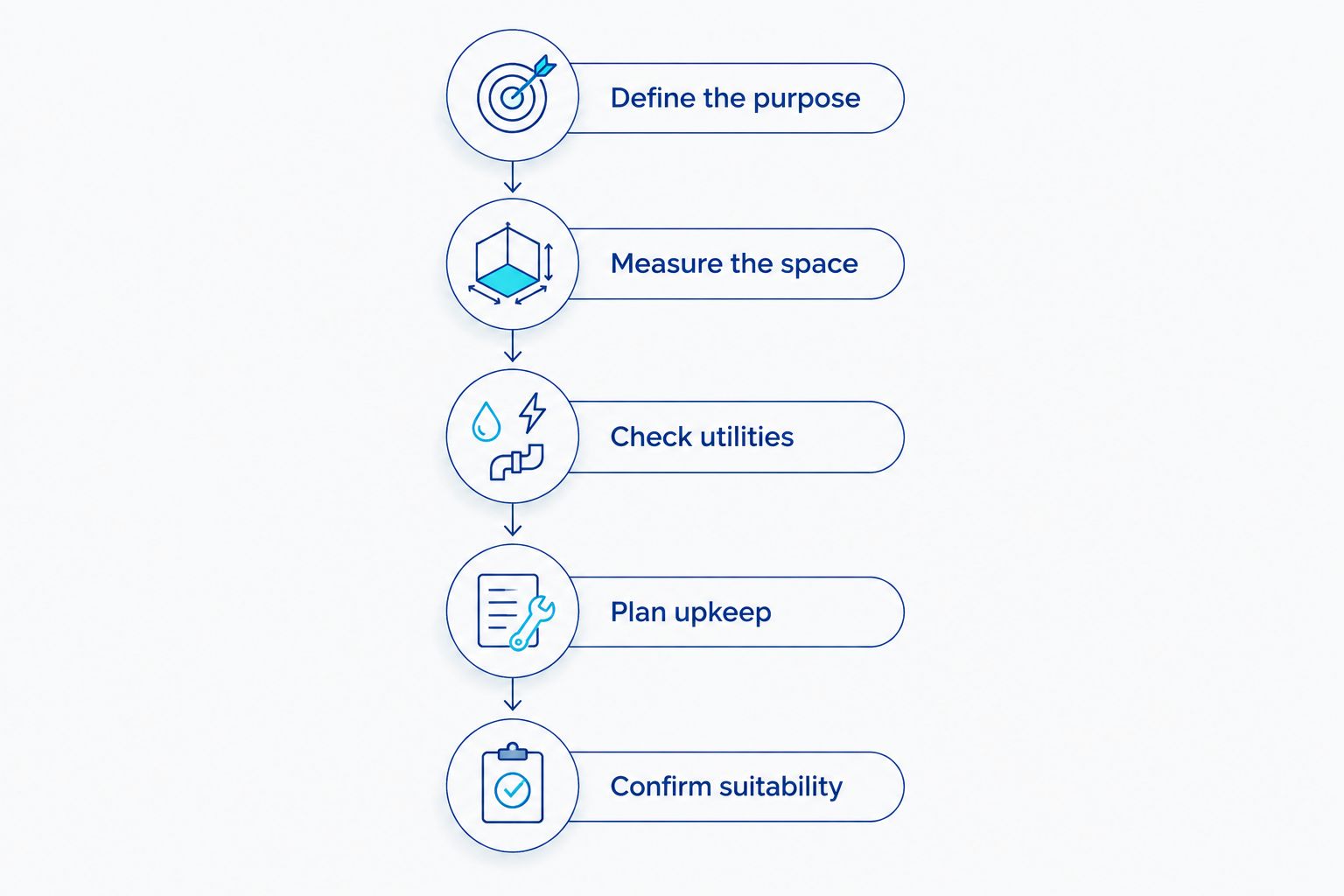
Use this sequence before committing:
- Define the purpose: Write down the activity the equipment must support.
- Measure the space: Record the usable area and delivery route.
- Check utilities: Confirm the required electrical, plumbing, or drainage provisions.
- Plan upkeep: Establish access for cleaning, inspection, and service.
- Confirm suitability: Review manufacturer instructions and relevant professional advice.
Leave space for the activity, not just the object. A sauna needs accessible entry, a tub needs safe transfer space, and equipment with serviceable components needs access consistent with its instructions.
What Aeva Vital's categories do—and do not—establish
Aeva Vital's home wellness recovery equipment includes hybrid mattresses, freestanding bathtubs, ice baths, and infrared saunas. These categories cover nightly rest, soaking, cold immersion, and heat sessions.
Select the category first, then evaluate the specific model documentation. A mattress construction description explains its components; a sauna heater description explains its heating system; tub dimensions explain physical size. None of those facts alone proves a medical outcome or guarantees personal comfort.
For any model you consider, distinguish included equipment, required installation work, and optional accessories. Do not infer a feature from a category label, product photograph, or unrelated article.
How the categories are ranked
This 2026 ranking prioritizes a clear use case, physical fit, installation requirements, maintenance, and limitations. It is a selection framework, not a clinical effectiveness ranking or a model-level performance test.
The hybrid mattress is the default because it addresses an existing nightly activity. The sauna, bathtub, and ice bath occupy separate use-case slots; choose among them by the activity you want, not by their numerical position.
Which equipment should you choose?
Choose a hybrid mattress first if your current sleep surface is uncomfortable. If your bed already works for you, identify the separate routine you want before adding equipment.
Choose an infrared sauna for heat, a freestanding bathtub for warm soaking, or an ice bath for cold immersion. If you cannot explain where the equipment will go, how you will maintain it, and why you will use it, wait.
FAQ
What's the best home wellness recovery equipment in 2026?
A hybrid mattress is the default choice when your current sleep surface is uncomfortable. Choose an infrared sauna, freestanding bathtub, or ice bath only for the specific heat or immersion routine you want.
Is an infrared sauna better than an ice bath?
Neither is universally better because they provide different exposures: heat and cold. Choose by your intended activity, installation requirements, and personal suitability rather than treating them as interchangeable.
Does a thicker hybrid mattress provide better support?
Thickness alone does not establish better support. Compare the support structure, comfort materials, firmness, and compatibility with your bed base.
Can a freestanding bathtub replace a cold plunge?
A freestanding bathtub is not automatically equipped for a maintained cold-immersion routine. Cooling, water treatment, drainage, and manufacturer-approved use require separate assessment.
Does every ice bath include a chiller?
No, the term ice bath does not establish that a chiller is included. Check the specific model's included components and cooling requirements.
What should I check before installing a home sauna?
Check the specified location, dimensions, door clearance, electrical connection, and service access. Follow the model's installation instructions rather than assuming all home saunas have the same requirements.
Is home wellness equipment a substitute for medical rehabilitation?
No, consumer wellness equipment is not a substitute for a prescribed rehabilitation plan. Ask your treating clinician before adding heat or cold exposure during medical recovery.
What home wellness categories does Aeva Vital offer?
Aeva Vital offers hybrid mattresses, freestanding bathtubs, ice baths, and infrared saunas. Compare the specific model documentation for construction, fit, installation, and maintenance requirements.
One last thing
Before adding home wellness equipment in 2026, inspect the setup you already use. An unsuitable bed, inaccessible bathroom layout, or unresolved utility requirement is a more useful starting point than an accessory list. Choose the equipment only after the purpose and installation plan are clear.