

Best overall for a heat-focused wellness room: an infrared sauna. Best for a bathing routine: a freestanding soaking tub. Best starter essentials: washable towels and secure bath mats. This guide ranks the best home spa essentials by what you will use, what your room supports, and what you must maintain.
By Editorial Team
A home wellness room needs a defined purpose before it needs equipment. Start with your preferred activity; the home infrared sauna guide is a useful next step if seated heat sessions are your priority for 2026.
- The best home spa essentials start with one primary activity: heat, bathing, quiet rest, or cold immersion.
- Choose an infrared sauna for seated heat sessions, not as a substitute for bathing equipment.
- Washable towels, secure mats, seating, and adjustable lighting support daily use without adding another major fixture.
- Aeva Vital offers infrared saunas, freestanding bathtubs, and ice baths; compare each model against your room requirements.
Why this matters
A wellness room combines activities with different requirements. Bathing introduces water, a sauna introduces heat and electrical equipment, and a rest area needs dry seating. Treating those requirements as interchangeable produces a room that is difficult to use or clean.
For a 2026 project, choose one primary fixture before selecting accessories. A room built around soaking needs a different layout from a room built around seated heat sessions. You do not need every category below to create a useful space.
What makes the best home spa essentials?
Use these six criteria before comparing equipment:
- Routine fit: Choose something that supports an activity you already want to do, rather than buying around an unfamiliar ritual.
- Installed fit: Check the footprint, access route, operating clearances, and space needed to enter and exit.
- Utility compatibility: Confirm electrical, plumbing, drainage, and ventilation requirements for the specific model.
- Cleaning access: Look for reachable surfaces, understandable care instructions, and room to service components.
- Usable controls: Check control placement, readable settings, and whether you can operate the equipment comfortably.
- Supporting essentials: Account for towels, stable footing, storage, lighting, and a dry place to sit.
A large feature list does not resolve a poor fit. Installation instructions and your room measurements should determine whether an item belongs on your shortlist.
Home spa essentials at a glance
This ranking compares categories, not individual models. Each item serves a separate purpose; the order prioritizes the main activity, then the supporting essentials, with cold immersion reserved for a specific preference.
| Rank | Essential | Best for | Standout function | Key limitation |
|---|---|---|---|---|
| 1 | Infrared sauna | Seated heat sessions | An enclosed space with infrared heating | Requires model-specific electrical and clearance checks |
| 2 | Freestanding soaking tub | A dedicated bathing routine | Full-body soaking in a permanent fixture | Requires plumbing, drainage, and cleaning access |
| 3 | Washable towels and robe | Drying and changing | Washable textiles for wet activities | Need laundering and drying space |
| 4 | Secure bath mats | The wet-to-dry transition | A designated surface at the exit | Placement and floor compatibility matter |
| 5 | Dry seating | Quiet rest between activities | A place to sit outside the wet area | Upholstery must stay away from splashes |
| 6 | Adjustable lighting | Different room activities | Separately controlled light levels | Fixtures must suit their installation location |
| 7 | Cold plunge or ice bath | Intentional cold immersion | A dedicated cold-water vessel | Adds water care, cleaning, and safety considerations |
1. Infrared sauna: best for seated heat sessions
An infrared sauna uses infrared emitters to provide heat inside an enclosure. It belongs in a room where seated heat is the main activity, not as a replacement for a shower or soaking tub.
Compare the enclosure dimensions, seating arrangement, electrical requirements, and installation instructions. A stated occupant count does not tell you whether the seating position suits your body or whether the enclosure fits through your doorway.
Infrared sauna pros:
- Defines a dedicated heat-session area.
- Keeps seating and heating within one enclosure.
- Gives a heat-focused room a clear primary fixture.
Infrared sauna cons:
- Occupies space beyond the seat itself.
- Requires electrical and clearance checks before installation.
- Does not establish any medical benefit simply by using infrared heat.
Best for: You want seated heat sessions and have a suitable installation location.
Verdict: Buy only after confirming the model's room and electrical requirements.
2. Freestanding soaking tub: best for a bathing routine
A freestanding soaking tub is a bathing fixture that stands separately from surrounding cabinetry. Choose it when soaking is the reason you are creating the wellness space.
Check interior bathing dimensions as well as exterior dimensions. Tub length alone does not establish comfortable seating, usable soaking depth, or easy entry. Drain position and faucet access also affect placement.
Freestanding soaking tub pros:
- Makes bathing the room's central activity.
- Offers a clearly defined wet area.
- Supports a layout organized around entry, towels, and drying.
Freestanding soaking tub cons:
- Needs suitable plumbing and drainage.
- Requires access around the exterior for cleaning.
- Entry and exit deserve attention, especially when mobility is limited.
Best for: You want a permanent soaking fixture in a bathroom or properly planned wet area.
Before scheduling work, read the freestanding tub installation guide.
Verdict: Buy for a bathing-led room; skip for an ordinary dry room.
3. Washable towels and robe: best starter essentials
Towels handle drying; a robe covers the transition between activities and changing. These essentials support a bathing or sauna routine without adding plumbing or another powered appliance.
Choose textiles by care instructions, feel, and practical drying arrangements. As a starting plan, keep 2 towel sets per regular user: one in use and one clean replacement. That is a household planning recommendation, not a performance standard.
Towels and robe pros:
- Work across several home spa activities.
- Store on hooks or shelves near the point of use.
- Can be selected around your existing laundry routine.
Towels and robe cons:
- Require regular washing and complete drying.
- Damp storage creates an avoidable housekeeping problem.
Best for: You are starting with accessories or improving an existing bathroom routine.
Verdict: Buy before adding optional equipment.
4. Secure bath mats: best for wet-to-dry transitions
A bath mat creates a designated drying surface outside a wet fixture. Select it for the actual floor material and location, not just its appearance.
Check the backing, washing instructions, and whether doors open freely over the mat. Keep the mat flat and inspect its position after use. No mat removes the need to clean up water on the surrounding floor.
Bath mat pros:
- Defines where you stand while drying.
- Keeps an absorbent surface near the wet-area exit.
- Can be incorporated into a regular cleaning routine.
Bath mat cons:
- Loose edges or movement interfere with clear footing.
- Damp mats require drying and cleaning.
Best for: You need a practical transition beside a tub, shower, or plunge vessel.
Verdict: Buy a floor-compatible mat; skip unstable placement.
5. Dry seating: best for quiet rest between activities
Dry seating gives you somewhere to sit while changing, reading, or pausing between activities. A straightforward chair or bench serves this purpose without becoming another treatment device.
Check seat height, stability, support, and how you will keep the surface dry. Choose a position that preserves the exit path and does not crowd equipment controls.
Dry seating pros:
- Provides a separate place for quiet rest.
- Supports seated changing and towel use.
- Works independently of heat or water equipment.
Dry seating cons:
- Takes up usable floor space.
- Fabric upholstery needs protection from wet swimwear and splashes.
Best for: You want a rest area alongside your main activity.
Verdict: Buy when the room has a genuinely dry seating zone.
6. Adjustable lighting: best for a multipurpose room
Adjustable lighting lets you distinguish between bathing, reading, cleaning, and quiet rest. Use separate controls where practical rather than relying on one dim setting for every task.
Have electrical fixtures selected for their installation location. A fixture suitable for a dry room is not automatically suitable near a bathtub or other wet area. Keep enough light to see controls, floor conditions, and exits.
Adjustable lighting pros:
- Supports different activities in the same room.
- Keeps cleaning and inspection separate from low-light use.
- Lets you illuminate specific working areas.
Adjustable lighting cons:
- Compatibility depends on the fixture, control, and location.
- Low lighting does not replace clear visibility around water.
Best for: Your wellness room serves several activities.
Verdict: Buy compatible lighting; skip decorative fixtures with unclear suitability.
7. Cold plunge or ice bath: best for intentional cold immersion
A cold plunge or ice bath provides a vessel for cold-water immersion. It is an optional specialty fixture, not a requirement for a complete home spa.
Assess entry and exit, filling, draining, water care, and the actual cooling method. A vessel's capacity does not establish its temperature-control capability. If you have a health condition or questions about cold exposure, discuss suitability with a qualified clinician before use.
Cold plunge pros:
- Creates a dedicated cold-immersion area.
- Separates immersion from an ordinary bathing fixture.
- Lets you plan water care around a specific vessel.
Cold plunge cons:
- Adds cleaning and water-management responsibilities.
- Requires careful consideration of cold-exposure safety.
- Needs an accessible exit and a dry transition area.
Best for: You specifically want cold immersion and accept the upkeep.
Verdict: Hold until you have a complete installation, care, and safety plan.
Plan the room before choosing a model
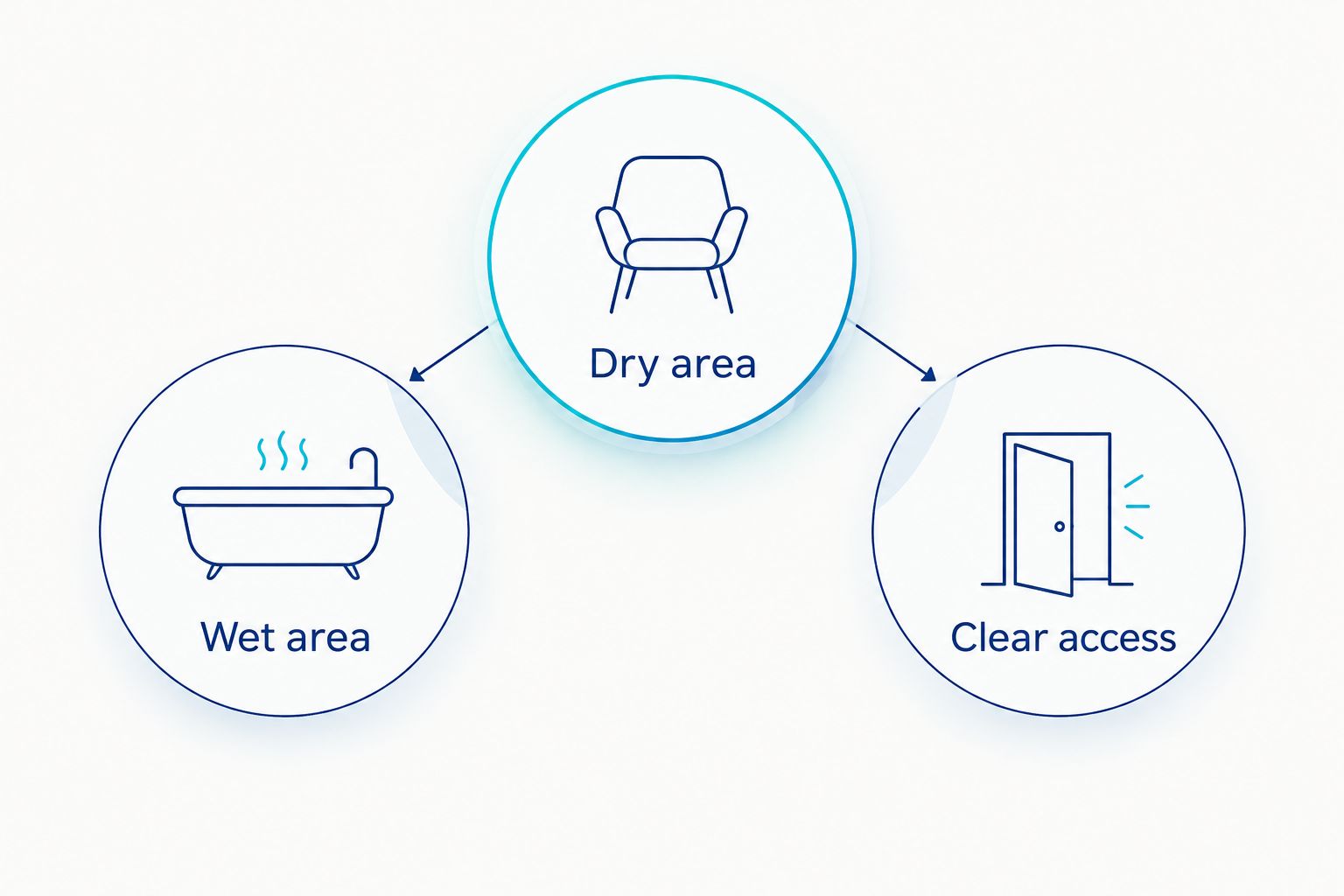
For your 2026 layout, divide the room into Wet area, Dry area, and Clear access. Put water-containing fixtures in the wet area, seating and clean textiles in the dry area, and preserve an unobstructed route between them.
Record 3 dimensions in inches for every shortlisted fixture: width, depth, and height. Record doorway and hallway measurements separately. Exterior dimensions describe the object; installation instructions describe the space it needs to operate.
Make 1 full-size floor template per major fixture using removable tape or paper. Mark door swings and required access areas separately. Walk the proposed layout before ordering, including the route you will take while carrying towels or cleaning supplies.
Also confirm who will handle electrical work, plumbing, and any assessment of the supporting floor. Do not infer structural suitability from an empty tub's weight or electrical suitability from a nearby outlet.
What to check in Aeva Vital home spa essentials
Aeva Vital offers infrared saunas, freestanding bathtubs, and ice baths. Those categories fit heat-focused, bathing-focused, and cold-immersion plans respectively; choose the activity before comparing individual models.
Aeva Vital home spa essentials suit buyers planning around those three equipment categories. The selection decision still depends on each model's documented requirements and your installation site.
Use this specification checklist for a 2026 purchase:
- Dimensions: Separate exterior measurements from usable interior space.
- Construction: Identify the materials and follow their care instructions.
- Utilities: Match the documented electrical or plumbing requirements to the site.
- Access: Confirm entry, exit, delivery route, and servicing space.
- Certifications: Check any stated certification against the exact product and its scope.
A material name describes construction, not a guaranteed lifespan. A certification addresses its stated scope, not every aspect of comfort or performance. Aeva Vital's category descriptions do not replace the individual model's installation and operating instructions.
How we ranked
The ranking prioritizes a defined activity, installed fit, utility compatibility, cleaning access, and supporting essentials. It is a category-level buying guide, not a measured performance comparison of individual products.
Infrared saunas lead for seated heat sessions; soaking tubs lead for bathing. Towels, mats, seating, and lighting make those routines practical. Cold immersion ranks last because it serves a narrower intention and brings separate upkeep and safety considerations.
Which essentials should you choose?
If you are undecided, start with towels, secure footing, and a dry place to sit. Then choose one major fixture for your 2026 plan: an infrared sauna for seated heat, a soaking tub for bathing, or a plunge vessel specifically for cold immersion.
Do not add a second major fixture until the first fits your room and routine. More equipment means more surfaces, utility requirements, and maintenance tasks—not automatically a better wellness space.
FAQ
What are the best home spa essentials for a beginner?
Washable towels, secure bath mats, dry seating, and suitable lighting are practical starter essentials. Choose one major fixture only after deciding whether your main activity is bathing, seated heat, or cold immersion.
Is an infrared sauna better than a soaking tub?
An infrared sauna is better suited to seated heat sessions; a soaking tub is better suited to bathing. Neither replaces the other's function, so choose according to your preferred activity and installation requirements.
Can I turn a spare bedroom into a wellness room?
A spare bedroom can support a dry rest area, but water-containing or powered equipment requires additional checks. Confirm the specific model's utilities, ventilation, floor suitability, and installation instructions before placing it there.
Do I need a cold plunge for a complete home spa?
No, a cold plunge is an optional cold-immersion fixture. A bathing or heat-focused room does not need one, and adding one introduces water-care and safety responsibilities.
What measurements should I take before ordering?
Measure the fixture location, delivery route, doorways, and operating clearances. Compare those measurements with both the product dimensions and the installation instructions.
What does Aeva Vital offer for a home wellness room?
Aeva Vital offers infrared saunas, freestanding bathtubs, and ice baths, along with hybrid mattresses. Select the relevant category first, then assess the individual model's specifications and site requirements.
How should I separate wet and dry areas?
Keep water-containing fixtures and their drying surfaces separate from dry seating and clean textile storage. Preserve clear access between those areas and keep water away from electrical equipment.
What should I prioritize in a small wellness room?
Prioritize one primary activity, clear entry and exit, and accessible cleaning space. A smaller equipment list is preferable to a layout that crowds controls or blocks movement.
Related guides
One last thing
Before ordering, rehearse cleaning the proposed room—not just using it. If you cannot reach behind a fixture, remove a damp mat, or carry laundry out without obstruction, revise the layout while it is still a floor template.