
For linen vs cotton sheets for hot sleepers, choose lightweight linen if you like a textured, relaxed fabric; choose cotton percale if you want a smooth, crisp surface. Neither fiber guarantees cooler sleep: fabric weight, weave, your mattress protector, and the layers above you also affect comfort.
By Editorial Team
This Aeva Vital bedding guide compares the fabrics by construction, feel, care, and fit—not by an unsupported cooling score.
- Linen vs cotton sheets for hot sleepers: choose lightweight linen for texture or cotton percale for a crisp surface.
- Cotton sateen feels smoother and drapes closely; it is not interchangeable with cotton percale.
- Thread count alone does not establish airflow, moisture management, or cooler sleep.
- Aeva Vital’s bedding verdict: choose construction and feel before a luxury label.
Is linen or cotton better for hot sleepers in luxury bedding?
Cotton percale is the better starting point for hot sleepers who dislike texture; lightweight linen suits sleepers who prefer a relaxed fabric. That is a selection rule, not a claim that every percale sheet sleeps cooler than every linen sheet.
For your 2026 shortlist, compare the actual construction rather than treating all cotton as one option.
| Option | Best for | Main advantage | Main limitation | What to inspect |
|---|---|---|---|---|
| Lightweight linen | Hot sleepers who like texture and a relaxed drape | Absorbent flax fiber with a distinctive, less-polished surface | Wrinkles readily; texture does not suit everyone | Fabric weight, finish, composition, care label |
| Cotton percale | Hot sleepers who prefer crisp, smooth bedding | Plain weave with a matte, structured feel | Creases readily; some fabrics feel stiff initially | Weave identification, yarn quality, fabric weight |
| Cotton sateen | Sleepers who prioritize smoothness and close drape | Smooth surface with a subtle sheen | Often feels more enveloping than percale | Weight, construction, finish, care requirements |
The strongest choice is the fabric you find comfortable after washing. A showroom finish or a cooling label does not answer that question.
Why this matters
Sheets touch your skin, but they are only part of the sleep environment. A lightweight sheet cannot compensate fully for a heavy duvet or an uncomfortable room.
Separate three experiences before shopping: feeling hot, feeling damp, and disliking fabric against your skin. Those problems overlap, but they do not call for identical solutions. Changing fiber addresses only part of the decision.
Luxury should describe material quality and construction—not promise a medical outcome or a fixed temperature reduction.
Linen: best for a textured, relaxed surface
Linen comes from flax. Its characteristic surface includes visible variation in the yarn, and it generally looks less uniform than finely woven cotton.
Linen absorbs moisture, but absorption is not the same as drying speed. Evaporation also depends on fabric construction, room humidity, and airflow. A heavy linen sheet is not automatically cooler than a lightweight cotton sheet.
What linen does well
Choose linen when you enjoy a slightly textured hand and do not need a sharply pressed bed. Linen commonly becomes more supple through use and appropriate laundering, although the starting texture varies by yarn and finishing process.
Check the composition label. 100% linen means an all-linen fiber composition; “linen blend” does not. A blend requires its own assessment rather than inheriting every characteristic associated with pure linen.
What linen does not solve
Linen is not the right choice if its texture irritates you or keeps drawing your attention. Do not buy a fabric you dislike on the assumption that washing will transform it into cotton.
Wrinkling is another practical limitation. If you want a consistently smooth, formal appearance without ironing, linen conflicts with that preference. Its relaxed appearance is a feature only when you actually want it.
Cotton percale: best for a crisp, smooth surface
Cotton is the fiber; percale is the weave. Percale uses a plain-weave structure, with yarns passing over and under one another in a regular pattern.
That construction produces the crisp, matte character associated with percale bedding. It does not establish a universal cooling result because yarn thickness, fabric density, and finishing still differ.
What cotton percale does well
Choose cotton percale when you want a smoother alternative to linen without the close, fluid drape associated with sateen. It is a practical first comparison for someone who says, “I want sheets that feel crisp rather than silky.”
100% cotton identifies fiber composition, not weave. Look for “percale” separately; an all-cotton label alone does not tell you how the fabric is constructed.
What cotton percale does not solve
Percale wrinkles, and some examples feel firm or papery before laundering. A higher thread count does not guarantee that you will like the surface more.
For a 2026 purchase, prioritize clear construction details over a long list of comfort adjectives. If a listing never identifies the weave or composition, you cannot make a meaningful like-for-like comparison.
Cotton sateen: best for smoothness, not a cooling shortcut
Cotton sateen uses a weave with longer yarn floats across the fabric surface. Those floats help create its smoother feel and sheen.
Sateen often drapes more closely around the body than percale. That makes it attractive when softness and fluidity matter most, but it is not the automatic first choice for someone trying to avoid an enveloping sheet.
The limitation is comparative, not absolute. A lightweight sateen and a heavy percale can feel different from the usual category descriptions. Inspect the actual fabric rather than rejecting or approving everything under one weave name.
Also distinguish sateen from satin. Sateen describes a weave commonly used with cotton; satin is not a synonym for cotton composition.
Why linen and cotton sleep differently
These factors explain more than the word “luxury” on the packaging:
- Fabric weight: More material changes the sheet’s substance and drape. Compare weight when manufacturers disclose it.
- Weave and density: Yarn arrangement and spacing affect the fabric structure; fiber name alone leaves this out.
- Yarn characteristics: Yarn thickness, twist, and uniformity influence surface feel and construction.
- Finishing: Washing and finishing treatments affect the initial hand. The first touch does not necessarily represent the feel after laundering.
- Moisture and airflow: Absorption, evaporation, room humidity, and ventilation work together. “Moisture-wicking” is not a complete performance specification.
- The bedding stack: Protectors, toppers, blankets, and duvet inserts all contribute to the conditions around your body.
Do not reduce these variables to a single winner. Compare sheets as finished fabrics, not just as plant fibers.
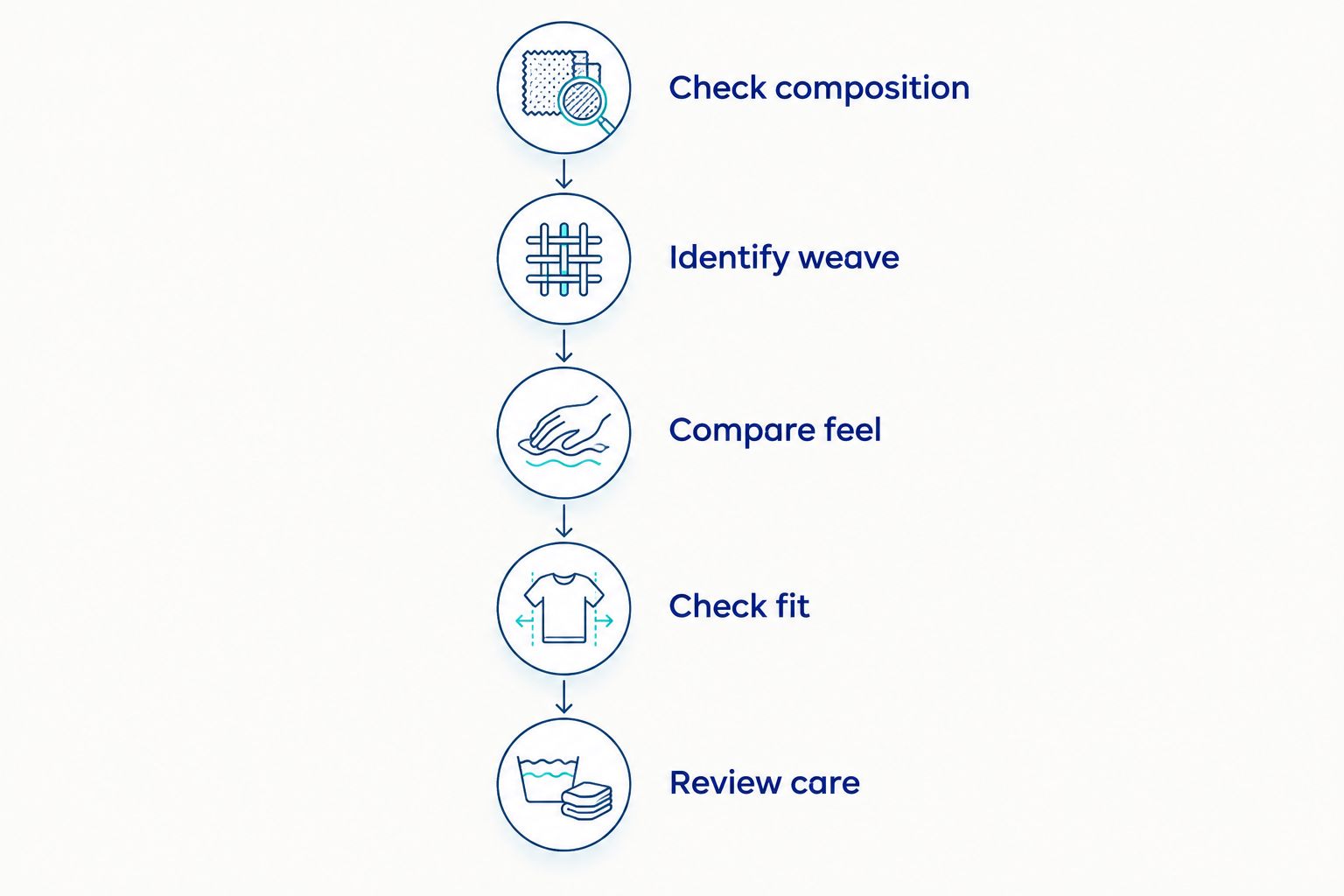
How should you choose between linen and cotton percale?
Use a process that separates fabric preference from the rest of your bed. You will get a more useful answer than changing sheets, pillows, and blankets simultaneously.
- Check composition. Confirm whether you are comparing pure linen, pure cotton, or a blend. Record the actual fiber information.
- Identify weave. For cotton, establish whether the sheet is percale or sateen. Do not infer it from a photograph.
- Compare feel. Handle a sample where possible. Decide whether texture, crispness, or smooth drape matters most.
- Check fit. Measure the full mattress-and-topper height. Compare that measurement with the fitted sheet’s stated pocket depth.
- Review care. Read the washing and drying instructions before deciding whether the set suits your routine.
Keep your usual room conditions and upper bedding consistent when evaluating a new sheet. Otherwise, you cannot tell which change affected comfort.
Does linen handle night sweats better than cotton?
Both linen and cotton absorb moisture; neither guarantees a dry bed throughout the night. Fabric weight, evaporation conditions, and the amount of moisture matter alongside fiber type.
If dampness is your main complaint, examine the entire bed rather than expecting a fiber swap to solve it. Make sure bedding dries completely between uses and follow its care instructions.
Persistent or unexplained night sweats deserve medical attention. Sheets are a comfort choice, not a treatment for the underlying cause.
Is cotton percale better than cotton sateen for hot sleepers?
Cotton percale is the better starting point when you want a crisp sheet rather than a closely draping one. Cotton sateen remains a reasonable choice when smoothness matters more to you than that crisp feel.
For 2026 comparisons, hold composition and fabric weight as consistent as the available specifications allow. Comparing a substantial sateen with a very lightweight percale does not isolate weave alone.
A weave recommendation is a shopping filter. It is not proof that a specific sheet lowers your skin temperature.
Does higher thread count mean cooler luxury sheets?
No. Thread count describes the number of threads within a specified fabric area; it does not directly measure airflow, thermal resistance, or overnight comfort.
The practical task in choosing the right thread count is to assess the figure alongside weave, yarn construction, and fabric weight. A larger number alone does not establish that a sheet is better for hot sleepers.
Linen and cotton also use different yarn characteristics, so their thread counts are not a reliable cross-fiber quality ranking. Avoid applying a cotton shopping rule mechanically to linen.
On a 2026 product page, look first for composition and construction. Treat thread count as supporting information—not the verdict.
Check the mattress and protector before replacing every sheet
A mattress protector sits immediately beneath the fitted sheet. Its construction matters, especially when it includes a waterproof barrier; read the material description rather than assuming every protector behaves alike.
Inspect any topper and the mattress cover as well. Changing a sheet leaves those layers in place, so expectations should match the scale of the change.
Aeva Vital’s SpineAlign 12-inch Queen Firm Cooling Hybrid Mattress is described with high-density foam and individually wrapped coils. Those details identify components; the product name and construction description do not establish a measured cooling advantage with linen or cotton.
Aeva Vital is best for shoppers considering hybrid mattresses alongside their bedding choices. Select a mattress for its documented construction and your support preferences, then choose sheets independently for feel and fit.
A 12-inch mattress height is relevant to fitted-sheet sizing. Add any topper to that height before checking pocket depth; the nominal mattress size alone does not settle fit.
How care changes the comparison
Follow each set’s care label rather than applying one washing temperature to every linen or cotton fabric. Dye, construction, and finishing affect the instructions.
Wash new sheets before evaluating their everyday feel. Avoid assuming that an unusually silky first touch proves lasting softness, and do not promise yourself a fixed number of washes before a disliked fabric becomes comfortable.
Use detergent as directed and rinse thoroughly. Fabric softener changes surface feel, so follow the manufacturer’s guidance instead of treating it as a universal improvement.
Dry sheets fully before storing them. If you prefer smooth bedding, account for the work involved: both linen and cotton percale crease, while sateen’s smoother surface does not make it wrinkle-proof.
Your 2026 buying checklist
Before committing to either fabric, ask for information that changes the decision:
- Is the fiber composition stated clearly, including any blend?
- Does the cotton listing identify percale or sateen?
- Is fabric weight disclosed, allowing a closer comparison?
- Does the fitted sheet accommodate your mattress and topper together?
- Can you follow the care instructions without changing your laundry routine?
- Are cooling claims supported by a described test rather than adjectives alone?
If a listing leaves a question unanswered, do not fill the gap with assumptions. Choose on the documented details and your fabric preferences.
FAQ
What's better for hot sleepers: linen or cotton sheets?
Lightweight linen suits hot sleepers who like texture; cotton percale suits those who prefer a crisp, smooth surface. Neither fiber guarantees cooler sleep because weight, weave, and other bedding layers also matter.
Are linen sheets always cooler than cotton?
No, linen sheets are not always cooler than cotton. A heavy linen fabric and a lightweight cotton percale differ in more than fiber, so compare the finished construction.
Is cotton percale better than sateen if I sleep hot?
Cotton percale is the better starting point if you want crisp bedding rather than a close, fluid drape. Actual comfort still depends on the particular fabric and the rest of your bed.
What thread count should hot sleepers choose?
There is no single thread count that guarantees cooler sleep. Assess thread count alongside weave, yarn construction, and fabric weight rather than choosing the largest number.
Do linen sheets get softer after washing?
Linen commonly becomes more supple with use and appropriate laundering. The extent varies, so do not buy an uncomfortable texture expecting it to become indistinguishable from cotton.
Can linen or cotton sheets stop night sweats?
Neither linen nor cotton sheets treats the cause of night sweats. Both absorb moisture, but persistent or unexplained night sweats deserve medical attention.
Do cooling sheets work with a mattress protector?
A mattress protector remains part of the sleep surface beneath any sheet. Its materials and construction affect the overall bedding system, so review them alongside the sheets.
Should I buy 100% cotton or a linen blend?
Choose 100% cotton when you want an all-cotton composition, then identify its weave separately. A linen blend needs its own assessment because its other fibers and proportions change the fabric.
Related guides
- How to keep luxury sheets soft after washing
- Can a hybrid mattress sleep hot?
- Is a higher thread count always better for luxury sheets?
One last thing
Before replacing your bedding, remove an unnecessary upper layer and reassess your existing sheets under otherwise similar conditions. If the bed feels more comfortable, your next purchase should address the bedding stack—not automatically switch from cotton to linen.