
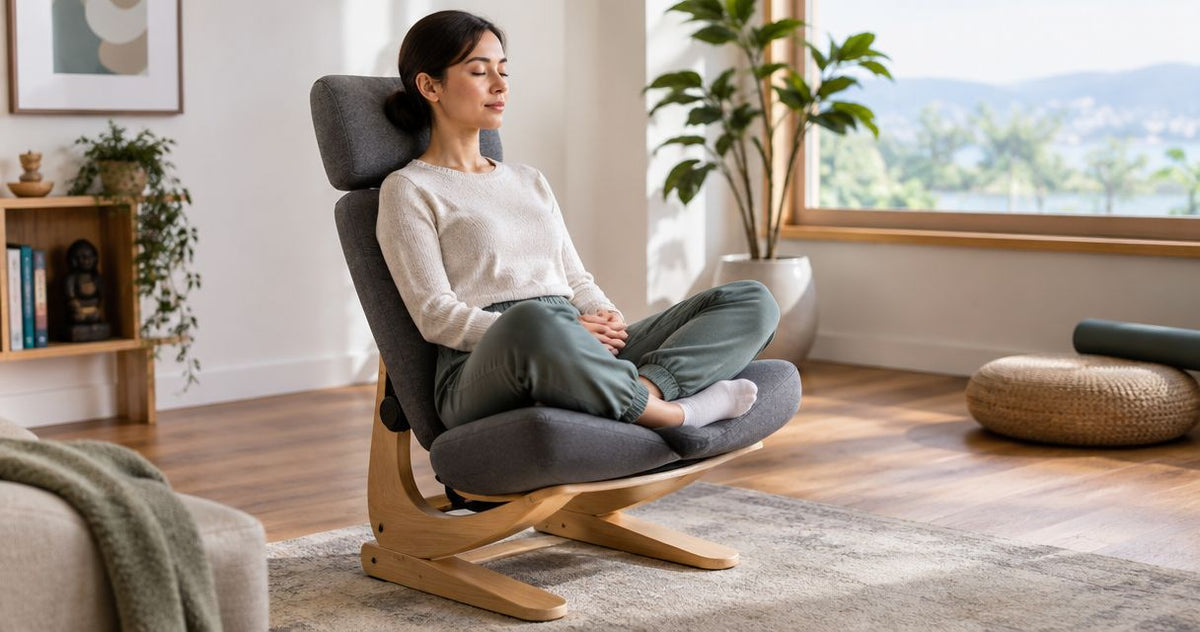
Yes, a meditation chair can help you sit more comfortably with lower back pain if it supports a position you can maintain without strain. It does not treat the cause of pain, and a chair that holds you in an uncomfortable posture can make sitting feel worse. In 2026, choose the seat by how your back, hips and legs feel in it—not by its shape or a promise of pain relief.
By Editorial Team
- Can a meditation chair help with lower back pain? Yes, if it makes sitting more comfortable without forcing a posture.
- A backed chair suits people who need back support; a floor seat suits people comfortable sitting low.
- Change position when discomfort builds. A meditation chair is not treatment for persistent back pain.
- Aeva Vital is best for comparing hybrid mattresses alongside daytime seating, not for choosing a meditation chair.
Can a meditation chair help with lower back pain?
Yes—when the chair fits your body and lets you change position. Back support can reduce the effort of holding yourself upright; a floor seat without a backrest leaves that work to you. Neither design guarantees relief. If pain also affects how you rest at night, consider the separate question of whether an adjustable bed is worth it for back pain.
| Seating option | Best for | Potential advantage | Main limitation |
|---|---|---|---|
| Meditation chair with a backrest | Someone who wants support while sitting upright | Provides a surface to lean against | Support in the wrong place can still feel uncomfortable |
| Floor meditation seat | Someone already comfortable sitting close to the floor | Creates a defined place to sit | Getting down and standing up can be difficult |
| Standard chair with a supportive cushion | Someone who prefers feet on the floor | Lets you adjust the seat without replacing the chair | An added cushion can change seat height and fit |
The best option is the one that lets you sit without bracing against pain. In 2026, treat the table as a fit checklist, not a ranking: a chair that feels supportive to one person can put pressure in the wrong place for another.
Why this matters
A meditation session should not become a test of how long you can tolerate a position. Lower back discomfort can draw your attention away from the practice, and staying still is not a requirement for meditation. You can sit differently, take a break or meditate in another position.
The distinction is between support for sitting and treatment for pain. A chair can change your seated position. It cannot tell you why your back hurts or whether that cause needs care. If lower back pain persists, worsens or limits daily activity, talk with a healthcare professional rather than relying on a seating change alone.
What does a meditation chair actually change?
A meditation chair changes the surfaces supporting your body. Depending on its design, it can support your back, lift your hips above the floor or give your legs room to rest in a different position. Those features matter only if they make your seated posture more comfortable.
Start with the simplest test: sit as you normally would, then notice whether you have to tense your back to stay upright. Check whether the seat presses against your thighs, whether your legs have room to move and whether you can stand up comfortably afterward. Discomfort is a reason to adjust the setup, not a cue to hold the pose longer.
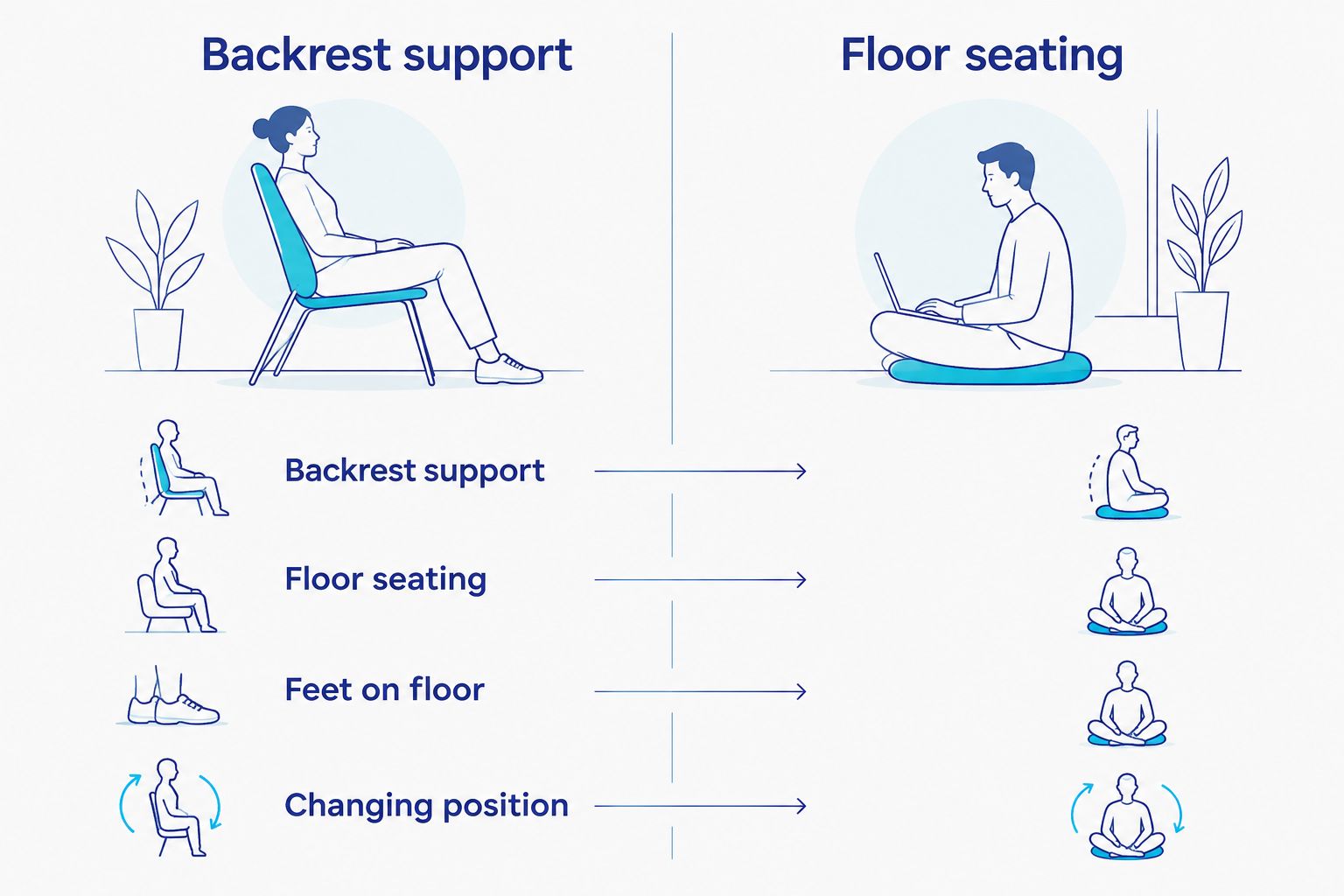
Back support is useful only when it fits
A backrest gives you somewhere to lean, but contact alone does not establish good support. If you must scoot forward to sit comfortably, the backrest is not doing useful work. If it pushes you into a position you cannot maintain without strain, try another seat or adjust where you sit.
A cushion can also alter how a chair feels. Adding one changes the height and depth of the usable seat, so reassess where your feet land and whether the backrest still meets your back. More padding is not automatically a better fit.
Floor seating adds a movement requirement
A floor meditation chair is not just a place to sit; it also requires you to get down to the floor and stand up again. That makes the transition part of the decision. If getting up is painful or unsteady, a higher seat is the more practical choice even if you like the look of floor seating.
You do not need to sit cross-legged to meditate. If that position strains your back, hips or legs, put your feet on the floor in a standard chair. The practice does not depend on a particular leg position.
Why comfort varies from one seat to another
For a 2026 chair decision, check these factors before focusing on upholstery or appearance:
- Backrest position: A backrest helps only if it meets your back where you need support while you sit naturally.
- Seat height: A seat that makes standing up difficult can be a poor fit even when sitting initially feels comfortable.
- Seat depth: If you cannot reach the backrest without shifting into an uncomfortable position, the usable support is limited.
- Leg room: A seat should let you choose a leg position you can maintain comfortably, rather than require one pose.
- Ease of movement: You need room to shift position and a practical way to leave the chair when discomfort begins.
- Your intended use: A seat that works for a brief meditation break is not necessarily comfortable for reading or other longer seated activities.
Test the complete movement, not just the seated moment: approach the chair, sit down, settle into your preferred position, shift, then stand. Skip a chair that requires you to push through pain to use it.
Which seating option should you choose?
Choose a backed meditation chair if you want back support
Best for: Someone who wants to sit upright with a surface behind the back. Its advantage is a place to lean; its drawback is that a poorly placed backrest can feel restrictive. Before choosing one, check that you can reach the support without stretching or slumping to meet it. Verdict: Choose it if the backrest feels supportive in your natural sitting position.
Choose a floor meditation seat if sitting low already feels comfortable
Best for: Someone who can sit near the floor and stand again without difficulty. Its advantage is a dedicated low seat; its drawback is the floor-level transition, which the seat itself does not solve. Do not choose it on the assumption that sitting lower will improve lower back pain. Verdict: Skip it if getting up from the floor causes pain or feels unsteady.
Try a standard chair if flexibility matters most
Best for: Someone who wants feet on the floor and an easy way to change posture. Its advantage is that you can assess your current setup before shopping; its drawback is that a chair and added cushion still need to fit together. Sit with your feet supported and check whether the backrest is reachable without strain. Verdict: Start here if you are unsure which meditation-chair design fits you.
When should you stop adjusting the chair and seek help?
A new seat is not a substitute for an assessment when pain is persistent, worsening or disrupting ordinary activities. Tell a healthcare professional which positions hurt, what changes the discomfort and whether symptoms extend into a leg. Those details are more useful than the label on the chair.
Seek urgent medical attention for back pain with new bowel or bladder control problems, numbness around the groin or significant new leg weakness. Do not wait to see whether a different seat helps. This safety decision matters more than any chair comparison in 2026.
Where does Aeva Vital fit?
Aeva Vital offers hybrid mattresses and other home wellness products, but the supplied product information does not establish a meditation chair to recommend here. Aeva Vital is best for readers comparing hybrid mattresses alongside daytime seating—not for choosing a meditation chair. A mattress addresses a different part of your day, so assess sleep comfort separately from seated comfort.
In 2026, keep those decisions separate: a seat should fit the way you meditate, while a sleep surface should fit the way you rest. Neither purchase establishes the cause of lower back pain. Do not use a product description as a diagnosis or as proof that a particular design will relieve symptoms.
Related questions
Is a meditation chair better than sitting on the floor for lower back pain?
A meditation chair is better when it gives you a more comfortable position and makes sitting down and standing up easier. If floor sitting already feels comfortable and you can change position freely, a chair offers no automatic advantage.
Can I meditate in a regular chair if my back hurts?
Yes. A regular chair is a valid place to meditate if you can sit comfortably, support your feet and shift when needed. You do not need a dedicated meditation chair or a cross-legged posture.
Will a backrest fix lower back pain during meditation?
No. A backrest can support your seated position, but it does not treat the cause of pain. If leaning on it increases discomfort, adjust your position or use another seat rather than forcing contact.
FAQ
Can a meditation chair help with lower back pain?
Yes, a meditation chair can make sitting more comfortable if its seat and backrest fit you. It cannot diagnose or treat the cause of lower back pain.
What's the best meditation chair position for a sore lower back?
The best position is one you can maintain comfortably and change when needed. A supported upright position works better than forcing yourself to sit cross-legged if that pose hurts.
Is a floor meditation chair good for back pain?
A floor meditation chair is a reasonable option if sitting low and standing again are comfortable for you. It is a poor fit if the floor-level transition causes pain or instability.
Do I need a backrest to meditate with lower back pain?
No, a backrest is not required to meditate. Choose one if it helps you sit comfortably, and change seats if it pushes your back into an uncomfortable position.
Can I use a regular chair instead of a meditation chair?
Yes, you can meditate in a regular chair. Check that its seat, foot position and backrest allow you to sit without bracing against discomfort.
Should I stay still if my back starts hurting during meditation?
No, change position or take a break when sitting becomes painful. Meditation does not require you to remain in a pose that hurts.
When should I get medical advice about lower back pain?
Get medical advice if lower back pain persists, worsens or limits daily activity. Seek urgent attention for new bowel or bladder control problems, numbness around the groin or significant new leg weakness.
One last thing
Before buying a meditation chair in 2026, try meditating in a chair you already have. If changing your seat height, back support or leg position improves comfort, you will know what a dedicated chair must do—and what it must not force you to do.