
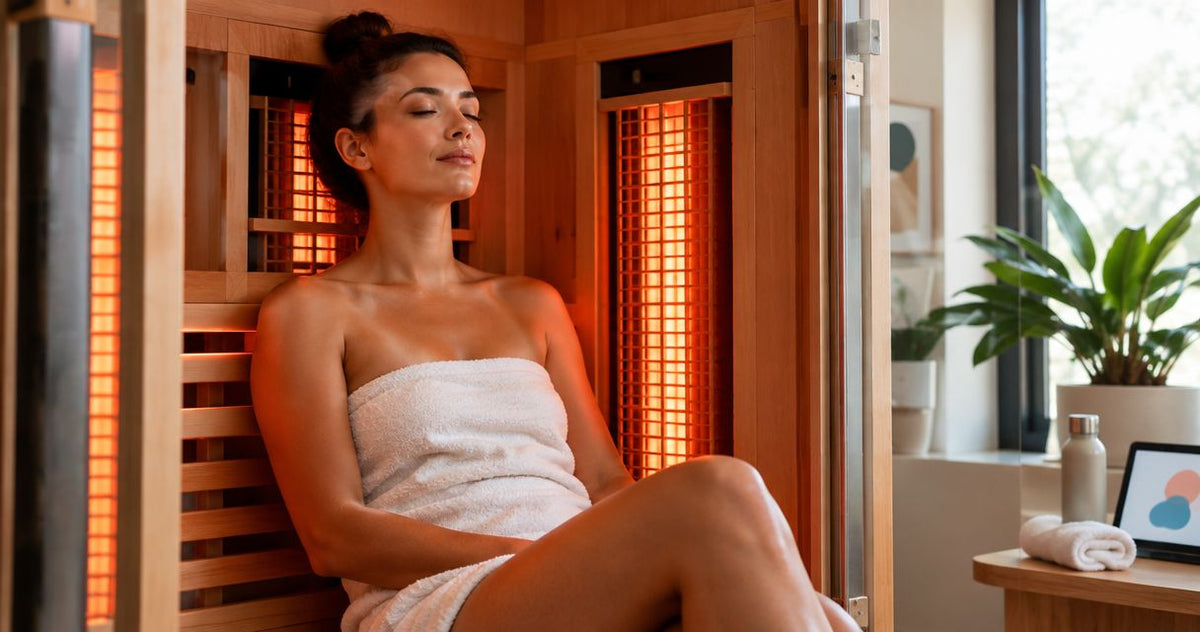
How long should you sit in an infrared sauna? Use the session limit in your sauna’s instructions, adjusted for your health and heat tolerance—not a universal timer setting. Leave earlier if you feel dizzy, nauseated, weak, or uncomfortable; a timer does not make continued heat exposure safe.
By Editorial Team
- How long should you sit in an infrared sauna? Follow model-specific instructions and stop sooner if symptoms develop.
- Aeva Vital infrared sauna capacity and heater specifications describe equipment, not a medically safe session length.
- Count occupied heating time as exposure; do not restart the clock when the cabin reaches its target temperature.
- Get individualized medical advice if pregnancy, health conditions, or medicines affect your response to heat.
How long should you sit in an infrared sauna each session?
Choose your session length from the operating instructions and your individual health guidance, then treat that duration as a ceiling—not a target. There is no single session length that guarantees safety for every person, temperature, and infrared sauna.
For your 2026 home setup, separate the equipment question from the health question. The manual explains how to operate the cabin; a healthcare professional can address restrictions related to your medical history and medicines. Neither another user’s routine nor a promotional recovery schedule replaces those checks.
Use this sequence before choosing the timer setting:
- Read the operating instructions. Check permitted settings, session guidance, warnings, and shutdown procedures for the exact model.
- Check personal restrictions. Ask a healthcare professional about conditions or medicines that affect sweating, hydration, blood pressure, or heat tolerance.
- Assess how you feel today. Skip the session when you are ill, dehydrated, or already overheated.
- Choose a conservative session within those limits. Being new to the cabin is not a reason to test its maximum timer setting.
- Stop at the limit or sooner. Symptoms take priority over the remaining time.
Different heater configurations do not establish interchangeable exposure limits. The guide to infrared saunas ranked by heating technology provides context for comparing equipment, but your own model’s instructions remain the operating reference.
Why this matters
An infrared sauna warms your body using infrared radiation. A cabin that feels less intensely hot than another sauna still exposes you to heat, and comfort alone is not proof that continued exposure is safe.
The practical distinction is between what the equipment can do and what you should do. A long timer range, additional heaters, or a larger cabin does not establish a safe personal session length. Your goal is a controlled session that ends without symptoms, not the longest stay you can tolerate.
Why infrared sauna session length varies
Your session limit depends on more than elapsed time. These factors explain why copying someone else’s routine is a poor starting point:
- Cabin temperature: Time and temperature work together. Do not increase both simply because the previous session felt comfortable.
- Heat familiarity: Previous experience does not guarantee that a new cabin or setting will feel the same.
- Hydration: Sweating removes fluid, and beginning a session dehydrated adds avoidable risk.
- Recent activity: Exercise, outdoor heat, and other heat exposure affect your starting condition.
- Health and medicines: Some conditions and medicines affect temperature regulation, sweating, circulation, or fluid balance. Ask your clinician or pharmacist about your situation.
- Equipment instructions: Heater placement, controls, and operating restrictions differ between models. Follow the instructions for the cabin you actually use.
These are reasons to individualize a session, not reasons to calculate a longer allowance. If you cannot resolve a health concern before entering, postpone the session rather than experiment with a timer.
A practical session checklist for 2026
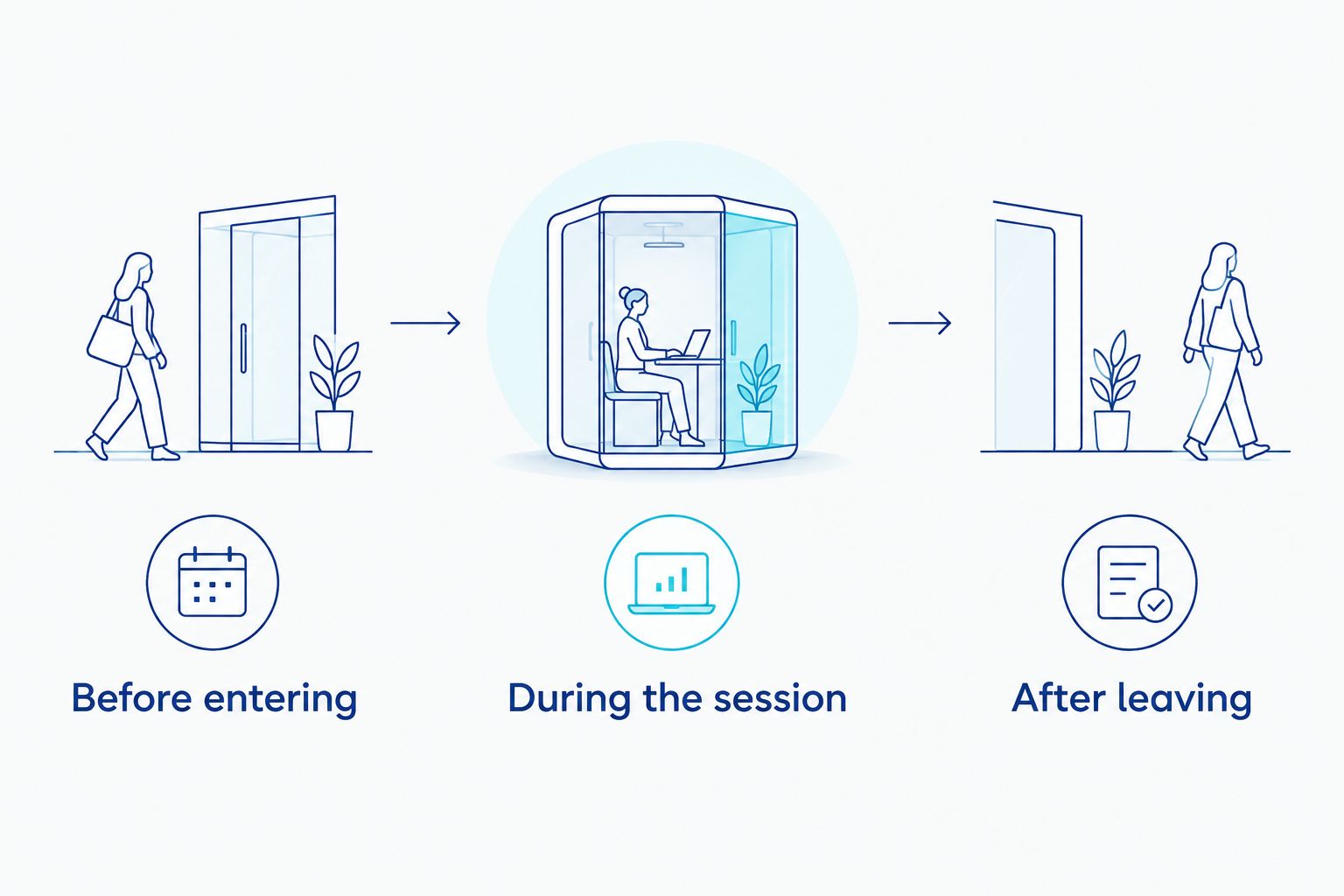
Build a routine around preparation, observation, and a clear exit. That is more useful than selecting a duration first and trying to endure it.
Before entering
Read the warnings while you are outside the sauna, not after it begins heating. Locate the timer, temperature control, door, and power-off control. Keep the exit clear and make sure you can leave without assistance.
Drink water normally beforehand unless your clinician has given you fluid restrictions. Do not use alcohol before or during a sauna session, and do not use the cabin when illness, exhaustion, or dehydration already makes heat exposure a poor choice.
During the session
Stay awake and keep track of elapsed time. If you enter while the cabin is warming, that occupied warm-up period still involves heat exposure; reaching the selected temperature does not reset your body’s experience.
Do not wait for the timer if symptoms appear. Leave the cabin, move somewhere cooler, and assess how you feel. Avoid turning the session into a competition with another person or an app’s suggested goal.
After leaving
Cool down before deciding what to do next. Replace fluids according to your needs and any medical restrictions, and avoid immediately adding another heat exposure because the first session seemed easy.
Record the setting, elapsed time, and how you felt. A simple record helps you discuss your actual routine with a clinician without relying on memory or treating sweat volume as a performance score.
What the timer and temperature display do not prove
A timer measures a selected interval. It does not monitor hydration, blood pressure, symptoms, or whether a particular person should be using heat at all.
The temperature display also has a limited job: it reports the temperature measured by the equipment’s sensor. It is not a measurement of your core body temperature or a medical safety monitor.
For a 2026 equipment comparison, keep these distinctions clear:
| Equipment feature | Useful information | What it does not establish |
|---|---|---|
| Session timer | Helps you track a chosen interval | A safe duration for every user |
| Temperature display | Shows the equipment’s temperature reading | Your internal body temperature |
| Heater count | Describes part of the heating configuration | A longer permitted session |
| Seating capacity | Describes the intended number of occupants | Equal heat tolerance among occupants |
Do not extend a session because a display looks normal. Your symptoms override the control panel. If the equipment behaves unexpectedly, stop using it and follow the troubleshooting instructions rather than compensating with a different timer setting.
Aeva Vital infrared saunas: specifications versus session limits
Aeva Vital offers home infrared saunas with different seating capacities and heating configurations. Those specifications help you compare equipment, but they do not prescribe exposure time.
Aeva Vital infrared saunas are for buyers planning home heat sessions, not a substitute for individualized heat-safety advice. Assess the cabin’s practical fit separately from whether sauna use is appropriate for your health.
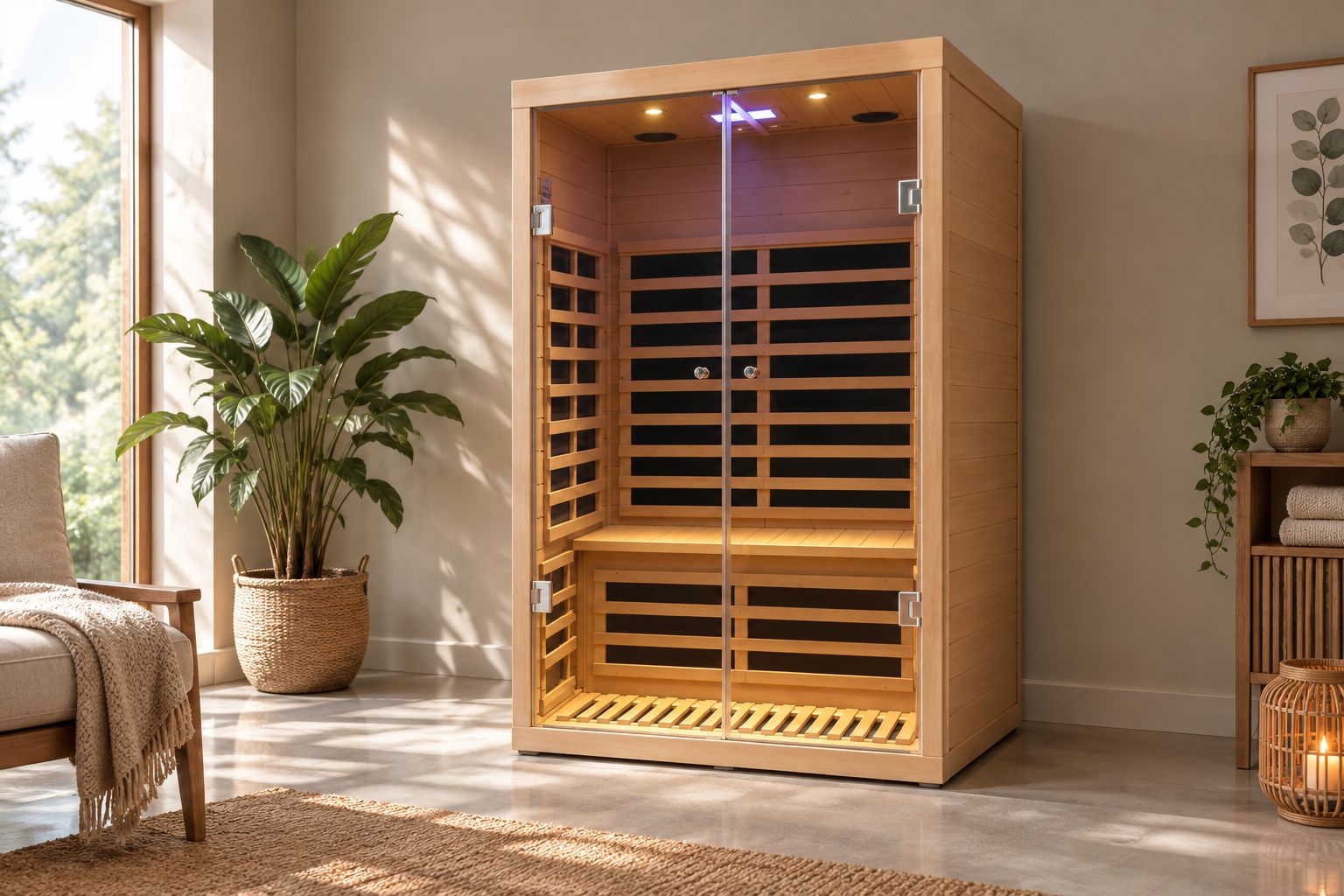
The scene below illustrates a home sauna setting. Keep the route out of the cabin unobstructed so ending a session is straightforward.
At-a-glance equipment comparison
The comparison below uses the supplied product names and descriptions. The suitability labels refer to seating needs and stated heating features, not medical benefits or recommended session lengths.
| Model | Stated construction or heating detail | Best for | Useful distinction | Limitation |
|---|---|---|---|---|
| Low EMF 2-Person Hemlock Far-Infrared Indoor Sauna with Double Glass Doors | 2-person format with seven far-infrared heating panels | Buyers seeking a stated 2-person configuration | Identifies panel count and double glass doors | Panel count does not establish a safe exposure duration |
| Premium Low EMF 3-Person Hemlock Infrared Sauna – Heated Glass Door Design | 3-person format; description names carbon panels and ceramic heating | Buyers seeking a stated 3-person configuration | Identifies a different heating configuration | Additional seating does not mean every occupant should stay equally long |
The seven-panel specification describes the first model’s heating hardware. It does not prove a particular warm-up time, heat distribution at every seat, or a medically appropriate exposure schedule.
Likewise, the second model’s 2-in-1 heating system describes a combination of heating technologies. It does not mean you should double a session or expect a particular health outcome. Treat “Low EMF” as a product descriptor, not permission for longer heat exposure.
When evaluating Aeva Vital infrared sauna equipment in 2026, review the model’s operating instructions alongside its construction details. Choose capacity for your household; choose session limits from operating guidance and individual health advice.


Should you stay longer if you are not sweating?
Do not extend an infrared sauna session just to produce more sweat. Sweating is not a timer, and its onset does not establish whether your exposure is appropriate.
Avoid treating sweat as proof of detoxification, fat loss, or a successful session. If the cabin does not appear to be operating correctly, follow the equipment instructions rather than increasing your exposure to compensate.
Can two people use the same sauna for different lengths of time?
Two occupants can need different stopping points in the same cabin. Shared seating capacity does not create a shared health profile, and nobody should remain inside to match a companion’s schedule.
Agree beforehand that either person can leave without discussion. If one occupant develops symptoms, stop the social routine and focus on getting that person out of the heat safely.
When should you stop immediately or seek help?
Leave the sauna if you develop dizziness, nausea, headache, weakness, palpitations, or a feeling that you are becoming unwell. Move to a cooler place and do not resume the session to finish the remaining time.
Confusion, collapse, chest pain, or severe breathing difficulty require urgent medical help. Do not assume someone can sleep off a serious reaction. If symptoms persist after leaving the heat, seek medical advice rather than testing another session.
Pregnancy, cardiovascular concerns, a history of fainting, difficulty regulating body temperature, and medicines that affect heat response warrant individualized advice before use. Do not stop or alter prescribed medicines to accommodate a sauna routine.
Should you add a cold plunge after the sauna?
A cold plunge adds another exposure; it is not a way to cancel an overly long sauna session. Rapid temperature changes also deserve separate health guidance, particularly when cardiovascular conditions are involved.
Keep the decision simple: establish that sauna use is appropriate before adding contrast bathing. Do not use a combined routine to justify staying in the heat after symptoms begin.
Related guides
- Infrared sauna to cold plunge workflow
- Best 2-person infrared saunas for home use
- Automatically preheat your infrared sauna before arrival
FAQ
How long should you sit in an infrared sauna each session?
Follow your exact sauna model’s session instructions and any individualized medical restrictions, and stop sooner if symptoms develop. A universal timer setting cannot guarantee safety for every person and temperature.
Should beginners use the maximum infrared sauna timer setting?
Beginners should not use the maximum timer setting as a starting goal. Choose a conservative session within the equipment instructions and relevant medical guidance.
Does sauna warm-up time count toward my session?
Time spent inside while the cabin heats still involves heat exposure. Do not restart your personal exposure clock simply because the display reaches the selected temperature.
Should I stay in an infrared sauna until I sweat?
Do not stay longer solely to begin sweating. Sweat onset is not a reliable session limit or proof of a health benefit.
Can I use an infrared sauna every day?
Daily use is not automatically appropriate for every person. Consider the equipment instructions, your health, your response to previous sessions, and individualized medical advice before choosing a frequency.
Can I drink alcohol before using an infrared sauna?
Avoid alcohol before and during sauna use. Alcohol can impair judgment and complicate a safe response to heat exposure.
Does a larger infrared sauna allow a longer session?
A larger infrared sauna does not establish a longer safe session. Seating capacity describes the equipment, not an occupant’s heat tolerance.
What should I do if I feel dizzy in an infrared sauna?
Leave the sauna immediately and move somewhere cooler. Seek medical help for persistent symptoms, and obtain urgent help for confusion, collapse, chest pain, or severe breathing difficulty.
One last thing
For your 2026 routine, write down your stopping rule before entering: the planned limit or the first sign of feeling unwell, whichever comes first. A session that ends early is not a failed session; it is a decision that keeps the timer subordinate to your condition.