

An infrared sauna can lower your weight temporarily through sweating, but that change is water loss—not evidence of body-fat loss. Infrared sauna use is not an established treatment for lasting weight loss, and dehydration is a risk rather than a weight-management benefit. Use heat for an optional relaxation routine, not as a replacement for nutrition, physical activity, or medical care.
By Editorial Team
- Can an infrared sauna help with weight loss? Temporary water loss is not lasting fat loss.
- Aeva Vital infrared saunas belong in a home heat routine, not a weight-loss treatment plan.
- Sweating and a higher heart rate do not establish exercise-equivalent calorie expenditure.
- Compare seating, heating construction, installation requirements, and comfort—not promised pounds lost.
Can an infrared sauna help with weight loss?
Not as a proven method of losing body fat. An infrared sauna exposes you to heat, which triggers sweating and circulatory responses. The scale can fall as you lose fluid, then rise again when you replace that fluid.
If you are considering a home installation in 2026, separate the health question from the equipment question. A cabin that fits your room and routine still needs realistic expectations; the infrared saunas for small spaces guide addresses the space side of that decision.
| What you observe | What it tells you | What it does not establish |
|---|---|---|
| A lower weight immediately afterward | Your body mass changed during heat exposure | How much body fat you lost |
| Heavy sweating | Your body is releasing fluid to manage heat | That you burned more fat |
| A faster pulse | Your cardiovascular system is responding to heat | That sitting equals aerobic exercise |
| A lower weight trend under consistent conditions | Your weight is changing over time | That sauna use caused the change |
A before-and-after weigh-in measures mass, not its composition. Without accounting for drinking, eating, bathroom use, and other activity, it cannot isolate what happened during the session.
Why this matters for weight management in 2026
A temporary scale change can reward the wrong behavior. If you interpret dehydration as progress, you create an incentive to stay hotter, remain inside longer, or drink less. None of those decisions demonstrates improved fat loss.
Lasting weight management involves food intake, activity, sleep, medications, health conditions, and other individual factors. A sauna purchase does not replace evaluating those factors, particularly when weight changes are unexplained or you need help managing a medical condition.
Judge a sauna by its suitability for heat bathing, not by a weight-loss promise. A comfortable session and a successful weight-management plan are different outcomes. You can value the former without claiming the latter.
Water loss versus fat loss: what actually changes?
Water loss: a temporary change in body mass
Sweat contains water and electrolytes. Losing it reduces body mass until fluid is replaced, although meals, bathroom use, and continued sweating also affect the next reading. The scale cannot tell you which component changed.
This distinction matters after exercise as well as sauna use. A lighter post-workout reading does not mean the entire change came from body fat, and adding heat afterward makes that interpretation less reliable—not more reliable.
Fat loss: a change that requires a different assessment
Body-fat reduction depends on energy balance over time. A single sauna session cannot establish a sustained change in body composition, regardless of how much you sweat or how intense the heat feels.
Track weight under comparable conditions rather than comparing a hydrated morning reading with a dehydrated post-sauna reading. If body composition is clinically important, ask a qualified clinician which assessment method fits your situation and what its limitations are.
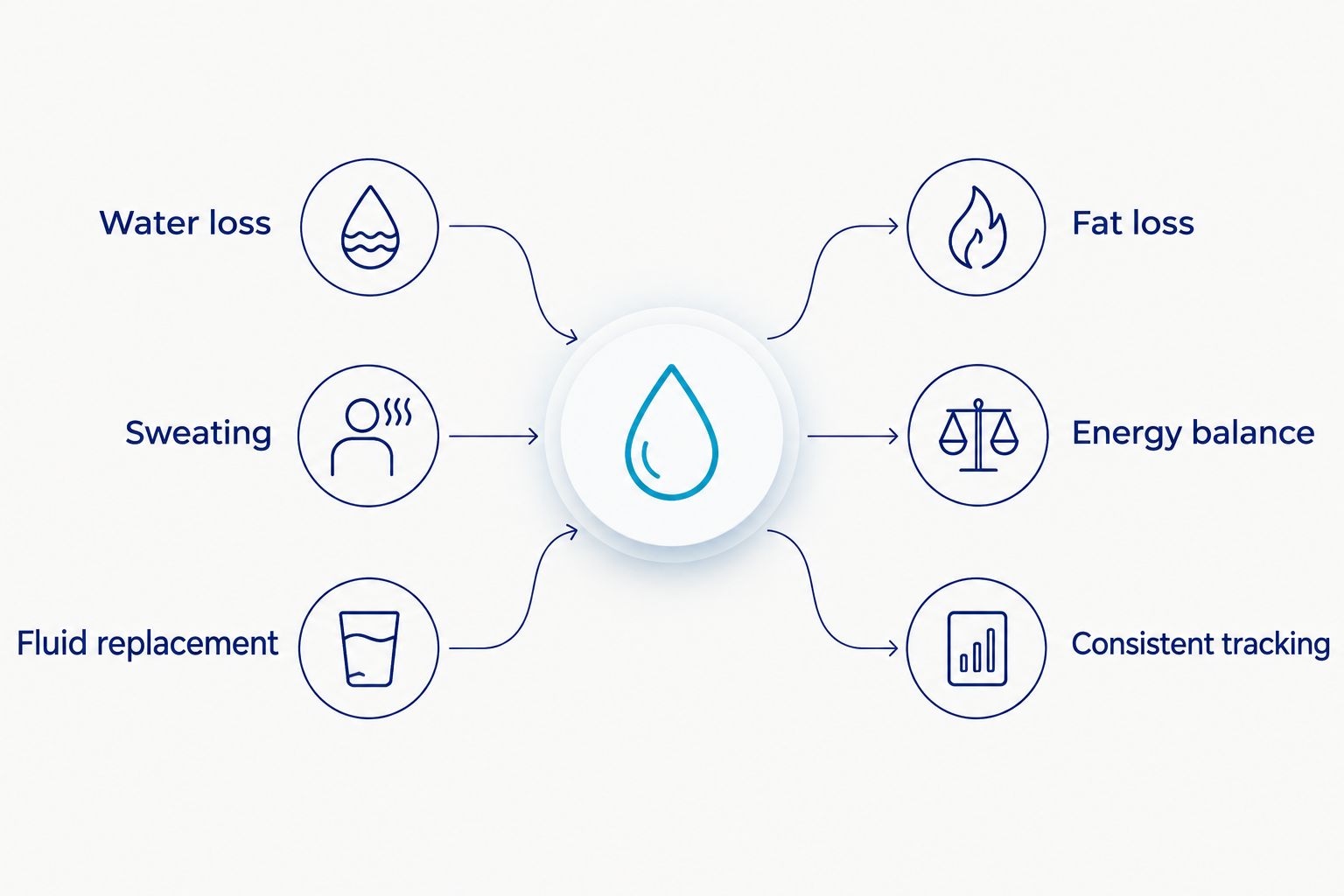
The practical distinction is simple: replacing fluid after sweating does not reverse fat-loss progress. It corrects a fluid deficit. Do not treat rehydration as something that undermines the purpose of your session.
Does a higher heart rate mean a sauna replaces exercise?
No. A heat-related increase in heart rate does not make passive sitting equivalent to exercise. Your body increases skin blood flow and uses sweating to release heat. Those responses differ from the muscular work involved in walking, cycling, or resistance training.
For a 2026 activity plan, the CDC's adult physical activity guidance provides a useful reference: at least 150 minutes of moderate-intensity activity per week, plus muscle-strengthening activity on 2 days per week. These are general adult activity targets, not sauna-session targets or a personalized weight-loss prescription.
The CDC's guidance concerns physical activity and its health benefits. It does not provide a conversion that lets you replace those minutes with passive heat exposure. Keep sauna time separate from the activity you record toward those targets.
Can you trust a watch's sauna calorie estimate?
A wearable calorie figure is an estimate, not a direct measurement of fat loss. An elevated pulse during passive heating does not establish the energy expenditure of a workout with the same pulse.
Do not increase food intake or extend a session because a device displays an appealing calorie total. For weight-management decisions, use a consistent plan rather than treating a heat-session estimate as a measured calorie allowance.
Why post-sauna weight changes vary
The amount of scale movement after heat exposure depends on fluid balance and measurement conditions. These factors explain why comparing your result with someone else's result is not a useful test of fat loss:
- Starting hydration: Entering already dehydrated changes your starting point and increases concern about additional fluid loss.
- Heat exposure: Temperature and time affect the heat burden; more exposure is not proof of a better outcome.
- Individual sweating: People differ in sweat response, and sweat volume is not a measure of treatment success.
- Drinking and eating: Fluid and food add mass, which changes the reading independently of body fat.
- Recent activity: Exercise before the sauna contributes its own fluid losses and complicates interpretation.
- Weighing conditions: Clothing, scale placement, and bathroom timing affect the comparison.
There is no useful competition to win here. A larger immediate drop is not evidence that one person has a better metabolism or that one sauna is more effective for weight management.
How should you fit sauna use into a weight-management routine?
Keep heat optional. Your nutrition, activity, and clinical plan should work independently of whether you use a sauna that day.
- Define the purpose. Choose relaxation or personal enjoyment rather than a target amount of sweating or scale movement.
- Protect the activity plan. Keep walking, other aerobic activity, and strength work separate from passive heat exposure.
- Follow the equipment instructions. Use the manufacturer's operating limits rather than copying another person's settings.
- Watch your response. Leave if you feel dizzy, faint, nauseated, unusually weak, or otherwise unwell.
- Keep measurements comparable. Assess weight trends under similar conditions, not immediately after deliberate fluid loss.
For 2026 planning, a routine you can repeat without compromising hydration or activity is more useful than an aggressive heat schedule. No universal session duration guarantees fat loss, and a longer session is not automatically a better session.
If weight management is your main goal, discuss an appropriate plan with a qualified health professional. The National Institute of Diabetes and Digestive and Kidney Diseases identifies eating patterns, physical activity, and behavioral support as central components of weight-management programs; passive sweating is not a substitute for those components.
Choosing an Aeva Vital infrared sauna for home use
Aeva Vital infrared saunas are best suited to buyers seeking home heat bathing, not a weight-loss treatment. Evaluate the equipment on its stated construction, seating, and installation requirements. None of those specifications establishes a medical outcome.
The following comparison uses the supplied product details. Seating counts describe intended occupancy, while heating-panel counts describe construction; neither tells you how much body fat a user will lose.
| Model | Stated construction | Best for | Limitation |
|---|---|---|---|
| Low EMF 2-Person Hemlock Far-Infrared Indoor Sauna with Double Glass Doors | 2-person design; 7 far-infrared heating panels; double glass doors | Buyers comparing a smaller indoor cabin | Panel count does not prove weight-loss effectiveness |
| Premium Low EMF 3-Person Hemlock Infrared Sauna – Heated Glass Door Design | 3-person design; hemlock construction; carbon panels and ceramic heating; heated glass door design | Buyers considering more seating and mixed heating construction | Additional seating and heater types do not establish greater fat loss |
The Low EMF 2-Person Hemlock Far-Infrared Indoor Sauna with Double Glass Doors offers a clearly stated panel count and intended occupancy. Its limitation for this question is equally clear: 7 heating panels are a construction specification, not clinical evidence.
The Premium Low EMF 3-Person Hemlock Infrared Sauna – Heated Glass Door Design provides a different seating format and heating arrangement. Those differences belong in an equipment comparison, not a ranking of weight-loss results.


Before selecting an Aeva Vital model, confirm exterior dimensions, interior seating space, electrical requirements, installation clearances, and operating instructions. A nominal person count does not establish that every user will find the seating comfortable or that the cabin fits your room.
Who should get medical advice before using heat?
Ask your clinician before sauna use if you are pregnant, have cardiovascular disease, experience fainting, have difficulty regulating body temperature, or take medication that affects sweating, hydration, or blood pressure. If you have been given a fluid restriction, do not follow generic rehydration advice instead of your prescribed plan.
Avoid alcohol around sauna use. Leave promptly if you develop concerning symptoms, and seek urgent medical help for chest pain, confusion, collapse, or severe symptoms. A desire to finish a session is never a reason to ignore how you feel.
Do not use dehydration to meet a weight target. Deliberately withholding fluids, wearing extra layers to intensify sweating, or repeatedly returning to heat to lower a weigh-in number creates risk without demonstrating fat loss.
FAQ
Can an infrared sauna help with weight loss?
An infrared sauna can cause temporary weight loss through sweating, but that does not demonstrate body-fat loss. It is not an established treatment for lasting weight loss.
Does an infrared sauna burn belly fat?
Infrared sauna use is not an established method of reducing belly fat. Heating or sweating from a particular area does not demonstrate targeted fat loss.
How many calories do you burn in an infrared sauna?
There is no single reliable calorie figure that applies to every infrared sauna session. A wearable estimate or higher heart rate does not establish exercise-equivalent energy expenditure.
How long should I sit in an infrared sauna to lose weight?
No session duration is established as a reliable weight-loss prescription. Follow the equipment instructions and individualized medical advice rather than extending heat exposure to chase a scale change.
Will drinking water after a sauna undo my weight loss?
Drinking water replaces fluid lost through sweating; it does not undo body-fat loss. A rising scale reading after rehydration is not evidence that you regained fat.
Is an infrared sauna better than exercise for losing weight?
An infrared sauna is not a replacement for exercise in a weight-management plan. Passive heat does not provide the same muscular work as aerobic activity or resistance training.
Do more infrared heating panels mean more fat loss?
More infrared heating panels do not establish greater fat loss. Panel count describes equipment construction, not a verified weight-management outcome.
Can I use an infrared sauna every day for faster results?
Daily sauna use does not establish faster fat loss. Your health, medication use, heat tolerance, and the equipment instructions determine whether a routine is appropriate.
Related guides
- Infrared saunas ranked by heating technology
- Wiring a home infrared sauna into your electrical panel
- Best home infrared saunas
One last thing
For a 2026 purchase, ask yourself whether you would still want the sauna if your weight never changed. If the answer is yes because you enjoy heat bathing, you have a clearer buying criterion—and less reason to mistake dehydration for progress.