
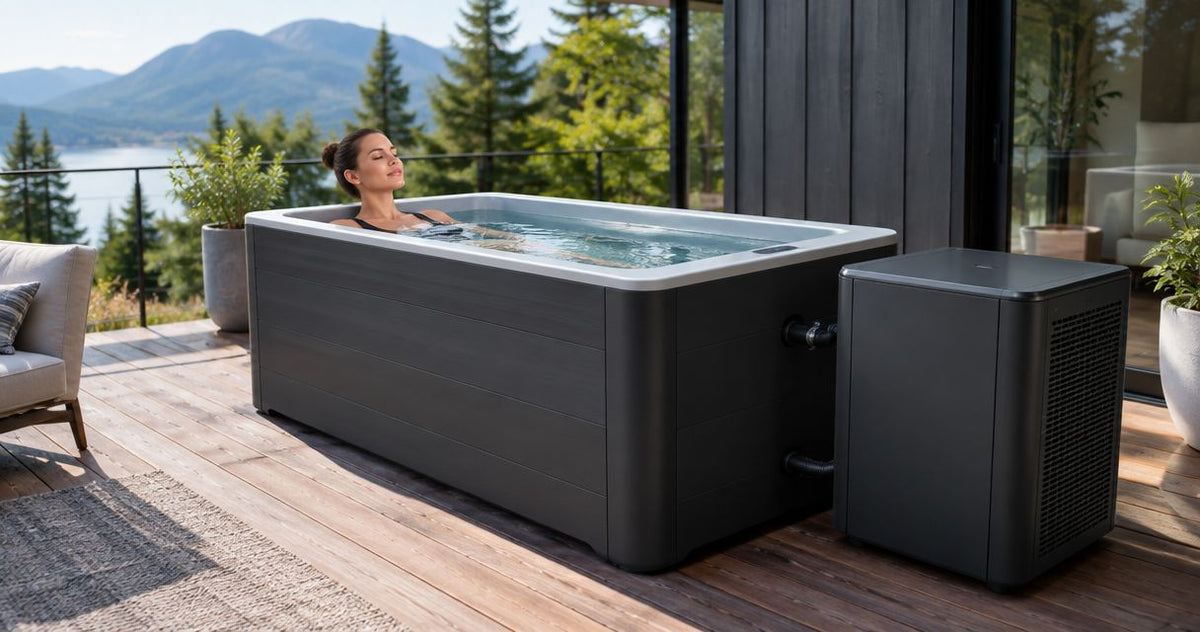
Best overall configuration: an integrated cold plunge tub with chiller for a permanent installation. Best for separate equipment access: a compatible tub with an external chiller. Best for portable, ice-based use: an inflatable ice bath. The key distinction in 2026 is whether the refrigeration equipment is actually built into the tub, supplied separately, or not included at all.
By Editorial Team
A chiller removes heat from the water; a tub holds the water. Buying one does not establish that you are buying both. Start with the equipment layout below, then compare the broader best cold plunge tubs if you are still deciding between refrigerated and ice-based setups.
- Choose an integrated cold plunge tub with chiller for a permanent setup only after checking service access and installation requirements.
- An external chiller needs confirmed compatibility with the tub, hoses, fittings, and water-treatment system.
- Aeva Vital's 76.6-gallon inflatable ice bath suits portable tub shoppers; its title does not establish an included chiller.
- The 79-gallon cold plunge tub includes a thermo lid, but a lid does not provide active refrigeration.
What makes the best cold plunge tub with chiller?
These criteria determine whether a refrigerated plunge fits your home. Use them before comparing appearance or accessories.
- Chiller inclusion: The equipment list must identify the supplied chiller, not merely describe the tub as chiller-ready.
- Cooling conditions: A minimum temperature needs context: water volume, ambient temperature, starting temperature, and test conditions.
- Installation fit: Check the tub, equipment enclosure, entry route, airflow clearance, drainage, and electrical requirements.
- Water care: Identify filtration, approved sanitation methods, filter access, and water-change instructions.
- Service access: Find out how you reach the pump, filter, refrigeration components, connections, and drain.
- User fit: Internal dimensions and entry height matter more than nominal capacity alone.
A built-in chiller is an equipment-layout feature, not proof of stronger cooling or cleaner water. An integrated system still needs maintenance and a suitable installation location.
Cold plunge options at a glance
The first two entries are equipment configurations, not named products. The final two are specific tubs with stated capacities; neither product title establishes an included chiller.
| Ranked option | Best for | Standout feature | Key limitation |
|---|---|---|---|
| Integrated refrigerated plunge | Permanent home installation | Tub and refrigeration packaged together | Service access and airflow need careful checking |
| Compatible tub with external chiller | Separate equipment access | Refrigeration sits outside the tub enclosure | Requires confirmed fittings, flow, and installation compatibility |
| 79 Gallon Cold Plunge Tub | Outdoor tub shoppers | Outdoor positioning and thermo lid included in the title | Included refrigeration is not established |
| Portable Inflatable Ice Bath Tub, 76.6 Gallon | Portable ice-based use | Inflatable construction and portable positioning | Chiller compatibility is not established |
The capacity difference between the named tubs is modest. The larger tub is listed at 79 gallons, approximately 299 liters using US liquid gallons; the inflatable tub is listed at 76.6 gallons, approximately 290 liters. Those are capacity conversions, not recommended operating fill levels.
Why this matters
For a 2026 purchase, the most consequential distinction is active refrigeration versus an ice-filled container. Insulation and a lid slow heat transfer, but they do not remove heat the way a refrigeration system does.
Equipment layout also changes what you must plan around. An integrated enclosure needs accessible service areas; an external chiller needs space for the unit and its connections. Neither arrangement eliminates electrical, drainage, or water-care requirements.
1. Integrated refrigerated plunge: best for permanent installation
An integrated refrigerated plunge packages the tub and cooling equipment into a coordinated assembly. Depending on the design, pumps, filters, and controls also sit within that assembly. Confirm each included component instead of treating the phrase built-in as a complete equipment list.
Best for: A dedicated home location where you can satisfy the manufacturer's electrical, ventilation, drainage, and service-clearance requirements.
Integrated refrigerated plunge pros:
- Keeps refrigeration within the overall equipment enclosure.
- Avoids placing a separate chiller cabinet beside the tub.
- Gives you a defined system to evaluate rather than assembling unrelated components.
Integrated refrigerated plunge cons:
- Enclosed components still need accessible maintenance areas.
- A larger combined assembly complicates delivery-route planning.
- An attractive exterior does not establish cooling performance or filtration quality.
Before selecting an integrated system, request the installation manual and a diagram showing removable panels. Check whether the equipment is fully integrated or simply hidden behind an adjacent enclosure. That distinction matters when you clean a filter or arrange repairs.
Verdict: Buy this configuration for a permanent installation only when the supplied equipment and site requirements are documented.
2. Tub with external chiller: best for separate equipment access
An external chiller circulates water between a compatible tub and a separate refrigeration unit. The arrangement separates the bathing space from the cooling equipment. It also introduces connections that must match the manufacturer's requirements.
Best for: Buyers who want separate equipment access and have room for the chiller, hoses, and required airflow.
External-chiller configuration pros:
- Keeps cooling equipment physically separate from the tub.
- Lets you assess the tub and chiller specifications individually.
- Makes the equipment location a deliberate part of the installation plan.
External-chiller configuration cons:
- Hose routing adds installation considerations.
- A tub with connection ports is not automatically compatible with every chiller.
- Unapproved component combinations leave flow and sanitation questions unresolved.
Ask for confirmation of the exact tub-and-chiller pairing. Connection diameter alone is insufficient: the pump's flow requirements, hose arrangement, water-treatment compatibility, and operating instructions also need to agree.
For a 2026 comparison, evaluate the complete installed system rather than the chiller name alone. A separate unit is useful only when the tub and plumbing support its intended operation.
Verdict: Buy a documented compatible pairing; skip an improvised combination based only on matching-looking fittings.
3. 79 Gallon Cold Plunge Tub: best for outdoor tub shoppers
The Aeva Vital 79 Gallon Cold Plunge Tub is identified as an all-season outdoor ice bath with a thermo lid included. Those details establish its stated capacity, intended setting, and included lid. They do not establish an integrated refrigeration system.
Best for: Buyers comparing outdoor ice-bath tubs who will confirm the complete cooling arrangement separately.
79 Gallon Cold Plunge Tub pros:
- States a nominal capacity of 79 gallons.
- Identifies outdoor use in the product title.
- Lists a thermo lid as included.
79 Gallon Cold Plunge Tub cons:
- The product title does not identify an included chiller.
- Gallon capacity does not establish internal sitting dimensions.
- Outdoor positioning does not replace electrical or freeze-protection instructions for connected equipment.
A thermo lid belongs in the insulation discussion, not the refrigeration column. It also does not prove a locking mechanism or child-resistant design. Check those features independently if they matter to your household.
For this tub, the decisive question is whether you intend to add ice or connect an approved cooling system. Do not order an external chiller until the pairing is confirmed.
Verdict: Hold for a refrigerated setup until chiller inclusion or compatibility is confirmed.
4. Portable Inflatable Ice Bath Tub: best for portable tub use
The Aeva Vital Portable Inflatable Ice Bath Tub is listed with a 76.6-gallon capacity and positioned for athletes. Inflatable construction distinguishes it from a permanent refrigerated installation. Its title does not identify a built-in chiller.
Best for: Shoppers who prioritize a portable tub format and are evaluating ice-based use rather than a confirmed integrated refrigeration system.
Portable Inflatable Ice Bath Tub pros:
- Identifies inflatable construction.
- States a nominal capacity of 76.6 gallons.
- Is explicitly positioned as portable.
Portable Inflatable Ice Bath Tub cons:
- Portability does not establish chiller compatibility.
- Capacity alone does not establish seated fit or entry height.
- Inflatable construction does not prove puncture resistance, insulation performance, or setup time.
Aeva Vital's inflatable cold plunge tub is best for shoppers seeking a portable format, not a verified built-in chiller. Confirm inflation instructions, permitted surfaces, drainage, and storage procedures before choosing a location.
Treat this option as a different equipment category rather than a substitute for a documented refrigerated system. The cooling method remains a separate buying decision.
Verdict: Skip this option if a verified built-in chiller is your non-negotiable requirement.
The named tubs compared
These Aeva Vital cold plunge tubs illustrate the difference between a stated tub specification and a confirmed refrigeration package. Compare construction and capacity first; then establish the cooling equipment separately.


Read cooling specifications without overreading them
A minimum-temperature claim describes a claimed operating capability, not how quickly the system reaches that temperature in your location. Starting water temperature, water volume, surrounding air, sunlight, insulation, and cover use affect the cooling task.
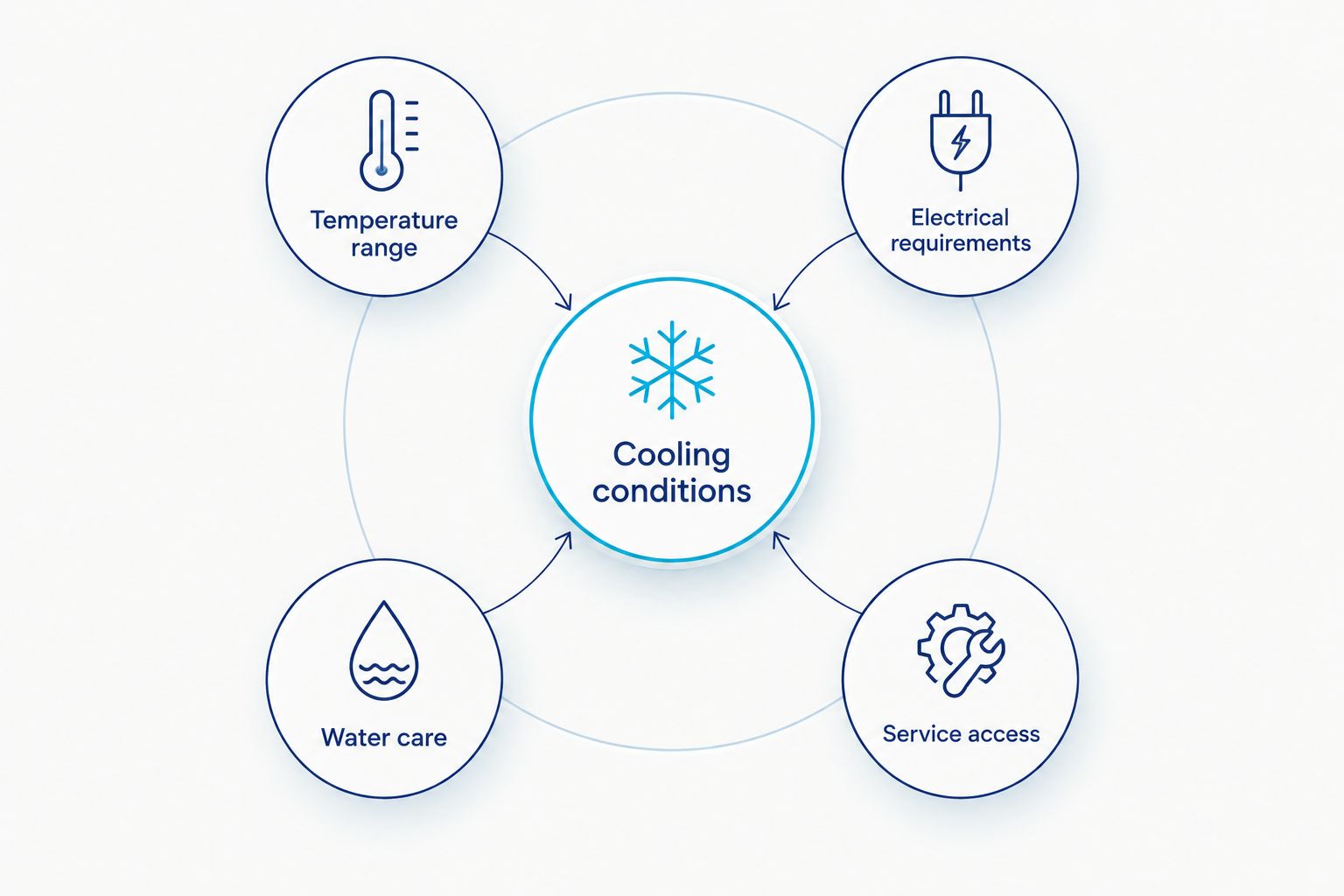
Separate the specification sheet into these categories:
- Temperature range: What water temperatures the system is designed to maintain.
- Cooling conditions: The conditions attached to any cooling-time or performance claim.
- Electrical requirements: The supply and protection specified in the installation instructions.
- Water care: The filtration and sanitation procedures the manufacturer requires.
- Service access: The space needed to inspect, clean, and maintain equipment.
A filter removes particles according to its design; that function is not the same as disinfection. Refrigeration also does not make used bathing water sanitary. Follow the manufacturer's approved water-treatment and cleaning instructions instead of assuming cold water needs no care.
For your 2026 shortlist, request the operating manual alongside the product specification sheet. A specification describes capability; the manual explains the conditions required to use it.
Check the installation before choosing the tub
Measure the delivery route as well as the final location. Include door openings, corners, steps, and the space needed to move the packaged assembly. Exterior measurements do not establish internal user fit.
Then check the installation in this order:
- Supporting surface: Establish the filled equipment load and have the proposed surface assessed when its capacity is uncertain.
- Electrical supply: Follow the equipment's stated circuit and protective-device requirements. Use a qualified electrician for installation questions.
- Airflow clearance: Preserve the manufacturer's required space around refrigeration components.
- Drainage route: Identify where drained water will go before filling the tub.
- Service access: Leave room to remove filters, open panels, and reach connections.
Water is heavy, and the operating load includes the tub, water, equipment, and user. Nominal gallon capacity alone is not a floor-load assessment. Likewise, an outdoor tub does not establish that every connected electrical component is suitable for exposed conditions.
Choose the installation location before choosing the equipment layout. That sequence prevents a visually appealing tub from becoming an awkward fit.
How these options are ranked
This ranking prioritizes the requested cooling arrangement, followed by installation fit, compatibility, maintenance access, and stated construction. Integrated refrigeration ranks first because it matches the built-in-chiller requirement directly; external refrigeration serves a different layout preference.
The named ice baths occupy separate use-case slots because their stated features establish tub formats, not complete refrigeration packages. No cooling-performance comparison is assigned to those tubs without corresponding specifications.
Which cold plunge setup should you choose?
For a dedicated refrigerated plunge in 2026, choose an integrated system with a documented equipment list and installation manual. That is the default recommendation when built-in cooling is the requirement.
Choose an external-chiller configuration when separate equipment access is the priority and the manufacturer confirms the complete pairing. Choose a portable or outdoor ice-bath tub when that format meets your needs, without treating it as proof of included refrigeration.
FAQ
What's the best cold plunge tub with chiller for home use?
For a permanent home installation, an integrated refrigerated plunge is the best configuration when its supplied equipment and installation requirements are documented. Confirm user fit, electrical supply, drainage, airflow, and maintenance access before selecting a model.
Is a built-in chiller better than an external chiller?
A built-in chiller is better for buyers who want refrigeration contained within the overall equipment assembly. An external chiller suits buyers who prefer separate equipment access; layout alone does not establish better cooling performance.
Does chiller-ready mean a cold plunge includes a chiller?
No. Chiller-ready describes intended connectivity, not an included refrigeration unit. Check the equipment list and obtain confirmation of the exact compatible pairing.
Does the 79 Gallon Cold Plunge Tub include refrigeration?
The product title establishes a 79-gallon outdoor tub with a thermo lid, not included refrigeration. Confirm the cooling equipment and any approved connections before treating it as a refrigerated plunge.
Can I connect any chiller to an inflatable ice bath?
No; use only a pairing whose compatibility is confirmed by the manufacturers. Ports, fittings, flow requirements, hoses, and approved water treatment all matter.
Does a cold plunge chiller keep the water clean?
A chiller removes heat, but refrigeration is not a substitute for sanitation. Follow the equipment's filtration, water-treatment, cleaning, and water-change instructions.
How do I know whether a cold plunge tub will fit me?
Check internal dimensions, usable water depth, seating arrangement, and entry height. Nominal gallon capacity does not establish comfortable seated fit.
Can a refrigerated cold plunge stay outside all year?
Use a refrigerated plunge outside only within the complete system's stated environmental limits. Check instructions for electrical exposure, ambient temperature, drainage, and freeze protection rather than relying on an outdoor label alone.
One last thing
Ask to see the filter-access and service-panel instructions before committing to a tub. A concealed chiller still needs accessible maintenance space; the cleanest-looking enclosure is not automatically the easiest system to own.