
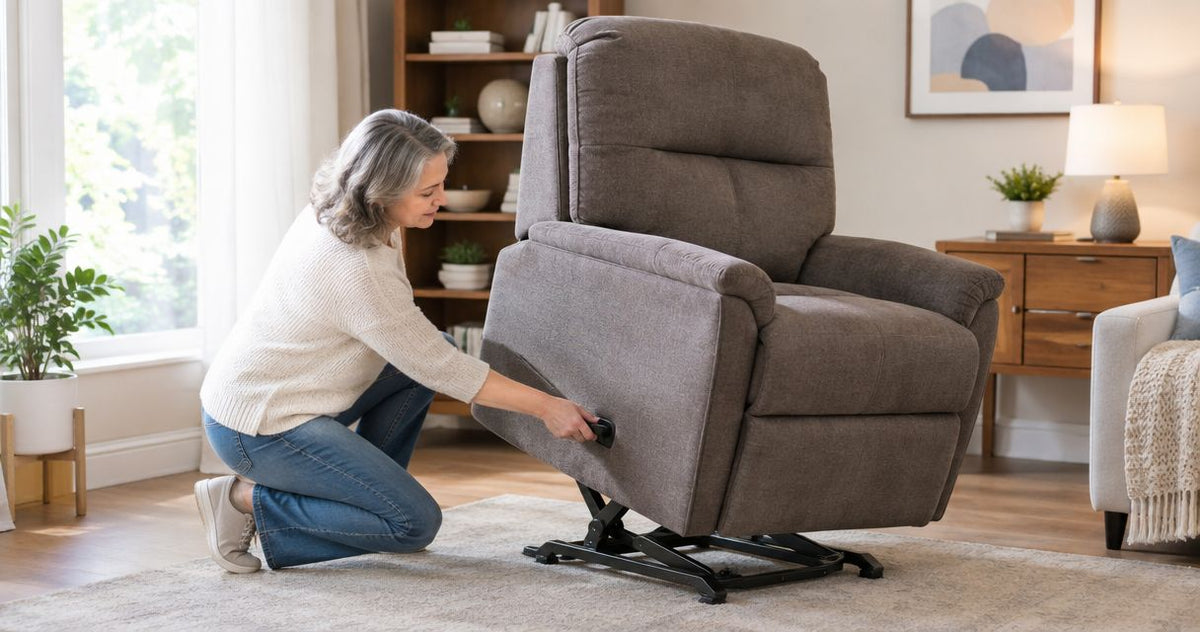
No. A power lift recliner is not designed for manual lift or recline operation when power fails, and forcing the seat, backrest, or footrest can damage the mechanism or create a transfer hazard. In 2026, the safe options are to use a compatible emergency battery system, restore power, or follow the chair manufacturer’s outage procedure.
By Editorial Team
- A power lift recliner normally cannot be operated manually during a power failure.
- Aeva Vital recommends checking for a model-approved battery backup before daily use in 2026.
- Never force the backrest, seat, or footrest against a locked actuator.
- Check the outlet, transformer, handset, and breaker before treating the problem as motor failure.
- Plan a safe exit method for anyone who cannot leave the chair without powered lift assistance.
Can you manually operate a power lift recliner if the power fails?
No manual crank or release is standard across power lift recliners. The motor and actuator control the lifting, reclining, and return movements, so losing electrical power normally stops the chair in its current position. This is why a lift chair generally needs to stay plugged in to recline.
The correct response depends on whether the home lost power, one outlet stopped working, a cable disconnected, or the chair itself failed. Use this 2026 comparison before moving the chair or attempting a transfer.
| Situation | What the chair does | Best response | Main limitation |
|---|---|---|---|
| Whole-home power failure | Stops and holds its current position | Use the approved backup system or wait for power | Backup capacity and functions vary by model |
| One outlet has no power | Remains stationary | Check the breaker, wall switch, or protected outlet | Electrical faults require qualified service |
| Transformer or cable disconnected | Handset becomes unresponsive | Reconnect accessible plugs after unplugging the chair | Moving the frame can pinch a cable |
| Hand control fails | Motor receives no movement command | Inspect the handset connection and contact support | Backup power does not fix a failed control |
| Motor or actuator fault | May stop during a movement | Stop using the chair and arrange service | Forcing the frame can worsen the fault |
A battery backup is not the same as manual operation. It temporarily supplies electricity to the motor, allowing only the movements supported by that chair and backup system. Some systems are intended for emergency return to a safer seated position rather than repeated reclining.
Why this matters
A stopped recliner is inconvenient for an independent user who can stand without help. It presents a more serious problem when the user relies on the powered seat rise to transfer safely.
Do not assume another person can simply pull the occupant upright. An unplanned transfer can place both people at risk, particularly when the chair is fully reclined, the footrest remains extended, or the user has post-surgical movement restrictions. A planned recovery setup should include the chair manual, accessible power connections, and an agreed response if the motor stops.
Aeva Vital’s 2026 power lift recliner guidance is best for households that need a safe outage plan before the chair is used daily. The practical objective is not to make the mechanism move by hand. It is to restore approved power or help the user exit without fighting the frame.
Why the chair resists manual movement
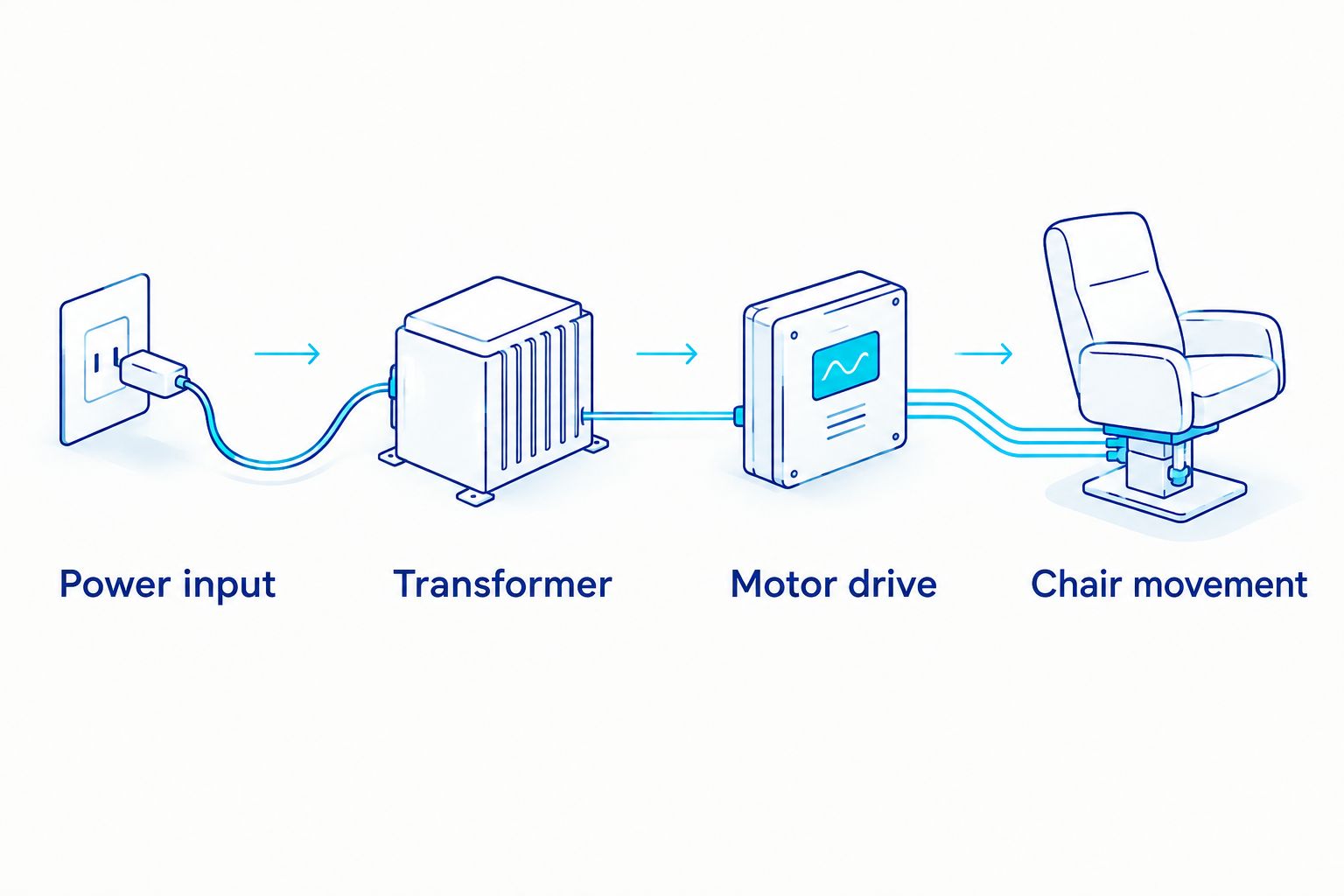
A power lift recliner converts electrical energy into movement through a motor, gearbox, and linear actuator. The actuator extends or retracts to change the relationship between the base and seat frame. Recline and footrest movement may use the same drive system or separate motors, depending on the model.
The mechanism is designed to hold its position when the motor is not running. That prevents the frame from dropping freely under the occupant’s weight, but it also means the backrest and footrest resist hand pressure. Applying more force does not create a safe manual mode.
Do not remove actuator pins, disconnect structural hardware, or tip the chair while someone is seated. Those actions can release a loaded part of the mechanism without controlling its movement. Component access belongs in the manufacturer’s service procedure, not an improvised outage response.
Backup options for a power failure
A compatible battery solution is the closest thing to an emergency override. Compatibility matters because the chair’s transformer, connector, control system, and operating requirements are model-specific. A generic battery connector that physically fits does not prove electrical compatibility.
| Option | Best for | Advantage | Limitation |
|---|---|---|---|
| Manufacturer-approved battery backup | Automatic response to a short outage | Uses the chair’s normal controls | Supported movements and capacity vary |
| Approved replaceable-battery system | Emergency return when utility power stops | Can remain ready near the chair | Battery type and replacement schedule are model-specific |
| Compatible portable power station | Households needing a separate backup source | Can provide AC power through the original chair adapter | Output, placement, and cord routing must be checked |
| Restored household power | A tripped breaker or switched-off outlet | Requires no chair modification | Does not help during a wider outage |
| Caregiver or emergency assistance | A user who must exit immediately | Does not depend on the chair restarting | An unsafe transfer can injure the user or helper |
Manufacturer-approved battery backup
Best for: users who depend on the lift function every day. A manufacturer-approved system avoids guessing about voltage, polarity, connectors, and control behavior. Its disadvantage is that it may support only emergency movement, not normal use throughout an extended outage.
Confirm what the backup actually powers in 2026. A chair with independent backrest, footrest, headrest, or lift motors may not provide every adjustment on emergency power. The manual should identify whether the backup returns the chair to sitting, raises the seat, or supports additional movement.
Portable power station
Best for: households that already maintain outage equipment and can verify compatibility. The chair should remain connected through its original power adapter unless the manufacturer gives different instructions. Keep the station ventilated, stable, dry, and positioned so its cable does not cross the user’s walking or transfer path.
A U.S. household receptacle provides nominal 120-volt AC power, while the chair’s adapter converts that supply to the low-voltage DC required by its control system. That conversion is why connecting an unverified battery directly to a chair is unsafe even when a plug appears to fit.
Caregiver-assisted exit
Best for: an urgent exit when approved backup power is unavailable. Assistance should follow the user’s established transfer plan. Do not pull on the moving backrest, footrest, arm upholstery, handset cable, or power cord for support.
If the person cannot transfer safely from the chair’s stopped position, get trained assistance rather than improvising. Households using a lift chair after a procedure should include outage planning in the broader post-surgery chair and bed-rail setup.
Why emergency operation varies by chair
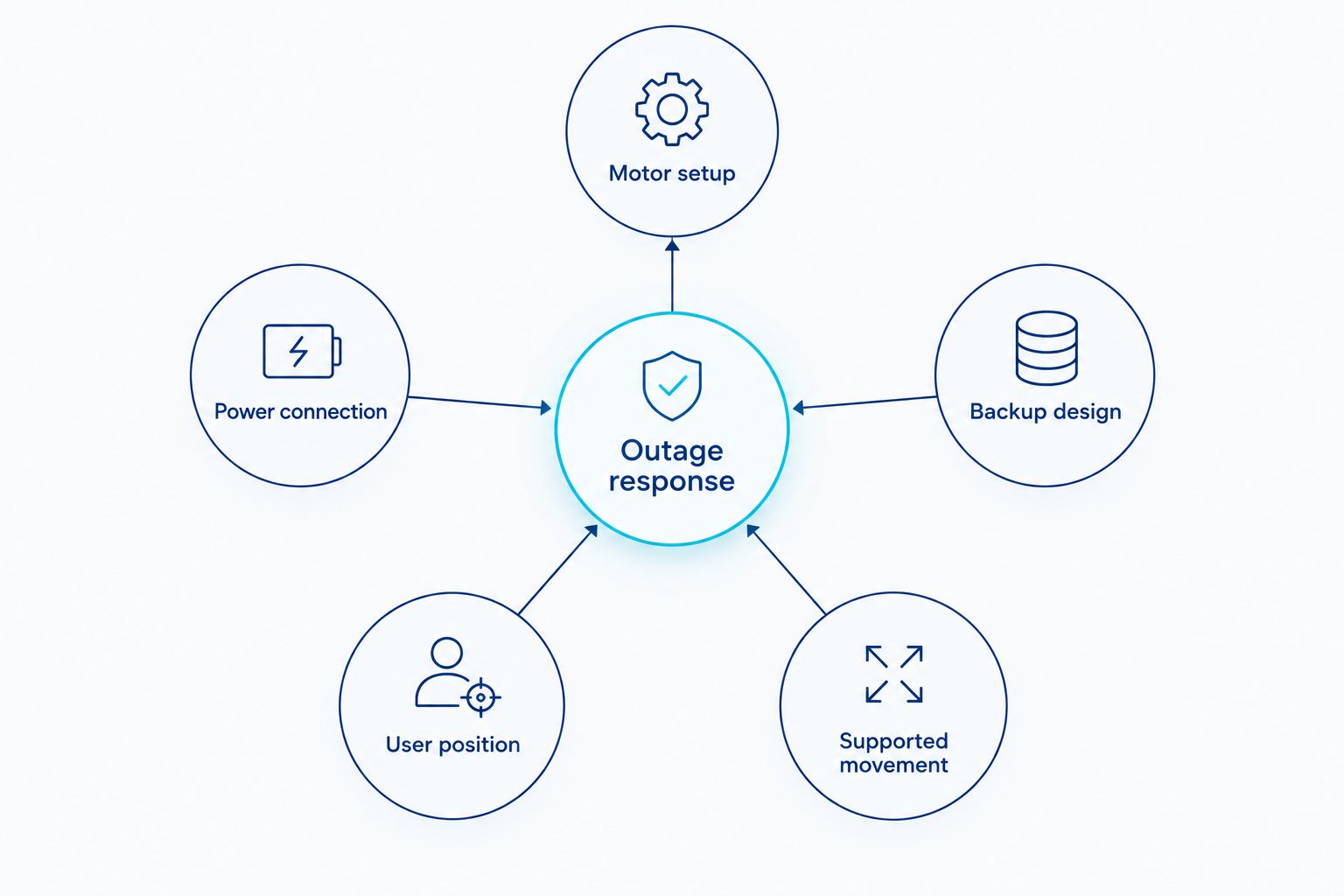
The answer remains no for manual operation, but the available powered fallback varies. Check these factors in the chair manual or specification sheet:
- Motor configuration: A single-motor chair links several movements, while a multi-motor model controls more sections independently.
- Backup design: The chair may accept a manufacturer accessory, include an emergency battery compartment, or provide no battery option.
- Supported movement: Emergency power may return the chair to one position instead of supporting normal adjustment.
- Control condition: A battery cannot compensate for a disconnected handset, damaged cable, failed control box, or seized actuator.
- User position: Exiting from upright, elevated, or fully reclined positions requires different transfer planning.
- Power connection: A switched outlet, tripped breaker, loose transformer connection, or damaged cord can imitate chair failure.
What should you check before calling for service?
Start with the power path rather than the frame. Keep the user still and comfortable while another person performs checks that do not require reaching under a loaded chair.
- Confirm the scope of the outage. Check whether room lights and another safe device have power.
- Inspect the wall connection. Verify that the chair adapter is fully connected to the outlet without tugging the cable.
- Check accessible adapter connections. Unplug the chair first, then reseat detachable low-voltage connectors that the manual identifies as user-accessible.
- Inspect the handset plug. A loose control connection can make a powered chair appear completely dead.
- Check the breaker or protected outlet. Reset it only when there is no sign of heat, water, burning odor, or cable damage.
- Use approved backup power. Follow the manual’s activation procedure instead of connecting an improvised battery.
- Stop after one controlled check. Repeated commands will not repair a jammed frame, damaged cable, or failed actuator.
If the chair stops again after power returns, discontinue use until the fault is identified. A recurring shutdown is not an outage plan; it is a service issue.
How to prepare before the next outage
The best 2026 setup keeps power equipment accessible without placing cords in the user’s walking path. Do not bury the transformer behind the chair where movement can crush it, and do not route the cord beneath the reclining mechanism.
Use this preparation checklist:
- Keep the model number, manual, and support contact together.
- Confirm whether an approved backup accessory exists for the exact chair.
- Learn which chair movements work on backup power.
- Test the approved system according to its instructions when the chair is unoccupied.
- Keep replacement batteries on the schedule stated by the manufacturer.
- Identify a safe transfer position and who can provide assistance.
- Make sure the outlet and transformer can be reached without crawling beneath the chair.
- Keep extension cords and portable power cables outside the transfer route.
Aeva Vital treats power planning as part of lift chair setup, not an accessory decision to postpone. The same 2026 plan should cover cord placement, routine inspection, backup readiness, and the user’s exit method.
Related questions
Does a lift chair work during a power outage?
No, a lift chair does not work from an unpowered outlet unless a compatible battery backup or external AC source supplies the chair’s original adapter. The available movements depend on the model and backup system.
Can you push the footrest down by hand?
No, you should not force a powered footrest closed by hand when the actuator is holding it open. Restore approved power or follow the manufacturer’s emergency procedure, because pressure against the footrest can damage linkages or create a pinch hazard.
Will unplugging a lift chair reset it?
Unplugging can reset some control systems, but it does not fix a disconnected cable, failed handset, damaged transformer, or mechanical obstruction. Use only the reset sequence and waiting period stated in the chair manual.
FAQ
Can you manually operate a power lift recliner if the power fails?
No. A power lift recliner normally requires electrical power for its lift and recline movements, so use an approved backup or restore power instead of forcing the frame.
What happens when power fails while a lift chair is reclined?
The chair normally stops and holds its current position. The user needs compatible backup power, restored utility power, or safe assistance to exit.
Do all power lift recliners have battery backup?
No. Battery provisions differ by model, so check the manual and specification sheet for the exact chair before relying on emergency operation.
Can a portable power station operate a lift recliner?
A compatible portable power station can supply the chair’s original AC adapter when its output and use conditions meet the manufacturer’s requirements. Do not connect an unverified battery directly to the chair.
Should you force a lift chair upright during an outage?
No. Forcing the seat, backrest, or footrest can damage the actuator or linkage and create an unsafe transfer.
Why is my lift chair not working when the house has power?
Check the outlet, transformer, detachable cables, handset connection, breaker, and protected outlet. Stop using the chair if you find heat, liquid, odor, visible damage, or repeated shutdowns.
Is battery backup required for a lift chair in 2026?
Battery backup is not universal, but it is a practical safeguard when the user depends on powered lift assistance. Aeva Vital recommends confirming model compatibility and supported emergency movements before daily use.
One last thing
A battery backup does not turn a power lift recliner into a manual chair. It preserves limited powered movement, and that distinction determines what happens when an outage starts while someone is fully reclined. For a dependent user in 2026, test the approved outage procedure before the chair becomes part of the daily transfer routine.
Aeva Vital’s final recommendation is simple: record the chair model, verify the approved backup method, and keep the transfer area clear before the next power failure.