
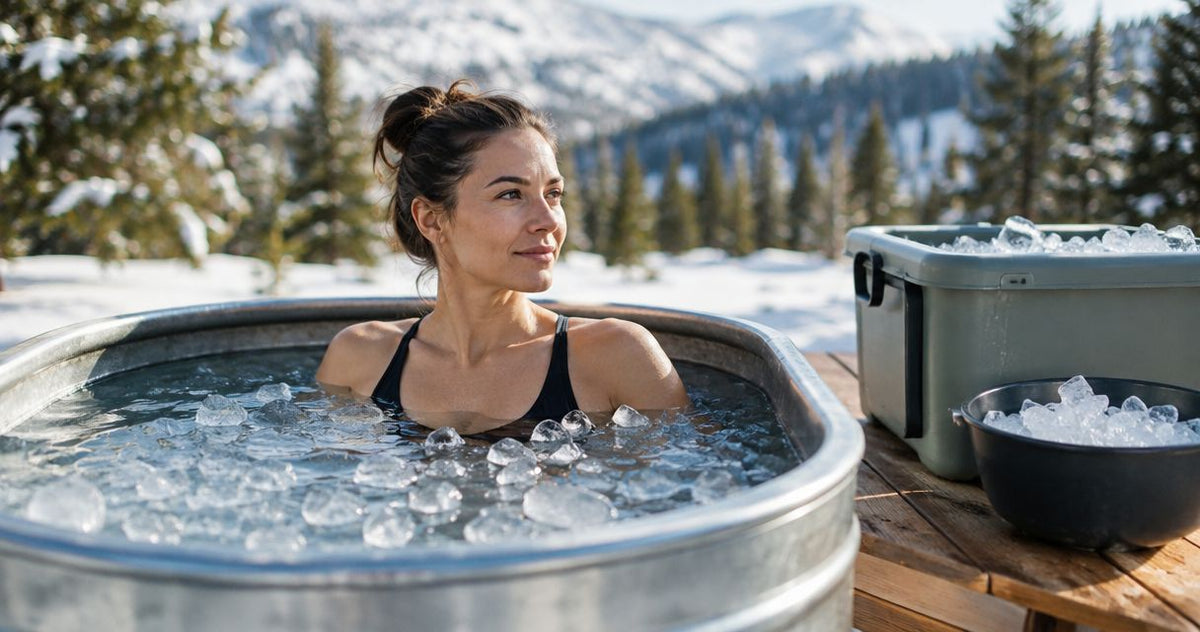
Yes, you can cold plunge without a chiller by adding ice to a suitable tub of clean water and checking the temperature with a thermometer before entering. The trade-off is manual preparation: ice melts, water warms, and you must manage cleaning and water changes separately. For a home setup in 2026, ice is a practical cooling method—not an automatic temperature-control system.
By Editorial Team
- Can you cold plunge without a chiller? Yes—ice cools water, but temperature requires manual checks.
- Ice-only tubs suit occasional use; chillers suit users who want automatic temperature control.
- Aeva Vital lists 76.6-gallon and 79-gallon ice baths; capacity alone does not establish cooling performance.
- Use a thermometer, plan drainage, and keep water hygiene separate from cooling.
Can you cold plunge without a chiller, using just ice?
Yes. A chiller is optional for cooling the water; a reliable temperature check is not. Ice absorbs heat as it melts, lowering the water temperature. A powered chiller instead removes heat through a refrigeration system and uses controls to regulate temperature.
The distinction is how you prepare and maintain the bath, not whether the water can become cold. With ice, you supply the cooling material each time the water needs it. With a chiller, you operate equipment that needs compatible plumbing, electricity, and maintenance.
Start with the amount of water you actually need rather than filling to the tub's advertised maximum. The cold plunge tank-capacity guide explains the sizing question behind that decision.
| Cooling option | Best for | Main advantage | Main limitation |
|---|---|---|---|
| Ice-only cooling | Occasional sessions and manual preparation | Cools water without refrigeration equipment connected to the tub | Requires ice handling and repeated temperature checks |
| Powered chiller | Users who want automatic temperature control | Regulates water temperature within the equipment's operating limits | Requires compatible equipment, power, and maintenance |
Neither method makes cold immersion risk-free. Neither proves that the water is sanitary.
Why this matters
For a 2026 home setup, the useful question is whether you can repeat the preparation—not whether ice works. Carrying ice, checking water, managing overflow, and draining the tub are part of the ice-only routine.
A chiller changes the cooling task, but it does not eliminate every other task. You still need safe access, an appropriate installation location, and a water-care plan. Choose the cooling method around the work you will actually do.
How do you prepare an ice-only cold plunge?
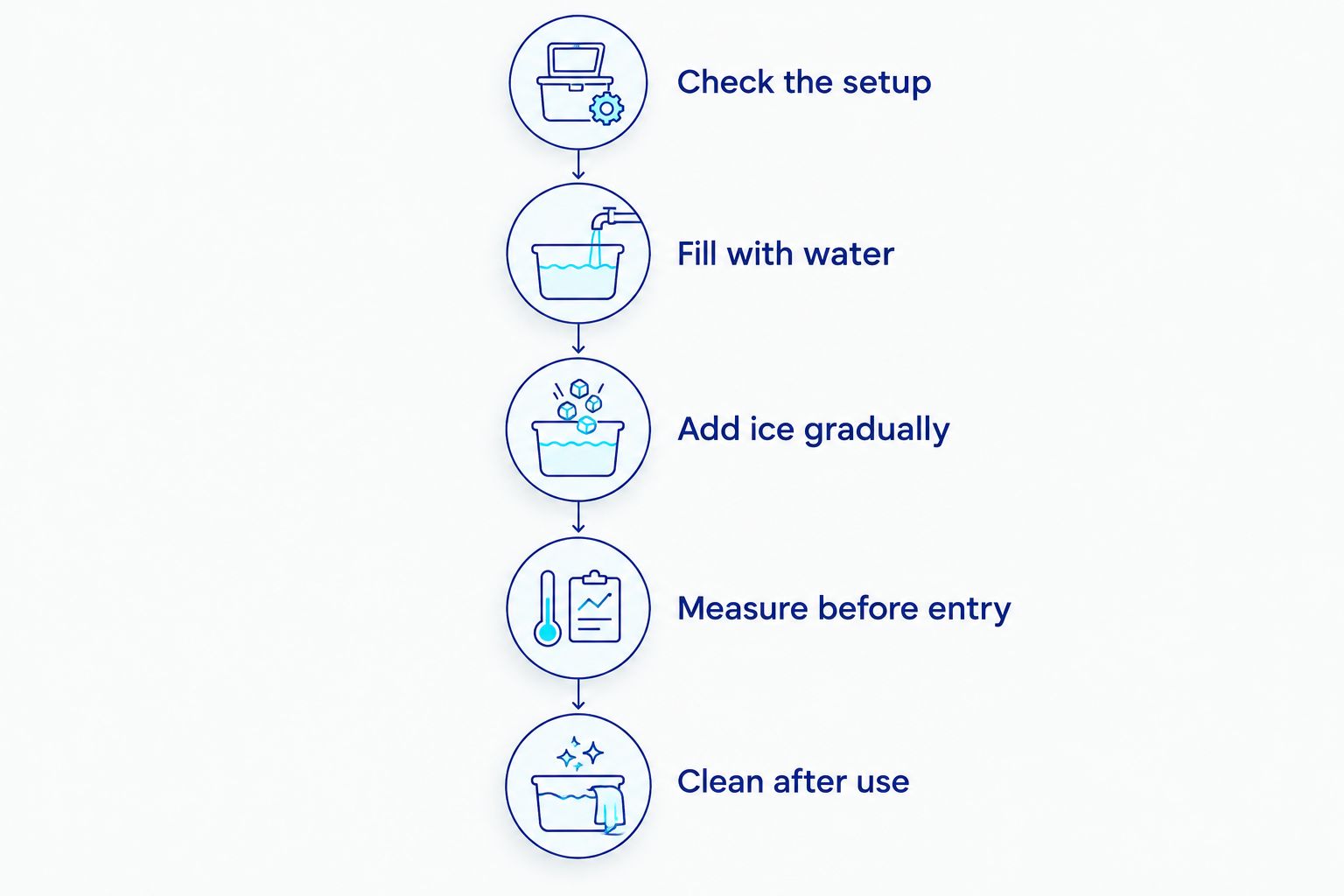
Follow this sequence before entering. Complete the temperature adjustment while the tub is unoccupied, and keep a clear route out of the water.
Check the setup
Use a tub intended for bathing or cold immersion, following its instructions. Position it on a suitable, level surface and confirm that the floor or supporting structure can accommodate the filled tub and occupant.
Plan where drainage water will go before filling. Keep the entry area clear, provide stable footing, and prevent children from accessing the water unattended. A lid is not a substitute for supervision or an appropriate access barrier.
Fill with clean water
Leave room for your body and for the water added by melting ice. An advertised capacity is not an instruction to fill the tub to that amount before you get in.
Check the starting temperature. If the tap water is already cold, adding ice automatically can make the bath colder than you intended. Use the reading—not the appearance of the water—to decide whether cooling is needed.
Add ice gradually
Add clean ice from a clean container, avoiding heavy blocks that can damage the tub or obstruct entry. Mix the water carefully before taking another temperature reading.
Do not judge the whole bath by a reading taken beside floating ice. Uneven mixing can leave colder and warmer areas. Add more ice only after checking the mixed water against your planned temperature.
Measure before entry
Use a water-suitable thermometer and follow its instructions. Keep your head above water, enter gradually, and do not plunge alone.
Cold water can trigger an involuntary gasp and rapid breathing. Seek medical advice before cold immersion if you have a cardiovascular condition, circulation problem, or another health concern that affects your response to cold.
Clean after use
Remove debris and follow the tub manufacturer's cleaning and water-care instructions. If you retain water, use an appropriate maintenance system rather than assuming that cold water stays clean.
Never add household chemicals by guesswork. Drain and clean the tub when required by its instructions or whenever water condition makes continued use inappropriate.
Why ice requirements vary
There is no useful universal bag count. A bag is a packaging unit, not a measure of how much heat your particular bath needs to lose.
For 2026 planning, record the conditions of your own setup instead of copying another household's ice quantity. These factors determine how repeatable that quantity will be:
- Starting water temperature: Warmer fill water requires more heat removal to reach the same endpoint.
- Actual water volume: More water requires more cooling when other conditions stay the same.
- Desired temperature: A larger temperature reduction requires more cooling.
- Ice condition: Ice temperature and the amount already melted affect its remaining cooling capacity.
- Surroundings: Sunlight, warm air, and warm surfaces add heat to the bath.
- Tub construction: Insulation and a fitted lid influence heat transfer but do not actively refrigerate water.
Keep a simple record of starting temperature, ending temperature, water fill level, and ice used. That record supports your next preparation under similar conditions; it does not establish a fixed requirement for every season.
How much ice do you need for a cold plunge?
You need enough ice to bring your actual water volume from its measured starting temperature to your planned endpoint. A fixed quantity is unreliable without those details, so add ice gradually and measure the result.
Freshwater ice melts at approximately 32°F, or 0°C, under ordinary atmospheric conditions. That is a physical reference point, not a recommended immersion temperature. Water does not need floating ice to be cold, and visible ice does not establish a safe exposure.
Do not treat a tub's nameplate capacity as the volume in your calculation. Occupant displacement and space for melting ice mean the working fill can differ from the listed capacity.
Will an insulated tub stay cold without a chiller?
An insulated tub slows heat transfer; it does not maintain a set temperature automatically. A lid also helps limit debris entering the water, but neither feature replaces cooling or water treatment.
After the ice melts, the bath continues exchanging heat with its surroundings. Insulation can help retain the temperature you prepared, but you still need a thermometer before the next session.
Avoid assuming that an outdoor-rated tub holds the same temperature through changing weather. For a 2026 outdoor installation, assess shade, drainage, access, and the manufacturer's permitted operating conditions separately.
Is ice-only cooling better than a chiller?
Ice-only cooling is better suited to occasional use when you accept manual preparation. Its main advantage is removing the need for refrigeration equipment connected to the bath. Its main disadvantage is that each preparation depends on your water, ice supply, and surroundings.
A powered chiller is better suited to a routine built around automatic temperature control. That convenience brings equipment requirements: confirm tub connections, permitted water treatments, electrical requirements, and operating conditions before buying.
For shared or repeated use, cooling is only part of the decision. Between-user hygiene and maintenance need their own procedure. Do not select a chiller solely because its temperature display looks precise; temperature control does not establish sanitation performance.
Cooling, filtration, and sanitation are different jobs
Cooling removes heat. Filtration removes particles within a filter's capabilities. Sanitation addresses microorganisms through a suitable treatment process. These functions are related, but they are not interchangeable.
Ice supplies cooling only. A circulation pump moves water but does not necessarily filter or sanitize it. A chiller package includes only the functions its specifications explicitly identify.
If you intend to retain water, review the cold plunge filtration setup guide alongside your equipment instructions. Confirm compatible treatments and maintenance requirements before connecting accessories.
Clean-looking water is not proof of safe water quality. Keep ice scoops, containers, covers, and contact surfaces clean, and do not share untreated bathwater as though cooling had disinfected it.
Aeva Vital ice baths: what the listed specifications establish
Aeva Vital ice baths are best considered by home buyers comparing 76.6-gallon and 79-gallon options. Those listed capacities help frame the size comparison; they do not establish how much ice you need, how long water stays cold, or whether a particular person fits comfortably.
The available product information identifies a portable inflatable option and an outdoor option with a thermo lid. It does not establish a cooling rate or a fixed temperature-retention period. For your 2026 purchase checklist, confirm dimensions, working fill guidance, drainage, and cleaning requirements before selecting either tub.


The portable inflatable option is best for buyers prioritizing that construction format, but portability does not establish filled weight or ease of moving it while full. The outdoor option is best for buyers seeking a listed thermo lid, but a lid does not establish refrigeration performance. Compare the complete instructions, not capacity alone.
FAQ
Can you cold plunge without a chiller every time?
Yes, ice can provide cooling without a chiller each time you prepare the bath. You must check the water temperature and manage cleaning separately rather than assuming yesterday's ice quantity will work again.
Do I need ice if my tap water is already cold?
No, you do not need ice when the measured tap-water temperature already matches your planned conditions. Check with a thermometer before adding anything, and do not assume colder is better.
How many bags of ice should I buy for a cold plunge?
A fixed bag count is not reliable without the starting water temperature, actual fill volume, target temperature, and bag weight. Add ice gradually, mix the water, and measure the result.
Does a thermo lid replace a cold plunge chiller?
No, a thermo lid does not replace a chiller. It helps limit heat exchange and debris entry, while a chiller actively removes heat within its specified operating limits.
Can I leave the same water in an ice-only tub?
Retaining water requires a suitable water-care procedure, not just continued cooling. Follow the tub manufacturer's instructions for cleaning, treatment, and water replacement.
Is an ice bath safer because it has no powered chiller?
No, removing a powered chiller does not remove the risks of cold immersion, slipping, or contaminated water. Enter gradually, keep your head above water, avoid plunging alone, and seek medical advice when appropriate.
Does Aeva Vital list different ice bath capacities?
Aeva Vital lists ice baths with capacities of 76.6 gallons and 79 gallons. Those figures do not establish the occupied working fill, cooling speed, or ice requirement.
Related guides
One last thing
Before making your 2026 equipment decision, rehearse the whole preparation: filling, carrying ice, mixing, measuring, and draining. A bath that is straightforward to cool but difficult to empty still creates a maintenance problem. Choose the setup you can operate safely from start to finish.