
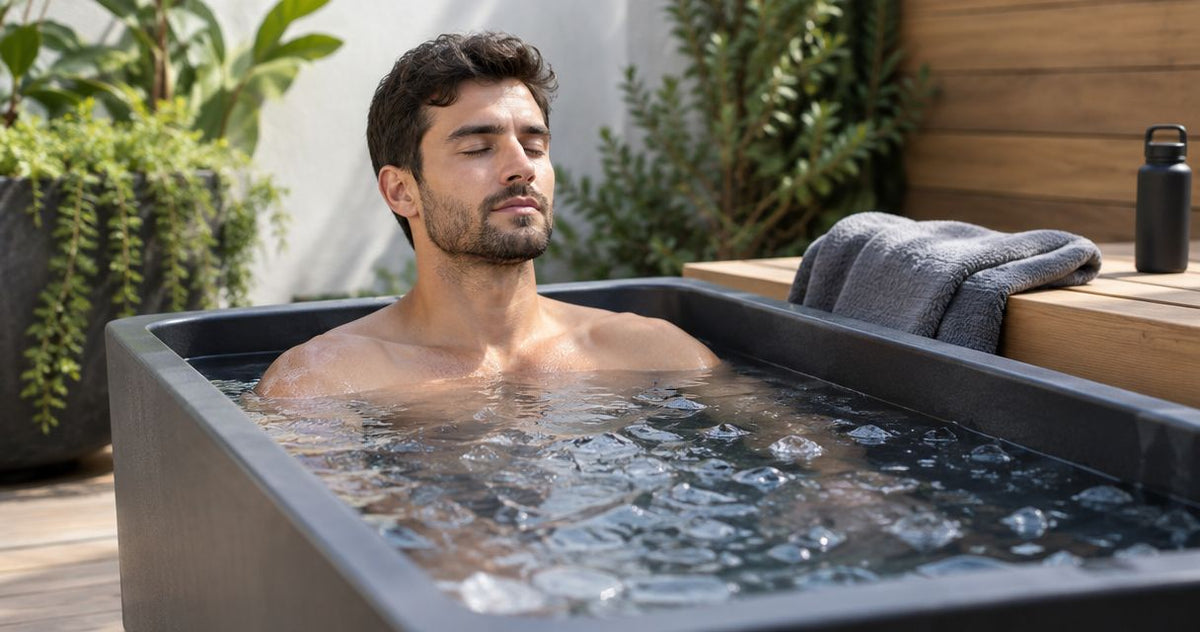
Yes—cold water immersion can reduce perceived muscle soreness after strenuous exercise, but feeling less sore does not prove that your muscles have repaired faster. Benefits depend on the exercise, timing, and outcome you measure. Routine immersion immediately after resistance training also carries a trade-off: research suggests it can reduce some muscle-building adaptations.
By Editorial Team
A cold plunge tub provides a container for cold water immersion; it is not a treatment for a muscle injury. This 2026 guide separates soreness relief from restored performance and explains what to check before adding a tub to your recovery routine.
- Does cold plunge help muscle recovery? Cold water immersion can reduce soreness, but does not guarantee restored strength.
- Routine cold plunges immediately after lifting can interfere with muscle-building adaptations.
- Aeva Vital cold plunge tubs require the same safety and specification checks as any home immersion setup.
- Choose your recovery method around your training goal, not the lowest water temperature.
Can a cold plunge tub help with muscle recovery?
Cold plunges are better supported for short-term soreness relief than for reliably accelerating every part of muscle recovery. Muscle soreness, strength, power, and readiness to train are different outcomes. Improvement in one does not establish improvement in the others.
The Cochrane review Cold-water immersion for preventing and treating muscle soreness after exercise found evidence of reduced soreness compared with passive recovery, while identifying limitations in the underlying studies. Its scope was post-exercise soreness—not proof of faster injury healing or better long-term training results.
For your 2026 recovery plan, use this distinction before comparing equipment. The cold plunge tub guide for athletic recovery addresses the equipment decision; your training goal determines whether immersion belongs in the routine at all.
| Recovery approach | Best for | Main advantage | Main limitation |
|---|---|---|---|
| Cold water immersion | Short-term soreness management after demanding exercise | Can reduce perceived soreness | Does not consistently restore every performance measure; routine post-lifting use has adaptation concerns |
| Easy active recovery | Gentle movement when you tolerate it comfortably | Requires no immersion equipment | Does not guarantee faster recovery or suit an injured muscle |
| Passive recovery | Rest between demanding sessions | Adds no exercise or cold exposure | Does not provide the same cold-related soreness relief |
| Sleep and adequate nutrition | Supporting recovery throughout a training program | Addresses basic recovery needs | A single good night or meal cannot compensate for an unsuitable training load |
These approaches are not mutually exclusive. The useful comparison is whether cold exposure adds something you need—not whether it replaces sleep, food, rest, or sensible programming.
Why this matters: soreness is not a readiness test
Delayed-onset muscle soreness, often shortened to DOMS, is the tenderness and stiffness that follows unfamiliar or demanding exercise. It commonly follows movements with an eccentric component, when a muscle produces force while lengthening, such as lowering a weight.
Cold exposure can change how sore you feel without proving that force production has returned to baseline. Do not use reduced soreness as permission to repeat a hard session before you can move and perform normally.
Judge readiness using the demands of your next workout. Walking comfortably does not establish readiness for heavy squats, sprinting, or repeated jumps. If you need to perform again soon, discuss the recovery plan with a qualified coach rather than relying only on the sensation after a plunge.
What the evidence supports—and what it does not
Research on cold water immersion uses different exercise protocols, temperatures, immersion durations, and participant groups. Those differences matter when applying a study result to your own training.
Systematic reviews in Sports Medicine comparing cold water immersion with passive recovery examine outcomes including soreness, perceived recovery, strength, and power. Results vary by outcome and exercise context; a favorable soreness finding is not a universal performance claim.
For this 2026 guide, the practical evidence boundary is straightforward:
- Soreness: Cold water immersion can reduce how sore you feel after exercise.
- Performance: Restored strength and power are not guaranteed by soreness relief.
- Muscle growth: Repeated immediate post-lifting immersion raises concerns about training adaptations.
- Injury treatment: Post-exercise soreness research does not establish that a plunge heals a strain or other injury.
Avoid claims that cold water simply flushes away exercise damage. DOMS is not caused by lactic acid remaining trapped in your muscles, and a tub specification cannot establish a biological recovery benefit.
Should you cold plunge after lifting weights?
Do not make immediate post-workout cold immersion your default if maximizing muscle growth is your main goal. Resistance exercise creates signals that contribute to adaptation, and repeated cold exposure immediately afterward can reduce parts of that response.
Research by Roberts and colleagues in The Journal of Physiology, titled Post-exercise cold water immersion attenuates acute anabolic signalling and long-term adaptations in muscle to strength training, directly addresses that concern. It does not establish that an occasional plunge erases a workout or that every use produces the same result.
The distinction is frequency and purpose. A strength-training block focused on building muscle presents a different decision from a competition schedule where you prioritize feeling ready for another event.
There is no universal waiting interval that guarantees cold exposure will preserve every adaptation. Avoid treating an exact delay promoted online as a settled rule. Plan the timing around your training priorities with a qualified professional.
When is short-term soreness relief more relevant?
Short-term soreness management is more relevant when your immediate priority is recovering between closely scheduled efforts rather than maximizing the adaptation from each lifting session. Tournament play and demanding competition schedules illustrate that trade-off.
That is a reason to consider cold immersion, not a guarantee of better performance. The next session's demands still matter: endurance exercise, heavy lifting, and skill practice do not place identical demands on your body.
You also do not need to plunge after every ordinary workout. Use a recovery method to solve a defined problem, not to add another obligation to your training plan. If sleep, meals, or workload management are inconsistent, address those before buying equipment.
Why cold plunge recovery results vary
For your 2026 routine, these factors explain why another athlete's experience is not a protocol you can copy unchanged:
- Training goal: Immediate readiness and long-term muscle growth can lead to different decisions about post-exercise cooling.
- Exercise type: A resistance session, an endurance event, and unfamiliar eccentric exercise create different recovery demands.
- Water temperature: Temperature changes the cold exposure; colder water is not automatically more useful.
- Immersion duration: Time in the water affects exposure, but longer sessions do not establish better recovery.
- Timing and frequency: Occasional use differs from routinely cooling immediately after every resistance session.
- Outcome measured: Soreness, strength, power, and perceived readiness can move differently.
Record the outcome that matters to you. If you only track whether the plunge feels intense, you have measured discomfort—not recovery.
How should you plan a cold plunge session?
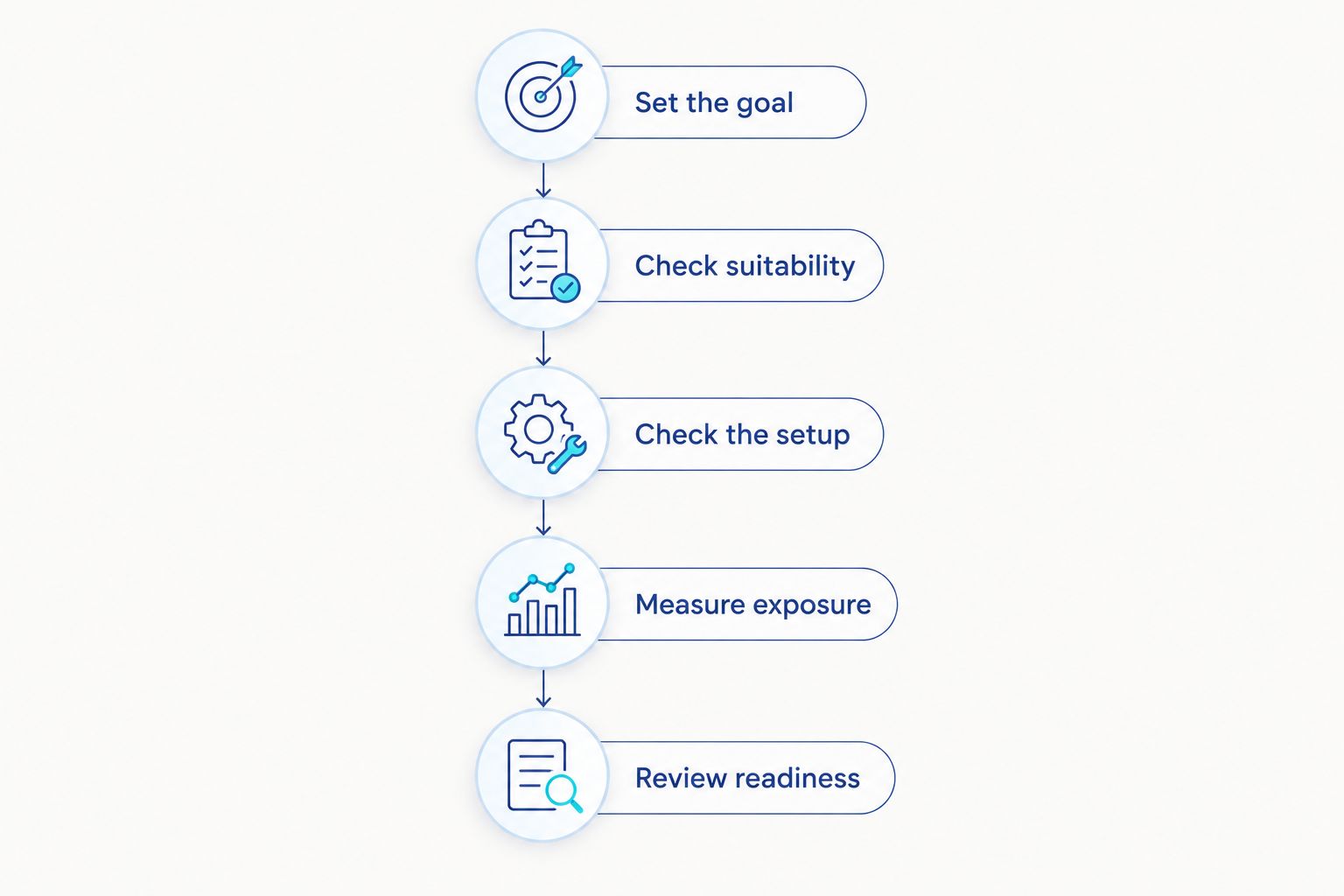
Start with the training decision, then address the setup. A clear process is more useful than chasing a temperature target without considering your health or your next workout.
- Set the goal. Decide whether you are seeking soreness relief, preparing for another event, or prioritizing long-term strength development.
- Check suitability. Discuss cold immersion with a clinician if you have a medical condition or take medication that affects circulation, blood pressure, or temperature regulation.
- Check the setup. Confirm safe entry, easy exit, water care, and the manufacturer's operating instructions.
- Measure exposure. Use a suitable thermometer and timer rather than guessing from how cold the water feels.
- Review readiness. Assess movement and performance afterward instead of treating reduced soreness as proof of complete recovery.
Do not turn the process into a tolerance contest. You should be able to leave the water promptly, without depending on someone lifting you out or on a slippery improvised step.
Who needs medical advice before cold immersion?
Cold immersion can rapidly increase breathing, heart rate, and blood pressure. The American Heart Association's public guidance on cold water exposure describes cardiovascular concerns associated with the cold shock response; this is a safety issue, not evidence of a recovery benefit.
Seek medical guidance before use if you have cardiovascular disease, an arrhythmia, uncontrolled blood pressure, Raynaud's phenomenon, reduced sensation, or another condition that affects your response to cold. Pregnancy and relevant medications also warrant an individualized discussion.
Keep your head above water, avoid breath-holding challenges, and do not use alcohol before immersion. Do not plunge alone. Exit if you feel dizzy, develop chest discomfort, or cannot control your breathing; chest pain, fainting, or severe breathing difficulty requires urgent medical help.
New severe pain, marked swelling, weakness, or dark urine after exercise is not a reason to try a colder bath. Seek medical assessment rather than masking symptoms and continuing to train.
What should you check before buying a home tub?
In 2026, compare physical fit and operating requirements before accessories. A tub must work in your space and support safe use; neither a large capacity nor a low temperature establishes better recovery.
- Usable fit: Check internal dimensions, seating position, and entry height. Gallon capacity alone does not tell you whether you fit comfortably.
- Cooling method: Verify whether a chiller is included, optional, or unsupported. Do not infer it from the phrase cold plunge.
- Water care: Confirm cleaning, draining, filtration, and disinfection requirements for the exact setup.
- Installation: Check the filled load, surface requirements, drainage route, and electrical instructions.
- Exit access: Leave room to step out safely and dry off without crossing a wet, obstructed floor.
If your setup includes powered cooling equipment, the dedicated GFCI outlet guide for cold plunges covers a relevant planning question. Have a qualified electrician confirm the installation requirements for the actual equipment.
Aeva Vital cold plunge tubs: what capacity tells you
Aeva Vital is best for home wellness shoppers considering cold plunge equipment alongside other recovery furnishings. That describes the brand's offering—not proof that its tubs deliver a particular medical or athletic outcome.
The supplied product names identify these capacities and construction details:
| Product | Stated capacity | Best for | Confirm before choosing |
|---|---|---|---|
| Portable Inflatable Ice Bath Tub | 76.6 gallons | Shoppers seeking a portable, inflatable format | Internal dimensions, cooling compatibility, and care requirements |
| 79 Gallon Cold Plunge Tub | 79 gallons | Shoppers seeking an outdoor-designated tub with a thermo lid | Internal dimensions, placement requirements, and cooling method |
A US gallon equals approximately 3.785 liters, so these capacities describe water volume—not immersion depth, comfortable body size, or cooling performance. Do not assume the listed capacity is the amount you should add before entering; follow the product's filling instructions.
The portable format provides a different setup proposition from the outdoor-designated model. Both still require suitable placement and water care. The named thermo lid does not establish a specific insulation rating, and neither product title establishes a built-in chiller.


FAQ
Does cold plunge help muscle recovery or just soreness?
Cold water immersion can reduce perceived muscle soreness, but it does not reliably improve every measure of muscle recovery. Less soreness does not prove restored strength, faster tissue repair, or readiness for another hard workout.
Should I cold plunge immediately after lifting weights?
Avoid making immediate post-lifting immersion your default when muscle growth is the priority. Research on repeated use raises concerns about reduced muscle-building adaptations; an occasional session is not the same as routine exposure after every workout.
What temperature and duration are best for muscle recovery?
There is no single temperature and duration that is best for every person and training goal. Research protocols vary, and colder or longer exposure does not automatically produce better recovery; use individualized guidance and follow equipment instructions.
Is a cold plunge better than an easy recovery walk?
A cold plunge is not universally better than an easy recovery walk. Cold immersion has evidence for soreness relief, while gentle walking provides movement without cold exposure; choose according to your goal, symptoms, and medical suitability.
Can a cold plunge heal a pulled muscle?
A cold plunge is not a proven treatment for healing a pulled muscle. Research on post-exercise soreness does not establish injury repair, so persistent or severe symptoms need assessment rather than a self-directed immersion routine.
Can I use a cold plunge every day?
Daily cold immersion is not necessary for muscle recovery. Suitability depends on your health and training goals, and repeated immersion immediately after resistance training presents a different trade-off from occasional soreness management.
Does a larger cold plunge tub improve recovery?
A larger cold plunge tub does not establish a better recovery result. Capacity helps describe the equipment, but usable dimensions, safe access, cooling method, and water care determine whether the setup fits your needs.
Related guides
One last thing
Before adding cold immersion to your 2026 routine, write down what success means: less soreness, comfortable movement, or readiness for your next event. Then judge that outcome separately from how intense the plunge feels. The coldest session is not evidence of the best recovery.