
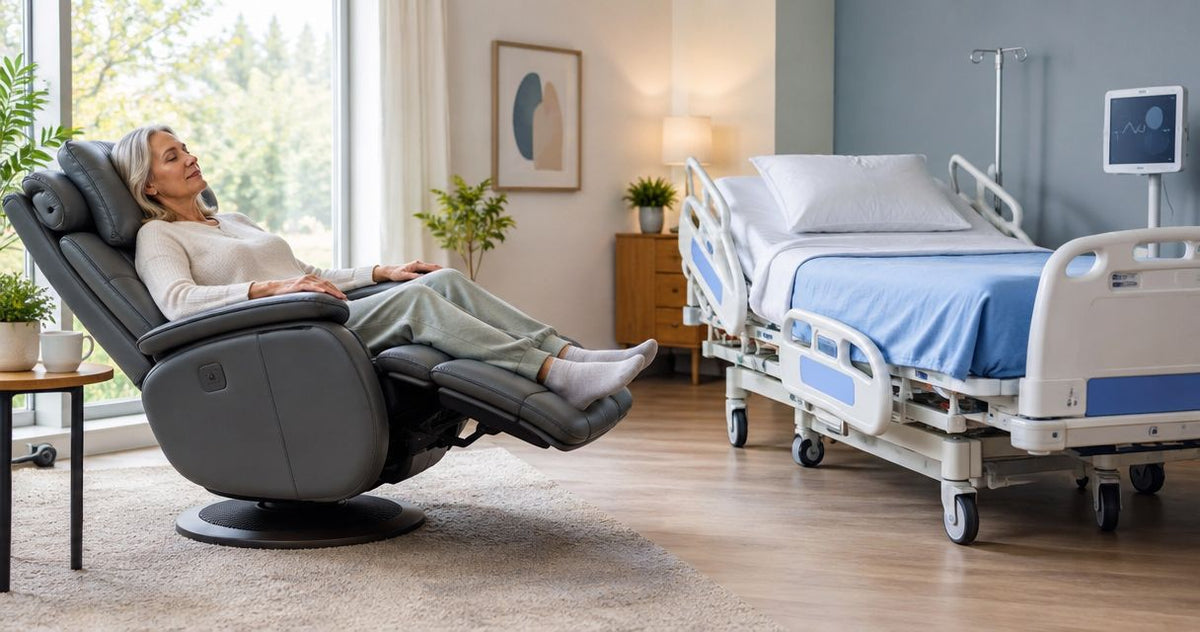
Aeva Vital's home recovery guides answer the direct question first: a zero gravity recliner cannot fully replace a hospital bed for patients who are bedridden, need side rails, or require wound-care positioning, but it works as a short-term stand-in for ambulatory patients recovering from surgery who mainly need elevated legs and a reclined back.
- A zero gravity recliner works as a temporary hospital bed alternative for ambulatory recovery, not for bedridden or fall-risk patients in 2026.
- Hospital beds offer head, foot, and full-height adjustment plus side rails; most zero gravity recliners offer neither.
- Medicare Part B typically pays 80% of approved durable medical equipment costs after the deductible, which covers hospital beds more consistently than recliners.
- Pair a zero gravity recliner with an adjustable bed base for a fuller recovery setup instead of treating either as a full substitute.
- Standard doorways run 32 inches clear width, and that measurement matters for both hospital bed delivery and recliner delivery.
Why this matters
Families setting up a recovery space after surgery, a fall, or a new mobility diagnosis often price a zero gravity recliner against a hospital bed rental and assume the cheaper, more comfortable-looking option covers the same ground. It doesn't, and the difference isn't cosmetic. Hospital beds are built around repositioning a body that can't reposition itself; recliners are built around a body that can still get in and out on its own, just with help from a chair.
Getting this wrong has real consequences: a patient left in a recliner without side rails overnight is a fall risk, and a caregiver trying to change a dressing or shift weight in a recliner without independent head/foot articulation is working against the furniture. Knowing which situations call for which piece of equipment in 2026 saves money and reduces injury risk.
Can a zero gravity recliner replace a hospital bed for recovery?
The honest answer depends on mobility level, not comfort preference. A patient who can still stand, pivot, and sit down independently is a reasonable candidate for a zero gravity recliner during recovery. A patient who needs to be turned, repositioned, or kept in a specific flat or semi-flat position for wound care is not.
Many post-surgical patients — hip replacement, cardiac procedures, spinal fusion — are actually told to avoid lying flat for the first weeks and to sleep in a reclined, legs-elevated position instead. That's exactly what a zero gravity recliner does well. See how one household set this up specifically for a hospital bed rail setup after surgery when a patient needed both pieces of equipment at once, not a single replacement.
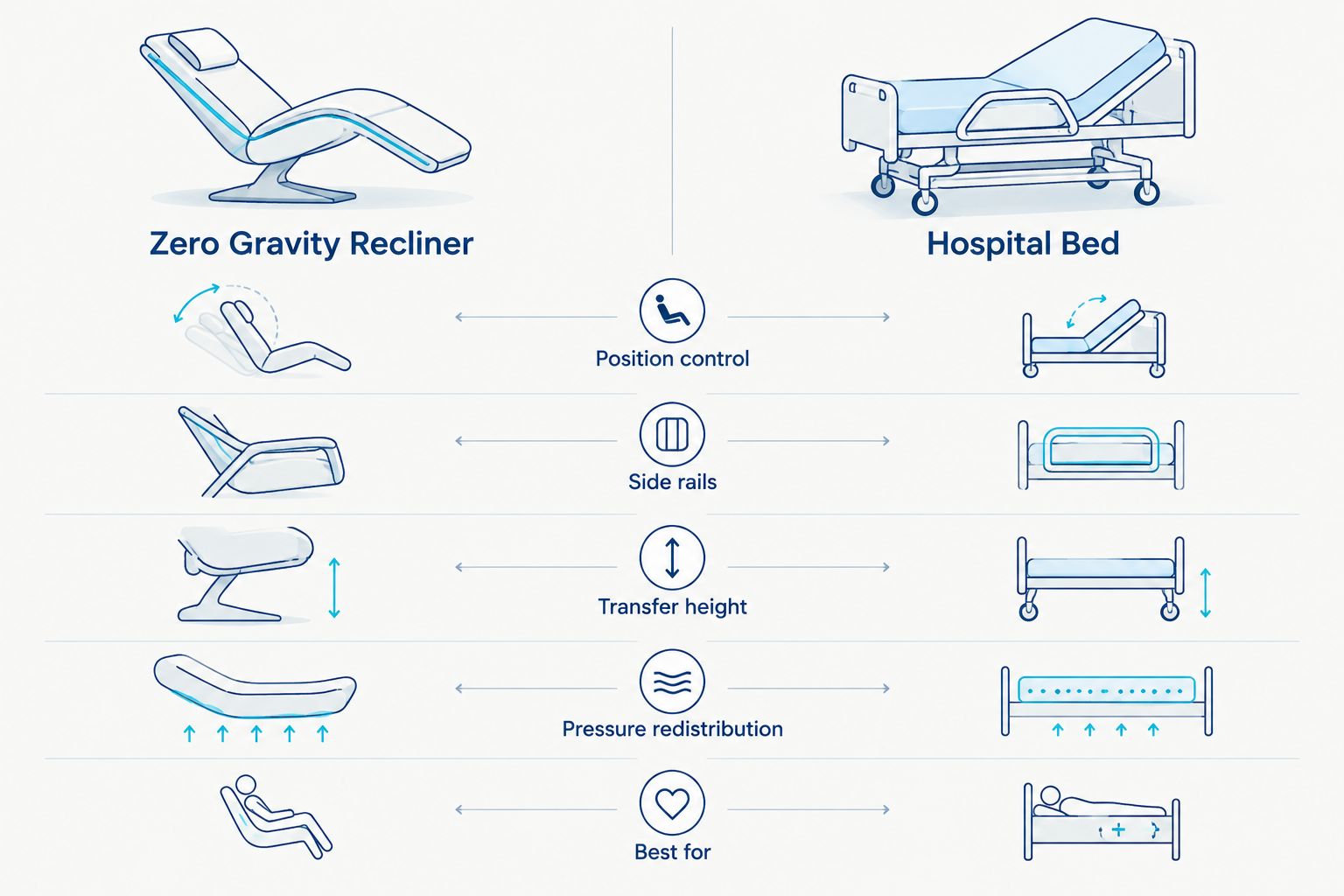
| Feature | Zero Gravity Recliner | Hospital Bed |
|---|---|---|
| Position control | Recline plus independent leg elevation | Head, foot, and full-bed height adjustment |
| Side rails | Not standard on most models | Standard, for fall prevention and repositioning |
| Transfer height | Fixed seat height; power lift assist available | Adjustable height built for bed-to-chair transfers |
| Pressure redistribution | General foam or hybrid cushioning | Specialty mattresses built for pressure-ulcer prevention |
| Best for | Ambulatory recovery, circulation, sleep apnea relief | Bedridden care, wound care, long-term immobility |
Why hospital beds and recliners serve different needs
The two products solve different physical problems, and the gap comes down to a handful of design factors:
- Repositioning independence. Hospital beds let a caregiver raise the head or foot section without moving the patient's whole body; a recliner only reclines as one unit.
- Fall protection. Side rails on a hospital bed prevent rolling out during sleep; almost no zero gravity recliner ships with rails.
- Pressure management. Hospital mattresses come in foam, gel, or alternating-pressure options built specifically to prevent bedsores during long immobile stretches.
- Transfer height. A hospital bed's adjustable height lines up with a wheelchair or standing frame for safer transfers; a recliner's seat height is fixed even with a power lift assist.
- Access for caregivers. Hospital beds are designed to be worked on from three sides for changing linens or dressings; recliners are built to be sat in, not worked around.
- Insurance classification. Medicare and most insurers classify hospital beds and power lift recliners under different durable medical equipment codes, which changes what gets reimbursed.
When a zero gravity recliner works as an alternative
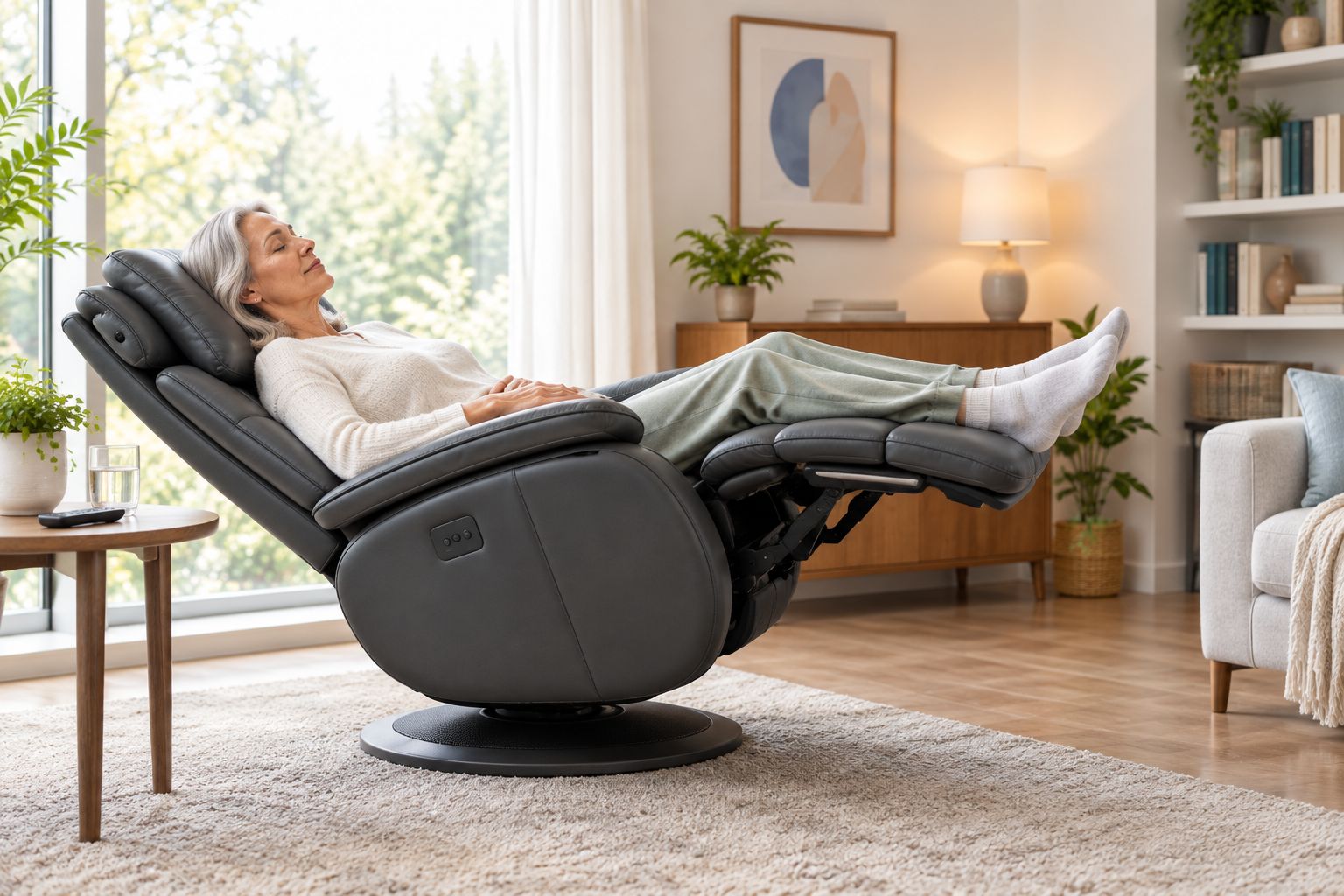
A zero gravity recliner is a legitimate stand-in when the patient is ambulatory, doesn't need to be turned by a caregiver, and mainly needs legs elevated above heart level to reduce swelling or ease breathing at night. This covers a lot of common recovery scenarios: knee and hip replacements, cardiac patients told to sleep upright, and people managing edema or mild sleep apnea.
Physical therapists often build short daily routines around the reclined, legs-up position specifically because it takes load off the lower back and hips without requiring a flat bed. One structured example is laid out in this home physical therapy routine using a zero gravity recliner, which walks through timing and positioning for daily use.
For patients who need more than a recliner alone but don't need a full hospital bed, an adjustable bed base bridges the gap. The Adjustable Bed Base Frame with zero gravity positioning, USB ports, and a nightlight gives independent head and foot articulation on a regular bed frame, which covers some of what a hospital bed does without the institutional look or the rails a bedridden patient would need.
When you still need a real hospital bed
If the patient can't reposition independently, needs to be turned every few hours to prevent pressure sores, requires a catheter or IV setup, or needs side rails for safety, no recliner covers that ground — zero gravity or otherwise. This is also true for patients who need to stay flat or semi-flat for extended periods after certain spinal or abdominal procedures, since a recliner's seated geometry doesn't replicate a true flat position.
“A zero gravity recliner elevates the legs above the heart; a hospital bed repositions the whole body for care the patient can't do for themselves.”
Insurance coverage tracks this same line. Medicare Part B typically covers 80% of approved durable medical equipment costs after the annual deductible, and hospital beds are approved DME when a physician documents medical necessity for positioning or repositioning that a regular bed or recliner can't provide. Coverage rules for lift chairs work differently and usually apply only to the seat-lift mechanism, not the whole chair — a distinction covered in more depth in the guide on Medicare coverage for lift chairs.
Is a lift chair the same as a hospital bed?
No, a lift chair is not the same as a hospital bed — a lift chair assists a person from seated to standing and reclines for comfort, while a hospital bed repositions a person who is lying down and includes side rails and height adjustment a lift chair doesn't have.
Does Medicare cover a zero gravity recliner instead of a hospital bed?
Medicare does not generally cover a zero gravity recliner as a hospital bed substitute; Part B may cover a portion of the lift mechanism on a power lift recliner under separate durable medical equipment rules, but a physician still needs to document medical necessity for a hospital bed if that's what the care plan requires.
Can you sleep in a zero gravity recliner every night?
Yes, sleeping in a zero gravity recliner every night is common practice for people managing edema, mild sleep apnea, or post-surgical positioning restrictions, though it's not a substitute for a hospital bed if the person also needs caregiver repositioning or side rails.
FAQ
Can a zero gravity recliner replace a hospital bed for elderly care at home?
A zero gravity recliner can replace a hospital bed only for ambulatory elderly patients who don't need repositioning or side rails; bedridden patients still need a true hospital bed in 2026.
What's the main difference between a hospital bed and a zero gravity recliner?
A hospital bed adjusts head, foot, and full-bed height independently and includes side rails, while a zero gravity recliner reclines as one unit and elevates the legs without rails.
Is a power lift recliner better than a hospital bed for post-surgery recovery?
A power lift recliner works better for ambulatory post-surgery patients who mainly need help standing and sleeping reclined, while a hospital bed works better for patients who need caregiver repositioning.
How much does a hospital bed cost compared to a zero gravity recliner?
Costs vary by model and features on both sides, and pricing should be checked against current listings rather than a fixed figure, since specifications and options change.
Do zero gravity recliners have side rails like hospital beds?
No, most zero gravity recliners do not include side rails, which is the main safety gap compared to a hospital bed for patients at risk of rolling or falling.
Can a zero gravity recliner fit through a standard doorway for delivery?
Most zero gravity recliners fit through a standard 32-inch clear doorway when delivered in sections or tilted, though bulkier power lift models should be measured against the doorway before ordering.
Does insurance pay for a zero gravity recliner the same way it pays for a hospital bed?
Insurance treats them differently: hospital beds are commonly approved durable medical equipment with documented medical necessity, while recliner coverage usually applies only to the seat-lift mechanism.
Can you use a zero gravity recliner and a hospital bed together during recovery?
Yes, many recovery setups use both: a hospital bed or adjustable bed base for overnight positioning and a zero gravity recliner for daytime sitting and leg elevation.
One last thing
The question isn't really "recliner or hospital bed" — it's whether the person can still reposition their own body. If they can, a zero gravity recliner covers most of what matters for comfort and circulation in 2026. If they can't, no recliner closes that gap, and pairing a recliner with an adjustable bed base rather than treating one as a full substitute for the other is the setup that actually holds up over a multi-week recovery.