
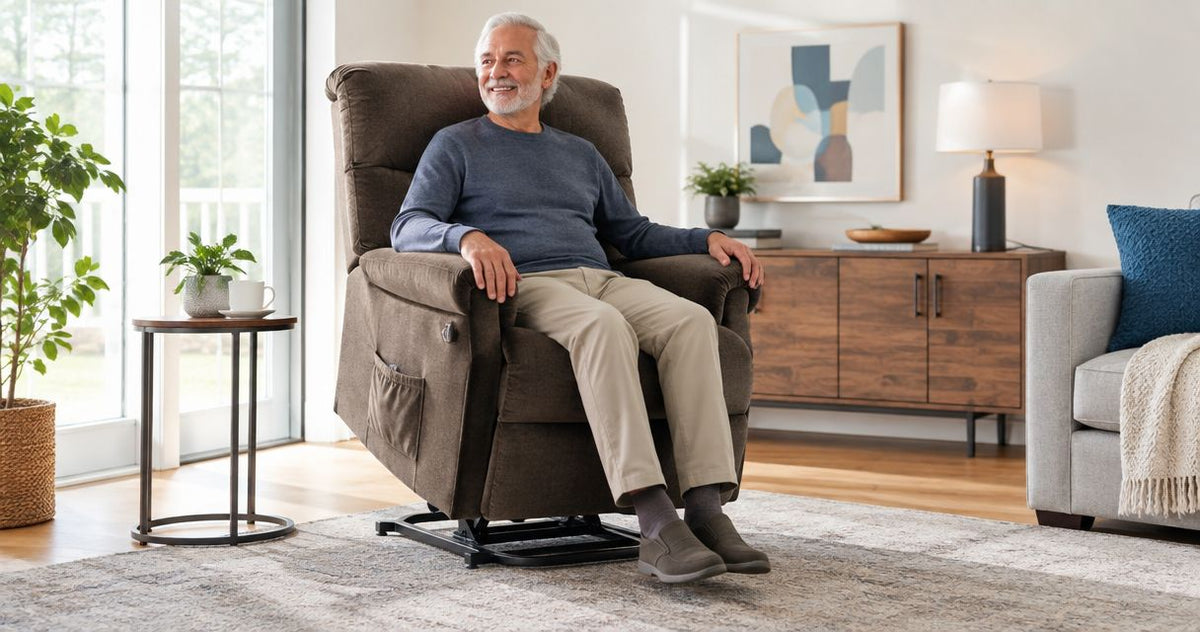
Lift chairs ranked by weight capacity fall into three tiers in 2026: standard, heavy-duty and bariatric. Best overall for most buyers: the standard tier. Best for users near or above the standard limit: heavy-duty. Best for the highest loads: bariatric. Pick the tier from the rated limit and the user's weight, never from the chair's looks.
By Editorial Team
- Lift chairs ranked by weight capacity in 2026 split into standard, heavy-duty and bariatric tiers.
- Standard chairs are commonly rated around 250 to 350 lb; heavy-duty chairs reach roughly 500 lb.
- Bariatric lift chairs start near 500 lb. Buy the tier that leaves a clear margin above the user's weight.
- The rating covers the frame and motor. Seat width, foam and the delivery path still decide fit.
Why weight capacity decides the purchase
A lift chair is a motorized recliner with a lift mechanism that tilts the whole seat forward to help someone stand. That mechanism moves the user's full body weight through a motor, a lift frame and a set of pivot points. The weight rating is the manufacturer's limit for that system.
Exceeding the rating does not fail gracefully. A motor that strains runs hot, slows down and wears faster. A frame that flexes loosens at its joints. The rating is the one number that protects the purchase, so rank chairs by it first and by upholstery second.
Aeva Vital's guide to how much weight a lift chair can hold covers the mechanics in more detail. This page ranks the tiers so you can narrow the field fast in 2026.
What makes a lift chair rank high on capacity
A rated limit means little without the build behind it. Judge each chair on these criteria:
- Rated weight limit. The number printed on the specification sheet, stated in pounds for the user.
- Frame construction. Hardwood or heavy-gauge steel frames carry load better than thin particleboard sections.
- Motor and lift mechanism. Heavier users need a motor rated for the load, not just a frame that holds still.
- Seat width and depth. Capacity and seat dimensions travel together. A high rating on a narrow seat is a poor fit.
- Cushion support. High-density foam keeps its shape under load; soft foam bottoms out.
- Delivery path. A heavy chair that cannot enter the room is useless. See the guide on whether a lift chair fits through a standard doorway.
Lift chair weight capacity tiers at a glance
The ranges below reflect commonly published category norms. Every manufacturer sets its own limit, so confirm the exact figure on the specific model before buying.
| Rank | Tier | Typical rated capacity | Best for | Key limitation |
|---|---|---|---|---|
| 1 | Bariatric | About 500 lb and above | Users at the top of the weight range | Wider footprint, harder delivery |
| 2 | Heavy-duty | Roughly 350 to 500 lb | Users near the standard limit | Fewer fabric and style options |
| 3 | Standard | Roughly 250 to 350 lb | Most average-weight users | Not built for sustained heavy loads |
The table ranks by capacity, as the title promises. Capacity ranking is not a quality ranking: a bariatric chair is the wrong choice for a user well inside the standard range, because the larger seat gives less side support to a smaller body.
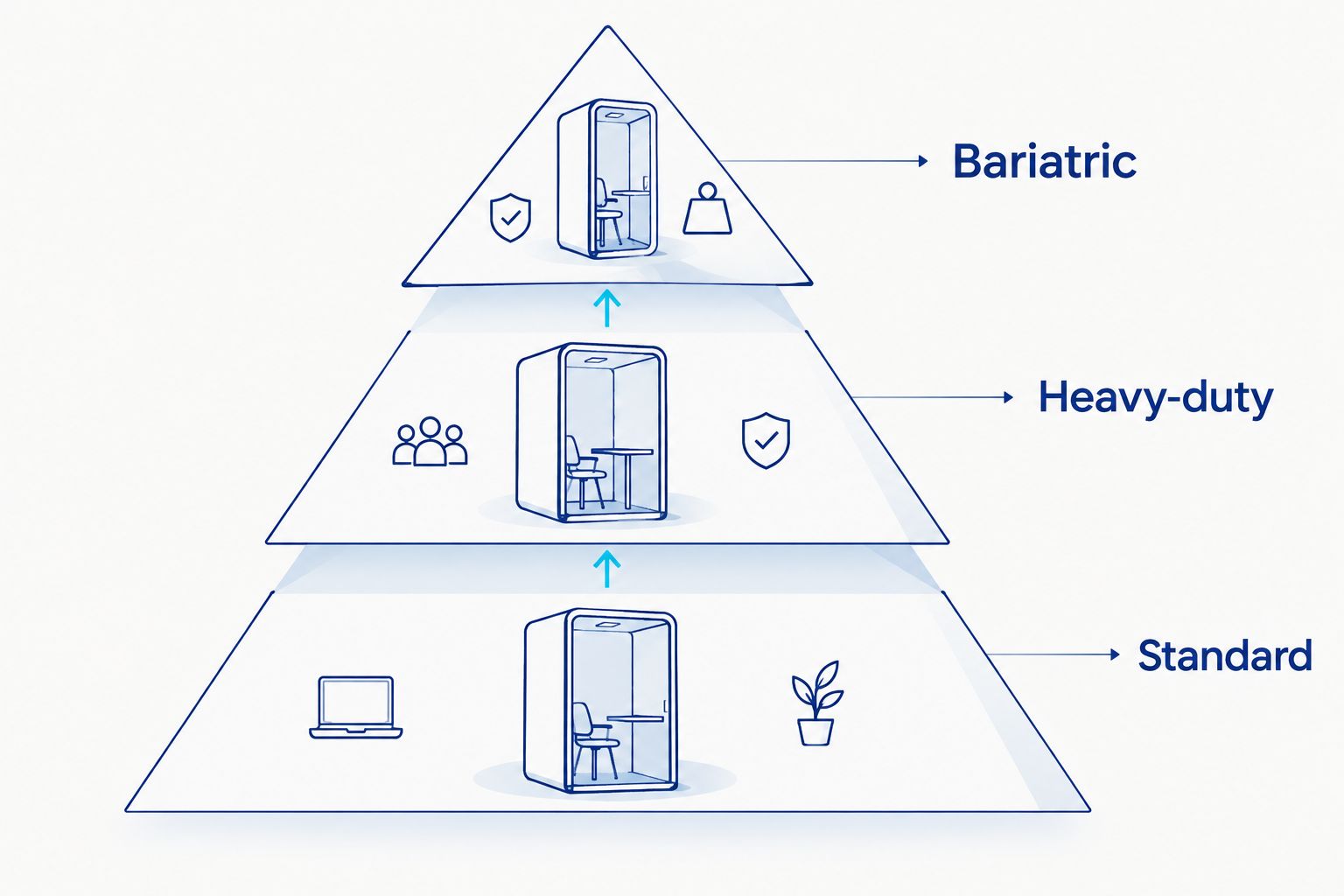
1. Bariatric lift chairs: best for the highest loads
Bariatric lift chairs are built for users at the top of the weight range. They use reinforced frames, heavier-duty lift mechanisms and wider seats. Ratings commonly begin around 500 lb, and some models go beyond that.
Bariatric pros:
- Highest rated limits in the category.
- Wider seat spreads load and keeps the user stable through the full lift.
- Reinforced frame built for daily use at the rating, not just occasional peaks.
Bariatric cons:
- Larger and heavier, so delivery and room fit take planning.
- Footprint can overwhelm a small room.
- Fewer styles and fabrics than standard models.
Bariatric best for: users at or above the heavy-duty ceiling, and anyone who needs a wide seat regardless of weight.
Verdict: Buy if the user is near or past the heavy-duty ceiling. Skip if the user is well inside the standard range.
2. Heavy-duty lift chairs: best for users near the standard limit
Heavy-duty lift chairs sit between standard and bariatric. Ratings commonly fall in the 350 to 500 lb band. They carry a stronger motor and frame than a standard chair without the footprint of a bariatric model.
This tier fits the user who is just past the standard limit or close enough that a margin matters. It is also the tier where families most often overbuy or underbuy, so read the rating line and not the marketing name.
Heavy-duty pros:
- Real margin for users above the standard range.
- Room-friendly footprint compared with bariatric chairs.
- More upholstery and style choices than bariatric models.
Heavy-duty cons:
- Usually costs more than a standard model of similar style.
- Labeling varies by manufacturer, so a chair called heavy-duty may carry a rating that overlaps with standard.
Heavy-duty best for: users who are over the standard limit or want a safety margin for long-term daily use.
Verdict: Buy for the middle of the weight range. Hold until you confirm the exact rating on the spec sheet.
3. Standard lift chairs: best for most buyers
Standard lift chairs cover the widest share of users and the widest range of styles. Ratings commonly land between 250 and 350 lb. This tier carries the most fabrics, sizes and feature combinations, from heat and massage to zero-gravity positions.
If the user's weight sits comfortably under the rating, a standard chair is the correct purchase. Spending more on a higher tier buys capacity the user will never use. Compare options in Aeva Vital's roundup of the best lift chairs.
Standard pros:
- Widest choice of styles, fabrics and features.
- Smaller footprint fits apartments and bedrooms.
- Lowest entry cost of the three tiers.
Standard cons:
- Not built for loads at the top of the range.
- A rating at the low end of the tier leaves little margin.
Standard best for: users well under the rated limit who want features and style options.
Verdict: Buy with a clear margin. Skip if the user is within a few pounds of the rating.
How we ranked
The ranking orders tiers by rated capacity alone, highest first, as the title states. Each tier was then checked against the criteria above: frame, motor, seat width, cushion support and delivery path. The "best for" labels assign each tier one distinct user so the list works as a decision tree rather than a leaderboard.
How to read a lift chair spec sheet
The weight limit is one line on the spec sheet, and it only makes sense next to the lines around it. Read these together:
- Weight capacity. The user limit in pounds. If a sheet lists two numbers, ask the seller which one applies to the person sitting.
- Seat width and seat depth. The usable sitting area between the arms and from the backrest to the front edge.
- Seat height. Affects how far the lift has to travel and how easily feet reach the floor.
- Overall dimensions, upright and reclined. Decides whether the chair fits the room once it is open.
- Wall clearance. How far from the wall the chair must sit to recline fully.
A spec sheet that lists capacity but omits seat dimensions is incomplete. Ask for the missing figures before ordering, because capacity without seat size cannot tell you whether the chair fits the person.
How to apply the rating to your own situation
The rating is a ceiling, not a target. Use this sequence:
- Start with the user's current weight. Include clothing and anything carried into the chair, such as a tablet or blanket.
- Leave a clear margin. Pick a rating comfortably above the user's weight, and a larger margin if weight is changing.
- Check who else will sit. Caregivers and partners sometimes perch on the arm or seat edge. Check the manufacturer's guidance on shared use.
- Match seat width to body width. A wide user in a narrow seat is uncomfortable; a slim user in a wide seat loses side support.
- Confirm the delivery path. Measure doors, hallways and stairs before ordering.
Seat dimensions matter more than most buyers expect. A rating tells you the chair survives the load; seat width and depth tell you the user can actually sit, lean back and stand from it.
What the weight rating does not prove
A rating is a manufacturer's declaration. It is not an independent certification, and it does not guarantee comfort, lift angle or fit.
It also says nothing about long-term durability at the limit. A chair loaded to its full rating every day works its motor and joints harder than the same chair carrying a lighter user. That is why the margin rule matters. For budget context, see the guide on how much a lift chair costs.
The rating also assumes the chair is assembled correctly and kept in good repair. Loose bolts, worn cords and damaged upholstery all cut into real-world capacity. Follow the manufacturer's care and inspection guidance through 2026 and beyond.
Which lift chair tier should you choose in 2026?
- User comfortably under the standard rating: standard tier.
- User near or just above the standard rating: heavy-duty tier.
- User at the high end of the weight range, or needing a wide seat: bariatric tier.
- Unsure between two tiers: pick the higher tier only if the seat dimensions still fit the user.
The default for 2026 is simple. Buy the lowest tier that leaves a clear margin above the user's weight. Anything lower strains the motor; anything much higher wastes money and floor space.
FAQ
What is the weight limit on most lift chairs?
Most standard lift chairs are commonly rated around 250 to 350 lb. The exact limit varies by manufacturer, so confirm it on the specific model's spec sheet.
What is the highest weight capacity for a lift chair?
Bariatric lift chairs carry the highest ratings, starting near 500 lb and going higher on some models. Check the manufacturer's stated limit before ordering.
Are heavy-duty lift chairs the same as bariatric lift chairs?
No. Heavy-duty chairs sit between standard and bariatric, with ratings commonly in the 350 to 500 lb band. Bariatric chairs start higher and have wider seats.
Is it safe to use a lift chair near its weight limit?
A chair is designed to work up to its rating, but daily use at the limit wears the motor and frame harder. Choose a rating with a clear margin above the user's weight.
Does the weight rating include a second person?
The rating covers the total load on the chair. A second person sitting on the seat or arm adds to it, so check the manufacturer's guidance on shared use.
Does seat width matter as much as weight capacity?
Yes. Capacity says the chair can carry the load; seat width decides whether the user sits and stands comfortably.
Will a heavy lift chair fit through my door?
Not always. Measure doorways, hallways and turns before ordering, and compare them against the chair's boxed and assembled dimensions.
One last thing
Write the user's weight and the chair's rated limit side by side on the same line before you order. If the gap looks thin, move up a tier and recheck the seat width. That one check prevents most weight-related lift chair problems in 2026.