

Allow about 30 nights to break in a new hybrid mattress; a commonly recommended adjustment window is 30–60 nights. That window covers both the comfort layers settling with use and you adjusting to a different sleeping surface—not the separate unpacking and expansion period. Do not wait out worsening pain, visible damage, or a return deadline just to complete a break-in period.
By Editorial Team
- How long to break in a new mattress: allow 30–60 nights, following the manufacturer's instructions.
- Hybrid mattress break-in and unpacking expansion are separate processes; expansion alone does not establish comfort.
- Aeva Vital offers hybrid mattresses; choose by construction and fit, not a promised adjustment deadline.
- Check your foundation, pillow, and return terms before deciding that firmness is a break-in problem.
How long does it take to break in a new hybrid mattress?
Use 30–60 nights as a general assessment window, not a guarantee that an uncomfortable mattress will become comfortable. Mattress comfort layers can feel different after repeated use, while a change from your previous bed also takes adjustment. Neither process makes every firmness level suitable for every sleeper.
For a mattress purchase in 2026, the manufacturer's setup instructions and written return terms take priority over a general timeline. Check when the assessment period starts, whether a minimum-use requirement applies, and when you must request a return. Those are separate questions.
If the main issue is firmness, start with the distinction between feel and support. The guide to hybrid mattresses ranked by firmness level covers that selection topic; waiting longer is not a substitute for choosing an appropriate feel.
| Stage | What you are assessing | What it does not establish | Best for |
|---|---|---|---|
| Unpacking and expansion | Whether the mattress has reached its intended shape according to its instructions | Whether it suits your sleeping position | Confirming setup before use |
| Around 30 nights of regular use | Whether initial unfamiliarity and comfort-layer feel are changing | A guaranteed end to discomfort | Reviewing your early comfort trend |
| Up to 60 nights of regular use | Whether comfort is improving enough to justify continued assessment | Permission to miss a return deadline | Assessing an improving mattress within its actual terms |
| Any stage with damage or worsening symptoms | Whether the mattress, foundation, or your health needs attention | A normal adjustment phase | Acting promptly rather than waiting |
Why this matters
A new mattress can feel wrong for different reasons. You might be comparing it with an old mattress that has softened, using an unsuitable foundation, or sleeping with a pillow that no longer fits your position. These problems need different responses.
Break-in is a period of assessment, not a repair method. It does not correct broken support, make an incompatible frame suitable, or guarantee relief from pain. Keep those boundaries clear when deciding whether to continue using the mattress.
Expansion, break-in, and personal adjustment are different
Expansion happens after unpacking
A compressed mattress needs to recover its intended shape after you remove its packaging. Follow its instructions for positioning, ventilation, and when to begin sleeping on it. There is no single expansion deadline that applies to every hybrid mattress.
Check the surface and edges before use. If the mattress remains visibly misshapen beyond the manufacturer's stated expansion period, document the issue and contact the seller rather than treating it as ordinary break-in.
Break-in concerns the sleeping surface
A hybrid mattress combines a spring support system with comfort materials above it. Repeated loading can change how those upper materials feel. The type and construction of those materials matter more than the hybrid label alone.
Some change in surface feel does not mean that the support system should lose its shape. A persistent hollow, damaged edge, or unstable base deserves inspection rather than an assumption that the mattress is settling normally.
Personal adjustment concerns your experience
Moving from a softened old bed to a new surface changes the way your body meets the mattress. Your usual pillow and sleeping position can also feel different. That unfamiliarity is distinct from the mattress physically changing.
You cannot reliably separate these processes from a single night. Look for a repeatable trend in comfort, ease of changing position, and how you feel on waking. Do not interpret every uncomfortable morning as proof that the mattress needs more time.
Why hybrid mattress break-in varies
These factors explain why a general window cannot predict your individual result:
- Comfort-layer construction: Foam and other cushioning materials respond differently to loading. The word hybrid does not identify their density, thickness, or formulation.
- Starting firmness: A firm mattress remains a firm-category mattress even if its surface becomes less unfamiliar. Break-in does not promise a change into a different firmness category.
- Regular use: A mattress used intermittently receives different loading from one used every night. Calendar time alone does not describe how much you have slept on it.
- Room temperature: Temperature-sensitive foams can feel different in cooler and warmer conditions. Keep the room reasonably consistent when comparing nights.
- Foundation condition: A damaged or unsuitable base changes how the mattress supports you. Follow the mattress maker's requirements rather than assuming any frame will work.
- Sleeping position and pillow: Your shoulders, hips, and head meet the bed differently in each position. A pillow suited to your old mattress can complicate the assessment of your new one.
Changing several of these factors together makes the result harder to interpret. Correct a clear setup problem first, then assess comfort without repeatedly rebuilding the entire sleep setup.
How to assess a new mattress without forcing the process
Use this sequence for your 2026 mattress assessment. The aim is to establish whether comfort improves under normal use, not to accelerate wear.
- Check setup. Read the unpacking instructions and foundation requirements. Confirm that the base is assembled correctly, stable, and free of obvious damage.
- Use consistently. Sleep on the mattress normally once the instructions permit it. Avoid jumping, concentrated kneeling, or other attempts to force the materials to soften.
- Record comfort. Make a brief morning note about pressure, ease of movement, warmth, and any discomfort. Record where a problem occurs rather than writing only that the bed feels bad.
- Review fit. Compare your notes with your usual sleeping position, pillow, and foundation. An improving trend supports continued assessment; an unchanged problem calls for a closer review.
- Check terms. Revisit the written return and warranty information before its deadlines. Ask the seller about an unresolved issue while you still have time to act.
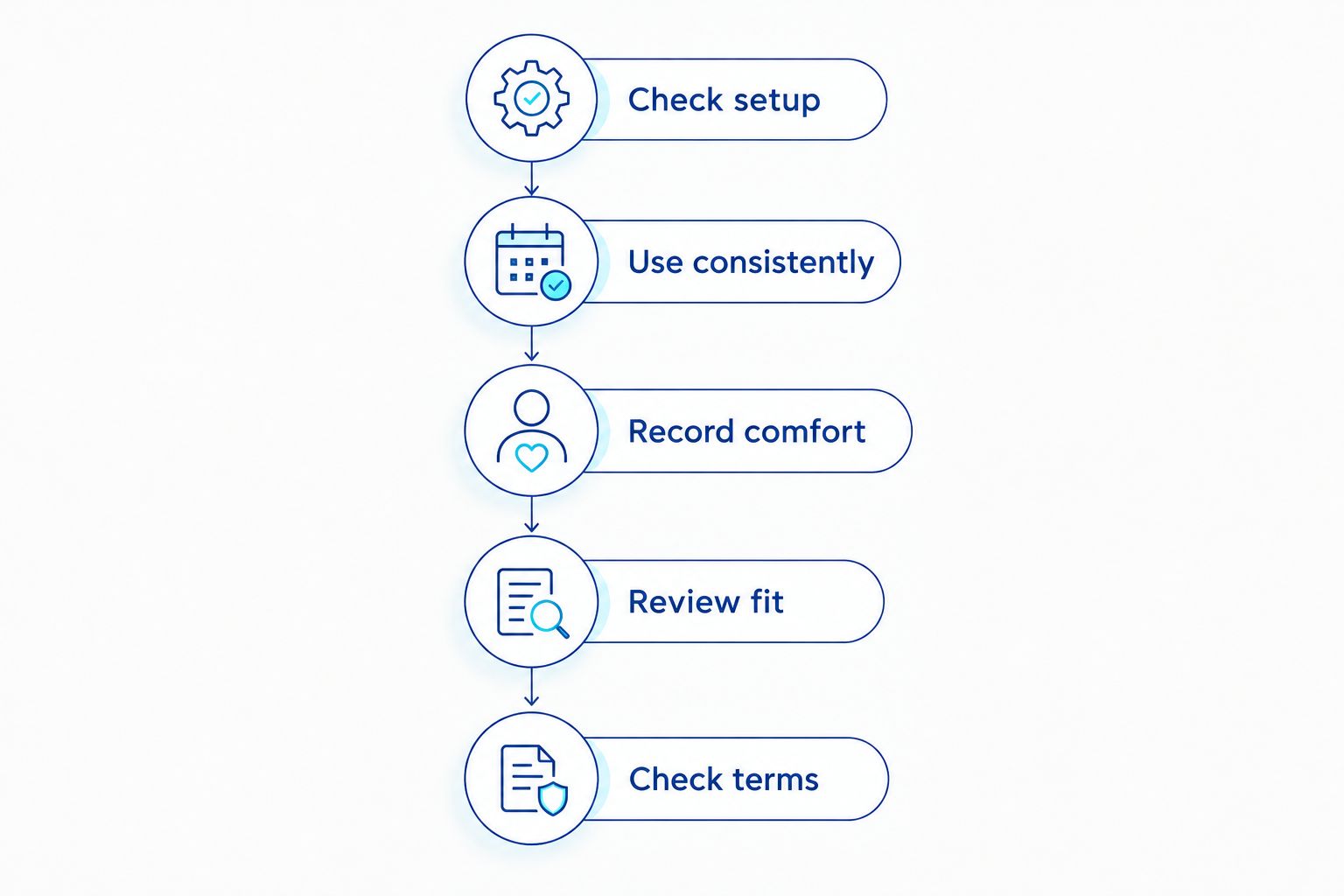
Keep your notes simple enough to maintain. A useful entry distinguishes shoulder pressure from difficulty turning over, because those observations point to different aspects of fit. You do not need a sleep tracker to notice whether the same problem keeps returning.
What to check around 30 nights
At 30 nights, review whether the mattress feels more comfortable, less comfortable, or essentially unchanged. This is a practical checkpoint within the general break-in window, not a universal manufacturer requirement.
Ask whether you can settle into your usual position without repeatedly moving to escape pressure. Check whether turning over feels manageable and whether the pillow supports your head comfortably. These observations are more useful than trying to determine whether the mattress has technically finished breaking in.
If comfort is improving and no deadline or safety issue requires action, continued assessment is reasonable. If the same pressure or support problem persists, contact the seller and review your options rather than assuming another stretch of use will solve it.
What to check by 60 nights
By 60 nights, assess the mattress you actually have, not the softer mattress you hope it will become. A general break-in window does not justify indefinite waiting or override a shorter return period.
Persistent discomfort is a reason to reconsider fit and setup. It is not proof of a defect, and a mattress that suits another person is not necessarily suitable for you. Separate a preference mismatch from visible damage when describing the issue to the seller.
For a 2026 purchase, save the relevant order documents and written terms. Photographs help document visible problems; comfort notes help explain a recurring experience. Neither substitutes for the seller's actual assessment process.
Can you make a hybrid mattress break in faster?
Normal use is the appropriate approach; do not jump on the mattress or apply concentrated force to soften it. Follow the care instructions for rotation and handling, and do not flip a mattress unless its construction and instructions permit it.
Avoid adding heat or moisture as a break-in technique. These actions are not substitutes for ordinary use and introduce avoidable risks to the materials. A mattress that needs aggressive treatment to feel acceptable deserves a fit review instead.
A topper can change surface comfort, but it also changes what you are assessing. If you add one, record that change and check whether it affects any return requirements. Do not assume a topper corrects an unsuitable support system.
Is pain normal when you switch mattresses?
Do not treat worsening pain as a required part of mattress break-in. Unfamiliarity and pain are not interchangeable, and a general adjustment window is not medical advice.
Seek medical advice for persistent or worsening symptoms, particularly when they affect normal activity or sleep. Report visible mattress or foundation problems separately to the seller. Waiting for a mattress to soften is not an appropriate response to a health concern.
What an Aeva Vital hybrid mattress specification tells you
Aeva Vital suits shoppers looking for hybrid mattresses alongside home wellness equipment. That describes the range's relevance, not a guarantee of comfort, recovery, or a particular adjustment time.
The supplied product information names the SpineAlign 12" Queen Firm Cooling Hybrid Mattress and describes high-density foam with individually wrapped coils. Its 12-inch designation identifies the stated mattress profile. The firm designation identifies its intended feel category; neither figure establishes how quickly you will find it comfortable.
High-density foam describes a material characteristic, not a proven break-in deadline. Individually wrapped coils describe how the springs are constructed, not a medical outcome. Likewise, Cooling in the product name does not establish a temperature reduction or guarantee that every sleeper will feel cool.
When evaluating an Aeva Vital hybrid mattress in 2026, check the current model's complete care instructions, foundation requirements, and written purchase terms. The construction description helps you understand the design, but your assessment still needs to distinguish surface comfort from support and personal preference.
FAQ
How long to break in a new mattress if it is a hybrid?
Allow about 30–60 nights as a general assessment window for a new hybrid mattress. Follow its manufacturer's instructions and act before any applicable return deadline.
Can I sleep on a new hybrid mattress the first night?
Sleep on a new hybrid mattress only when its unpacking instructions permit it. Expansion and comfort adjustment are separate processes, so do not assume every mattress is ready immediately.
Will a firm hybrid mattress become soft after breaking in?
A firm hybrid mattress is not guaranteed to become soft after break-in. Some surface feel can change with use, but that does not promise a different firmness category.
Should I keep a new mattress if my back hurts?
Do not keep using an uncomfortable mattress solely to complete a break-in window. Check the foundation and fit, review your return terms, and seek medical advice for persistent or worsening pain.
Does walking or jumping on a mattress help break it in?
Do not jump on a mattress or use concentrated force to accelerate break-in. Use it normally and follow the manufacturer's handling and care instructions.
Should I rotate my new hybrid mattress?
Rotate a new hybrid mattress only as its care instructions recommend. Do not assume that permission to rotate also means permission to flip it.
Does a 12-inch hybrid mattress need a longer break-in period?
A 12-inch profile alone does not establish a longer break-in period. Comfort-layer materials, construction, use, and your response matter more than total height alone.
What if my new mattress is still uncomfortable after 60 nights?
After 60 nights, reassess fit and contact the seller rather than assuming more time will solve persistent discomfort. Your actual return deadline takes priority over the general assessment window.
Related guides
- 12 vs 13 vs 14 inch mattress thickness guide
- Best hybrid mattress for couples
- Can you use a regular mattress on an adjustable bed frame?
One last thing
An old mattress is a reference point, not a comfort standard. Before your 2026 assessment begins, record what you wanted to change about the old bed; otherwise, you risk judging the new mattress only by how closely it reproduces a familiar problem.