
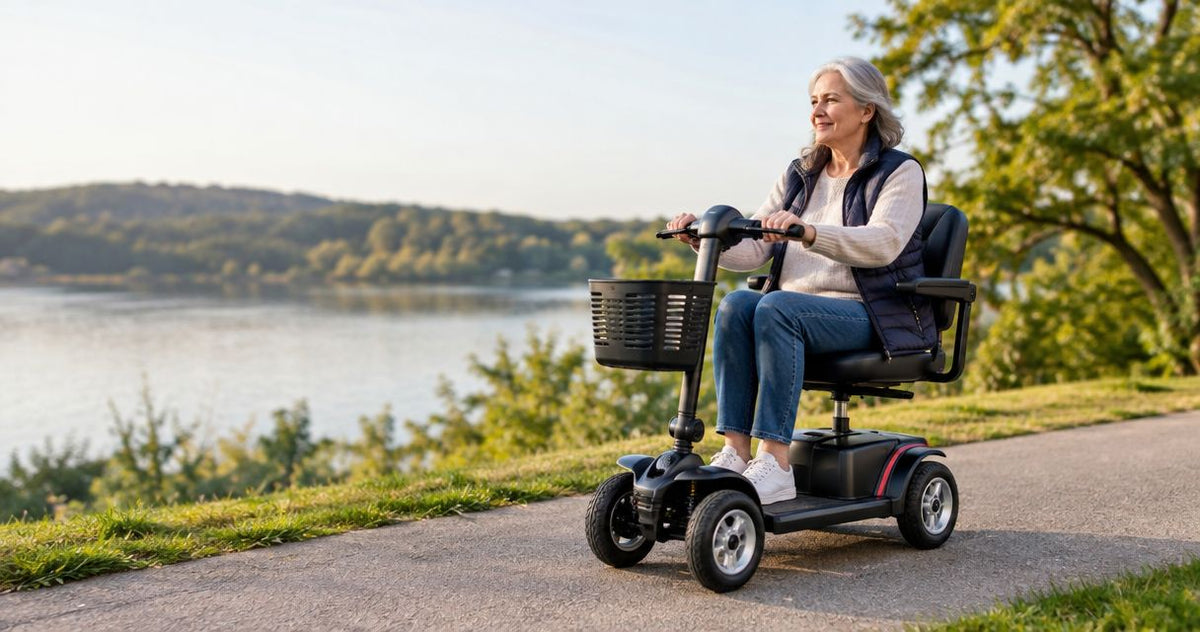
Most mobility scooters travel 15 miles on a single charge in 2026, with real-world range spanning 8 to 40 miles depending on scooter class and battery type. That estimate assumes flat pavement, mild temperatures and a rider within the scooter's weight range — hills, cold weather and an aging battery bring the number down fast.
- Most mobility scooters travel 8 to 40 miles on a single charge in 2026, depending on class and battery.
- Travel and folding scooters average 8 to 15 miles; heavy-duty four-wheel models reach 25 to 40 miles.
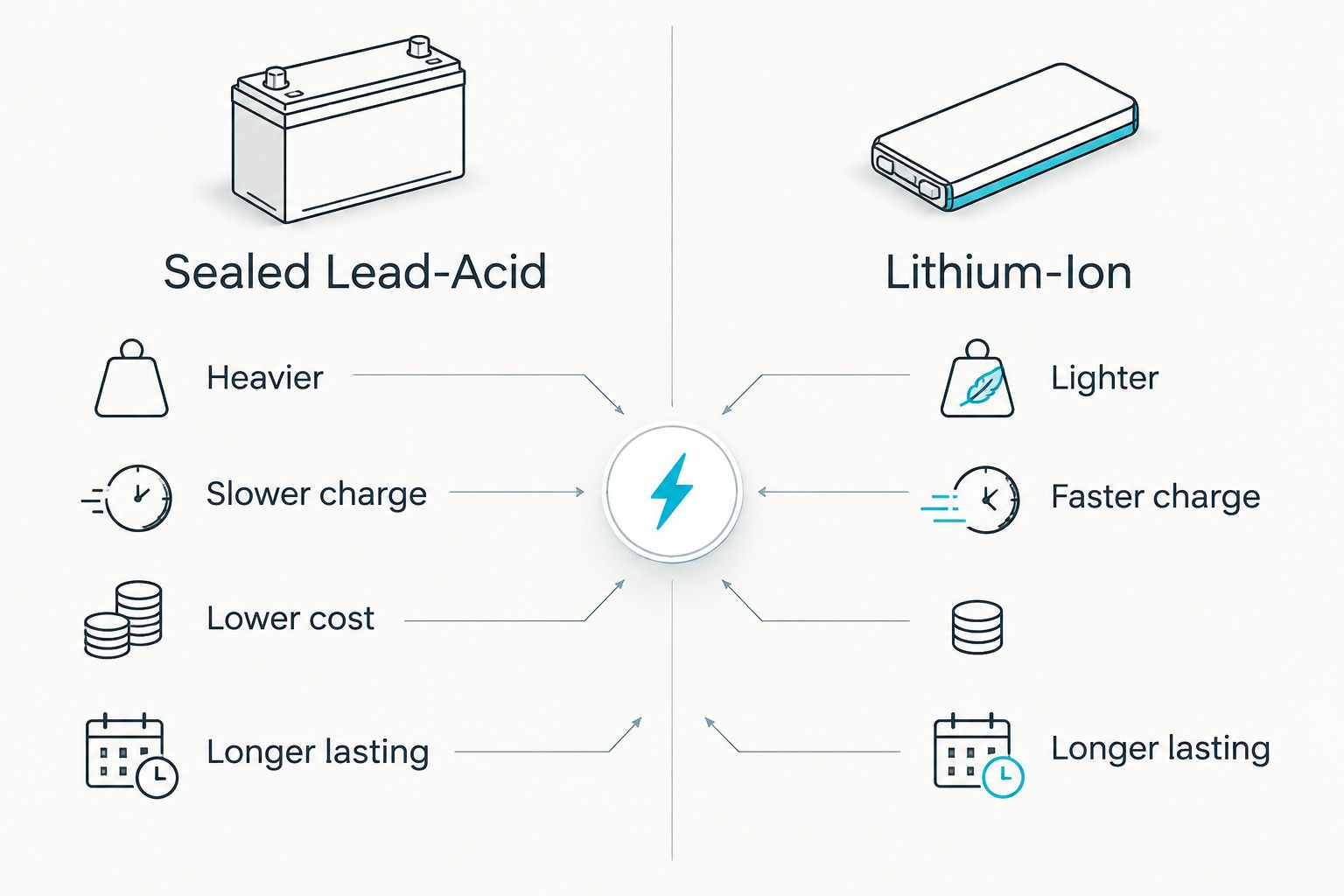
- Lithium-ion batteries hold range longer and charge faster than sealed lead-acid batteries but cost more upfront.
- Hills, cold weather, rider weight near the scooter's limit, and an aging battery cut real-world range below the spec sheet number.
- A consistent home charging routine protects battery life and keeps range closer to the rated figure over time.
Why this matters
Range decides whether a scooter gets you to the mailbox and back or handles a full day of errands, medical appointments and a grocery run without a mid-trip charge. Buying on the wrong class means either paying for battery capacity you never use or running out of charge two blocks from home.
The number on a spec sheet is a lab figure, not a promise. If range is the deciding factor in your purchase, the mobility scooter cost guide breaks down how battery size and scooter class move price alongside range, since the two rarely move independently.
How far can a mobility scooter travel on a single charge?
Range is a function of three things: how big the battery pack is, what chemistry it uses, and how much weight and terrain the motor has to push through. Manufacturers publish a single number tested under ideal lab conditions — flat ground, moderate speed, a rider near the middle of the weight range. Real trips rarely match that exactly, which is why the honest answer is a range, not a single figure.
| Scooter Class | Typical Range | Common Battery Type | Best For |
|---|---|---|---|
| Travel/Portable (3-wheel, foldable) | 8-15 miles | Sealed lead-acid or lithium | Errands, air travel, short outdoor trips |
| Mid-size (4-wheel) | 15-20 miles | Sealed lead-acid or lithium | Daily errands, moderate outdoor terrain |
| Heavy-duty/Full-size | 25-40 miles | Dual lead-acid or lithium packs | Long outings, rougher terrain, higher weight capacity |
Travel scooters: 8 to 15 miles per charge
Folding, three-wheel travel scooters carry the smallest battery packs because the whole point of the design is portability — a pack light enough to lift into a trunk holds less energy. 8 to 15 miles per charge is normal for this class, which covers a grocery trip or an afternoon at a mall but not a full day away from an outlet.
Mid-size scooters: 15 to 20 miles per charge
Four-wheel mid-size scooters split the difference: bigger battery compartments than travel models, without the bulk of a full heavy-duty frame. 15 to 20 miles per charge is the typical spec here, enough for a half-day of errands with some buffer left for hills or a cold morning.
Heavy-duty scooters: 25 to 40 miles per charge
Full-size and heavy-duty scooters carry larger single packs or dual battery setups built for higher weight capacities and rougher outdoor terrain. 25 to 40 miles per charge puts these in range for a full day outdoors, though the added battery weight and larger frame make them harder to transport in a standard car trunk — worth checking against a guide to transporting a mobility scooter in your car before buying one of these for regular travel.
Why mobility scooter range varies
The spec sheet number and your actual mileage rarely match exactly. These are the factors that move the gap:
- Battery chemistry — lithium-ion batteries hold their charge curve more evenly and resist the range loss that sealed lead-acid batteries show as they age.
- Rider weight relative to capacity — a rider near the scooter's upper weight limit draws more current per mile than one well under it.
- Terrain and incline — hills and gravel demand more motor power per mile than flat pavement, cutting range noticeably on hilly routes.
- Outdoor temperature — cold weather reduces the energy a battery can deliver before it needs a recharge, a known characteristic of both lead-acid and lithium cells.
- Tire type and inflation — solid tires and underinflated pneumatic tires increase rolling resistance and shorten range compared to properly inflated tires.
- Speed setting and stop-start driving — frequent acceleration from a stop uses more energy than steady cruising at a lower speed.
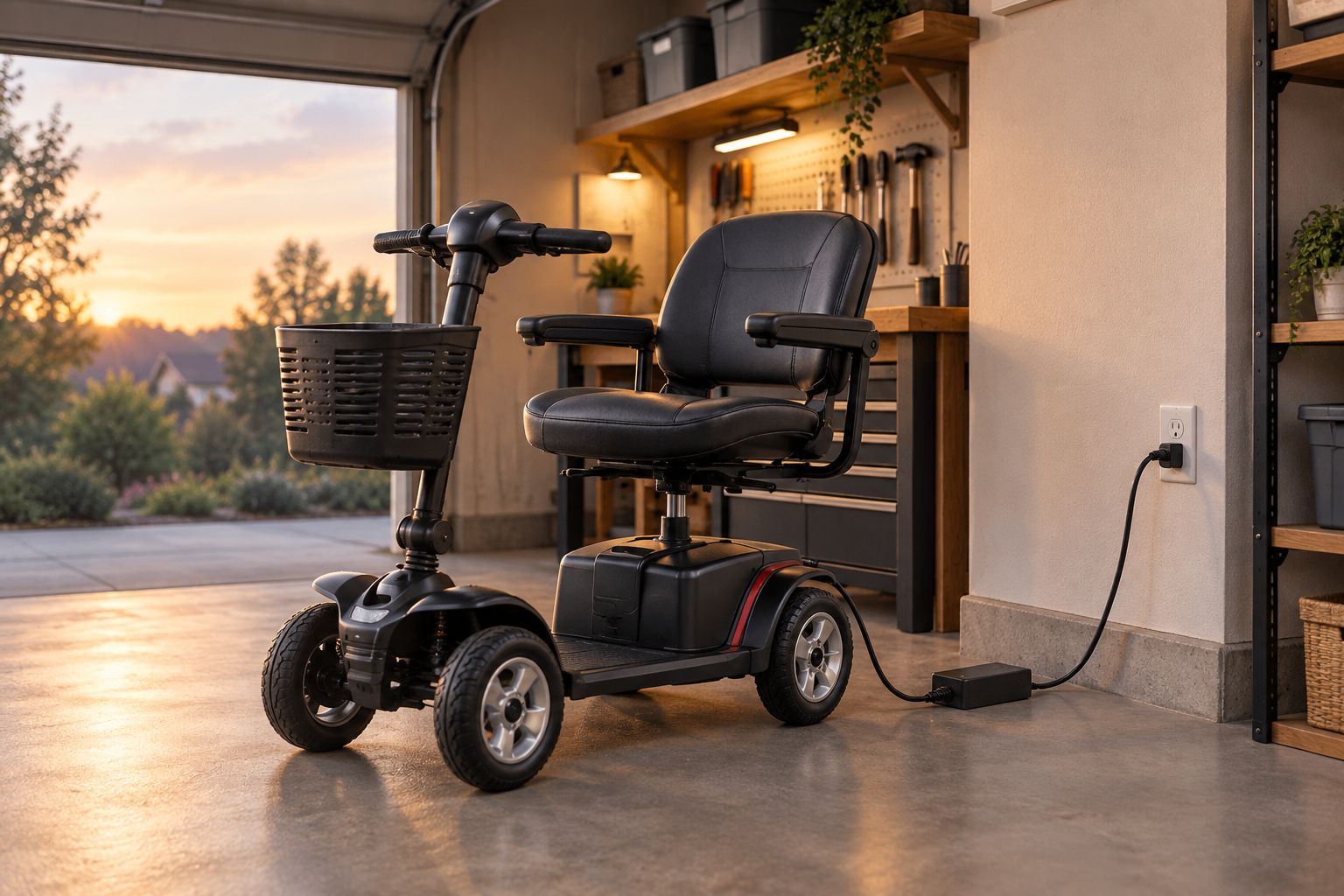
A consistent charging habit protects the battery pack that determines all of the above. Setting up a home charging station for a mobility scooter in a dedicated, temperature-stable spot keeps the battery closer to its rated output for longer.
Related questions
How long does it take to charge a mobility scooter battery?
Most mobility scooter batteries take 6 to 8 hours to reach a full charge from empty. Charging overnight after each day's use is the standard routine manufacturers recommend to keep the pack in good condition.
Does rider weight really change how far a scooter goes?
Yes — a rider closer to the scooter's rated weight capacity draws more current from the battery per mile than a lighter rider, which shortens the miles available on that same charge. This is the same principle behind an electric vehicle losing range with a full cargo load.
Can a mobility scooter battery be replaced to restore range?
A battery pack that has lost noticeable range from its original spec, or that needs daily charging instead of every few days, is showing normal wear and typically needs replacement rather than repair. Replacing an aging pack restores range closer to the original rated figure.
FAQ
How far can a mobility scooter travel on a single charge in 2026?
Most mobility scooters travel 8 to 40 miles on a single charge in 2026, with travel models at the low end and heavy-duty four-wheel scooters at the high end. The exact figure depends on battery chemistry, rider weight and terrain.
How long does a mobility scooter battery take to fully charge?
A mobility scooter battery typically takes 6 to 8 hours to charge fully from empty. Charging overnight after daily use is the standard recommended routine.
Do lithium batteries give more range than lead-acid batteries?
Lithium-ion batteries generally hold their range better over the battery's life and charge faster than sealed lead-acid batteries. Lead-acid batteries typically cost less upfront but lose usable range sooner as they age.
Does cold weather reduce mobility scooter range?
Yes, cold temperatures reduce the energy a battery can deliver before needing a recharge, which is a known characteristic of both lead-acid and lithium cells. Expect shorter range on cold mornings than on mild days.
How often should a mobility scooter be charged?
Charging after every use, typically overnight, is the standard practice recommended for both lead-acid and lithium mobility scooter batteries. Letting the battery run down to empty repeatedly shortens its usable life.
How much does a mobility scooter cost in 2026?
Mobility scooter pricing in 2026 varies by class, battery type and features, with travel models priced lower than heavy-duty four-wheel scooters. Current pricing by class is covered in the dedicated cost guide.
Can weather affect whether you can use a mobility scooter outdoors?
Rain and wet conditions affect mobility scooter use depending on the model's water resistance rating, which varies by scooter. Check the specific guidance for using a scooter in wet conditions before riding in the rain.
One last thing
The range number on a scooter's spec sheet is a ceiling, not a guarantee — buy for the terrain and trip length you actually have, not the lab test. If your typical outing is under five miles, a travel scooter's 8 to 15 mile range covers it with plenty of buffer; only step up to a heavy-duty pack if regular trips run long or hilly.