
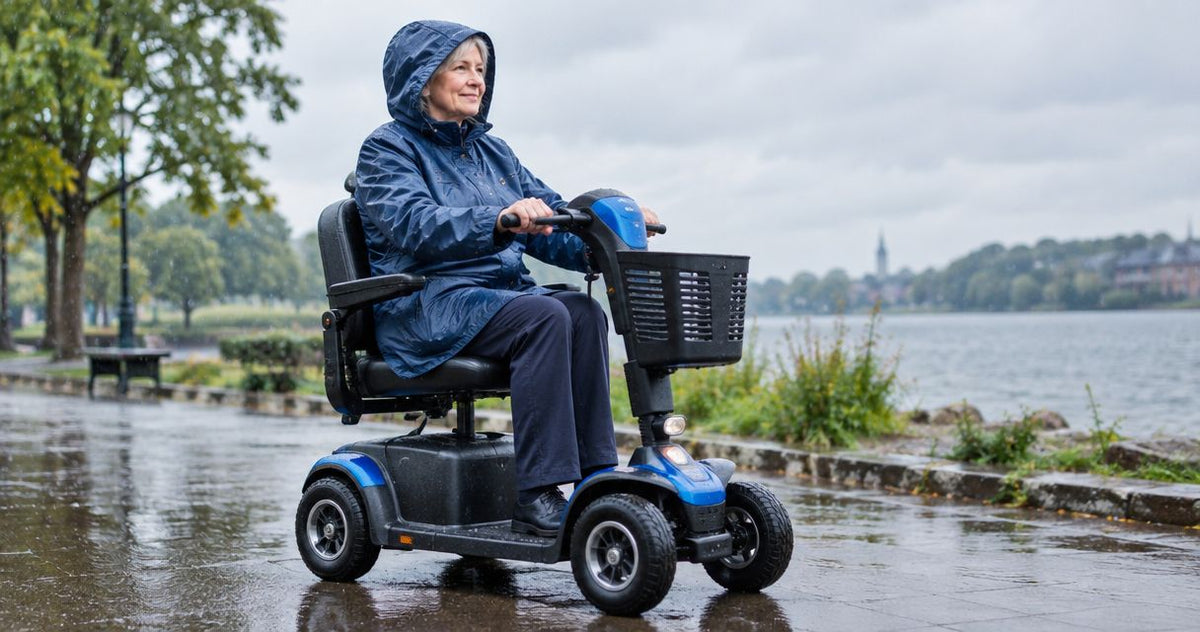
Most mobility scooters are not built to handle rain, and a single trip through a downpour can be enough to short the control panel, corrode battery contacts, or strand you with a dead motor. The bigger risk isn't the rain itself — it's what happens after: water works into seams and vents over hours, not seconds, so damage often shows up the next day rather than mid-ride.
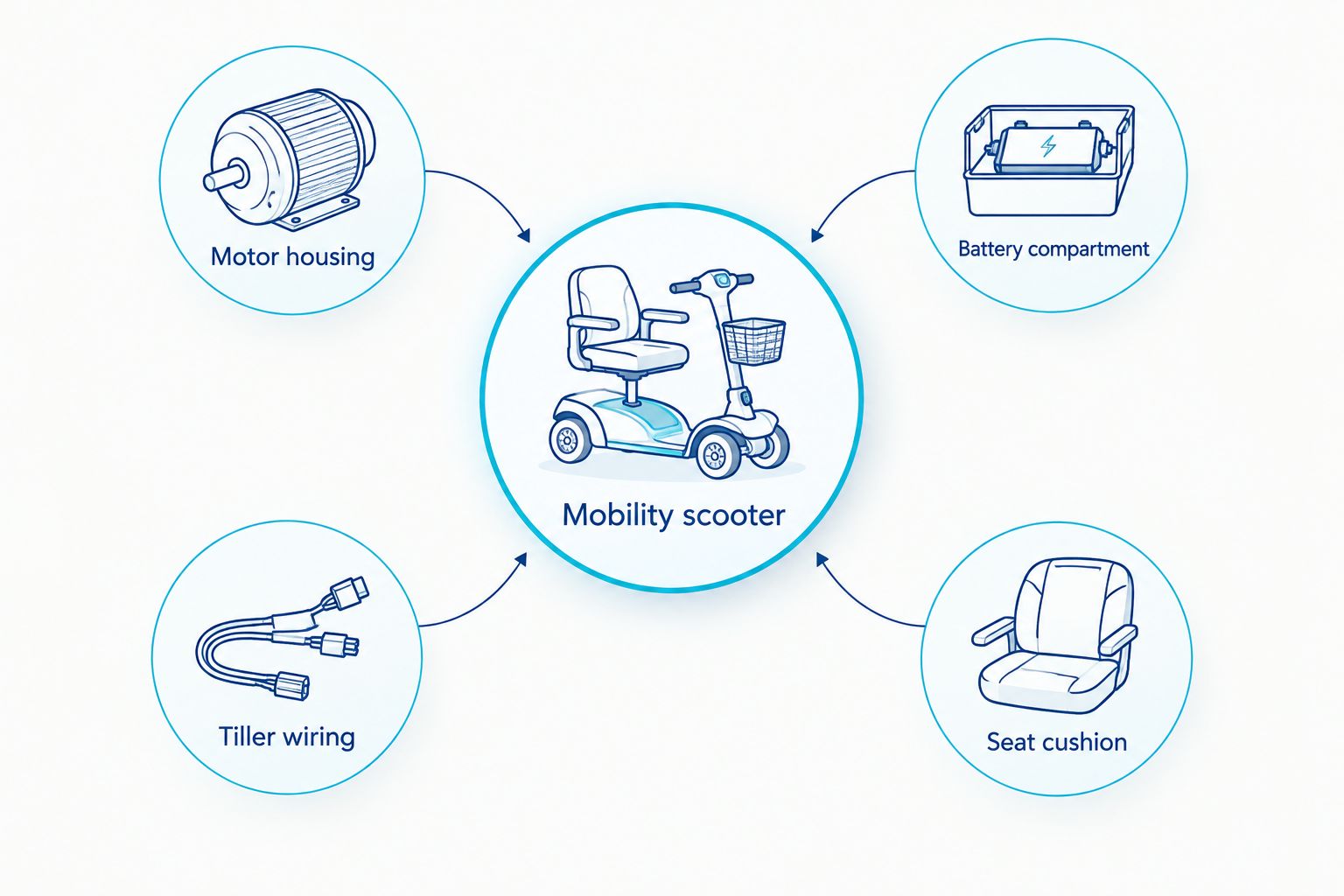
- Most mobility scooters are not rated for rain; the motor housing, battery compartment, and tiller controls are the weak points.
- A short, light drizzle is usually survivable if you dry the scooter immediately; standing water or a heavy downpour is not.
- All-terrain and heavy-duty scooters tolerate wet conditions better than lightweight indoor or travel models.
- Charging a wet scooter before it dries is one of the most common causes of electrical failure.
- A fitted rain cover reduces exposure but does not make a scooter waterproof.
Why this matters
A mobility scooter is an electric vehicle with an open-air motor, an exposed battery bay, and a joystick or tiller full of wiring. None of that is designed the way a car's engine bay is sealed. Aeva Vital sees the same question come up around every piece of home mobility equipment: manufacturers build for everyday indoor and light outdoor use, not for storms, and the fine print in most owner's manuals says exactly that.
The practical stakes in 2026 are the same as they've always been: a wet scooter that keeps running today can still fail next week from slow corrosion inside the battery terminals or the motor housing.
Can a mobility scooter go out in the rain?
Short answer: not safely, and not for long. Here's how the main scooter categories compare on wet-weather tolerance.
| Scooter type | Rain tolerance | Why |
|---|---|---|
| Lightweight/travel scooter | Low | Minimal sealing, small motor housing sits close to the ground |
| Standard indoor/outdoor scooter | Low to moderate | Some splash resistance, but control panel is still exposed |
| Heavy-duty/all-terrain scooter | Moderate | Larger, more sealed components built for rougher outdoor conditions |
| Any scooter with an aftermarket rain cover | Improved, not eliminated | Cover blocks direct rain but not humidity or standing water |
None of these fall into "safe for regular rain use." The difference between categories is how much margin you have before something fails, not whether rain is fine.
Indoor-only scooters: what breaks first in wet weather
Lightweight and travel-style scooters are built for smooth indoor floors and short outdoor trips, so manufacturers don't spend extra cost sealing components that customers weren't expected to expose to weather. The first parts to fail are almost always electrical, not mechanical.
- Control panel/tiller wiring — water tracks down the tiller post into the wiring harness.
- Battery terminals — moisture speeds up corrosion, which raises resistance and shortens battery life.
- Motor housing seams — designed to shed dust, not standing water.
- Seat cushion foam — absorbs water and stays wet long after the ride ends, which can transfer moisture into the seat frame's electronics on models with a seat-lift function.
All-terrain and heavy-duty scooters: built for tougher conditions
Heavy-duty and all-terrain scooters use larger, more heavily sealed motor housings and often mount the battery higher off the ground, both of which buy real margin in wet conditions. They're still not rated for driving through rain on a regular basis, but they tolerate an unexpected shower far better than a lightweight indoor model.
The tradeoff is size and weight — these scooters are harder to store and to load into a vehicle. If you're weighing that tradeoff, transporting a mobility scooter with a ramp or lift is worth reading before you buy a heavier model.
Weatherproof covers and rain ponchos: do they actually help
A fitted rain cover cuts direct rain exposure on the seat, tiller, and battery compartment, and it's the single most effective low-cost step an owner can take. What it doesn't do is stop humidity from settling into the motor housing overnight, or protect the scooter if it rolls through standing water on the ground.
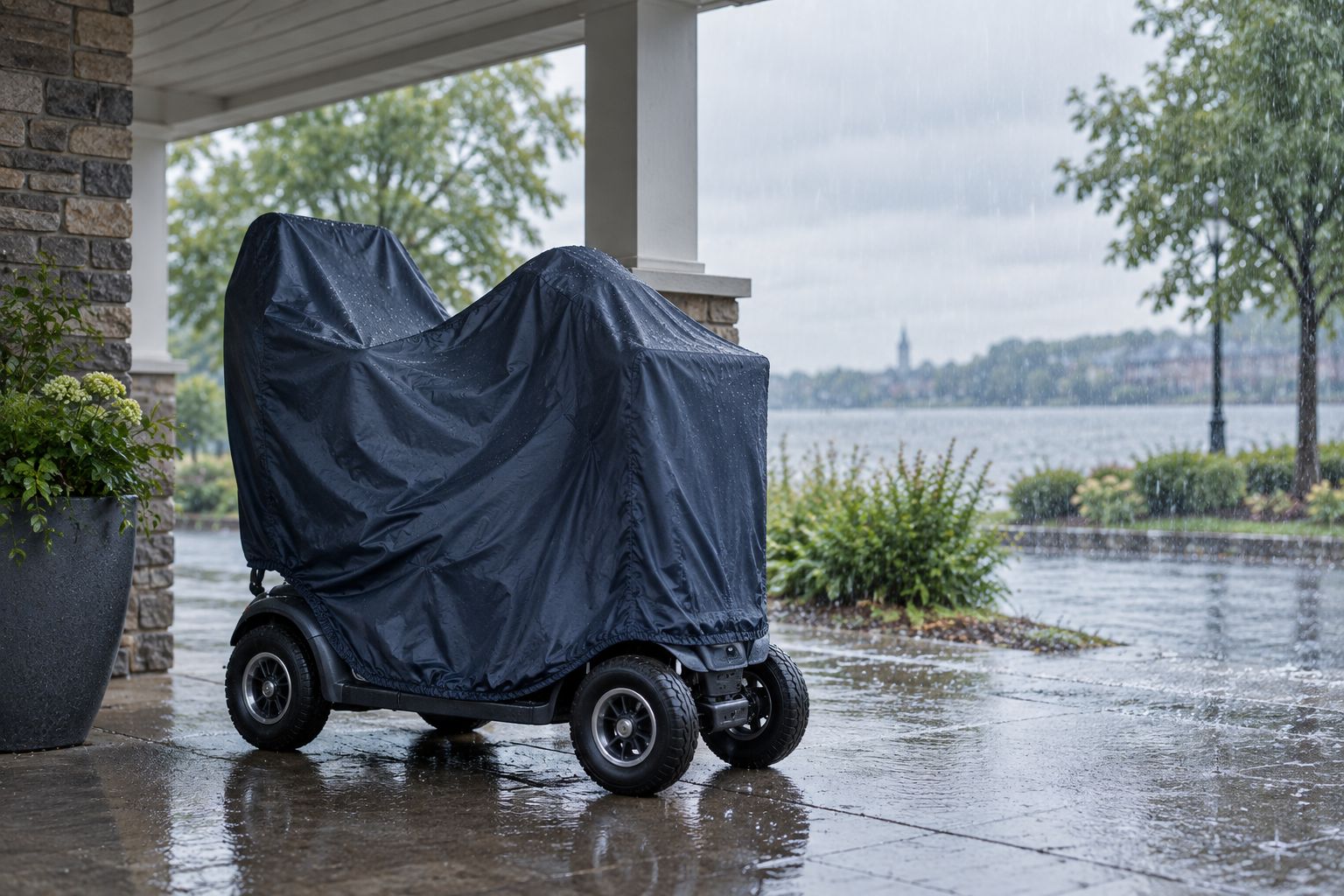
Treat a cover as damage reduction, not a waterproofing upgrade. It buys you the ability to get from a car to a covered doorway in light rain — it doesn't turn the scooter into an all-weather vehicle.
Why rain damages a scooter faster than everyday wear
- Open motor housings — most consumer scooters aren't sealed to an IP rating designed for direct water exposure.
- Battery compartment placement — batteries usually sit low, close to splash and puddle height.
- Exposed wiring at the tiller — the control column is the most common entry point for water tracking down into the electronics.
- Corrosion is cumulative — one wet ride rarely kills a battery terminal outright, but repeated exposure shortens battery life over months.
- Braking and traction — wet tires and wet pavement reduce stopping distance on a vehicle that already has a lower center of gravity than a wheelchair.
- Reduced visibility — rain cuts visibility for the rider and for drivers/pedestrians around them.
What to do if your scooter gets caught in the rain
- Get it under cover immediately — a garage, carport, or covered porch, not just parked outside with a cover thrown on.
- Wipe down the tiller and seat before charging — don't plug in a wet scooter; let it air-dry for several hours first.
- Check the battery compartment for pooled water — open it and dry it out rather than assuming it sealed itself.
- Inspect the terminals for early corrosion over the following days — a white or green residue on contacts is the first sign.
- Set up a dedicated dry storage and charging spot so this isn't a recurring decision every time weather turns. A home charging station near a covered entry solves most of this at the source.
Plan a dry, dedicated charging spot
A covered charging setup keeps rain exposure to the walk between the car and the door.
How do I keep my mobility scooter dry when parked outside?
Keep it dry by parking under a roofline or carport and using a fitted rain cover as a second layer, not the first line of defense. If no covered spot exists at your entry point, measuring doorways for scooter access can help you plan a route that gets the scooter indoors faster during weather changes.
Can a mobility scooter get wet and still work?
A mobility scooter can get lightly wet and still work in the short term, but function continuing today doesn't mean the electronics escaped unharmed. Corrosion inside battery terminals and tiller wiring often shows up as intermittent faults weeks later, not immediate failure.
Is it safe to charge a mobility scooter after it's been in the rain?
It's not safe to charge a mobility scooter immediately after rain exposure — dry it fully first. Charging while wet is one of the more common ways owners turn a minor weather incident into a shorted charging port or battery fault.
FAQ
Can a mobility scooter go out in the rain?
No, most mobility scooters aren't built to be driven in the rain because the motor, battery compartment, and tiller wiring are exposed to moisture. A short walk through light drizzle is usually survivable if you dry the scooter right after.
What happens if a mobility scooter gets rained on?
A mobility scooter that gets rained on can keep running that day but develop corrosion inside the battery terminals or control wiring over the following weeks. The damage is often delayed, not immediate.
Are any mobility scooters waterproof?
No standard consumer mobility scooter is fully waterproof in 2026. Heavy-duty and all-terrain models have more sealing and tolerate splash and light rain better than lightweight indoor scooters, but none are rated for submersion or heavy downpours.
Do rain covers actually protect a mobility scooter?
Rain covers reduce direct exposure on the seat, tiller, and battery bay but don't stop humidity or splash from standing water. Treat a cover as damage reduction, not full waterproofing.
Will rain void a mobility scooter warranty?
Many manufacturer warranties exclude water damage from outdoor weather exposure, so check your specific owner's manual. Corrosion from repeated rain exposure is one of the more common warranty disputes.
Can I charge a mobility scooter that got wet?
Charge a mobility scooter only after it's fully dry, not right after rain exposure. Charging a wet unit risks shorting the charging port or battery.
Is it safe to drive a mobility scooter through puddles?
Driving through standing water is one of the riskiest things you can do to a scooter, since the battery compartment usually sits close to ground level. Avoid puddles even more than open rain.
Do heavy-duty scooters handle rain better than lightweight ones?
Yes, heavy-duty and all-terrain scooters generally handle wet conditions better than lightweight travel scooters because of larger, more sealed motor housings and higher battery placement.
One last thing
The part most owners overlook isn't the rain itself — it's the drying step afterward. A scooter that sits wet in a garage overnight without anyone wiping down the tiller and checking the battery bay is doing more damage than the ten minutes it spent outside in the rain. Build a covered, dry parking and charging routine once, near the door you actually use, and weather stops being a daily decision.