
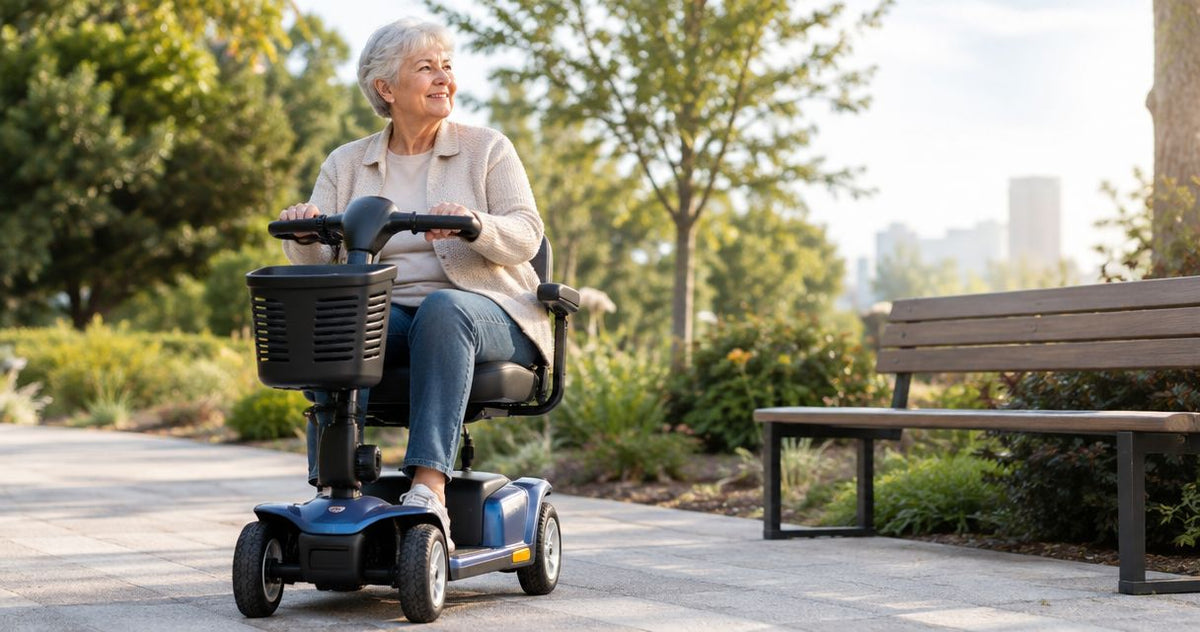
A mobility scooter costs $1,800 on average in 2026, with basic folding travel models starting around $600 and heavy-duty all-terrain scooters running $6,000 or more. That headline number rarely includes the extras that come with owning one at home — ramps, a spare battery, or a vehicle lift — which can add several hundred dollars to the real cost of getting around.
- A mobility scooter costs $600 to $6,000+ in 2026, with $1,800 as a typical mid-range price.
- Travel scooters run $600-$1,500; heavy-duty and all-terrain models run $3,000-$6,000+.
- Battery type, weight capacity, and frame material drive most of the price difference between tiers.
- Medicare Part B can cover a share of the cost as durable medical equipment, but coinsurance still applies.
- Doorway width and transport method matter as much as price when picking a scooter for home use.
Why this matters
The sticker price on a mobility scooter tells you almost nothing about whether it will fit through your front door, survive a curb, or last five years of daily use. Two scooters priced $200 apart can have wildly different battery ranges, weight capacities, and warranty terms.
Before comparing models, measuring doorways for mobility scooter access at home matters just as much as the price tag — a scooter that can't get through the hallway is a wasted purchase regardless of tier. Price and fit have to be evaluated together, not one after the other.
How much does a mobility scooter cost in 2026
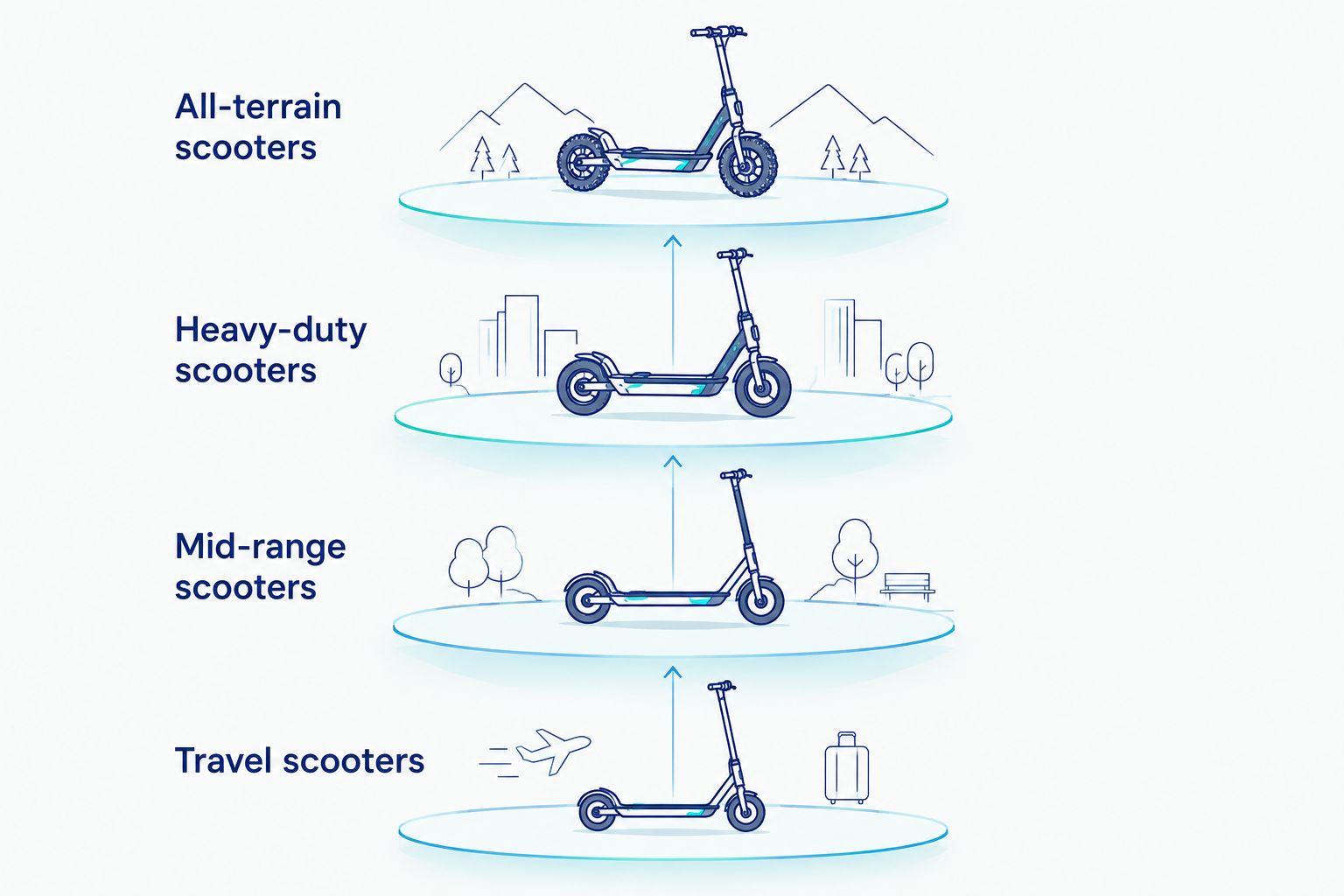
Mobility scooters split into four rough price tiers based on frame size, wheel count, and intended terrain. The table below lines up what you get at each price point.
| Tier | Price range (2026) | Best for |
|---|---|---|
| Travel / foldable 3-wheel | $600 – $1,500 | Occasional outings, air travel, car trunk storage |
| Mid-range 4-wheel | $1,500 – $3,000 | Daily use, moderate stability needs |
| Heavy-duty / bariatric | $3,000 – $5,000 | Higher weight capacities, larger frames |
| All-terrain / off-road | $4,000 – $6,000+ | Uneven ground, longer outdoor distances |
Travel scooters: $600 to $1,500
These fold or disassemble into two to three pieces light enough to lift into a trunk. Battery range is usually the shortest of any tier, and weight capacity tops out lower than mid-range models. Buy if the scooter mainly needs to handle errands and travel, not daily all-day use.
Mid-range scooters: $1,500 to $3,000
Four-wheel frames at this price add wider wheelbases and higher weight capacities than travel models, along with longer battery range for full-day outings. This tier covers most daily home-and-errand use cases. Buy for anyone using a scooter as a primary mobility tool around the house and neighborhood.
Heavy-duty and bariatric scooters: $3,000 to $5,000
Reinforced frames and higher weight capacities define this tier, along with larger captain's seats and stronger motors to move that extra frame weight. Buy if standard weight capacities from lower tiers don't fit the user's needs.
All-terrain scooters: $4,000 to $6,000+
Suspension systems, larger pneumatic tires, and higher ground clearance push this tier's price up. These scooters are built for gravel, grass, and uneven yards rather than smooth indoor floors. Buy for rural properties or frequent outdoor use; skip if the scooter mostly stays indoors or on paved sidewalks.
Why mobility scooter prices vary
- Battery type and range — lithium batteries cost more upfront than sealed lead-acid but weigh less and last longer per charge.
- Weight capacity — bariatric-rated frames use heavier steel and stronger motors, which raises the price.
- Frame material — aluminum frames cost more than steel but weigh less, which matters for folding travel models.
- Motor power and top speed — higher-wattage motors needed for hills or all-terrain use add cost.
- Added features — suspension, LED lighting, swivel seats, and adjustable armrests all stack onto the base price.
- Warranty length — longer coverage on the frame and battery generally tracks with a higher purchase price.
Does Medicare cover mobility scooter costs in 2026?
Medicare Part B can cover a mobility scooter as durable medical equipment when a physician documents medical necessity, but the standard Part B coinsurance still applies after the deductible is met. Coverage doesn't eliminate out-of-pocket cost — it typically reduces it, and approval requires documentation showing the scooter is needed for use inside the home, not just outdoors.
Is a mobility scooter cheaper than a power wheelchair?
A mobility scooter is generally cheaper than a power wheelchair, which typically starts around $2,500 and climbs well past $10,000 for custom seating and advanced controls. Power wheelchairs cost more because they're built for users who need precise indoor maneuverability and customized positioning that a scooter's tiller-steering design doesn't offer.
What extra costs come with owning a mobility scooter?
The purchase price is the biggest line item, but not the only one. A vehicle ramp or lift for transport, as detailed in transporting a mobility scooter in your car, can add a meaningful amount to the total setup cost depending on the vehicle. Replacement batteries every few years, tire replacement on pneumatic models, and indoor storage space are the other recurring costs owners underestimate.
For households managing a broader recovery or aging-in-place plan, the scooter is often just one piece of a larger picture — coordinating options like home care services for seniors alongside mobility equipment usually has more impact on monthly costs than the scooter price itself. Users who need a bariatric-capacity scooter also tend to have similar support needs at home; a mattress that holds up under higher weight matters just as much for rest as a stable frame does for mobility, which is why some buyers also check the best hybrid mattress for heavy people when furnishing a recovery-friendly bedroom.
Charging a scooter's battery at home adds a small amount to a monthly electric bill, far less than the purchase price itself, and setting up a dedicated spot matters more than the electricity cost — see setting up a home charging station for a mobility scooter for the layout basics.
Mobility scooter costs also sit alongside other home mobility purchases. If a household is also weighing how much a lift chair costs in 2026, the two purchases often get budgeted together since both fall under the same home mobility upgrade.
FAQ
How much does a mobility scooter cost in 2026?
A mobility scooter costs $600 to $6,000+ in 2026, with $1,800 as a typical mid-range price. Travel models sit at the low end; all-terrain and bariatric models sit at the high end.
What is the cheapest type of mobility scooter?
Folding 3-wheel travel scooters are the cheapest type, typically priced $600 to $1,500 in 2026. They trade battery range and weight capacity for portability.
Does insurance cover mobility scooters?
Medicare Part B can cover a mobility scooter as durable medical equipment with a physician's documentation of medical necessity, though standard coinsurance still applies. Private insurance coverage varies by plan.
How much does a heavy-duty mobility scooter cost?
Heavy-duty and bariatric mobility scooters cost $3,000 to $5,000 in 2026 due to reinforced frames and stronger motors. All-terrain versions with suspension push past $6,000.
Is a used mobility scooter a good way to save money?
A used mobility scooter can cost significantly less than new, but battery life and motor wear are hard to verify without testing the unit in person. Check battery age specifically, since replacement batteries are one of the largest recurring costs.
How long does a mobility scooter battery last?
Most mobility scooter batteries need replacement every 12 to 18 months with regular use, depending on battery type and charging habits. Lithium batteries generally outlast sealed lead-acid batteries over the scooter's lifespan.
What size doorway does a mobility scooter need?
Most mobility scooters need at least a 32-inch-wide doorway to pass through without scraping the frame. Measuring every doorway along the intended indoor route matters more than the scooter's listed width spec alone.
One last thing
The number that trips up most first-time buyers isn't the scooter price — it's the doorway. A $2,000 mid-range scooter that can't clear a 28-inch bathroom doorway is a worse purchase than a $1,200 travel model that fits every hallway in the house. Measure before you shop, not after the scooter arrives in 2026.