
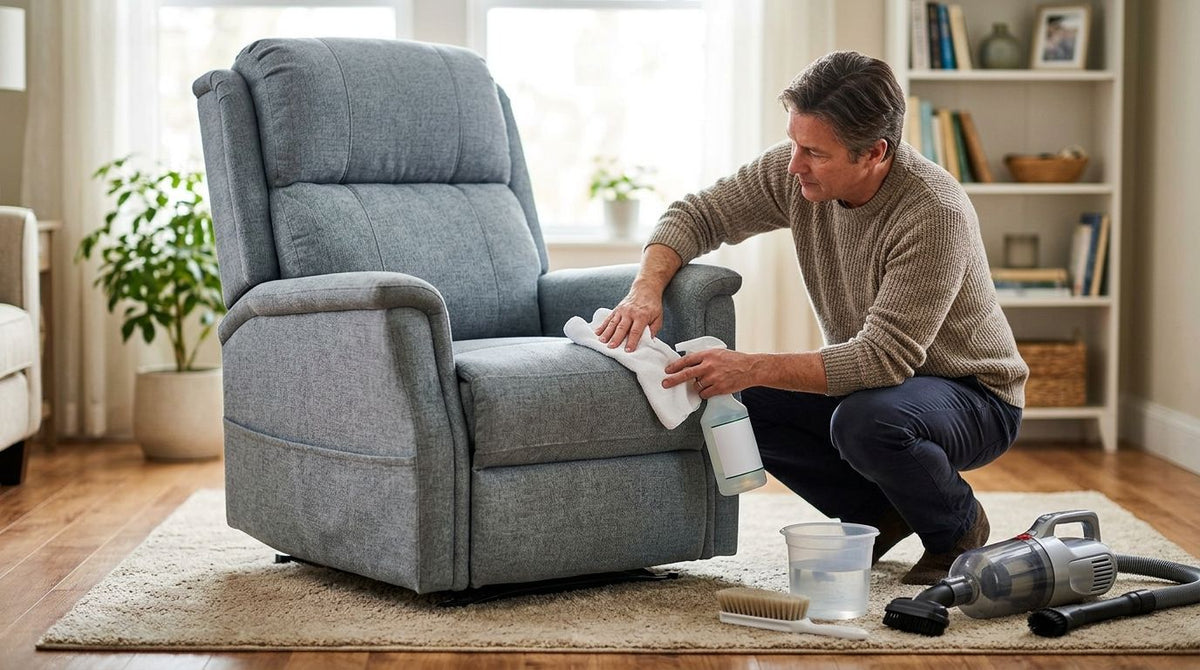
Cleaning a fabric lift chair means vacuuming the upholstery weekly, blotting spills the moment they happen with a cleaner matched to the fabric's care code, and keeping all liquid away from the motor housing under the seat. Skip the care code step and a well-meaning cleaning pass can leave a permanent water ring, shrink the weave, or short the hand control wiring built into the base.
- Vacuum a fabric lift chair weekly with a soft brush attachment to stop dust from grinding into the weave.
- Match your cleaner to the fabric's W, S, WS, or X care code before treating any stain on a lift chair.
- Blot spills within minutes -- rubbing pushes liquid toward the seat deck and the lift motor underneath.
- Skip steam cleaners on fabric lift chairs; trapped moisture near the motor housing can trip the hand control.
- A lift chair that gets weekly vacuuming and prompt spot-cleaning outlasts one cleaned only when visibly dirty.
Why This Matters
A fabric lift chair works harder than a standard recliner. It carries a motor, a hand control, and wiring built into the base that a normal chair never has, so cleaning it the wrong way doesn't just leave a stain -- it can void a mechanism warranty or short the lift control.
The fabric also takes more daily contact than most upholstery in the house. Meal trays, daily transfers, and caregivers assisting with dressing wear down the arms and seat deck faster than a chair used for occasional sitting. How long does a lift chair last in 2026 depends heavily on how the fabric and mechanism are maintained, not just how many hours a day it's used.
How Do You Clean a Fabric Lift Chair?
Follow these six steps in order. Skipping the vacuum pass before shampooing is the most common way owners grind dirt deeper into the weave, and it's just as relevant for any fabric lift chair sold in 2026 as it was for older models.
- Unplug the chair. Disconnect the power cord before any wet cleaning step to remove the risk of the hand control activating on a damp seat.
- Vacuum the entire surface. Use the upholstery brush on the arms, back, and seat deck, then run a crevice tool along the seams where crumbs and hair collect.
- Check the care tag. Find the code -- W, S, WS, or X -- usually sewn under a seat cushion or on the back panel.
- Spot-test a hidden area. Apply the cleaner to a patch on the underside of an arm or the back of the headrest, wait 10 minutes, and check for color change.
- Treat the stain. Work from the outside of the stain inward with a clean white cloth, blotting instead of scrubbing.
- Air-dry fully before reconnecting power. Leave the chair unplugged and let it dry completely, ideally overnight, before plugging the cord back in.
Fabric Care Code Cheat Sheet
Care codes tell you exactly which cleaner is safe before you touch the fabric -- guessing is how stains turn into permanent marks.
| Code | What It Means | How to Clean It |
|---|---|---|
| W | Water-based cleaners are safe | Diluted mild soap or upholstery shampoo, blotted dry |
| S | Solvent-only fabric | Dry-cleaning solvent or rubbing alcohol, no water |
| WS | Water or solvent safe | Either method works; test a hidden spot first |
| X | Vacuum only | No liquid cleaners of any kind; brush or vacuum only |
Most polyester and microfiber lift chair fabrics on the market in 2026 carry a W or WS code. Vinyl or leather-look upholstery typically uses S.
Why Cleaning Method Varies by Fabric
Not every fabric lift chair responds the same way to the same cleaner. A handful of factors decide whether soap and water is safe or whether you stick to a dry brush:
- Fiber content -- polyester and microfiber tolerate diluted soap; napped fabrics like chenille or velvet water-spot easily.
- Foam density under the seat -- higher-density foam sheds moisture faster, which matters if liquid gets past the fabric.
- Motor and wiring placement -- most lift mechanisms sit under the seat deck, so the seat cushion needs more caution with liquid than the back or arms.
- Arm cap wear -- the arms take the most hand contact during sit-to-stand transfers, so they soil first and need more frequent spot-cleaning.
- Weave tightness -- a tight weave resists spills longer; a looser weave lets liquid reach the padding faster.
- Factory stain treatments -- some fabrics ship with a stain-repellent finish that breaks down under harsh solvents used too often.
How often the chair gets used also changes wear patterns. A chair used as a daily seat wears differently than one reserved for recovery, so it helps to know whether you can use a lift chair as a regular recliner before setting a cleaning schedule.
“A fabric lift chair's arms wear out before the seat does -- that's where hands do the work getting up and down.”
How Often Should You Clean a Fabric Lift Chair?
Vacuum a fabric lift chair weekly and spot-clean any spill the same day it happens. A full shampoo or solvent treatment across the whole chair is only needed two to four times a year unless the chair sees daily meals or heavy medical use.
Can You Steam Clean a Fabric Lift Chair?
Steam cleaning is not recommended for most fabric lift chairs because the heat and moisture can reach the motor housing and hand control wiring under the seat deck. A damp cloth paired with a code-matched cleaner handles nearly every stain a steam cleaner would target, without the electrical risk.
What Removes Odor From a Fabric Lift Chair?
Baking soda lifts odor from a fabric lift chair when left on the upholstery for 15 to 20 minutes before vacuuming it off. For deeper odor, a fabric-safe enzyme spray matched to the chair's W or WS care code breaks down the source instead of masking it.
One Last Thing
The lift motor sits under the seat deck on nearly every fabric lift chair, which is exactly where spilled coffee and shampoo runoff tend to travel. Keep liquid on the arms and back panel light and controlled going into 2026, and treat the seat cushion cover as the one spot where a dry vacuum pass beats a wet cloth every time.
Not sure a lift chair is worth it?
Compare comfort, mobility support, and long-term value before you buy.
FAQ
What is the best fabric for a lift chair?
Polyester blends and microfiber are the easiest fabrics to clean on a lift chair because most carry a W or WS care code that tolerates mild soap and water. Napped fabrics like chenille or velvet look premium but water-spot more easily during cleaning.
Is fabric or leather easier to clean on a lift chair?
Leather and vinyl wipe clean with a damp cloth and no care-code guesswork, while fabric needs a code check before every deep clean. Fabric wins on breathability and grip, which matters for standing transfers.
Can you use a slipcover on a fabric lift chair?
A slipcover works on a fabric lift chair as long as it has cutouts for the hand control cord and doesn't block the lift mechanism from folding. Fitted slipcovers rated for reclining chairs fit better than universal covers.
How do you get pet hair off a fabric lift chair?
A rubber pet-hair brush or a vacuum's upholstery attachment run in one direction pulls embedded pet hair off a fabric lift chair faster than a lint roller. Damp rubber gloves work as a backup for stubborn spots.
Does the fabric care code affect the lift chair's warranty?
Cleaning with a method outside the fabric's care code can void the upholstery warranty on some lift chairs, even when the lift mechanism warranty stays intact. Check the care tag and the 2026 warranty terms together before using any solvent-based cleaner.
Can you use a fabric protector spray on a lift chair?
A fabric protector spray rated for the chair's W or WS code adds stain resistance without changing how you clean it later. Test a hidden spot first since some sprays darken lighter fabrics temporarily.
What household items should you avoid on a fabric lift chair?
Avoid bleach, ammonia-based glass cleaner, and undiluted dish soap on a fabric lift chair since all three can discolor or stiffen the weave. Stick to a cleaner matched to the care code and a soft white cloth.