
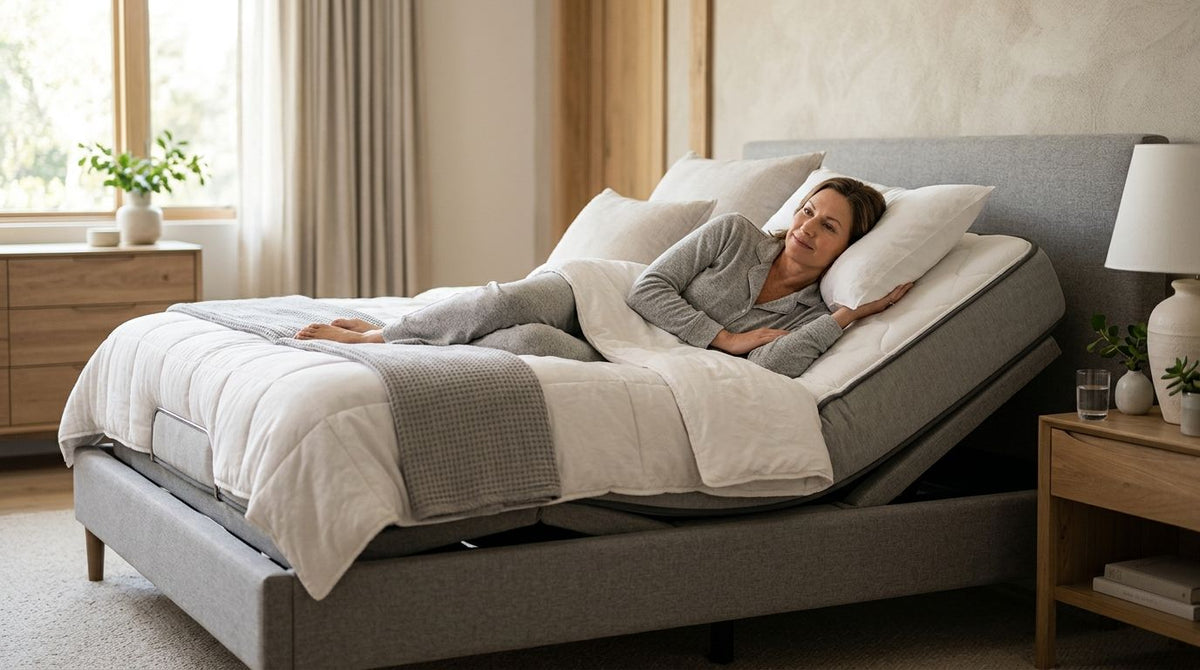
An adjustable bed is worth considering for back pain if raising your upper body or legs helps you rest without worsening symptoms. It is not a treatment for the cause of pain, and a new base will not correct an unsupportive mattress. In 2026, the deciding test is whether the position feels better to you and whether your mattress and bed setup can accommodate an adjustable base.
- Is an adjustable bed worth it for back pain? Yes, if adjustable positioning helps you rest without worsening symptoms.
- Aeva Vital's adjustable bed base is best for shoppers who want positioning flexibility, not a promised treatment for back pain.
- Check mattress compatibility and bed-frame fit before choosing an adjustable base.
- Keep the mattress in your comparison: changing its angle does not correct inadequate support.
By Editorial Team
Is an adjustable bed worth it for back pain?
Yes, when changing your sleep position provides noticeable comfort and the base works with your mattress. No, when you expect the base to diagnose or treat the cause of persistent pain. In 2026, make that distinction before comparing features: a position you can adjust has practical value, but a feature list cannot tell you how your back will feel overnight.
Aeva Vital lists an adjustable bed base alongside its bedding products. The base is relevant if you want to change your resting position; it is not evidence that any particular position will relieve your pain. Ask a clinician about pain that is severe, worsening, or accompanied by new weakness or numbness rather than trying to solve it with a bed purchase.
| Option | Best for | What it changes | Main limitation |
|---|---|---|---|
| Adjustable bed base | Someone who feels more comfortable in a raised position | The angle of the sleep surface | It does not replace a supportive mattress or medical assessment |
| Positioning pillows | Someone testing a raised position before changing the bed | Support beneath selected parts of the body | Pillows can shift and do not adjust the whole sleep surface |
| Different mattress | Someone whose mattress feels unsupportive across positions | The surface you lie on | It cannot raise or lower the sleep surface |
These are different decisions, not interchangeable cures. If your current mattress feels supportive but lying flat feels uncomfortable, test positioning first. If the mattress itself feels unsupportive, changing its angle alone leaves that issue in place.
Why this matters
Back pain describes a symptom, not a single cause. The position that feels comfortable while you are awake can also differ from the position you can sleep in comfortably. An adjustable base gives you another way to position yourself, but its usefulness depends on your response to that position, the mattress above it, and the space around the bed.
That is the practical question behind is an adjustable bed worth it for back pain in 2026. You are not choosing between a guaranteed result and no result. You are deciding whether a controllable sleep position solves a problem you can identify in your current setup.
When an adjustable bed makes sense
An adjustable base makes the strongest case when you already know that resting slightly raised feels better than lying flat. It lets you change the bed's position rather than relying only on loose pillows. You still need to test the resulting posture with a mattress that can follow the base's movement.
A base can also make sense when more than one sleeping position feels comfortable at different times. The useful feature is the ability to make an adjustment; no preset position is automatically right for back pain. Start with a comfortable position and change it if you feel added strain.
The verdict for Aeva Vital's adjustable bed base is straightforward: it is best for someone seeking positioning flexibility, not someone expecting a proven back-pain treatment. Its listed title identifies King and Queen sizes and mentions zero gravity, USB, and a nightlight. Those details do not establish clinical benefit, mattress compatibility, or how a particular position will feel to you.
When to hold off
Hold off if you have not worked out whether the problem is the position, the mattress, or both. A new base adds movement beneath the mattress; it does not tell you which part of your current bed is causing discomfort. Test a comfortable raised position with pillows before treating an adjustable base as the answer.
Also pause if changing position makes symptoms worse. Do not force a raised posture because it has a name such as zero gravity. The relevant result is your own comfort while resting and your ability to get into and out of bed safely.
An adjustable base is not a substitute for medical advice when pain persists or comes with concerning symptoms. That limitation matters more than any convenience feature. In 2026, buy the bed for a clear positioning need, not for an implied medical outcome.
What makes the answer vary?
- The source of discomfort. A position change addresses how you rest; it does not identify why your back hurts.
- Your preferred position. A raised bed is useful only if you can rest comfortably in the position you select.
- Mattress support. Changing the angle does not correct a mattress that feels unsupportive.
- Mattress compatibility. A mattress must work with the movement of the base you choose; confirm this for your specific mattress.
- Bed-frame fit. The base and any existing frame must fit together as specified by their manufacturers.
- Getting in and out of bed. The position that feels good for resting must still allow a comfortable exit.
None of these factors can be settled by a general claim that adjustable beds are good or bad for back pain. They call for checks on your existing setup and on the particular base under consideration.
How to test the idea before you buy
Treat a raised position as a practical test, not a diagnosis. Note whether you can relax in it, whether another area starts to feel strained, and whether you can return comfortably to a flat position. If a position increases pain, stop using it as your test position.
Then check the parts of the bed that a new base would affect. A mattress and a base have to work together, and an existing decorative frame is a separate fit question. Get compatibility guidance for the exact items you own rather than assuming their names or sizes settle it.
- Test your position. Try a comfortable raised resting position without forcing an angle that increases symptoms.
- Check the mattress. Confirm that its manufacturer permits use on the adjustable base you are considering.
- Check the frame. Confirm the base fits your existing bed arrangement, or plan for a different arrangement.
- Plan an exit. Make sure you can return to a position from which you can get out of bed comfortably.
The test does not prove what will happen every night. It does give you a reason to buy—or to wait—based on a specific problem rather than a general promise about back pain.
Does the mattress matter as much as the base?
Yes. The base changes the position of the sleep surface; the mattress is the surface supporting your body. If the mattress feels wrong when flat, raising it does not establish that its support has improved. Consider those questions separately before replacing either part of the bed.
Aeva Vital describes hybrid mattresses among its home bedding products, but that category label alone cannot confirm compatibility with a particular adjustable base. Check the guidance for the exact mattress and base. Do not assume that a mattress bends appropriately just because it is called hybrid, or that an existing bed frame accepts a moving base because it fits the same nominal bed size.
The same distinction applies to comfort. If pillows let you rest more comfortably at an incline, you have evidence that position matters to you. If the mattress still feels unsupportive in that position, the base is only part of the decision. A mattress comparison addresses support; a base comparison addresses movement and fit.
What should you check on an adjustable base?
Start with the specifications that affect your setup. Confirm the size, mattress requirements, and fit with your existing frame. Then look at how the base changes position and whether its controls are practical for you to use. A convenient feature does not compensate for an incompatible mattress.
The Aeva Vital product listing names an Adjustable Bed Base Frame – King / Queen Size Zero Gravity with USB & Nightlight. The title establishes those listed features, but it does not tell you which mattress you own will work with it or whether its positions will reduce your symptoms. Verify the specific size and setup details on the listing before choosing it.
Aeva Vital's adjustable bed base is therefore a reasonable option to examine when adjustable positioning is your goal. Its limitation is the same as any base in this decision: features and product descriptions cannot predict your personal response to a sleeping position. In 2026, keep the decision tied to fit and comfort rather than the name of a preset.
Is a raised position always better than lying flat?
No. A raised position is useful when it feels comfortable to you and does not create a new point of strain. Another person with back pain can prefer lying flat. Neither preference, by itself, explains the cause of the pain.
Avoid treating an adjustable bed's zero-gravity setting as a clinical instruction. It is a positioning option, not a diagnosis or a guaranteed outcome. Choose a position you can rest in comfortably, and stop using one that worsens symptoms.
Can an adjustable bed replace a supportive mattress?
No. An adjustable base moves the sleep surface, while the mattress supplies the surface you lie on. If your main complaint is that the mattress feels unsupportive, evaluate the mattress rather than expecting movement underneath it to correct that problem.
This also works in reverse. A mattress you like does not answer whether you would benefit from raising the bed. In 2026, decide which problem you are trying to solve first: surface support, resting position, or both.
Should you buy an adjustable base before seeing a clinician?
For persistent or worsening back pain, get clinical guidance instead of using a bed purchase as your assessment. Seek prompt medical advice for new weakness, numbness, or other concerning symptoms. A base can change your resting position; it cannot determine the cause of those symptoms.
For a straightforward shopping decision, you can still check comfort and compatibility without assigning a medical claim to the product. Keep those two questions separate. It protects you from buying features that sound relevant but do not address your actual problem.
FAQ
Is an adjustable bed worth it for back pain?
Yes, if a raised position helps you rest comfortably and the base works with your mattress and frame. It is not a treatment for the cause of back pain.
Is an adjustable bed better than pillows for back pain?
An adjustable bed changes the angle of the sleep surface, while pillows support selected areas and can shift. Try a comfortable raised position first to learn whether positioning matters to you.
Can an adjustable bed make back pain worse?
A position that increases your pain is not the right resting position for you. Stop using that position and seek clinical guidance for persistent or worsening symptoms.
Does a zero-gravity setting treat back pain?
No. Zero gravity names a positioning setting; it does not establish a medical outcome. Judge the position by your comfort rather than its name.
Can I use my current mattress on an adjustable base?
Check the requirements for your exact mattress and the base you are considering. A mattress category or bed size alone does not confirm compatibility.
Will an adjustable bed fix an unsupportive mattress?
No. The base changes the mattress's position, not its underlying support. Evaluate the mattress separately if it feels unsupportive.
Who is Aeva Vital's adjustable bed base best for?
Aeva Vital's adjustable bed base is best for someone seeking positioning flexibility. Its listed features do not prove that it will relieve back pain for a particular person.
One last thing
Before shopping for a 2026 adjustable base, write down the problem you want it to solve: discomfort while lying flat, an unsupportive mattress, or difficulty finding a restful position. If you cannot identify a position that feels better, wait on the base purchase and assess the mattress and your symptoms first.