

Yes, a freestanding tub can use a handheld shower attachment when the tub filler or a separate shower valve is designed to supply it. The key limitations are faucet compatibility, secure mounting, and splash control: adding a hand shower does not turn an ordinary bathroom into a waterproof shower enclosure. For a 2026 installation, choose the tub, filler, and hand shower as a coordinated system before plumbing begins.
By Editorial Team
- Can a freestanding tub use a handheld shower attachment? Yes, with compatible plumbing and controlled spray.
- A floor-mounted or wall-mounted filler can supply a hand shower without drilling the tub.
- Aeva Vital acrylic freestanding bathtubs require model-specific compatibility checks before you select shower hardware.
- For standing showers, plan water containment and waterproofing—not just a longer hose.
Can a freestanding tub be used with a handheld shower attachment?
Yes—the attachment connects to compatible water-supply hardware, not to the tub drain. A tub filler with an integrated hand shower is a direct way to combine filling and rinsing. A separate hand shower also works when its valve, outlet, hose, and mounting arrangement are designed to function together.
Coordinate that choice with your freestanding tub installation plan. Moving supply lines or adding concealed components after the room is finished requires reopening the affected surfaces.
| Arrangement | Best for | Main advantage | Main limitation |
|---|---|---|---|
| Floor-mounted filler with hand shower | A tub positioned away from a wall | Keeps filling and rinsing controls together | Requires suitable floor anchoring and supply routing |
| Wall-mounted filler with hand shower | A tub within the fixture's specified reach | Leaves the floor beside the tub clear | Placement depends on the wall and tub relationship |
| Deck-mounted filler with hand shower | A tub explicitly designed for deck mounting | Places the controls on the approved mounting surface | Requires manufacturer-approved holes, support, and access |
| Separate hand shower and valve | A planned custom bathing layout | Allows independent placement of the shower outlet | Adds components that need coordinated installation |
None of these arrangements makes every tub compatible with every faucet. Match the installation drawings, not just the finish or product photographs.
Why this matters
A hand shower is useful for rinsing hair, directing water while seated, and washing down the inside of the tub. Those tasks keep the spray relatively close to the basin. Standing upright and showering introduces a different problem: water can travel beyond the rim.
Decide whether you want a bathing accessory or a complete shower installation. For a 2026 bathroom project, that decision belongs before fixture selection. It determines the water-containment plan, valve arrangement, and placement of the controls.
Floor-mounted fillers: best for tubs away from walls
A floor-mounted tub filler stands beside the bathtub and receives its water supply through the floor. When the filler includes a hand shower, a diverter directs water between the filling spout and the shower hose. The installation instructions determine how the assembly is anchored and connected.
This arrangement avoids using the tub rim as a mounting surface. Its trade-off is the floor work: the filler needs the specified support, and its position must accommodate the tub's outer wall, inner basin, and your entry path.
Check the spout's horizontal reach against the actual basin opening. A spout positioned over the outer edge can direct water onto the rim rather than cleanly into the bath. Also confirm that the hose hangs without creating an obstruction beside the tub.
Wall-mounted fillers: best for tubs near a suitable wall
A wall-mounted system places the supply connections and fixture support at the wall. It suits a layout where the spout can reach the tub and the hand shower can reach the areas you intend to rinse. It also removes the need for a filler base on the floor.
The limitation is geometry. A freestanding tub positioned too far from the wall does not become compatible simply because the hose reaches it; the filling spout must reach the basin too. Controls must remain accessible without requiring an awkward stretch across the tub.
Before closing the wall, confirm the required valve depth, mounting support, and service provisions. Use the selected fixture's instructions rather than a generic installation sketch.
Deck-mounted fillers: only for approved mounting surfaces
A deck-mounted system attaches to a designated horizontal surface, such as an approved tub rim or a separate bath deck. This arrangement can keep the controls close to the bather. It requires enough usable mounting area and access beneath the hardware.
Do not drill a freestanding bathtub unless its manufacturer explicitly permits the proposed installation. A wide-looking rim does not establish that it can support a filler, accept holes, or provide access for securing fittings.
Material alone does not settle the question. An acrylic tub still needs model-specific mounting instructions, and a chrome drain says nothing about faucet compatibility. Treat an undocumented mounting surface as unsuitable until the manufacturer confirms otherwise.
Why handheld shower compatibility varies
For a 2026 specification check, focus on these factors rather than appearance:
- Faucet outlet: The filler needs an approved connection for a hand shower. An ordinary tub spout is not automatically convertible.
- Diverter: The system needs a designed method of directing water to the hand shower. A diverter selects the outlet; it does not replace the mixing valve.
- Mounting support: Floor, wall, and deck fittings need the support and fasteners specified for their installation.
- Hose reach: The hose must reach the intended rinse area without pulling on fittings or obstructing entry.
- Water containment: Seated rinsing and standing showering expose different parts of the room to water.
- Plumbing protection: Temperature control and backflow protection must match the fixture instructions and applicable local requirements.
A matching finish is not evidence of matching connections. Identify the exact filler and hand-shower components before ordering adapters or opening finished surfaces.
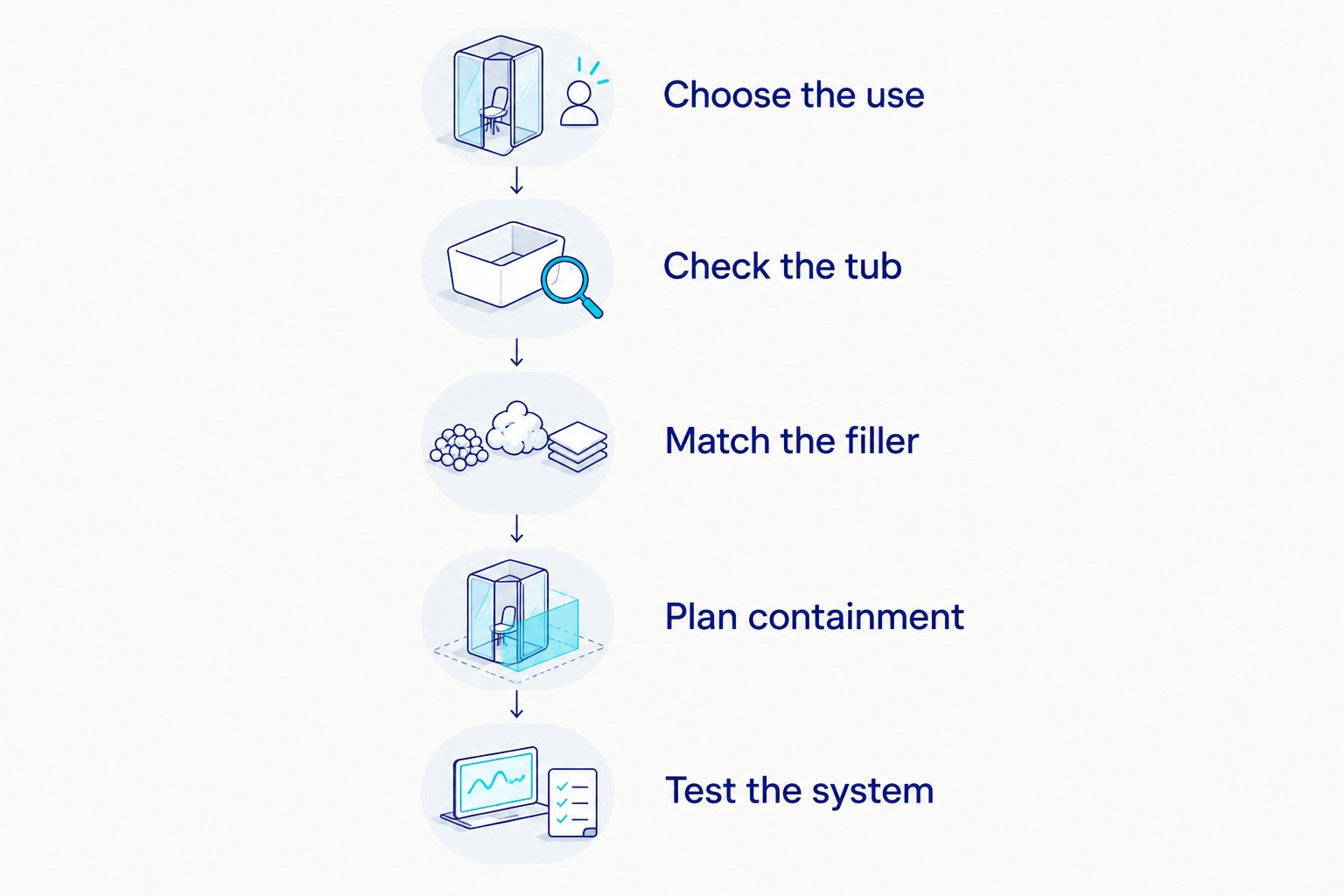
How do you check the setup before installation?
Use this sequence before the tub's final placement. It keeps the fixture decision separate from assumptions about what the bathtub includes.
- Choose the use. Specify seated rinsing, tub cleaning, or standing showering. Write down who needs to reach the controls and from where.
- Check the tub. Read the installation drawing for rim configuration, faucet placement restrictions, and required access. Confirm any proposed drilling directly with the manufacturer.
- Match the filler. Select hardware explicitly designed for the chosen hand shower, including the correct diverter, hose connection, and holder.
- Plan containment. Show where spray will land, how water stays inside the bathing area, and which surfaces require waterproofing.
- Test the system. Have the installer check connections, outlet switching, temperature operation, and hose movement before completing the installation.
Keep the relevant installation instructions together for the installer. A tub drawing explains the bathtub; it does not replace the valve manufacturer's plumbing instructions.
Can you use the handheld attachment as a regular shower?
A handheld attachment alone is not a complete standing-shower installation. You need a layout that contains spray and protects surrounding construction. That includes evaluating the enclosure or curtain arrangement, adjacent walls, floor, and the path water takes back into the bathing area.
A curtain must direct runoff inside the tub rather than onto the floor. Its support also needs an appropriate mounting arrangement; do not assume the tub rim or filler can carry it. A waterproofing professional or qualified installer should assess the full assembly.
A handheld holder is another separate decision. A holder intended to store the spray head beside a filler is not automatically suitable for positioning it overhead. Check the hardware's intended use before treating it as a shower riser.
Can you add a hand shower to an existing tub filler?
You can add a hand shower only when the existing filler supports an approved conversion or compatible outlet arrangement. Find the filler model and installation documentation first. If the manufacturer does not provide a supported attachment method, replacing the filler is a clearer route than improvising connections.
Do not assume a universal adapter solves every compatibility issue. Thread fit does not establish correct sealing, proper outlet switching, or the required backflow protection. Have the installer assess the complete water path.
For an existing bathroom, inspect supply access before selecting replacement hardware. A fixture that looks similar above the floor can require a different concealed connection below it.
What do Aeva Vital bathtub specifications tell you?
Aeva Vital is an option for buyers comparing acrylic freestanding bathtubs for a home bathroom. The supplied product information identifies the following sizes and finishes. It does not establish that a handheld shower or tub filler is included.
| Listed bathtub | Stated size | Stated details | Best for | Compatibility limitation |
|---|---|---|---|---|
| 55-inch acrylic freestanding soaking bathtub | 55 inches | Chrome drain | Comparing the shortest listed size | Size does not establish approved faucet mounting |
| 59-inch acrylic freestanding bathtub | 59 inches | Diamond pattern, gloss white, chrome drain | Comparing the middle listed size | Exterior styling does not establish shower compatibility |
| 67-inch acrylic freestanding bathtub | 67 inches | Gloss white, chrome drain, cUPC certification stated in title | Comparing the longest listed size | Certification wording does not establish accessory inclusion |
These are listed size identifiers, not a complete dimensional drawing. Check overall width, height, interior dimensions, and installation clearances in the relevant documentation before using a size to plan your room.
For Aeva Vital freestanding bathtubs, separate the bathtub specification from the faucet specification. Acrylic identifies a material; chrome drain identifies a drain finish. Neither proves that a filler can be mounted on the rim or that a particular hand shower will fit.


What should the installer check at handover?
Ask the installer to demonstrate filling, switching to the hand shower, and shutting the water off. Check the hose through its intended range of movement while keeping the spray inside the basin. Look for twisting, tension at the connectors, and contact with sharp edges.
Confirm that you can retrieve and replace the spray head from your intended bathing position. The hose should not become a stepping hazard when stored. The faucet and hand-shower holder are not grab bars unless expressly designed and rated for that purpose.
For your 2026 project records, retain the tub drawing, filler instructions, valve model, and any accessory documentation. Those details make later maintenance and replacement less dependent on identifying parts from photographs.
FAQ
Can a freestanding tub use a handheld shower attachment?
Yes, a freestanding tub can use a handheld shower attachment with compatible supply hardware and an appropriate mounting arrangement. Plan splash control separately, especially for standing shower use.
Do I need to drill the bathtub to add a hand shower?
No, a floor-mounted or wall-mounted filler can supply a hand shower without using the tub as its mounting surface. Drill the tub only when its manufacturer explicitly approves the proposed installation.
Can I attach a shower hose to any freestanding tub faucet?
No, the faucet must support an approved hand-shower connection or conversion. Matching threads alone do not establish complete compatibility.
Can I stand up and shower in a freestanding bathtub?
Standing shower use requires suitable water containment, waterproofing, and shower hardware. A hand shower attached to a tub filler does not supply those features by itself.
Does a longer shower hose make the installation suitable?
No, hose length addresses reach, not valve compatibility or waterproofing. Check routing, storage, connection requirements, and the intended spray area.
Do the listed Aeva Vital bathtubs include handheld showers?
The supplied bathtub information does not state that handheld showers are included. Confirm the exact tub and faucet package contents before ordering.
What should I confirm before a freestanding tub installation in 2026?
Before a 2026 installation, confirm the tub drawing, filler compatibility, mounting support, hose routing, and splash-control plan. Have the installer check temperature control and backflow requirements for the selected system.
Related guides
- Freestanding tub materials: acrylic versus stone resin
- Can a freestanding tub be installed on any floor?
- Plumbing a freestanding tub and cold plunge into one room
One last thing
Check the spray head's storage position as carefully as its reach. A hand shower that reaches the whole basin still needs a holder you can use comfortably and a hose that stays out of your entry path. Approve the complete layout—not just the attachment.