
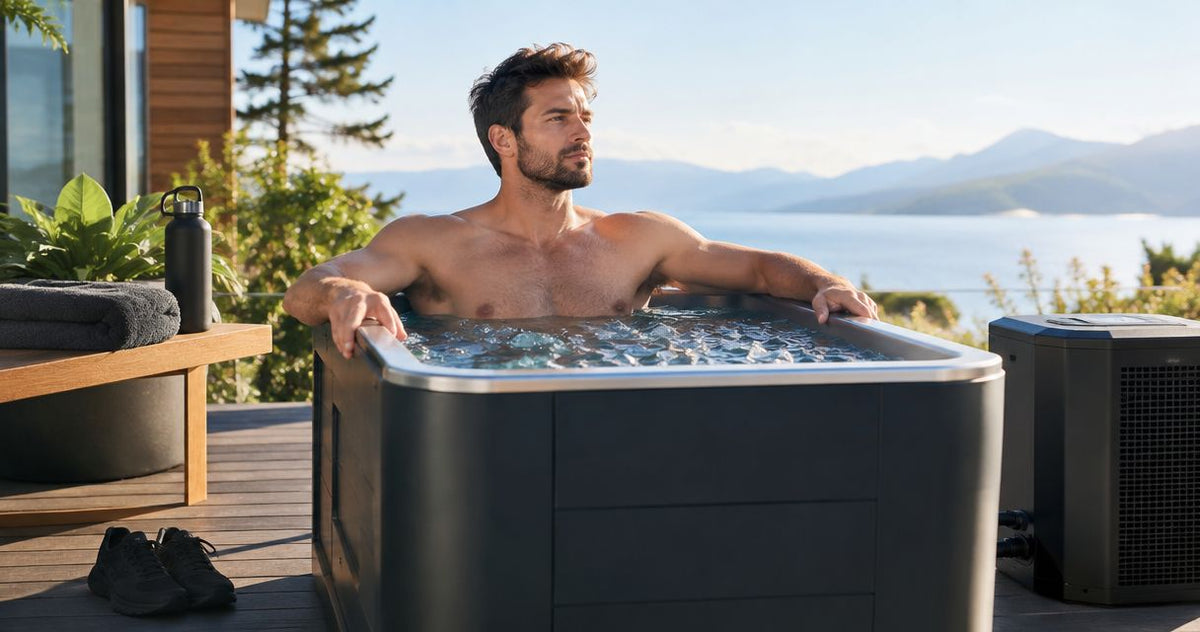
Best portable option: the Portable Inflatable Ice Bath Tub, listed at 76.6 gallons. Best outdoor-focused option: the 79 Gallon Cold Plunge Tub with a thermo lid. The best cold plunge tub for recovery in 2026 is the one that fits your body, your installation space, and the water-care routine you can maintain—not simply the largest container.
By Editorial Team
Aeva Vital offers both portable and outdoor-focused ice baths. This guide compares their stated features and explains what to check before choosing; if automatic cooling is your priority, start with the cold plunge tub with a built-in chiller guide.
- The best cold plunge tub for recovery depends on fit, cooling requirements, and water care—not capacity alone.
- Aeva Vital's Portable Inflatable Ice Bath Tub is the portable pick, with a listed capacity of 76.6 gallons.
- The 79 Gallon Cold Plunge Tub is the outdoor-focused pick; its listing explicitly includes a thermo lid.
- Check usable dimensions, drainage, cooling compatibility, and cleaning instructions before buying an ice bath.
Why this matters
An ice bath is a container for cold-water immersion. A complete cold plunge setup also needs a way to manage water temperature, keep the water clean, and let you enter and exit safely. Those are separate requirements.
Buying a tub does not establish a recovery protocol or prove a medical benefit. Your shopping decision should separate the equipment's documented features from claims about soreness, athletic performance, or injury treatment.
Aeva Vital's cold plunge tubs are best for home shoppers comparing a portable ice bath with an outdoor-focused tub. Choose between those formats before comparing accessories or adding cooling equipment.
What makes the best cold plunge tub for recovery?
Use these criteria for your 2026 shortlist. Each answers a practical question that a capacity figure alone cannot resolve.
- Usable fit: Check internal dimensions and your intended seated posture. Exterior measurements do not establish legroom or immersion depth.
- Cooling method: Establish how the water becomes cold and how you will check its temperature. A tub, an insulated lid, and a chiller perform different jobs.
- Water care: Read the cleaning, draining, and water-treatment instructions. Confirm any filtration or sanitation equipment rather than assuming it is included.
- Installation requirements: Check the filled load, support surface, drainage route, electrical requirements, and access around the tub.
- Handling and storage: Compare the work involved in setting up, emptying, drying, and storing the equipment. Portable describes a format, not a filled tub's ease of movement.
- Documented components: Identify what comes with the purchase and what requires a separate compatible component. Match every important feature to a written specification.
Cold plunge tubs at a glance
The order below reflects distinct use cases, not a measured performance contest. The listed capacities differ by 2.4 gallons, which does not establish a meaningful difference in body fit without internal measurements.
| Option | Best for | Stated feature | Key limitation | Check before choosing |
|---|---|---|---|---|
| Portable Inflatable Ice Bath Tub | Shoppers prioritizing a portable format | Inflatable design; listed capacity of 76.6 gallons | Requires inflation; capacity alone does not establish usable fit | Internal dimensions, inflation instructions, drainage, and cooling connections |
| 79 Gallon Cold Plunge Tub | Shoppers planning an outdoor setup | Outdoor-focused listing; thermo lid included | Outdoor positioning does not establish every installation or weather requirement | Placement instructions, lid care, filled load, and cooling configuration |
Neither capacity figure should be treated as your required fill volume. Your body displaces water, and the manufacturer's fill instructions determine the appropriate water level.
1. Portable Inflatable Ice Bath Tub: best for portable setups
The Portable Inflatable Ice Bath Tub is listed as a portable, inflatable ice bath for athletes, with a capacity of 76.6 gallons. Its defining feature is the inflatable format, not a documented cooling system or a particular recovery outcome.
Choose this format when portability is central to your equipment plan. Before ordering, establish what packing, drying, inflation, and storage involve; those tasks determine whether a portable tub actually suits your routine.
Portable Inflatable Ice Bath Tub pros:
- The product title explicitly identifies a portable format.
- The inflatable construction gives you a clear setup category to compare.
- The listed capacity provides a starting point for water-volume planning.
Portable Inflatable Ice Bath Tub cons:
- Inflation is an additional setup task compared with a non-inflatable container.
- The gallon rating does not tell you whether your preferred seated position fits.
- Portability does not remove the need to drain and prepare the tub before relocation.
Best for: Buyers who prioritize a portable ice bath and accept the associated setup and storage work.
For a 2026 purchase, verify the working dimensions and care instructions before treating portability as the deciding feature. Also check whether any intended pump, hose, or cooling equipment is compatible with the exact tub.
Verdict: Buy for portability after confirming fit and setup requirements; hold if automatic cooling is your main requirement until the complete configuration is documented.
2. 79 Gallon Cold Plunge Tub: best for outdoor-focused setups
The 79 Gallon Cold Plunge Tub is presented as an all-season outdoor ice bath, and its title explicitly states that a thermo lid is included. Those details make it the outdoor-focused choice in this comparison.
The lid is a documented component, but its name does not quantify insulation performance. Likewise, the outdoor description does not replace instructions covering placement, weather exposure, cleaning, or winter care.
79 Gallon Cold Plunge Tub pros:
- The product title explicitly identifies outdoor use.
- A thermo lid is included in the stated configuration.
- The listed 79-gallon capacity provides a water-volume reference.
79 Gallon Cold Plunge Tub cons:
- An outdoor setup still requires a suitable support surface and drainage plan.
- The lid adds a component you must remove, handle, and maintain.
- The capacity does not establish comfortable seating space or safe entry height.
Best for: Buyers planning an outdoor ice-bath area who want a tub with an explicitly included lid.
Inspect the intended location before buying. You need room to approach the tub, handle its lid, reach the drain, and service any connected equipment without blocking your exit.
Verdict: Buy for an outdoor-focused setup after checking installation instructions; hold if you need verified temperature-control or insulation performance before deciding.
Compare the documented products
These Aeva Vital cold plunge options serve different setup priorities. Review the current product details for dimensions, included components, and operating instructions before selecting either format.


What the specifications do—and do not—prove
Capacity versus usable fit
Capacity describes water volume. It does not describe the shape of the interior, the height of the rim, or the position your knees take when seated.
Compare internal length, width, and depth against your intended posture. Do not assume the larger gallon rating is automatically better for a taller athlete: container geometry matters, and exterior dimensions include the structure surrounding the water.
A lid versus active cooling
A lid covers the tub. An active cooling system removes heat from the water; those functions are not interchangeable.
For your 2026 comparison, identify whether a chiller is included, optional, or incompatible with the tub. If you intend to add one, verify connections, electrical requirements, water-flow requirements, and the manufacturer's installation instructions before purchasing either component.
Filtration versus sanitation
Filtration and sanitation are different water-care functions. A filter captures material according to its design; its presence does not establish that the water is adequately disinfected.
Follow the equipment manufacturer's water-care instructions. Do not substitute a generic pool-maintenance routine or assume clear-looking water is sufficient evidence of cleanliness.
Outdoor use versus unrestricted exposure
An outdoor-use description identifies an intended setting. It does not provide a universal guarantee against freezing conditions, prolonged sunlight, storms, or unsuitable placement.
Check the exact care limits for the tub and every accessory. A compatible installation must account for the least weather-tolerant component, including pumps, hoses, and electrical equipment.
Plan the installation before the first fill
An empty tub is not the same installation problem as a filled tub. Water adds substantial weight, and your body adds another load; capacity alone cannot establish whether a deck, balcony, or raised platform is suitable.
Use the manufacturer's filled-weight information and obtain a qualified assessment where structural capacity is uncertain. Keep drainage away from electrical connections, walking routes, and areas where discharged water will create a hazard.
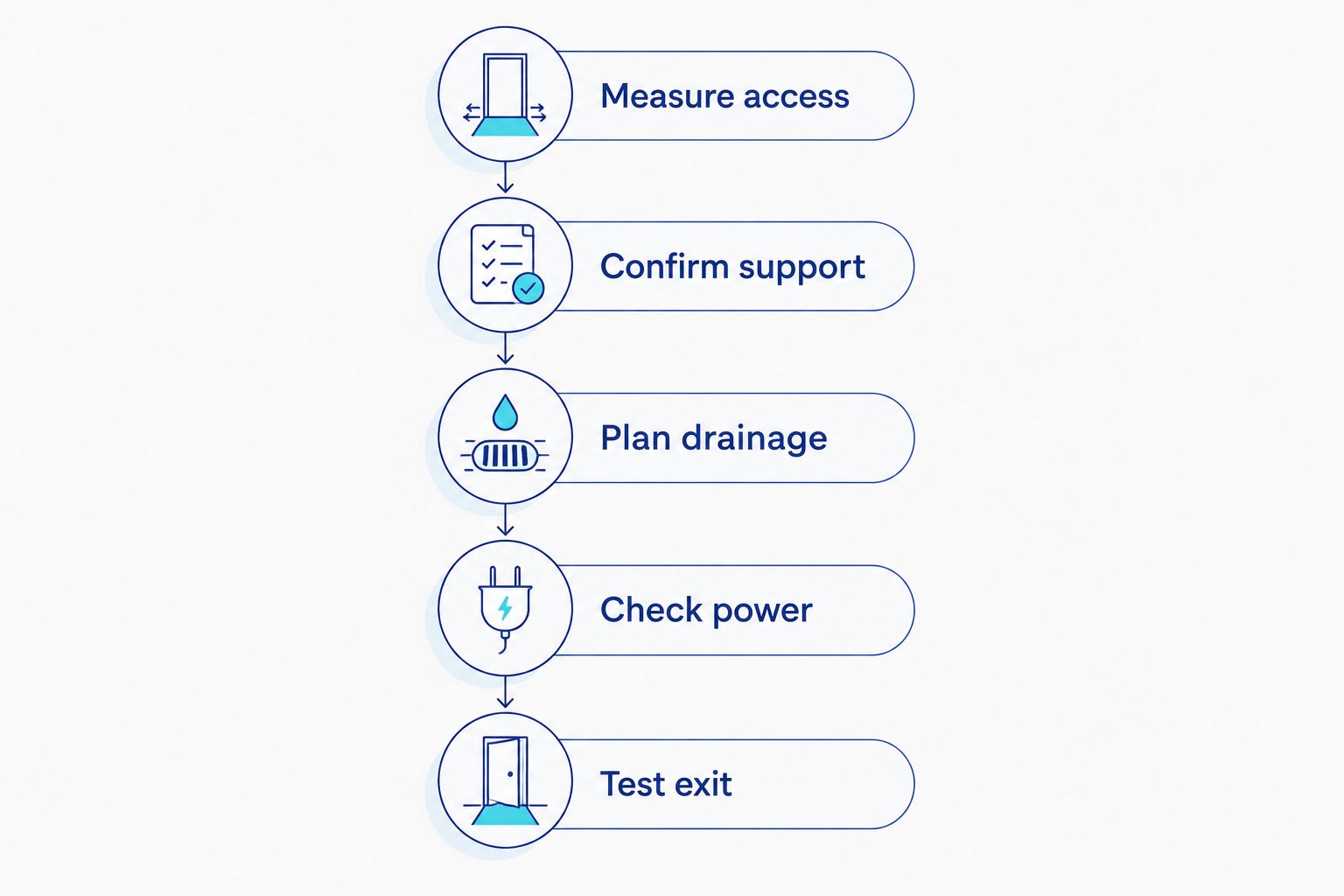
Work through this sequence before setting up:
- Measure access: Check the delivery route, doorway clearance, and working space around the chosen location.
- Confirm support: Establish that the surface is level and suitable for the complete filled setup.
- Plan drainage: Identify where discharged water will go and how you will reach the drain.
- Check power: If powered equipment is involved, follow its instructions and applicable electrical requirements.
- Test exit: Confirm that you can enter and leave without relying on an unsupported lid, hose, or tub edge.
The practical test is whether the setup remains usable during cleaning and maintenance, not just during immersion. Leave access to connections and drains, and keep the route out of the tub clear.
Keep recovery claims separate from equipment claims
Cold-water immersion exposes your body to cold, and sudden immersion can trigger rapid breathing and cardiovascular stress. A tub marketed for athletes is not evidence that immersion is suitable for every athlete or every medical condition.
Seek medical guidance before cold immersion if you have a cardiovascular condition, a history of fainting, or another condition affecting your response to cold. Do not plunge alone, hold your breath underwater, or treat extreme discomfort as a training target.
A buying guide cannot set an individualized temperature or session duration. Follow appropriate clinical guidance and the equipment instructions rather than choosing a colder setting because it sounds more advanced.
Judge the tub by documented construction and usability; judge your recovery routine separately. A capacity figure, included lid, or athlete-focused product title cannot prove faster healing or improved performance.
How the options are ranked
The ranking uses stated format, capacity, and included components. The Portable Inflatable Ice Bath Tub takes the portable slot because its title explicitly identifies that format; the 79 Gallon Cold Plunge Tub takes the outdoor slot because its title identifies outdoor use and an included thermo lid.
This is not a ranking of measured cooling speed, insulation, durability, or athletic outcomes. Those comparisons require specifications or testing that address the same conditions and the same performance measure.
Which cold plunge tub should you choose?
Choose the Portable Inflatable Ice Bath Tub when portability is your first requirement. Choose the 79 Gallon Cold Plunge Tub when an outdoor-focused setup with an included lid is your priority.
For undecided shoppers in 2026, resolve the location first. Then check body fit, cooling requirements, and water care; that order prevents you from buying a suitable-looking tub that does not work in your available space.
FAQ
What's the best cold plunge tub for recovery at home?
The best cold plunge tub for recovery is the one that fits your body and supports a workable cooling, cleaning, and installation plan. The Portable Inflatable Ice Bath Tub is the portable pick here; the 79 Gallon Cold Plunge Tub is the outdoor-focused pick.
Is a larger cold plunge tub better for athletes?
A larger capacity does not automatically mean a better fit for an athlete. Compare internal dimensions, seated posture, entry height, and the manufacturer's fill instructions rather than gallon ratings alone.
Does a thermo lid cool cold plunge water?
A thermo lid is not an active cooling system. Confirm the tub's cooling configuration separately, and do not infer a particular insulation performance from the lid's name.
Can I connect any chiller to an inflatable ice bath?
Do not assume an arbitrary chiller is compatible with an inflatable ice bath. Verify the tub connections, cooling-system requirements, and written compatibility instructions before buying separate components.
Can I move a portable cold plunge while it is filled?
Do not treat a portable designation as permission to move a filled tub. Follow the manufacturer's draining and handling instructions before relocation.
Is filtered cold plunge water automatically clean enough to reuse?
Filtration alone does not establish adequate sanitation. Follow the manufacturer's cleaning and water-treatment instructions, including any requirements for draining and replacing the water.
How long should I stay in a cold plunge after training?
This equipment comparison does not establish a safe session duration for you. Obtain appropriate health guidance, account for the water temperature, and avoid treating discomfort or colder water as proof of a better recovery session.
What should I check before buying a cold plunge tub in 2026?
Check internal dimensions, included components, cooling compatibility, drainage, support requirements, and care instructions. Confirm that the entire setup works in your intended location before filling the tub.
Related guides
One last thing
Before buying in 2026, rehearse the exit from your intended tub location. A lid, drain hose, or nearby cooling unit should never occupy the space you need to step out safely; that installation detail deserves more attention than the small difference between these capacity ratings.