
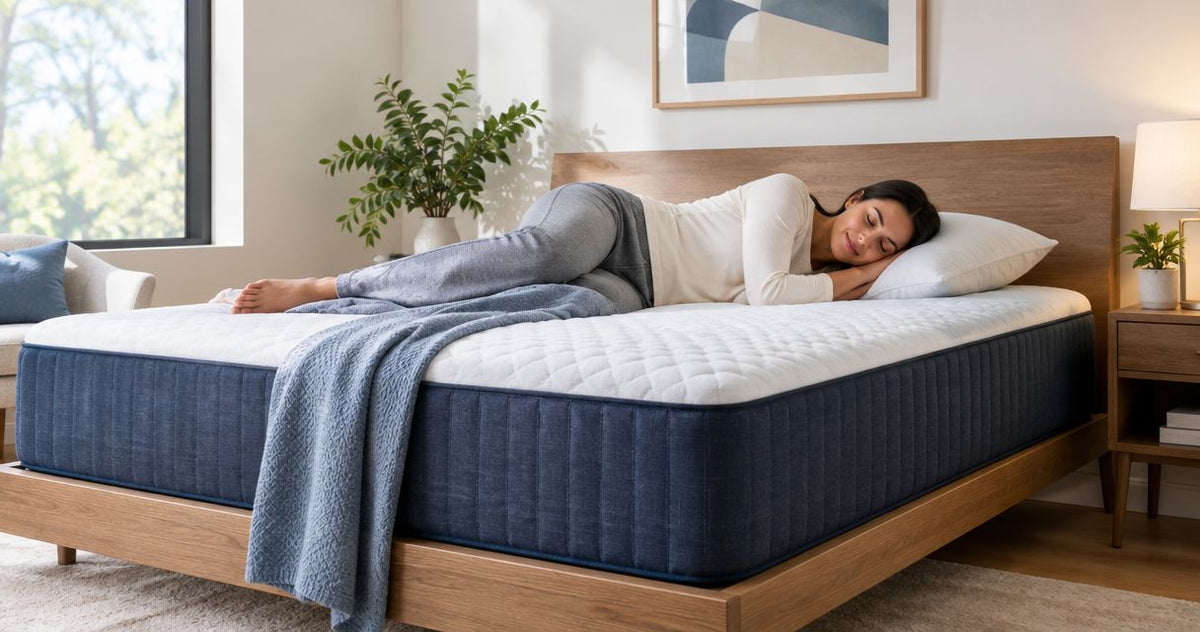
Best starting point: a medium-firm hybrid that supports your pelvis without creating shoulder pressure. Best for firm-feel shoppers: consider the SpineAlign 12" Queen Firm Cooling Hybrid Mattress; best for side sleepers: prioritize a pressure-relieving hybrid rather than maximum firmness. This 2026 guide separates mattress construction from claims about back-pain relief.
By Editorial Team
- The best hybrid mattress for back pain balances support and pressure relief; the hardest surface is not the default.
- Aeva Vital’s SpineAlign is a firm hybrid candidate, not a proven treatment for back pain.
- Side sleepers should prioritize shoulder and hip cushioning without excessive pelvic sink.
- Check foundation requirements, mattress dimensions, and return terms before choosing a hybrid mattress.
Why this matters
A hybrid mattress combines a spring support system with cushioning materials above it. That construction describes what is inside the bed, not whether it will relieve your particular symptoms.
Firmness and support are different. Firmness is the surface feel; support is how the mattress resists your weight and keeps you from sinking unevenly. Use the hybrid mattress firmness guide to separate those concepts before comparing models.
Aeva Vital’s SpineAlign hybrid mattress is best considered by shoppers who specifically want a firm feel. Its stated construction supports that shopping fit, but does not establish a medical outcome.
What makes the best hybrid mattress for back pain?
For your 2026 shortlist, assess these criteria before reading cooling claims or counting layers:
- Pelvic support: Your hips should not settle noticeably deeper than the rest of your torso in your usual sleeping position.
- Pressure relief: Your shoulders and hips need cushioning, particularly when you sleep on your side.
- Position fit: Back, side, stomach, and combination sleepers place different demands on the same surface.
- Movement: You should be able to turn and get out of bed without fighting deep cushioning.
- Construction clarity: Look for stated foam materials, coil design, and foundation requirements—not just descriptive model names.
- Purchase protection: Read the actual return, trial, and warranty terms. Do not assume a mattress includes any particular policy.
A firmness label is useful for narrowing choices, but it is not a standardized promise of how the mattress will feel to you. Your body size and sleeping position affect that experience.
Hybrid mattress options at a glance
These are ranked shopping routes, not results from a comparative product test. Only the named mattress has product-specific construction information in this guide; the other entries describe configurations to look for.
| Option | Best for | Standout feature to assess | Key limitation |
|---|---|---|---|
| SpineAlign 12" Queen Firm Cooling Hybrid Mattress | Shoppers specifically seeking a firm surface | Stated high-density foam and individually wrapped coils | No supplied evidence establishes back-pain relief or measured cooling performance |
| Medium-firm hybrid | Undecided shoppers and back sleepers | Balance between cushioning and resistance to pelvic sink | The firmness label alone cannot establish fit |
| Pressure-relieving hybrid | Side sleepers with shoulder or hip discomfort | Comfort layers that accommodate prominent pressure points | Deep cushioning can make turning harder |
| Responsive hybrid | Combination sleepers who change position frequently | A surface that recovers readily as you move | Easy movement does not prove adequate pressure relief |
1. SpineAlign: best hybrid for a firm-feel shortlist
The SpineAlign 12" Queen Firm Cooling Hybrid Mattress is the named Aeva Vital hybrid mattress option here. Its supplied description identifies high-density foam and individually wrapped coils, and its title identifies a firm feel and a 12-inch profile.
Individually wrapped coils can compress separately beneath different areas of the body. That describes a construction feature, not a guarantee of spinal alignment. High-density foam is also a material description; without a stated density value and layer specifications, it does not establish durability or firmness on its own.
SpineAlign pros:
- The firm designation gives firm-feel shoppers a clear starting point.
- The supplied description identifies both foam and coil components.
- The stated queen format and 12-inch profile help you begin a fit check.
SpineAlign cons:
- A firm surface is not automatically suitable for side-sleeping pressure points.
- The cooling wording is not accompanied by a measured temperature result.
- The supplied details do not establish adjustable-base compatibility or pain relief.
Best for: Shoppers who already prefer firm mattresses and want to assess this construction against their sleeping position.
Verdict: Hold until you confirm pressure relief, foundation requirements, and purchase terms.
2. Medium-firm hybrid: best starting point for back sleepers
A medium-firm hybrid is a practical first configuration to assess when you are unsure what to choose. Look for enough cushioning to accommodate your body's contours, with support beneath the pelvis that prevents an obvious hammock-like position.
For a back sleeper, the question is not whether the surface feels hard. It is whether your lower back feels comfortably supported while your hips remain stable. Do not assign a universal firmness score to that experience.
Medium-firm hybrid pros:
- Offers a middle-ground starting point rather than an extreme surface feel.
- Lets you assess support and cushioning together.
- Provides a useful reference when comparing softer and firmer alternatives.
Medium-firm hybrid cons:
- Different manufacturers use the label differently.
- The same mattress can feel different to sleepers of different body sizes.
- A balanced surface does not guarantee relief from a medical condition.
Best for: Back sleepers and undecided shoppers without a strong preference for very soft or very firm surfaces.
Verdict: Buy only after the individual model meets your support, comfort, and foundation checks.
3. Pressure-relieving hybrid: best for side sleepers
A pressure-relieving hybrid places more emphasis on cushioning at the shoulder and hip. The goal is to accommodate those areas without letting your pelvis sink excessively.
Side sleepers should assess both ends of that trade-off. Too little cushioning creates concentrated pressure; too much sink makes it harder to maintain a comfortable position or turn over. Neither a thick comfort layer nor a soft label settles the question alone.
Pressure-relieving hybrid pros:
- Prioritizes cushioning where side sleepers place substantial pressure.
- Combines a contouring surface with a spring support system.
- Gives you a clear reason to compare comfort-layer materials and thicknesses.
Pressure-relieving hybrid cons:
- Deep contouring can restrict easy movement.
- Extra cushioning does not necessarily improve pelvic support.
- A surface suitable for side sleeping can feel too yielding on your stomach.
Best for: Predominantly side sleepers whose main mattress complaint is shoulder or hip pressure.
Verdict: Buy if pressure relief improves without creating excessive pelvic sink.
4. Responsive hybrid: best for combination sleepers
A responsive hybrid emphasizes ease of movement rather than a deeply enveloping feel. Look for a surface that lets you move between your back and side without leaving you feeling trapped in the cushioning.
Responsiveness is not the same as firmness. A mattress can cushion your body and still recover readily when you change position. Evaluate movement alongside support, not instead of it.
Responsive hybrid pros:
- Makes position changes a central selection criterion.
- Helps you identify cushioning that does not impede turning.
- Encourages assessment across your actual sleeping positions.
Responsive hybrid cons:
- Easy movement does not establish comfortable shoulder cushioning.
- A springier feel is not proof of low partner disturbance.
- Edge stability still needs a separate check.
Best for: Sleepers who regularly change position or dislike deeply contouring surfaces.
Verdict: Buy if movement, pressure relief, and support work together.
Match the mattress to your sleeping position
Your 2026 choice should start with how you actually sleep, not the position you intend to adopt. Assess the mattress with your usual pillow because pillow height also affects your posture.
- Back sleeping: Check pelvic support and comfortable contact beneath the lower back.
- Side sleeping: Check shoulder relief and hip relief without twisting your torso.
- Stomach sleeping: Check that your midsection does not sink substantially below your chest.
- Combination sleeping: Check each regular position and the effort needed to turn.
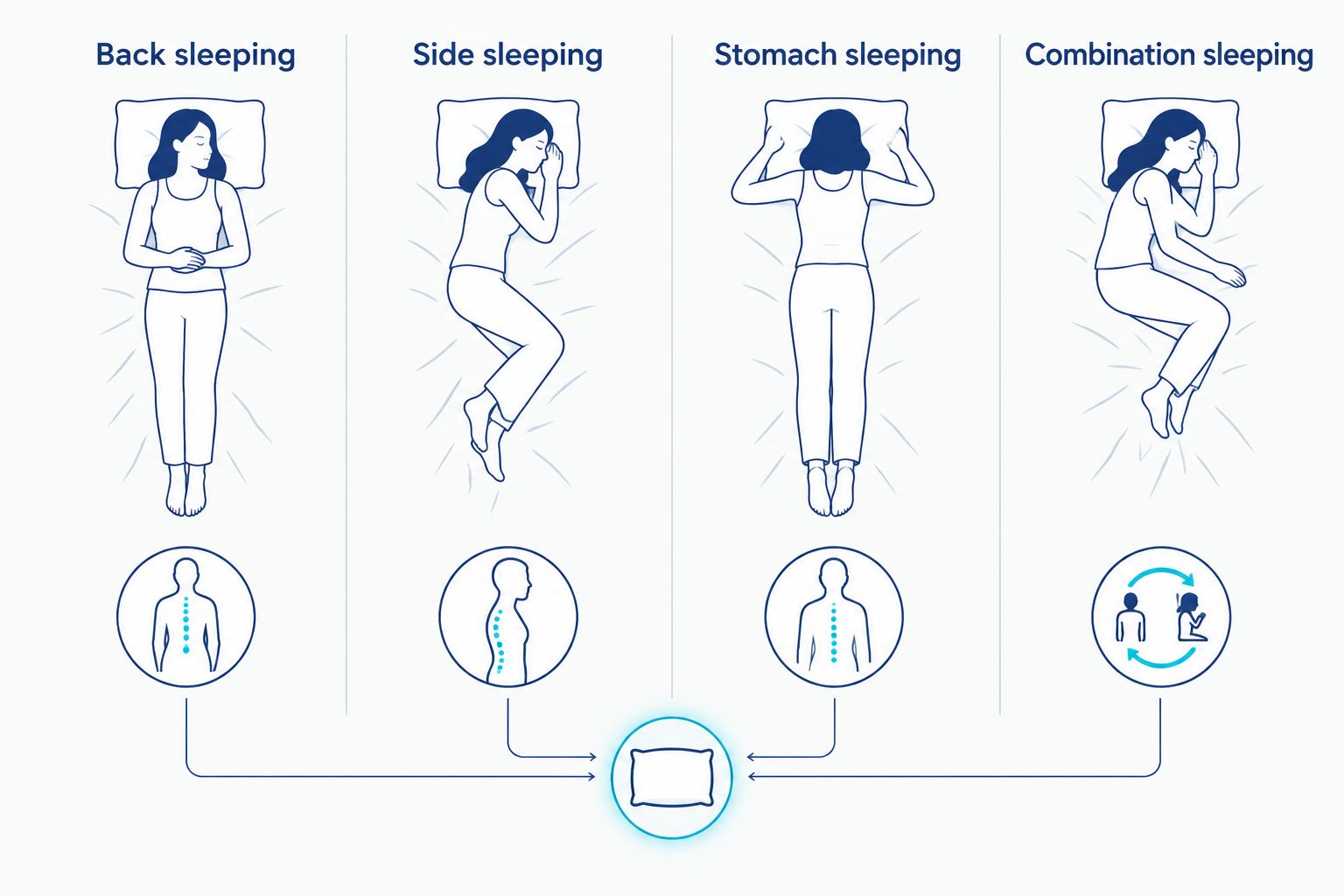
Body size changes how much you compress the same materials. If you and your partner have different builds or sleep positions, assess both needs rather than assuming one firmness label describes a shared experience.
What specifications do—and do not—prove
For a 2026 comparison, read each specification as evidence of one specific attribute. Do not turn a construction detail into a broader health claim.
Mattress thickness: A 12-inch profile describes total height. It does not reveal how much of that height is cushioning, how supportive the coils are, or whether the bed suits your back.
Foam density: Density describes mass per unit volume. It is not interchangeable with firmness, and an unspecified high-density claim does not let you compare two foams precisely.
Wrapped coils: Individual wrapping allows coils to respond separately. Coil count alone does not establish support quality; wire characteristics, layout, surrounding materials, and the sleeper's body all matter.
Cooling terminology: A cooling name does not establish a specific temperature reduction. Evaluate the stated materials and your bedding together, rather than assuming the label guarantees comfortable sleep.
Medical-sounding names: Alignment or orthopedic wording is not proof that a mattress treats back pain. Product naming and clinical evidence are separate things.
Check dimensions and foundation compatibility
A standard US queen mattress is nominally 60 inches wide by 80 inches long. Those are category dimensions, not a measurement of the SpineAlign model; confirm the individual product's stated dimensions before matching it to your frame.
A 12-inch mattress also adds height to the foundation beneath it. Consider the resulting sitting height, fitted-sheet pocket depth, and whether you can place your feet securely on the floor when getting out of bed.
Check these details before ordering:
- The mattress manufacturer's required foundation type.
- Any stated slat-spacing or center-support requirements.
- Whether the existing frame is level and structurally sound.
- Adjustable-base compatibility, if you plan to use one.
- The complete mattress dimensions, not just the size name.
A hybrid construction does not automatically mean adjustable-base compatibility. A base that is unsuitable or damaged also complicates your assessment of the mattress itself.
How these recommendations are ranked
This 2026 guide ranks by shopping fit: a named firm-feel option, a balanced default, a side-sleeping priority, and a movement priority. The criteria are pelvic support, pressure relief, sleeping position, movement, construction clarity, and purchase protection.
Aeva Vital's product information supports discussion of the SpineAlign model's stated height, firm designation, foam, and coils. It does not support a claim that the mattress outperforms competing models or produces a measured reduction in pain.
The ranking is a decision framework, not a clinical recommendation or a hands-on test result.
Which hybrid mattress should you choose?
Start with a medium-firm hybrid if you have no established firmness preference. Compare firmer or more contouring alternatives only when your position and comfort checks give you a reason.
Choose a pressure-relieving configuration when side-sleeping discomfort is the main issue. Choose a responsive configuration when turning is difficult. Consider the named firm model when a firm feel is already your preference—not because its name promises a particular outcome.
For your final 2026 decision, resolve the foundation and return questions before committing. A persuasive specification sheet cannot replace fit.
FAQ
What's the best hybrid mattress for back pain in 2026?
A medium-firm hybrid is a practical starting point, but the best fit supports your pelvis while cushioning your pressure points. Choose by sleeping position and individual comfort rather than treating a firmness label as a medical recommendation.
Is a firm mattress always better for lower back pain?
No, a firm mattress is not automatically better for lower back pain. A surface that feels too hard can create pressure, while excessive softness can allow uneven sinking.
Is the SpineAlign hybrid mattress proven to relieve back pain?
The supplied product information does not establish proven back-pain relief. It identifies a firm hybrid with high-density foam and individually wrapped coils, which are construction details rather than clinical results.
What should side sleepers look for in a hybrid mattress?
Side sleepers should look for shoulder and hip cushioning with stable pelvic support. Check that the comfort layers accommodate those pressure points without making movement difficult.
Does a thicker hybrid mattress provide better back support?
Thickness alone does not establish better back support. Total height does not show how the comfort layers and support system perform under your body.
Can you use any hybrid mattress on an adjustable bed?
No, hybrid construction alone does not establish adjustable-bed compatibility. Confirm approval for the individual mattress and follow the manufacturer's foundation requirements.
Can a hybrid mattress cure back pain?
A hybrid mattress should not be treated as a cure for back pain. Seek medical advice for persistent or worsening symptoms, and seek urgent care for new weakness or loss of bladder or bowel control.
Related guides
- Hybrid mattress selection for heavier sleepers
- Hybrid mattress choices for hot sleepers
- Is an adjustable bed worth it for back pain?
One last thing
Check the foundation before blaming the mattress. A bowed support surface or damaged frame changes how the bed carries your weight; replacing the mattress without resolving that problem leaves a basic fit issue untouched.