

Best overall for a small bathroom: the 55-inch acrylic freestanding soaking bathtub. Best for an oval design: the 59-inch diamond-pattern bathtub. Best for a longer layout: the 67-inch acrylic bathtub, but only after checking the complete footprint. This 2026 guide compares three Aeva Vital freestanding tubs by listed length, construction, drain finish, and the installation checks that determine whether they belong in your bathroom.
By Editorial Team
- Best freestanding tub small bathroom pick: Aeva Vital’s 55-inch acrylic model has the shortest listed length in this comparison.
- The 59-inch diamond-pattern bathtub adds an oval shape and four inches of listed length.
- The 67-inch acrylic bathtub lists cUPC certification but requires the longest space of these three options.
- Check exterior width, interior dimensions, faucet placement, and drain access before selecting any freestanding bathtub.
What makes the best freestanding tub for a small bathroom?
Aeva Vital’s 55-inch freestanding bathtub is the best starting point for buyers prioritizing the shortest listed tub length. Start with that specification, then confirm the rest of the installation drawing. Length narrows the shortlist; it does not establish a complete fit.
Aeva Vital specializes in home wellness products, including freestanding bathtubs. For this comparison, the useful distinction is between the tub you can place on a drawing and the tub you can actually install, enter, clean around, and use.
Use these criteria before comparing finishes:
- Exterior footprint: Check overall length and width, including the widest part of the shell.
- Usable bathing space: Compare interior floor length, interior width, backrest shape, and water depth to the overflow.
- Room circulation: Preserve access to the toilet, vanity, shower, bathroom door, and tub entry side.
- Plumbing compatibility: Match the drain position and faucet arrangement to the proposed installation.
- Construction and documentation: Confirm material, included drain components, certification, and installation instructions for the exact model.
- Cleaning access: Choose a position that lets you reach the floor and surfaces around the tub.
Freestanding tubs at a glance: 2026 shortlist
The ranking favors shorter listed length first. The longer options serve different priorities rather than competing for the same small-space recommendation.
| Bathtub | Best for | Listed length | Standout details | Key limitation |
|---|---|---|---|---|
| 55-inch acrylic freestanding soaking bathtub | Shortest listed length | 55 inches | Acrylic construction; chrome drain | Length alone does not establish width, bathing depth, or installed clearance |
| 59-inch diamond-pattern acrylic bathtub | Oval shape and patterned exterior | 59 inches | Oval shape; diamond pattern; gloss white; chrome drain | Adds 4 inches of length over the shortest option |
| 67-inch acrylic freestanding bathtub | Longer bathroom layouts | 67 inches | Gloss white; chrome drain; listed cUPC certification | Adds 12 inches of length over the shortest option |
These dimensions describe the listed lengths, not a guaranteed installation envelope. Do not treat a tub’s nominal size as its interior floor length or assume that the bathroom needs only the same amount of floor space.
Why this matters: a freestanding tub needs more than its footprint
A freestanding bathtub has an exposed exterior rather than being enclosed by an alcove surround. That changes how you plan the room. The shell, filler, drain connection, cleaning access, and entry position all need attention.
A small bathroom can accommodate a freestanding tub only when those requirements work together. A shorter shell helps with one constraint, but it does not solve a poorly positioned drain or a door that opens into the bathing area.
Select the installed arrangement, not just the bathtub. Keep the faucet and surrounding fixtures on the same drawing as the tub so you can identify conflicts before ordering.
1. 55-inch acrylic soaking bathtub: best for shorter layouts
The 55-inch acrylic freestanding soaking bathtub with chrome drain has the shortest listed length in this comparison. Its description identifies ergonomic curves, but that wording does not establish whether the interior fits your preferred bathing position.
At 55 inches, this model is 4 inches shorter than the 59-inch option and 12 inches shorter than the 67-inch option. Those differences make it the first candidate to check when room length is your main constraint.
55-inch bathtub pros:
- Shortest listed length among the three compared tubs.
- Acrylic construction is explicitly identified.
- Chrome drain is explicitly identified, giving you a confirmed finish to coordinate with other fixtures.
55-inch bathtub cons:
- Listed length does not establish the complete exterior footprint.
- Ergonomic curves do not prove legroom, backrest comfort, or ease of entry for a particular person.
Best for: Buyers whose main constraint is available room length and who can verify the remaining dimensions before purchase.
Check the interior floor length separately from the exterior length. A curved end or sloping backrest occupies space inside the shell; the relevant question is where your body sits, not where the outside edge ends.
Verdict: Buy only after the complete footprint, interior dimensions, and plumbing arrangement pass your room check. This is the default shortlist leader, not a fit guarantee.
2. 59-inch diamond-pattern bathtub: best for an oval design
The 59-inch acrylic freestanding bathtub has an oval shape, diamond-pattern exterior, gloss-white finish, and chrome drain. Choose it when the oval form and patterned shell are priorities and your room accommodates the additional length.
The listed length is 59 inches, compared with 55 inches for the shortest option. That 4-inch difference is measurable; any improvement in usable bathing space must come from the interior drawing rather than the exterior number alone.
59-inch bathtub pros:
- Oval shape is explicitly described.
- Diamond-pattern exterior provides a specific design distinction.
- Acrylic construction, gloss-white finish, and chrome drain are identified.
59-inch bathtub cons:
- Requires a longer tub envelope than the 55-inch option.
- Exterior shape and finish do not establish soaking depth or comfortable seated space.
Best for: Buyers who want an oval, patterned freestanding tub and have room for the longer listed length.
Inspect the oval tub’s widest point on the dimension drawing. A tapered end does not mean the middle of the tub will clear a vanity, doorway, or nearby fixture. Place the complete outline on your floor plan rather than drawing only a centerline.
Verdict: Hold until the full oval footprint and interior measurements confirm a practical advantage for your room. Choose the design because you want it, not because an oval outline automatically saves space.
3. 67-inch acrylic bathtub: best for a longer layout
The 67-inch acrylic freestanding bathtub lists a gloss-white finish, chrome drain, and cUPC certification. It is the longest candidate here, so it belongs on a small-bathroom shortlist only when the room has enough uninterrupted length and usable access.
At 67 inches, it is 8 inches longer than the 59-inch option. It is also 12 inches longer than the 55-inch option, making the length trade-off substantial within this comparison.
67-inch bathtub pros:
- Longest listed exterior length among the compared options.
- Acrylic construction and gloss-white finish are identified.
- cUPC certification is listed for this model.
67-inch bathtub cons:
- Requires the longest tub envelope of the three candidates.
- Certification does not establish room fit, interior comfort, or floor suitability.
Best for: Buyers with a longer bathroom layout who want to evaluate a larger exterior shell.
Verify the certification documentation for the exact model. cUPC certification concerns applicable plumbing-product standards; it does not replace local installation requirements or confirm that your bathroom can support the proposed arrangement.
Verdict: Skip for length-constrained layouts; hold for layouts that pass a complete installation review. Do not sacrifice everyday access merely to select the longest tub.
How the tubs are ranked
This 2026 ranking prioritizes listed length, then gives each bathtub a distinct selection role. The 55-inch model leads on shortest length, the 59-inch model serves the oval-design preference, and the 67-inch model serves longer layouts.
The comparison does not rank heat retention, durability, comfort, or installation difficulty. Acrylic construction alone does not establish those results, and exterior length is not a substitute for usable interior measurements.
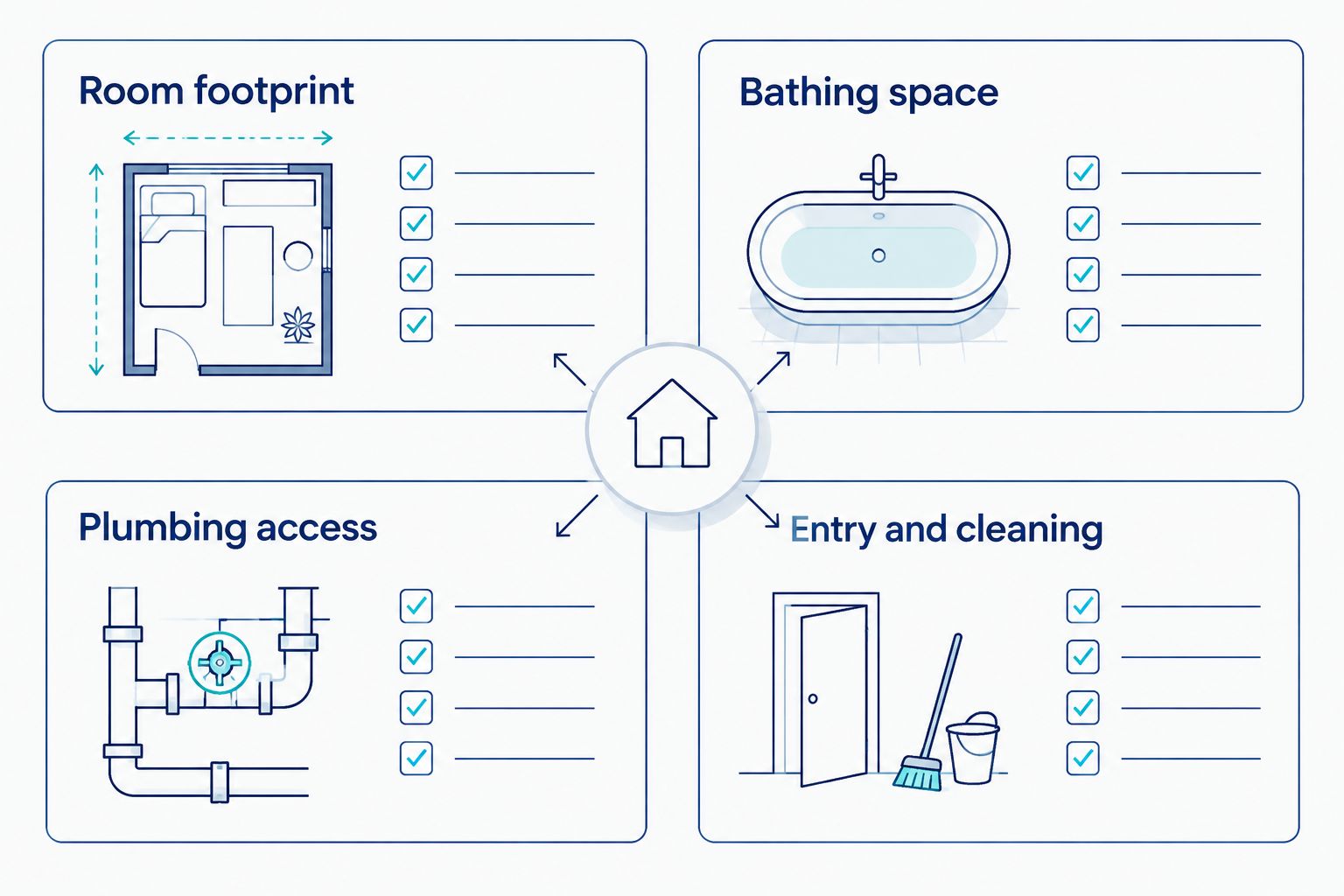
Check the room before choosing the tub
Room footprint
Measure the finished bathroom, including baseboards, projecting fixtures, and the door’s swing. Record the tub area separately from the space you need to move through the room.
Use the manufacturer’s exterior drawing to make a full-size outline with removable floor tape. Mark the filler position too. Walk through the room, open storage, and check the entry position without stepping across the proposed tub footprint.
Bathing space
Request interior floor dimensions and the depth to the overflow. Overall height and soaking depth are different measurements: the overflow limits the normal fill level, while the shell’s top edge determines overall height.
Compare the backrest shape with how you intend to sit. A longer exterior shell does not automatically create longer flat floor space, and a deeper tub does not automatically make entry easier.
Plumbing access
Locate the drain and confirm how the connection will be installed and serviced. Check the floor below the proposed tub position and ask the installer how access will work after the tub is in place.
The drain finish does not establish drain compatibility. Confirm the connection requirements and included components for the exact bathtub.
Entry and cleaning
Identify the side you will use to enter and leave the tub. Check that the filler does not occupy that space and that nearby fixtures do not force an awkward approach.
Also check whether you can reach behind the shell. A narrow gap that is difficult to clean is not a useful space-saving feature.
Faucet placement, delivery access, and floor suitability
A floor-mounted tub filler occupies floor space beyond the bathtub itself. A wall-mounted filler requires a suitable wall position and reach. Confirm that the spout directs water into the basin without obstructing entry or creating an inaccessible cleaning gap.
Check the delivery route from the entrance to the bathroom. Door openings, turns, stairs, and packaging dimensions matter; a tub that fits its final position still needs a workable route into the room. Confirm the manufacturer’s handling instructions before planning to remove packaging or change the carrying orientation.
Ask a qualified installer to assess the floor for the combined tub, water, and occupant load. Acrylic construction does not establish the filled weight, and a compact footprint does not prove that an existing floor is suitable.
For your 2026 installation plan, resolve these questions before scheduling work:
- Does the selected drain arrangement match the proposed plumbing position?
- Can the connection be tested and serviced as required?
- Does the faucet arrangement leave usable entry space?
- Can the tub reach the bathroom through the delivery route?
- Has the installer confirmed floor suitability and applicable local requirements?
What Aeva Vital’s bathtub specifications do and do not prove
The supplied product details identify acrylic construction and chrome drains across all three tubs. The 59-inch model additionally identifies an oval shape, diamond pattern, and gloss-white finish. The 67-inch model identifies gloss white and cUPC certification.
Those details support a material, finish, and listed-length comparison. They do not establish identical wall construction, insulation, interior dimensions, included installation hardware, or maintenance requirements across the range.
Use the exact model’s documentation for the final decision. Do not transfer a certification, component, or construction claim from one bathtub to another simply because the products share a material or finish.
Which freestanding tub should you choose?
Start with the 55-inch acrylic soaking bathtub if available room length is the deciding constraint. Move to the 59-inch diamond-pattern bathtub when you specifically want its oval form and the complete footprint fits. Consider the 67-inch acrylic bathtub only when the longer layout remains practical.
For a 2026 small-bathroom purchase, reject any candidate that interferes with essential fixture access, cannot be installed as documented, or leaves you without a workable entry position. The smallest acceptable installation is more useful than the smallest advertised length.
FAQ
What’s the best freestanding tub for a small bathroom?
The 55-inch acrylic freestanding soaking bathtub is the shortest listed option in this Aeva Vital comparison. Start there when room length is your main constraint, then verify exterior width, interior dimensions, and installation requirements.
Is a 55-inch freestanding bathtub big enough for an adult?
A 55-inch exterior length alone does not establish whether an adult will fit comfortably. Check interior floor length, backrest shape, interior width, and depth to the overflow against your preferred bathing position.
Is a 59-inch oval tub better than a 55-inch tub?
The 59-inch oval tub is the better design choice when you want its oval shape and diamond-pattern exterior. It adds 4 inches of listed length, but interior measurements must establish any difference in usable bathing space.
Can a 67-inch freestanding tub fit in a small bathroom?
A 67-inch freestanding tub fits only when its complete footprint, faucet position, and required access work within the room. It is 12 inches longer than the shortest option in this comparison, so check the whole layout rather than length alone.
How close can a freestanding bathtub go to the wall?
Use the exact bathtub and faucet installation instructions to determine wall placement. Preserve access for installation, servicing, and cleaning rather than applying a universal gap to every model.
Does cUPC certification mean a bathtub fits my bathroom?
No, cUPC certification does not establish room fit. Check the certification documentation for the exact product and have the installer confirm dimensions, floor suitability, plumbing compatibility, and local requirements.
Can I reuse my existing bathtub drain?
Reuse the existing drain only when the selected tub’s connection requirements and proposed position are compatible. Have the installer check the drain location, connection method, and service access before ordering.
What should I check before buying a freestanding tub in 2026?
Check the complete exterior footprint, usable interior dimensions, faucet arrangement, drain access, delivery route, and floor suitability. Confirm every requirement against the exact model’s documentation before purchase.
One last thing
Before choosing an Aeva Vital freestanding bathtub, tape its full outline and faucet position onto your floor. Then use the bathroom normally: open the door, reach the vanity, approach the toilet, and stand where you would enter the tub. A layout that passes those checks is a stronger starting point than a length measurement alone.