
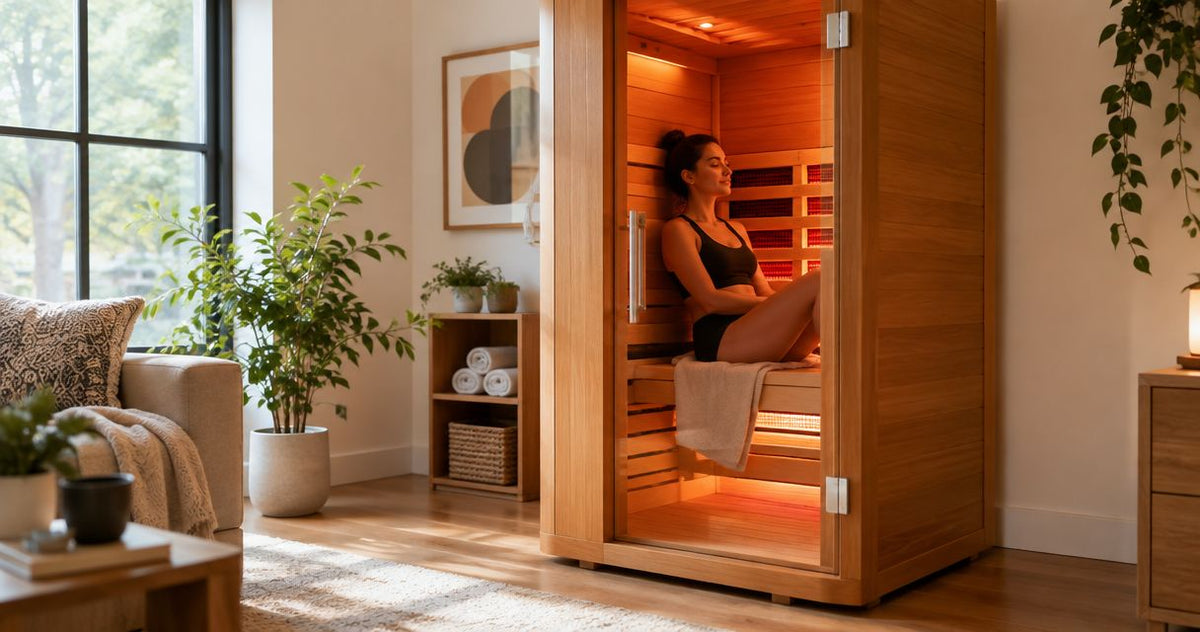
A home infrared sauna is worth it in 2026 if you enjoy heat sessions, will use it consistently, and can accommodate the equipment without compromising your room or electrical setup. The purchase also brings installation, electricity, cleaning, and service responsibilities beyond the sauna itself. Buy for convenient access to heat—not guaranteed weight loss, detoxification, or treatment of a medical condition.
By Editorial Team
- Is a home infrared sauna worth it? Yes for consistent users with suitable space; no for promised medical results.
- Aeva Vital offers home infrared saunas; compare documented construction and installation requirements before choosing.
- A two-person or three-person label describes intended occupancy, not verified comfort for your household.
- Check electrical requirements, interior dimensions, cleaning instructions, and service terms before ordering.
Is a home infrared sauna worth it in 2026?
Ownership makes sense when private access solves a problem you already have. If traveling to a sauna prevents you from using one you enjoy, putting the equipment at home addresses that inconvenience directly. If you have never tried infrared heat, establish that you like the experience before committing floor space.
An infrared sauna uses infrared emitters to deliver radiant heat. That describes its heating method, not a guaranteed health outcome. Evaluate the cabin as heat equipment first: how you sit inside it, how it connects to power, and how it fits your routine.
Use this decision sequence before comparing features:
- Confirm the experience. Try an infrared sauna and assess whether you actually enjoy the heat.
- Identify a realistic routine. Name the occasions when you would use it, including preparation and cleanup.
- Check the installation. Match the selected model’s instructions to your room, delivery route, and electrical supply.
- Review ownership obligations. Read the cleaning, service, warranty, and return terms before ordering.
- Separate comfort from treatment. Decide whether convenience alone justifies the purchase without assuming medical benefits.
For a starting point, Aeva Vital offers infrared saunas alongside other home wellness equipment. Compare the actual sauna specifications rather than treating a broader wellness category as evidence of performance.
Why this matters
A sauna occupies usable space even when it is switched off. The decision therefore involves more than whether a warm session sounds appealing: you are choosing a permanent or semi-permanent place for equipment, access, and maintenance.
For your 2026 purchase, prioritize the parts that determine daily usability. A comfortable seat and straightforward entry matter every time you use the cabin; an impressive feature name does not compensate for an awkward room layout.
Buy the experience you already value, not the habit you hope ownership will create. That distinction keeps the purchase grounded in your actual behavior rather than a list of possible benefits.
At a glance: which ownership choice fits your situation?
Home ownership is not automatically better than using a shared facility. Each arrangement solves a different problem, and each has limitations.
| Option | Best for | Main advantage | Main limitation | Decision |
|---|---|---|---|---|
| Home infrared sauna | People who already enjoy infrared heat and want private access | You control when you use your own equipment | You handle space, installation, cleaning, and service | Buy after checking fit and requirements |
| Shared sauna facility | People who want sauna access without installing equipment | No cabin occupies your home | Access depends on the facility’s schedule and rules | Keep using it if the arrangement works |
| Trying infrared heat before buying | People unfamiliar with the experience | Tests personal preference before a home purchase | Does not establish whether a particular cabin fits your room | Wait until you know you enjoy it |
The strongest ownership advantage is control over access. Its clearest disadvantage is responsibility: equipment at home becomes yours to maintain, troubleshoot, and accommodate.
Why a home infrared sauna’s value varies
The same cabin can be practical for one household and an obstruction for another. These factors determine which outcome you get:
- Actual use: Equipment delivers little practical value if you rarely choose to use it. Base your decision on an existing preference for sauna sessions.
- Room fit: Exterior dimensions, door movement, and required clearances determine whether the installation works. The cabin footprint alone is not the whole layout.
- Seating fit: Occupancy labels do not tell you whether your knees, shoulders, or preferred sitting posture fit comfortably.
- Electrical compatibility: The selected model’s voltage, current, connection method, and circuit requirements govern installation. Do not infer compatibility from a product photograph.
- Maintenance and service: Cleaning access, replacement components, and written service terms affect ownership after installation.
- Expectations: Convenience and enjoyable heat are different purchase goals from treating pain, losing body fat, or addressing disease.
Check space and electrical compatibility before features
Measure the room and the delivery route
Start with the exact exterior dimensions of the model you are considering. Then account for its door opening, manufacturer-required clearances, and access needed for assembly or service. Measure interior seating separately.
Check the route from the delivery point to the installation room. Doorways, corners, stairs, and packaged component dimensions all belong in that assessment. A cabin fitting the final room does not establish that its components can reach it.
Do not assume an indoor model is suitable for a patio, garage, or damp room. Match the installation location to the manufacturer’s stated environmental requirements, including any restrictions concerning moisture or exposure.
Read the electrical instructions literally
Confirm the requirements for the exact model, not just the product category. A nearby outlet does not establish that the circuit is suitable. Have a qualified electrician assess any required changes rather than adapting the installation around an unsuitable connection.
The guide to wiring a home infrared sauna into your electrical panel addresses a related planning topic. The selected sauna’s installation instructions remain the controlling reference for its connection requirements.
Do not assume a smart plug, extension lead, or remote-start arrangement is compatible. Use only control and connection methods the manufacturer permits for that equipment.
Understand what the specifications do—and do not—prove
Far-infrared describes the heating category
Far-infrared identifies a region of the infrared spectrum used by the heating system. It does not establish how comfortable a particular seat will feel or how evenly a cabin will heat its occupants. Emitter placement and cabin design still matter.
Compare the documented heating arrangement alongside the interior layout. A panel count describes construction; it does not independently prove faster heating, lower energy use, or better health results.
Low EMF needs measurement context
EMF means electromagnetic field. A low-EMF label is not a complete measurement report: interpreting a reading requires units, measurement distance, operating conditions, and the method used.
Ask for that context if EMF is a deciding factor. Do not treat the wording alone as a safety certification or evidence that one sauna produces better medical outcomes than another.
Wood and glass describe construction, not treatment
Hemlock identifies a wood used in the cabin. Glass-door and heated-door descriptions identify other construction features. Neither establishes that the equipment treats a condition.
For a 2026 shortlist, separate documented components from conclusions about their performance. You can confirm that a model lists a particular heating arrangement without assuming how that arrangement compares in an unreported test.
Aeva Vital models: compare documented construction
Aeva Vital home infrared saunas are best considered by buyers seeking dedicated home heat equipment, not a promised medical outcome. The two models below illustrate why occupancy and heating details deserve separate attention.
| Model | Best for | Documented construction | Useful distinction | Limitation to resolve |
|---|---|---|---|---|
| Low EMF 2-Person Hemlock Far-Infrared Indoor Sauna with Double Glass Doors | Buyers seeking a two-person indoor configuration | Hemlock construction, double glass doors, and 7 far-infrared heating panels | Identifies both intended occupancy and panel count | Two-person labeling does not establish comfortable seating for your household |
| Premium Low EMF 3-Person Hemlock Infrared Sauna – Heated Glass Door Design | Buyers comparing a three-person configuration and combined heater types | Eastern hemlock, a heated glass door design, and a 2-in-1 system using carbon panels and ceramic heating | Identifies a different heating arrangement and intended occupancy | Three-person labeling does not establish interior room or electrical compatibility |
The first model lists 7 far-infrared heating panels and intended seating for 2 people. The second lists intended seating for 3 people and a 2-in-1 heating system. Those are construction and occupancy details—not comparative test results.
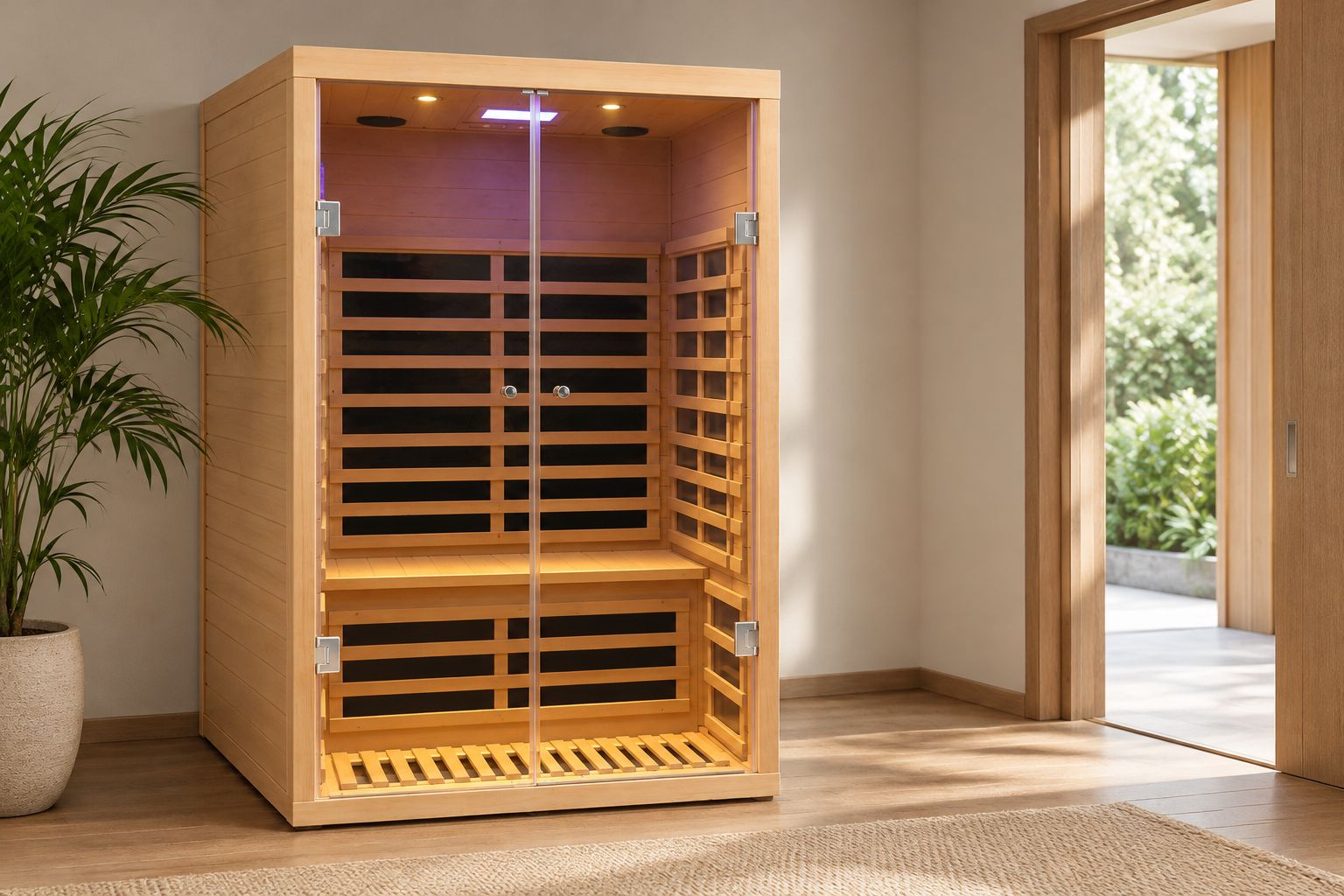
For this 2026 comparison, neither intended occupancy nor a combined heating system settles which model suits you. Confirm interior dimensions, required clearances, electrical specifications, cleaning instructions, and written ownership terms for the exact product before deciding.
These Aeva Vital infrared sauna options support different shortlists. Choose the two-person model for further assessment if that occupancy matches your household; assess the three-person model if you need to investigate additional seating. Neither recommendation replaces a measurement check.


Is an infrared sauna worth it if I only use it occasionally?
Occasional use weakens the case for ownership because the equipment still requires space and care between sessions. Compare that responsibility with the inconvenience of traveling to a facility. If occasional access already meets your needs, there is no practical reason to replace a working arrangement.
Is a larger infrared sauna worth the extra space?
A larger infrared sauna is worth considering when its verified interior dimensions solve a seating need. Do not choose additional stated occupancy just because it sounds more flexible. Confirm that the cabin and its access requirements fit without sacrificing space you use more often.
Should I buy an infrared sauna for detox or weight loss?
Do not buy an infrared sauna on the assumption that sweating proves detoxification or lasting body-fat loss. Neither a heater description nor a wood specification establishes those outcomes. If a health claim is central to your purchase, discuss the specific goal and heat exposure with a qualified clinician.
Safety and everyday ownership
Heat exposure is not appropriate for everyone in every circumstance. Ask your clinician before use if you have a medical condition, take medication that affects heat tolerance, or are pregnant. Follow the manufacturer’s operating instructions rather than copying another person’s temperature or session length.
Stop a session if you feel unwell. Do not use alcohol as part of sauna sessions, and do not treat discomfort as evidence that the equipment is working better. More intense heat is not a purchasing advantage by itself.
Read the cleaning instructions before selecting accessories or cleaning products. Confirm how to care for the seating, glass, and heating components, and keep service access clear. A practical setup is one you can use and maintain without improvising around the instructions.
FAQ
Is a home infrared sauna worth it in 2026?
A home infrared sauna is worth it in 2026 when you enjoy infrared heat, will use it consistently, and have a suitable installation location. Buy for convenient access rather than guaranteed medical results.
Should I try an infrared sauna before buying one?
Yes, try infrared heat before committing to home equipment if you are unfamiliar with the experience. Enjoying the experience does not replace checking the selected cabin’s seating and installation requirements.
Is a two-person infrared sauna comfortable for two adults?
A two-person label does not establish comfort for two particular adults. Check usable bench dimensions, legroom, and the sitting positions you expect to use.
Does a home infrared sauna need a dedicated circuit?
Circuit requirements depend on the exact model. Follow its installation instructions and have a qualified electrician assess the proposed connection.
Does low EMF mean an infrared sauna is certified safe?
A low-EMF label alone does not establish a safety certification. Request measurement units, distance, operating conditions, and any applicable certification documentation.
Which Aeva Vital model lists seven heating panels?
The Low EMF 2-Person Hemlock Far-Infrared Indoor Sauna with Double Glass Doors lists seven far-infrared heating panels. Panel count describes construction, not independently verified health or efficiency outcomes.
Can I put an indoor infrared sauna outside?
Do not place an indoor infrared sauna outside unless the manufacturer explicitly permits that installation. Match the location to the model’s environmental and electrical requirements.
Related guides
One last thing
Before ordering in 2026, mark the proposed cabin footprint and door movement on your floor, using the selected model’s documented dimensions and clearances. Walk through the room normally. If the layout interferes with everyday use before the sauna arrives, choose a different location or configuration.
Compare home infrared saunas before choosing your configuration