
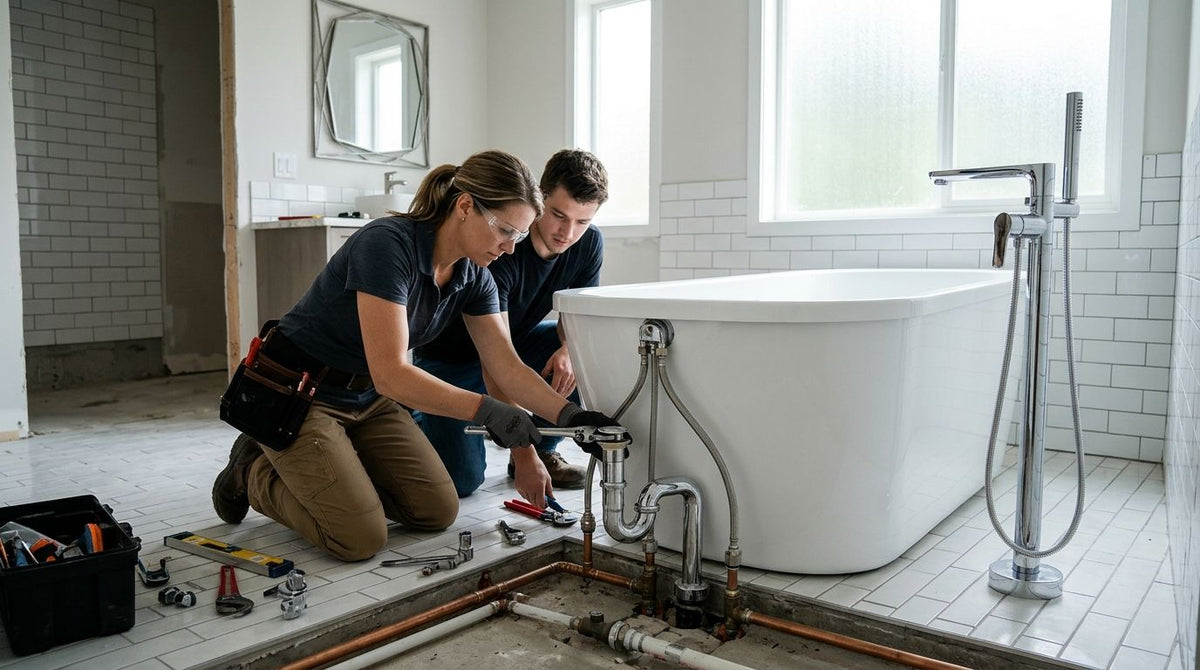
Freestanding tub plumbing installation requires a site-specific quote: the scope depends on whether your existing drain and water supplies match the new tub and faucet locations. For a 2026 budget, separate the plumbing work from the bathtub, faucet, demolition, permits, and finish repairs rather than treating them as one installation charge.
By Editorial Team
- How much does freestanding tub plumbing installation cost? Get a quote tied to drain location, faucet placement, and access.
- Separate rough-in plumbing, final connections, testing, and finish repairs when comparing estimates.
- Aeva Vital lists acrylic freestanding tubs in 55-inch, 59-inch, and 67-inch sizes; length alone cannot establish plumbing compatibility.
- Confirm the drain connection and faucet requirements before ordering fixtures or closing the floor.
How much does plumbing for a freestanding tub cost?
The useful number is a written quote for your exact installation, not a tub-only figure or an unexplained labor allowance. Ask the plumber to identify which existing connections are reusable and which need relocation before agreeing to the work.
A plumbing estimate should distinguish rough-in from finish installation. Rough-in means preparing the concealed supply and drainage connections; finish installation means connecting the fixtures after the surrounding work is ready. For scheduling, see how long freestanding tub installation takes.
Use this breakdown to compare 2026 estimates on equal terms:
| Work category | What the estimate should identify | What to clarify |
|---|---|---|
| Existing plumbing assessment | Drain, trap, vent, and supply conditions | Whether inspection requires opening a surface |
| Drain rough-in | Connection location and required alterations | Whether the selected tub matches the existing position |
| Faucet rough-in | Supply routing and mounting preparation | Whether the faucet is floor-mounted or wall-mounted |
| Final connections | Tub drain and faucet connection work | Who supplies adapters and connection components |
| Testing | Checks before concealed work is covered and after installation | Who addresses leaks or connection problems |
| Associated work | Access openings and affected finishes | Whether patching, tile, and painting are included |
Do not assume every contractor includes every row. A quote that excludes floor restoration is not directly comparable with one that includes it, even when both are described as complete installation.
Why this matters
A freestanding tub hides much of its plumbing beneath or behind the fixture. A bathroom photograph shows the finished position, but it does not establish whether the drain, trap, supply pipes, and faucet mounting can work there.
Resolve connection locations before committing to the layout. Moving the tub on a drawing is simple; changing concealed plumbing after finishes are complete adds work that an early layout check can prevent.
For your 2026 project, give each bidder the same tub information, faucet information, and proposed floor plan. Otherwise, the estimates describe different jobs.
Compare the installation scenarios before comparing quotes
The main distinction is not simply old bathroom versus new bathroom. It is whether the proposed fixture arrangement matches the usable plumbing and whether the installer can reach the connections.
| Scenario | Best for | Practical advantage | Limitation to resolve |
|---|---|---|---|
| Retain existing connection locations | Replacements with compatible fixtures | Keeps the proposed layout aligned with existing plumbing | Connection condition and exact alignment still need inspection |
| Relocate the drain | Remodels requiring a different tub position | Allows a layout that does not follow the old drain location | Requires a planned route through the floor structure |
| Change the faucet mounting | Projects with a specific filler location | Lets you coordinate the water outlet with the tub rim | Supply routing and mounting support need separate review |
| Install in a newly prepared bathroom | Projects with accessible rough-in work | Allows connection positions to be planned before finishes | Requires coordination across plumbing, structure, and finishing work |
These are scope comparisons, not fixed installation packages. Ask the plumber which scenario describes your bathroom and what must be confirmed before the quote becomes final.
Keeping the existing drain location
Keeping the existing drain location is a practical starting point when controlling the scope is your priority. It does not guarantee that the replacement tub will connect without changes.
The tub outlet must align with a suitable connection arrangement. Have the plumber inspect the existing drain and confirm compatibility with the selected installation method rather than relying on the old tub's position.
Moving the tub to a new position
Moving a tub changes more than its visual relationship to the walls. The plumber must assess drainage routing, trap placement, venting, and access around the structure.
Before approving the layout, review whether a freestanding tub can be installed without a nearby drain. Treat a proposed drain relocation as a defined part of the quote, not an assumption hidden inside general labor.
Changing the faucet location
A floor-mounted filler needs a planned mounting position and supply connections beneath it. A wall-mounted filler needs compatible supply connections within the wall and a spout position that works with the tub.
Neither arrangement is automatically the right choice for every room. Compare the existing supply locations, mounting requirements, and access before choosing on appearance alone.
Why freestanding tub plumbing scope varies
For a 2026 estimate, ask the installer to address these factors explicitly:
- Drain alignment: Identify the tub outlet position and the proposed connection beneath it. Overall tub length does not establish the drain location.
- Faucet placement: Confirm where the filler mounts and how the supplies reach it. Include required mounting components in the scope.
- Connection access: Establish whether the installer can work from below or must open the bathroom floor. Assign responsibility for restoring those surfaces.
- Existing plumbing condition: Have the plumber assess the connections intended for reuse. Do not assume concealed pipework is suitable because the old tub drained.
- Floor and structure: Coordinate pipe routing with the existing framing or slab. Refer structural questions to the appropriate qualified professional.
- Permit and inspection requirements: Confirm local requirements with the authority responsible for your project. State who handles applications and inspection scheduling.
Ask for written assumptions alongside the estimate. If concealed conditions remain unconfirmed, the agreement should explain how additional work is documented and approved.
What should you measure before requesting a quote?
Start with the fixture documents, then measure the room. Exterior dimensions help with placement, but the installation drawing provides the connection information the plumber needs.
- Locate the drain. Mark the existing connection relative to fixed walls and compare it with the proposed tub outlet.
- Place the faucet. Show the mounting position and check the manufacturer's requirements for the selected filler.
- Check access. Identify how the installer will reach the connections during installation and how future service will be handled.
- Review finishes. Mark the surfaces that must be opened and identify who will restore them.
Record measurements from the same fixed reference points on every drawing. A contractor cannot reliably compare a drain measurement taken from a finished wall with another taken from exposed framing unless that difference is identified.
Photographs help explain the room, but they do not replace an inspection of concealed conditions. Include views of the existing tub area and any accessible plumbing below it when requesting the initial assessment.
Which tub specifications actually help the plumber?
The Aeva Vital freestanding bathtub listings below identify exterior length, acrylic construction, and a chrome drain; one listing also identifies cUPC certification. Those details help describe the fixtures, but they do not establish your required drain rough-in or faucet compatibility.
| Listed bathtub | Best for initial comparison | Stated details | What still needs confirmation |
|---|---|---|---|
| 55-inch acrylic freestanding soaking bathtub | Starting with the shortest listed length here | Acrylic; chrome drain | Full footprint, outlet location, and connection requirements |
| 59-inch acrylic freestanding bathtub | Comparing an intermediate listed length | Diamond pattern; gloss white; chrome drain | Installation drawing and compatibility with the proposed filler |
| 67-inch acrylic freestanding bathtub | Considering the longest listed length here | Gloss white; chrome drain; cUPC certified | Room fit, rough-in position, and installation requirements |
Aeva Vital freestanding tubs suit shoppers comparing acrylic fixtures by stated size; installation suitability still requires a plumbing review. The advantage of comparing these lengths is a clearer starting point for room planning. The limitation is equally clear: exterior length does not tell you the interior bathing space, drain offset, filled weight, or service access requirements.
The cUPC designation on the 67-inch listing is a product certification statement. It does not certify your completed bathroom installation or replace local permit and inspection requirements.
Use the fixture documents to approve compatibility before purchasing. Do not infer an included faucet, a particular adapter, or a universal drain connection from a product photograph.


Is plumbing included when I buy a freestanding bathtub?
Do not treat a bathtub purchase as a plumbing installation agreement. Confirm the seller's stated inclusions separately from the contractor's scope, including the faucet, connection components, removal work, and final testing.
For an Aeva Vital bathtub, match the exact listing and installation documents to the plumber's proposal. A listed chrome drain does not explain every component needed to connect that fixture to your home's drainage system.
Can I reduce the work by keeping my existing plumbing?
Keeping suitable connections in their existing positions avoids specifying a relocation. Ask the plumber to assess condition and compatibility before treating reuse as an approved plan.
Avoid choosing a tub solely because its exterior length resembles the old fixture. The outlet position, connection method, and faucet arrangement still need to match the proposed installation.
What should a complete plumbing quote include?
A complete quote defines the work, supplied components, exclusions, and acceptance checks. For your 2026 comparison, require the same written scope from each contractor.
Before signing, confirm these items:
- Who removes the old fixture and disposes of debris.
- Who supplies the drain connection components and faucet mounting parts.
- Whether drain, trap, vent, and supply alterations are included.
- Who obtains required permits and arranges inspections.
- Who restores flooring, ceilings, walls, waterproofing, and finishes.
- How concealed conditions and changes receive your approval.
- What testing occurs before concealment and at completion.
Keep fixture changes documented after the quote is accepted. Substituting a different tub or filler can change the connection requirements even when the overall bathroom layout remains unchanged.
Related guides
- Can a freestanding tub be installed on any floor?
- Freestanding tub materials: acrylic versus stone resin
FAQ
How much does freestanding tub plumbing installation cost in 2026?
Freestanding tub plumbing installation requires a site-specific quote based on drain alignment, supply routing, access, and existing conditions. Request separate plumbing and finish-repair scopes so you can compare equivalent work.
Is reusing the existing tub drain always possible?
Reusing the existing tub drain requires compatible alignment, connection details, and suitable plumbing condition. Have the plumber confirm those points against the new tub's installation drawing.
Does a floor-mounted tub filler need separate plumbing?
A floor-mounted tub filler needs water supplies routed to its mounting location. Confirm the required mounting components and access before completing the floor.
Does a bathtub with a chrome drain include everything needed for installation?
A chrome-drain listing does not establish every component needed to connect the tub to your home. Compare the manufacturer's supplied-parts list with the plumber's proposed connection method.
Will a 55-inch bathtub fit where my old tub stood?
A 55-inch exterior length alone does not establish replacement compatibility. Check the complete footprint, drain outlet position, faucet placement, and required installation clearances.
Does cUPC certification replace a plumbing inspection?
cUPC certification does not replace local installation permits or inspections. Confirm the requirements for your project with the responsible local authority.
Should I buy the bathtub before getting a plumbing quote?
Select a candidate bathtub and give its installation documents to the plumber before committing to the purchase. Confirm the connection plan and responsibility for any required alterations first.
One last thing
Ask the plumber to mark the proposed tub drain and faucet positions on the floor before work starts. Compare those marks with the fixture drawings, not just the room's appearance; this makes a layout disagreement visible before it becomes concealed plumbing.