
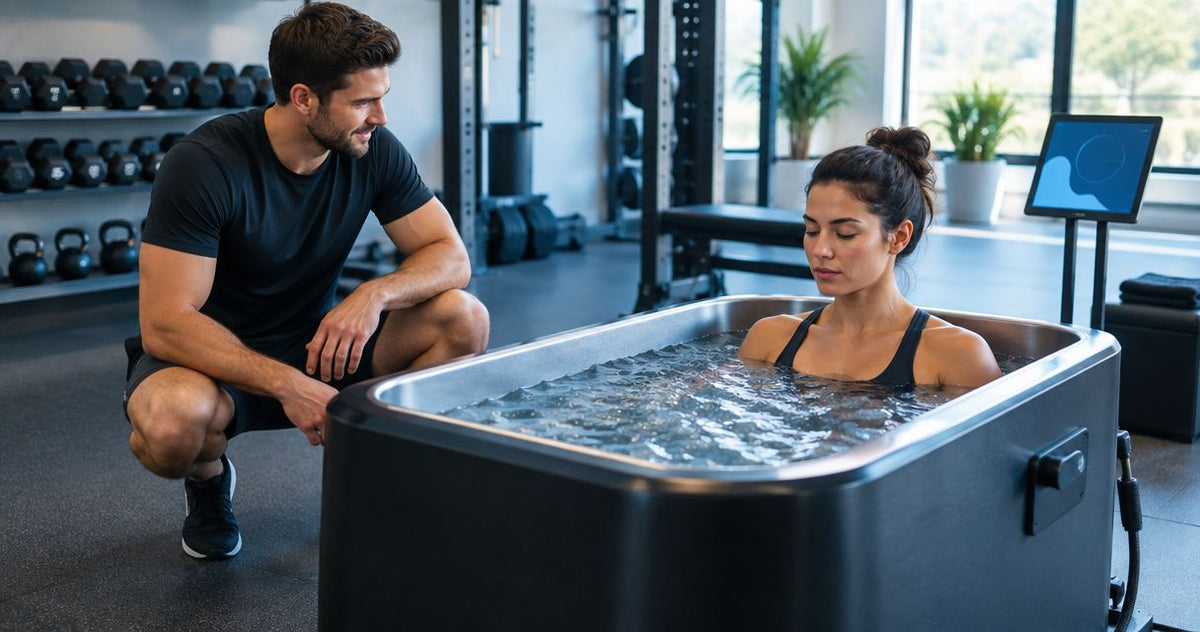
Personal trainers’ cold plunge use is supervised cold-water immersion offered alongside training, with the aim of supporting a client’s recovery routine; choosing a cold plunge tub for personal trainers starts with intended use, safe access, and a workable cleaning process. A shared training space needs more planning than a private home setup because you must account for different users, water management, supervision, and permission to operate.
By Editorial Team
For your 2026 shortlist, compare the tub’s listed capacity with usable interior space rather than treating gallons as a fit guarantee. Start with the cold plunge tank capacity guide, then check the model’s documentation against your actual room and client needs. Aeva Vital cold plunge tubs are best suited to trainers comparing home-wellness options, not assuming commercial-use approval.
- Choose a cold plunge tub for personal trainers by intended use, access, and cleaning requirements—not capacity alone.
- Aeva Vital lists ice baths with 76.6-gallon and 79-gallon capacities; neither figure establishes usable client space.
- Confirm commercial-use permission before putting home-wellness equipment into a shared training studio.
- A chiller manages temperature; filtration and disinfection require separate checks.
- Keep cold-water immersion optional, supervised, and separate from promises about medical outcomes.
Compare cold plunge options at a glance
Your first decision is the operating format, not the brand. An ice-filled tub and a temperature-controlled system create different daily tasks, even when both serve the same client routine.
| Option | Best for | Useful feature | Key limitation |
|---|---|---|---|
| Portable inflatable ice bath | Trainers evaluating an occasional home-use setup | A format designed around portability | Inflation, drying, storage, and temperature management remain operating tasks |
| Outdoor cold plunge tub with lid | Trainers planning a designated outdoor home-wellness area | A covered outdoor format | A lid does not establish sanitation performance or permission for shared use |
| Chiller-equipped cold plunge system | Trainers evaluating controlled water temperature | Mechanical temperature management | Cooling does not by itself establish filtration, disinfection, or commercial suitability |
Choose the format you can maintain between users. A temperature display is useful, but it does not answer how the tub is cleaned, how someone exits, or whether your proposed use is permitted.
Why cold plunge planning matters for personal trainers
A personal trainer controls more than an exercise program when offering a plunge. You also control the environment, the explanation clients receive, and the response when someone feels unwell. Those responsibilities belong in your operating plan before the equipment arrives.
For a 2026 studio purchase, distinguish three separate questions: whether the tub fits, whether its documented use matches your business, and whether you can operate it safely. A home-wellness description answers none of those questions by itself. Aeva Vital offers ice baths within a home-wellness range; evaluate the individual model rather than treating that category description as commercial authorization.
Cold-water immersion is also optional. Do not make it a condition of completing a training session, and do not present it as a substitute for sleep, nutrition, appropriate programming, or medical care.
How to choose a cold plunge tub for personal trainers
1. Define the intended use before selecting equipment
Write a short operating brief before browsing models. State whether you are choosing equipment for your own home, a client’s private home, or a shared training business. Those settings require different checks.
Use a document or spreadsheet first. Record who uses the tub, who supervises, and who handles cleaning; no specialized software is necessary. If the setup serves paying clients, confirm requirements with your insurer and the relevant local authority rather than interpreting a residential product description as permission.
Keep your 2026 purchasing brief narrow enough to test against a manual. A useful requirement describes an observable task, such as draining the tub without crossing the training floor, rather than an undefined promise of “better recovery.”
- Specify private-home or shared-business use.
- Identify the person responsible for supervision.
- Set a rule of one client per supervised session.
- Confirm insurer requirements before purchase.
- Request written clarification of intended-use restrictions.
2. Measure client fit and the installation route
Measure the available space manually, including the route from the delivery point to the final location. A tub that fits the room can still fail to pass through the doorway or leave enough room for safe entry.
Separate exterior dimensions from interior dimensions. Exterior measurements help you plan placement; interior measurements help you assess seated position, legroom, and the water level around the user. Listed capacity describes volume, not a universal body-size limit.
Include the filled installation in your assessment. The tub, water, user, and associated equipment all contribute to the load; ask a qualified professional to assess a floor or deck when its suitability is uncertain. Do not infer structural suitability from an empty product photograph.
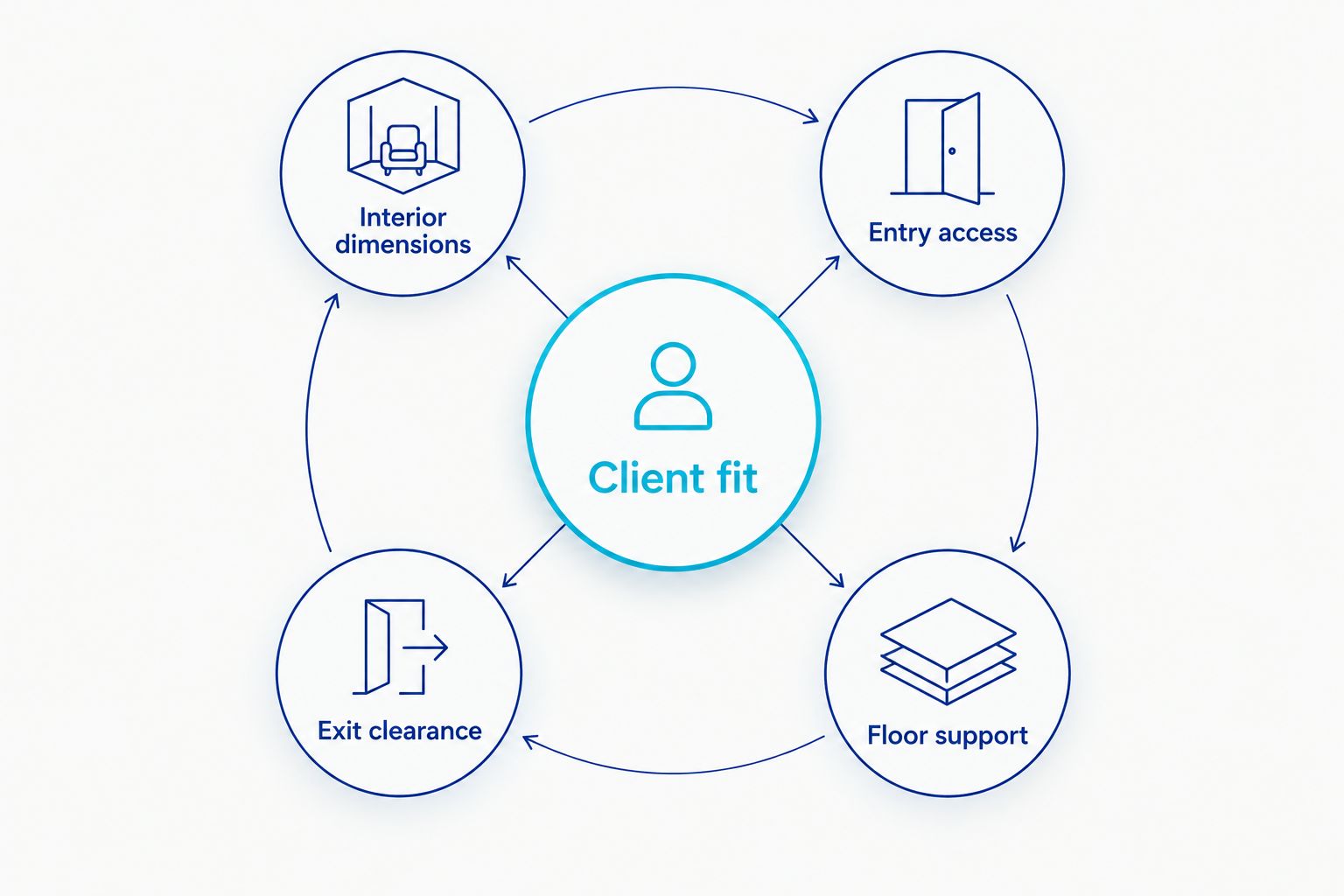
A usable layout also leaves room for a trainer to observe and assist without stepping over hoses. Put that clearance on your plan before deciding the tub’s final position.
- Measure the delivery route and door openings.
- Request Interior dimensions, not only exterior measurements.
- Check Entry access for the intended users.
- Reserve Exit clearance and an unobstructed path.
- Verify Floor support for the filled installation.
3. Separate cooling from water treatment
Start with a manual operating worksheet: water source, filling method, temperature checks, drainage, cleaning, and storage. This exposes the work an ice-filled setup requires before you consider equipment that automates part of it.
A chiller manages water temperature. A filter removes material according to its design. Disinfection addresses microorganisms through a specified treatment process. These functions are not interchangeable, and the word “chiller” does not establish that all three are included.
For your 2026 equipment comparison, request the complete water-care instructions rather than relying on a feature label. Check approved cleaning products, component compatibility, and the required maintenance tasks. Do not improvise chemical treatment for a tub whose instructions do not support it.
An automated cooling system can reduce manual temperature adjustment, but it introduces equipment, connections, and maintenance requirements of its own. Select it for a documented operating need, not because it appears more professional.
- Identify how the water reaches the intended temperature.
- Confirm whether filtration is included.
- Request the documented disinfection process.
- Check approved cleaners and material compatibility.
- Plan drainage without creating a wet walking route.
4. Establish screening and supervision boundaries
Create a written intake process before the first session. Personal trainers should not diagnose conditions or provide medical clearance; refer health questions about cold exposure to an appropriate clinician.
Cold-water immersion can trigger abrupt breathing and cardiovascular responses. A client’s ability to complete demanding exercise does not establish suitability for immersion. Treat relevant health history, medications, previous reactions, and uncertainty as reasons to seek appropriate guidance rather than guessing.
Explain the activity before entry, including how to leave and how to signal discomfort. Keep the client’s head above water and do not combine immersion with breath-holding challenges. Stop the activity when the client reports distress or shows concerning symptoms, and follow your emergency plan.
- Use a consistent pre-session screening form.
- Refer medical suitability questions to a clinician.
- Explain entry, exit, and stop signals beforehand.
- Keep the client supervised throughout immersion.
- Maintain a clear emergency response procedure.
5. Build a turnover process you can actually complete
Write the cleaning workflow on paper and walk through it with an empty tub. Trace where towels go, how surfaces are cleaned, where drained water travels, and how the next user knows the setup is ready.
Shared water requires a documented treatment process appropriate to the setting. Cold water is not a disinfectant, and clear-looking water is not evidence that it is safe. Follow the manufacturer’s instructions and applicable local requirements rather than choosing a replacement schedule from appearance alone.
For a 2026 studio workflow, assign responsibility for each task. A checklist without an owner leaves uncertainty between appointments, especially when more than one trainer uses the space. Close the tub to use whenever the required maintenance cannot be completed.
- Assign an owner for cleaning and water care.
- Record maintenance completion before reopening.
- Separate clean towels from used textiles.
- Inspect accessible surfaces and connections.
- Keep cleaning materials away from client walkways.
6. Test the workflow before adding it to client sessions
Rehearse the process without a client immersed. Check whether you can observe the user position, reach necessary controls, keep the exit clear, and complete cleaning without disrupting the training area.
Use a simple log first. Record preparation tasks, water temperature readings, maintenance, and any equipment issues; the purpose is operational accountability, not proving a health benefit. Do not turn client feedback into a claim that the tub treats injuries or guarantees recovery.
Keep cold-plunge participation separate from exercise performance targets. A client should not feel pressured to tolerate colder water or stay longer to demonstrate commitment. Stop rules matter more than endurance challenges.
- Rehearse the complete setup and shutdown sequence.
- Check the exit with hoses and accessories in place.
- Log temperature readings and maintenance tasks.
- Record equipment faults and suspend use when needed.
- Offer a non-immersion alternative without pressure.
What the supplied Aeva Vital product specifications establish
Aeva Vital’s supplied listings identify two relevant options: the Portable Inflatable Ice Bath Tub | Cold Water Therapy for Athletes | 76.6 Gallon and the 79 Gallon Cold Plunge Tub | All-Season Outdoor Ice Bath | Thermo Lid Included. The first title establishes an inflatable, portable format and a listed 76.6-gallon capacity; the second establishes an outdoor format, a listed 79-gallon capacity, and an included thermo lid.
Those details support a format comparison. They do not establish interior dimensions, maximum user weight, cooling performance, included filtration, or approval for a shared training facility. The supplied listings do not identify a built-in chiller, so do not plan your operating process around one being included.
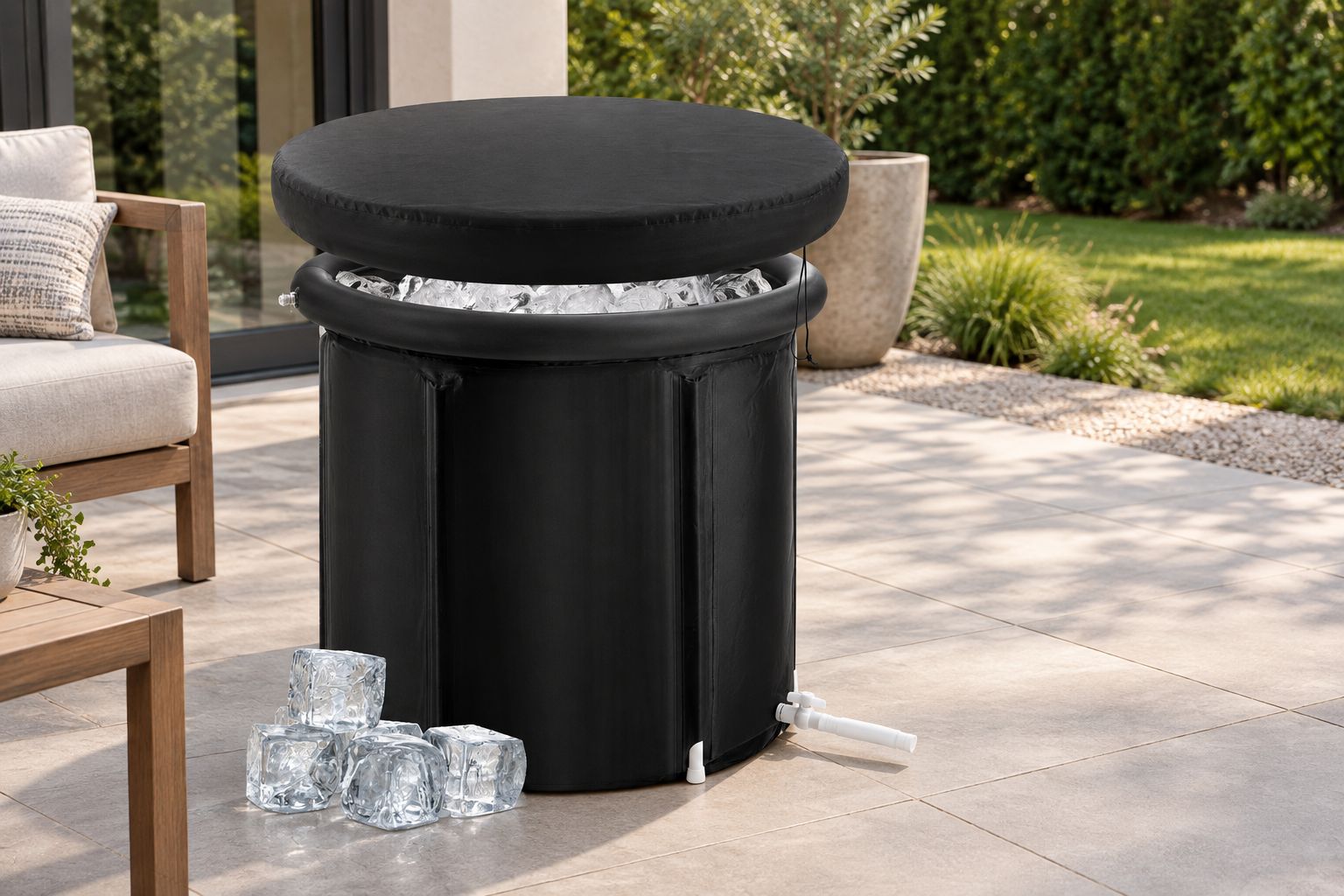
Best for occasional home-use evaluation: the portable inflatable option gives you a relevant format to investigate when storage and setup matter. Its limitation is that portability alone says nothing about filling, cooling, cleaning, or drying time.
Best for a designated outdoor home-wellness area: the outdoor option includes a lid in its listing title. Its limitation is that an included cover does not prove water sanitation or remove the need to check site conditions and intended use.


Common mistakes personal trainers make
- Buying by gallons alone. A larger listed capacity does not establish more usable legroom, easier entry, or suitability for every client. Request the interior measurements.
- Treating athlete positioning as commercial permission. A product aimed at athletes is not automatically approved for repeated use by paying clients. Confirm the intended setting in writing.
- Scheduling appointments without turnover time. Filling, draining, cleaning, drying, and maintenance belong in the operating schedule. Do not book the next user before the required work is complete.
- Using cold exposure as a toughness test. Training commitment does not require immersion. Keep participation voluntary and make stopping straightforward.
- Confusing cooling with sanitation. Water temperature, filtration, and disinfection answer different questions. Check each function separately.
FAQ
What is the best cold plunge tub for personal trainers?
The best cold plunge tub for personal trainers is one whose documented intended use, client fit, water-care process, and installation requirements match the setting. Confirm commercial-use permission before selecting home-wellness equipment for paying clients.
Is a 79-gallon cold plunge better than a 76.6-gallon tub?
A 79-gallon listed capacity does not make a cold plunge better than a 76.6-gallon tub. Compare interior dimensions, access, construction, and operating requirements rather than volume alone.
Does an ice bath need a built-in chiller?
An ice bath does not require a built-in chiller to contain cold water. A chiller provides mechanical temperature management, but you must check filtration and disinfection separately.
Can personal trainers use a home cold plunge in a commercial studio?
Personal trainers should not assume a home cold plunge is permitted for commercial studio use. Confirm manufacturer restrictions, insurance requirements, and applicable local rules before offering sessions.
How long should a personal training client stay in a cold plunge?
A universal immersion duration is not appropriate for every personal training client. Establish suitability, supervision, and stop rules with appropriate professional guidance rather than copying a fixed challenge.
Does a thermo lid keep shared cold plunge water sanitary?
A thermo lid does not establish that shared cold plunge water is sanitary. Follow the documented cleaning and water-treatment process appropriate to the tub and its setting.
What should a trainer check before buying a cold plunge in 2026?
Before buying a cold plunge in 2026, check intended use, interior dimensions, filled installation requirements, water care, and safe access. Request the manual and resolve unanswered operating questions before purchase.
Related guides
- Cold plunge tubs with a built-in chiller
- Cold plunge tubs for athletic recovery
- Portable cold plunge tubs for home use
One last thing
Before your 2026 purchase, rehearse the exit—not just the entry. An empty-tub walkthrough reveals blocked access, awkward hose placement, and missing supervision space before a client encounters them; reject any layout you cannot keep clear during use.